

Anholt in winter: Denmark's island where the stars steal the show
Anholt is far enough out that you feel it before you even arrive. You leave from Grenaa, sit down on the ferry, and after a while there’s nothing left to look at but open water. Somewhere mid-crossing, the signal drops, people stop checking their phones as often, and by the time you reach Anholt Havn, it already feels separate. A few fishing boats, the small harbour buildings, maybe someone unloading supplies if you’re there at the right time. Then you walk. It’s only about ten minutes into the village, following Ørkenvej past low houses and gardens that look like they’ve been shaped more by wind than anything else. No big arrival moment, just a gradual shift into somewhere quieter.
In winter, the island strips back even further. The grocery shop on Anholt Bygade still opens, a couple of places serve food depending on the week, and that’s about it. You fall into a simple routine quickly, walking the same stretch between the harbour and the village, maybe continuing out towards the lighthouse if the weather holds.
The Dark Sky Park label from 2025 sounds like a headline, but it’s not something you notice during the day. It only makes sense later, when you step outside after dinner and realise how little light there actually is. Walk just past the last houses, towards the dunes or out along the road leading east, and the sky opens up properly.
Most days here end up looking similar. You go out for a walk, usually longer than you planned because there’s nothing pushing you back. You might head towards Ørkenen, where the landscape flattens and stretches out in a way that doesn’t feel like the rest of Denmark, or just follow the coastline from the harbour until you turn around.
It’s not a place you come to fill your time. If anything, it does the opposite. But if that sounds like what you need, a few quiet days, some cold air, something warm to eat, and a sky that actually gets dark, then Anholt in winter tends to work without needing much from you.
Choosing Anholt once summer is over
Most islands make it pretty clear how you’re meant to be there. You arrive in summer, everything’s open, there’s a natural flow to the day, cafés, beaches, somewhere to go next without thinking too much about it.
Anholt doesn’t really offer that once the season ends. You notice it quickly after arriving at Anholt Havn, with fewer ferries on the schedule, fewer people getting off with you, and not much happening beyond what’s necessary. The walk into the village along Ørkenvej feels quieter, not in a curated way, just because there’s less going on. Houses are closed up, gardens left as they are, and the pace slows down.
In the village itself, along Anholt Bygade, things stay open but on their own terms. The small grocery shop runs as usual, maybe a place or two serving food depending on the week, and you’re left to figure out how you want to spend your time.
That’s where winter starts to make sense here.
The darker evenings aren’t something extra you add onto the trip, they just take over naturally. You go out during the day, usually for a walk towards the lighthouse or out into Ørkenen, come back in when it gets cold, eat something simple, and then head back out once it’s properly dark. Not every night is clear, and that becomes part of it too. You stop expecting anything specific and just check the sky.
It’s worth being honest about it, though.
If what you want is an easy winter break with open cafés, somewhere to browse, a bit of atmosphere built around visitors, this isn’t that kind of island. There are moments where it can feel a bit too quiet, especially if the weather turns and you’ve already walked the same stretch twice.
But if you’re fine with that trade-off, a few good walks between the harbour and the village, a warm place to come back to, and evenings that revolve around whether the sky clears, then Anholt in winter works in a way that doesn’t need much explaining once you’re there.
If you’re building a wider Denmark trip around this, it’s worth pairing Anholt with other slow islands that are more flexible year-round. Trippers Terminal has a good starting point for that kind of route planning in this guide: Digital Detox on Denmark’s Slow and Scenic Islands.
What a Dark Sky certification means for Anholt
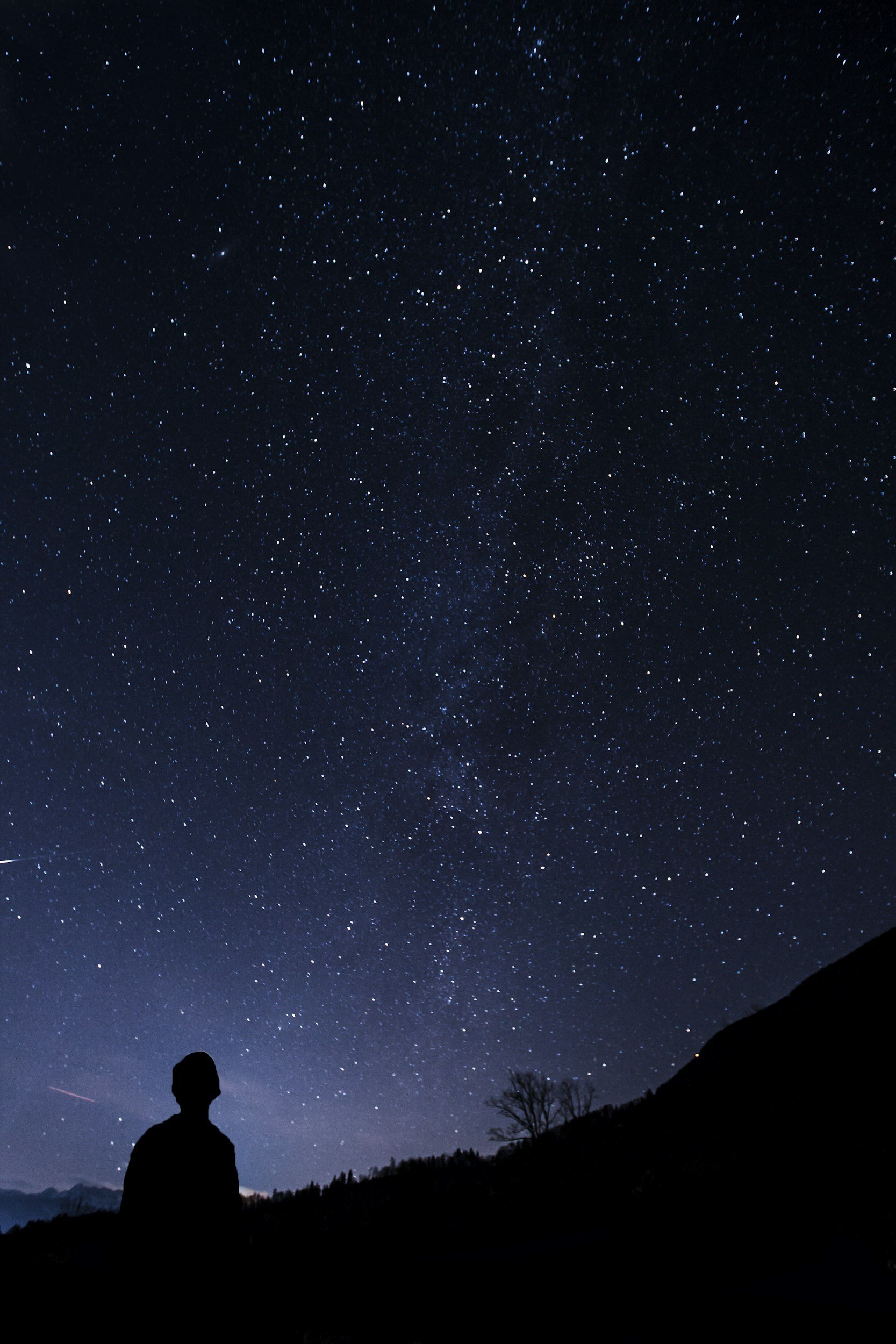
When a place is certified as an International Dark Sky Park, it’s not just because it looks pretty in night photos. It’s about measurable sky quality and long-term commitment to protecting darkness: lighting policies, community involvement, and ongoing work to reduce light pollution. In Anholt’s case, DarkSky International notes that local advocates have been collecting sky-quality data since 2019, with an additional measuring station installed later, and that the island has backed that science with practical changes.
That matters because “good stargazing” is otherwise a slippery promise. Plenty of places claim it. Few can back it up with the kind of documentation and standards that a certification process requires.
What it means for you, as a visitor, is less abstract than it sounds. It means that on a clear winter night, the island is genuinely dark. It’s not “dark for Denmark”, it’s dark in the way you only notice when you’ve lived near streetlights for years and forgot how much they wash out. It means the Milky Way isn’t something you have to squint and imagine. It means meteor showers are not a niche hobby here, they’re a real possibility when conditions are there!
It also means you need to treat the sky as something you plan around, not something you hope for. The best way to do Anholt is to accept that this is a weather-dependent trip and structure it so the trip still feels good if clouds win one night.
If you like this kind of travel, where nature is the headline and you’re not forcing it, you’ll probably also enjoy reading: Trending Destinations for Sustainable Astrotourism and 5 Stargazing Holidays in Europe.
The island you get when summer leaves
Anholt is small, and that’s part of what makes it feel so contained and calming in winter. There isn’t a long list of neighbourhoods to decode. There’s the harbour, the village, dunes and beaches, and then the bigger natural presence: open land and the island’s famously dry landscape.
One of the things you’ll hear mentioned quickly is “the desert”. Anholt is often described as having Northern Europe’s largest desert, and the contrast between the busy summer harbour and the quiet and darkness of winter is something even the harbour itself points out. In winter, that landscape feels even more stark, because you’re not sharing it hundreds of thers! You’re walking through something that looks exposed and slightly otherworldly, but in a very Danish way: understated, sandy, and shaped by wind.
The village settles into something more everyday. Shops are open because people live here, not because visitors expect them to be… There’s less to browse and more to notice. A chalkboard that hasn’t been rewritten in a while, and ights switched off early.
Also, walking becomes the main way you understand the island. Not long, organized hikes. Just nice walks where you let the weather decide how far you go (some days the wind pushes you back sooner than planned!)
If you’re used to slow travel meaning cafés, bookshops, and small galleries, Anholt will feel sparse. There isn’t much to browse, and nothing to wander into just because it looks nice. The island doesn’t offer shopping... It kind of assumes you’ll bring a book with you!
Explore the nigh sky on Anholt
Let’s make this practical, because “stargazing” can sound like a vague activity until you’re standing outside wondering where to go.
On Anholt, the best night sky moments come from three things lining up:
Clear skies. Low moonlight. And getting away from the small pockets of light around buildings.
The moon part matters more than most people expect. A bright moon can turn a night into something beautiful but it also flattens the sky, especially if your goal is seeing a dense field of stars or the Milky Way. If you’re hoping for a heavy star-filled sky, timing your trip around a low moon helps!
Then there’s the human factor: your eyes need time to adjust. Give yourself 15 to 20 minutes outside without looking at a bright phone screen. Use a dim headlamp if you need light. If you bring a headlamp, a red-light setting helps. This is one of those small details that can turn “nice, I guess” into “oh, that’s the sky”.
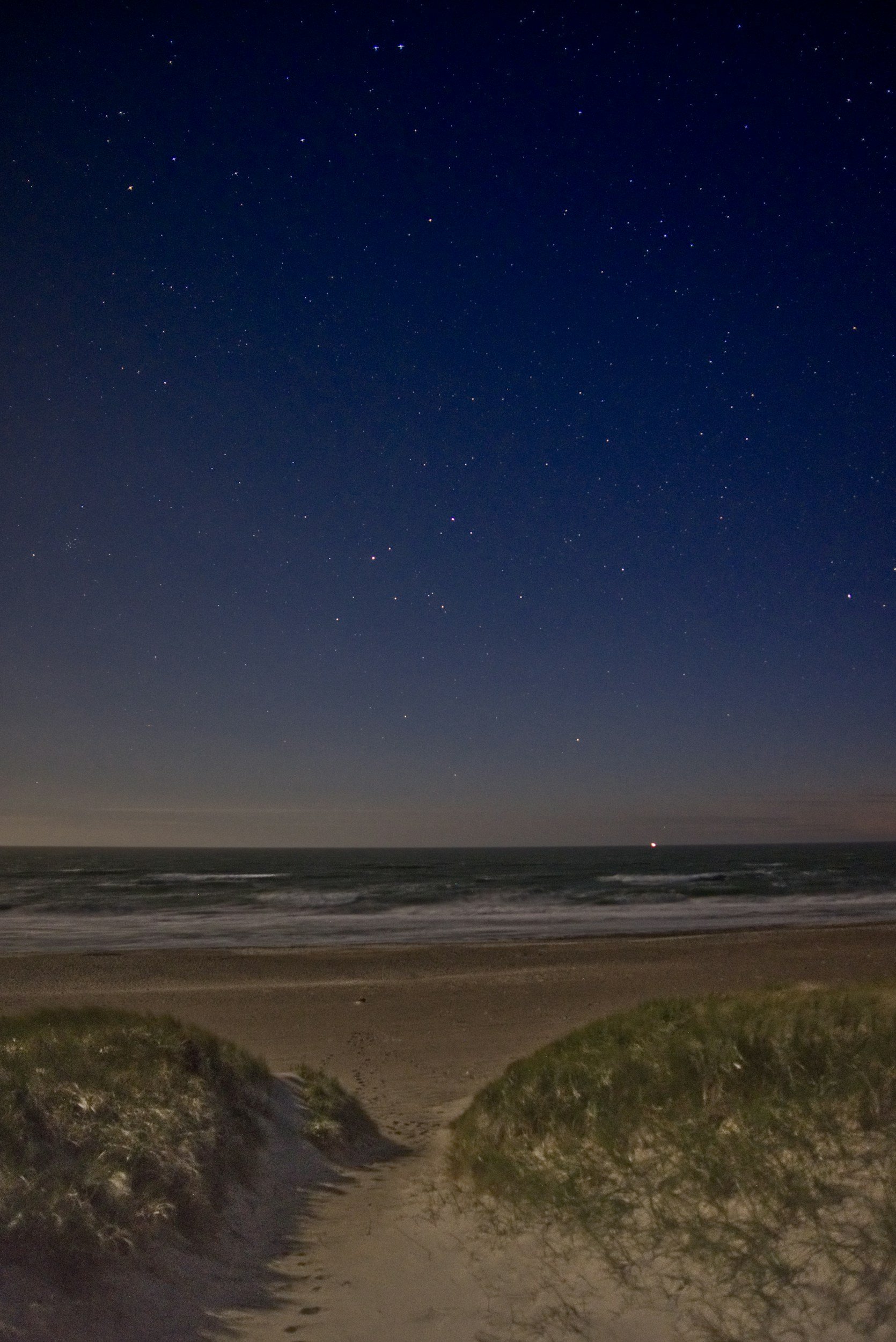
Where to go without making it complicated:
If you’re staying near the village, a short walk out toward darker stretches of beach or dunes can be enough. If you’re closer to the harbour, do the same: move away from any concentrated lighting, even if it’s only 10 minutes on foot. The island is dark enough that you don’t need to chase a “secret spot”. You just need a bit of distance from built light.
Anholt’s landscape also gives you something that many stargazing destinations don’t: a feeling of horizon. Water and dunes create open sightlines. On a clear night, that openness is part of the experience. It makes the sky feel bigger.
One more honest note: if you get a fully clouded night, don’t force it! Make your peace with the fact that winter travel is a small gamble. Go out once, check the sky, then give yourself a warm evening indoors. The win is returning to darkness and quiet, not standing outside for an hour proving you’re committed, right?
Daylight hours: walking, weather, and slow pace
Winter days on Anholt are short, and it helps to know roughly what that means in practice. From December to early February, daylight usually runs from around 8:30 in the morning until about 3:30 in the afternoon. It shifts a little through the season, but you never have the feeling of a long, open day. You work with a small window, and once you accept that, the days become easier!
Mornings tend to start slowly. There’s no reason to rush out early, because the light isn’t doing much yet… You have breakfast, look outside, check the wind, and wait until it feels properly bright before heading out. Most days, that’s closer to mid-morning than early.
Walking is how the daylight gets used. Not in a planned way, and not with a route in mind - you basically go out and see how it feels. Some days you end up walking for an hour, maybe a bit more, before the cold starts to get through. Other days you’re back inside sooner than you expected, hands cold, face warm (glad you went out at all!) Both feel like the right decision at the time.
By early afternoon, the light already starts to soften. Around two or three, you notice the sky shifting, and that’s usually your cue to head back if you’re still out…
Being inside by mid-afternoon can feel strange at first if you’re not used to winter travel this far north. But after a day or two, it starts to make sense. You rest a bit, read, maybe write, maybe do nothing at all. You’re not killing time. You’re keeping enough energy to step back outside later if the sky clears.
That’s the balance that works here. The days aren’t meant to be full here!
Where to stay on Anholt when the island is quiet
Accommodation is the part of an Anholt winter trip you want to think about early, because choice is limited compared to bigger islands.
Where you stay on Anholt in winter matters more than it might on other trips, mostly because you’ll spend a fair amount of time there. Evenings are long. You come back cold from walks. Some nights you’ll head out again, others you won’t. Your accommodation isn’t just a place to sleep, it’s where you hang out.
There aren’t many options, which simplifies things. You’re not choosing between styles or neighbourhoods, you’re choosing between ways of spending your evenings.
Staying at Pakhuset makes the trip feel straightforward. It’s small, traditional, and well placed between the harbour and the village. You don’t need to think much once you’re there. You basically just come back from a walk, eat something warm, and relax.
If you’re more comfortable being entirely on your own in the evenings, a holiday home or cabin can suit better! There are a few really cozy gems to rent here. Some of the places you’ll find through Landfolk lean toward simple Danish design rather than holiday décor, which works well here. You plan your food in advance, light the fire if there is one, and accept that your evenings will be quiet. This setup feels more like a retreat than a trip, and it suits people who are happy reading, writing, or doing very little once it gets dark.
There are also smaller bed-and-breakfast style places on the island. They tend to be personal and unfussy, often run by people who live there year-round. If what you care about most is sleeping well and feeling comfortable rather than having space or privacy, these can be a good middle ground.
What Anholt doesn’t have in winter are design-led boutique hotels or places built to impress. And that’s worth saying plainly. You’re choosing accommodation here to support the experience, not to be part of it. Once you let go of the idea that where you stay needs to be “interesting”, it becomes much easier to pick the right option.
Getting to Anholt in the off-season
The trip to Anholt is part of the experience, and in winter it requires a bit of attention!
The main route is by ferry between Grenaa on the mainland and Anholt. The ferry crossing is roughly three hours. The operator publishes sailing lists and timetables, and times can vary, especially with seasonal schedules. Check before you go…
Grenaa itself is in Djursland, on the east side of Jutland, and it’s reachable from Aarhus and the wider Danish rail network. If you’re coming from Copenhagen, you can do it by train and local connections, but it’s a travel day. Plan it like one. Trying to squeeze Anholt into a rushed weekend where you arrive late Friday and leave early Sunday is technically possible, but it’s not the kind of trip that delivers the calm experience you’re coming for.
A tip is to build slack into both ends. If you have a fixed flight home or a tight connection after the ferry, you’ll spend your whole trip watching the clock. Ferries are generally reliable, but winter is winter - and wind happens.
If you’re travelling with a car, note that many visitors leave it on the mainland and travel on foot once they’re on Anholt. Some holiday home listings even explicitly suggest leaving your car in Grenaa and taking the ferry over. For winter, that can actually be a relief. A small island walk is nicer when you’re not thinking about parking and road conditions.
Who actually enjoys Anholt in winter?
Anholt in winter isn’t something you “do well” by planning it properly. It either fits how you like to travel, or it doesn’t.
It tends to suit people who don’t need much structure once they arrive. The kind of trip where you go out for a walk without deciding where you’re going, follow the road past the harbour, maybe keep going towards the lighthouse if the weather holds, and turn back when it doesn’t. No real plan, no pressure to make something happen.
Days are short, and you feel that. By mid-afternoon the light starts to drop, and you’re usually back inside earlier than you would be anywhere else. You end up doing simple things more than once, cooking something easy, stopping by the shop on Anholt Bygade, sitting with a book you actually feel like reading rather than just bringing it along.
If you like paying attention to small shifts, the island gives you enough to notice. The way the wind changes direction along Ørkenvej, how the harbour looks completely different depending on the light, or how you can tell, almost instinctively after a day or two, whether the sky might clear later in the evening.
It also helps if you’re fine with things not lining up perfectly.
Some nights will be clear, and the sky opens up properly once you step outside the village. Other nights, it’s just low cloud and darkness without much to see. There’s no alternative plan waiting for you if that happens. You just stay in, try again the next evening, and let it be part of the experience rather than something that went wrong.
That’s usually where people decide whether it works for them or not.
If you need choice, places to go in the evening, or a bit of background atmosphere to feel comfortable, winter here can feel a bit empty. But if you’re okay with a few repeated walks, a slower pace, and days that aren’t filled on purpose, then Anholt tends to settle in quite naturally.
If you want a dark-sky trip with a bit more built-in structure, it can be worth reading a few alternatives on Trippers Terminal and comparing what you actually want. Bettmeralp, for example, is a very different winter environment, but it gives you a sense of how another kind of night-sky trip can feel when you pair it with a mountain setting: Bettmeralp in Winter. Scotland is another option if you want night skies plus a wider range of places to stay and eat: Scotland.
FAQs about Anholt in winter
Is Anholt worth visiting in winter?
Yes, if you’re choosing it for quiet, walking, and the night sky. It’s not worth it if you need a lot of open restaurants, evening buzz, or a packed itinerary to feel satisfied.
When was Anholt certified as a Dark Sky Park?
Anholt was certified as an International Dark Sky Park in May 2025 by DarkSky International.
How do you get to Anholt in winter?
Most visitors take the ferry between Grenaa and Anholt. The crossing is around three hours, and winter schedules vary, so it’s worth checking the current sailing list and building slack into your travel day.
Are hotels and restaurants open on Anholt in winter?
Some accommodation options operate year-round, but winter is quieter and choice is limited compared to summer. Anholt Kro is one of the established places to stay. Always check opening periods for dining and services before you travel.
What’s the best time for stargazing on Anholt?
Clear nights with low moonlight give you the best visibility for star fields and the Milky Way. Planning around moon phases makes a noticeable difference.
How many days do you need on Anholt in winter?
Two nights is the minimum that makes sense, because it gives you at least two chances for clear skies and one full day to settle into the pace. Three nights is ideal if you want the trip to feel genuinely restful.