
You don't have to be royal to sleep in a castle
You check in just before dinner, drop your bag, and step outside for a few minutes before it gets dark. There’s a lawn, maybe a lake or a stretch of open fields, and no one around apart from a couple of other guests heading inside. It doesn’t feel like a hotel in the usual sense, and that’s the part most people don’t expect.
Castle stays in the UK have a reputation for being expensive and formal, but a lot of them aren’t set up that way anymore. Many sit outside towns, sometimes 15–25 minutes from the nearest place with shops or restaurants, and that changes the price and the pace of the stay. You’re not paying for a central location or constant service. You’re paying for the building, the space around it, and the fact that once you’re there, you don’t need to go anywhere else.
That also means the experience depends on how the place is run. Some castles still follow a set dinner schedule where most guests stay in for the evening. Others work more like small hotels where you come and go, but the surroundings stay quiet once the day ends. Rooms aren’t uniform either. You might be in the main building with thick walls and smaller windows, or in a converted wing where things feel a bit more modern. It’s worth checking, because the difference isn’t always obvious when booking.
What ties these places together is that they give you access to something that usually comes at a much higher price, without needing to structure your stay around it. You arrive, settle in, and the rest of the evening tends to take care of itself.
If you’re debating whether to stay in the UK or head across to France for a similar feel, castle towns gives a clearer sense of how the experience differs once you’re there.
For something more active built around the setting rather than just the stay, castle hiking shows how you can shape an entire trip around moving between castles.
Amberley Castle, West Sussex: castle stay inside a walled village setting
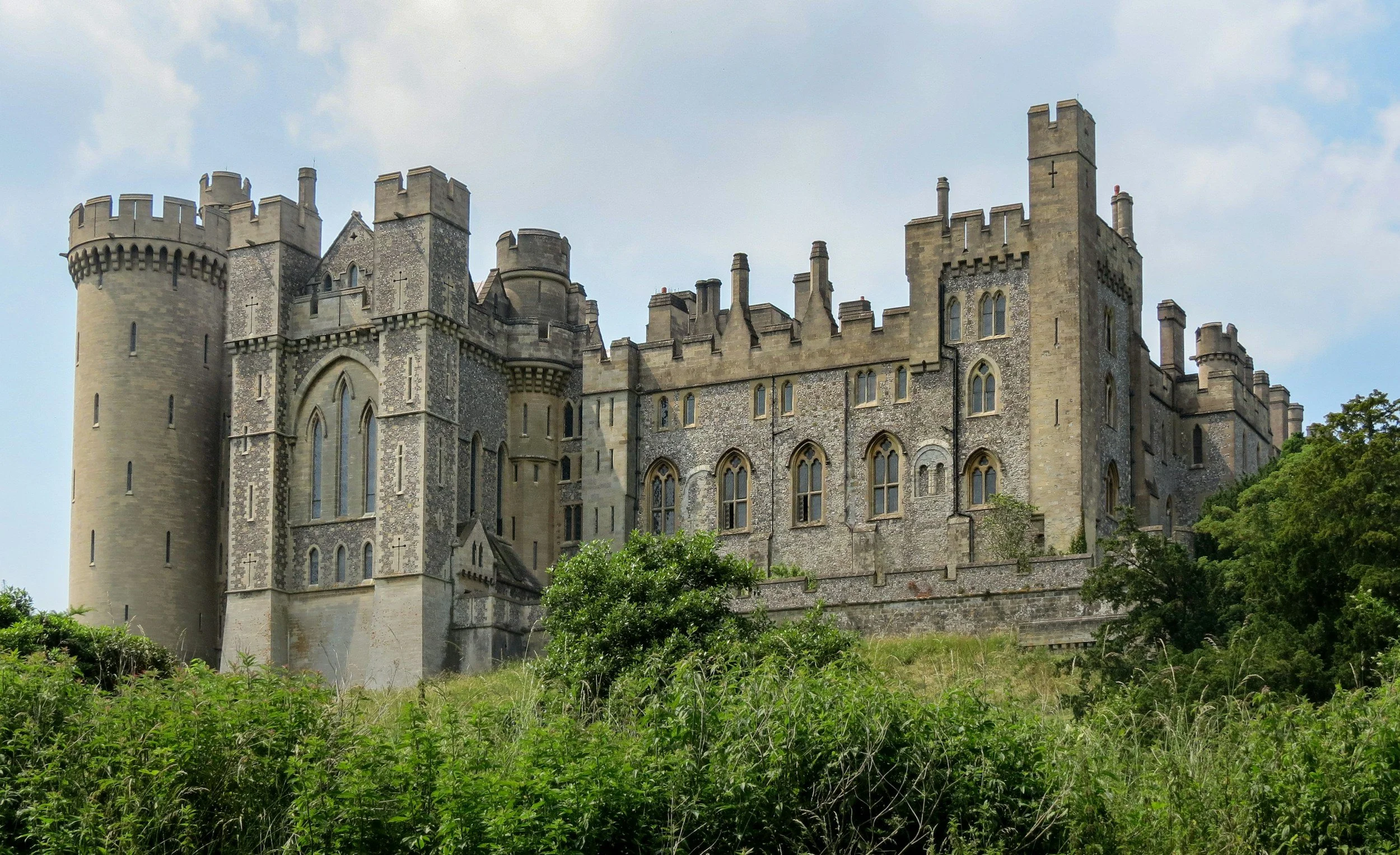
You turn off the main road, pass a few houses, and then suddenly you’re at a gate that looks like it belongs somewhere much further away from London. Once you drive through it, that’s basically it. You’re inside, and everything outside drops away without you thinking about it.
Amberley Castle is in the village of Amberley, right by the South Downs. It’s about 20 minutes from Arundel and just over an hour from London if you come by train. The station is close, but not right next to it. If you walk, it takes around 20 minutes along Station Road, past Amberley Museum, then into the village where the road narrows and you stop seeing much traffic at all. Most people take a taxi, especially if they’re arriving later in the day.
The layout is what makes this place work. It’s fully enclosed by stone walls, so once you’re inside, you don’t get any of the usual background noise you’d expect in southern England. No passing cars, no people walking past, nothing carrying in from outside. Even on a weekend, it stays contained. You notice it more in the evening, but it’s there during the day as well.
Rooms aren’t standard, and it’s worth taking a minute to look at the differences before booking. Some are tucked deeper into the building, with smaller windows and thicker walls, which makes them darker and quieter. Others are slightly more open, depending on where they sit within the castle. If you’re staying more than one night, it’s worth asking for something on the garden side or further away from the entrance, just to keep things as still as possible.
Once you’ve checked in, there isn’t much you need to figure out. You can walk around the grounds in a few minutes. There’s a central lawn, a couple of paths along the walls, and a few corners where you can sit without feeling like you’re in a shared space. It’s not the kind of place where you spend hours exploring the grounds. It’s more that you step outside, walk for a bit, and then stop.
Dinner is usually where the day settles. Most people stay in, partly because it’s easier and partly because there isn’t much reason to leave again. There is a pub in the village, The Black Horse, and it’s about a 10-minute walk if you want something more casual, but it’s not somewhere you rely on without checking opening times. It’s simpler to decide early and stick with one plan for the evening.
During the day, you’ve got a few options that don’t require much planning. Amberley village is just outside the gates. You can walk through it in 15–20 minutes, pass a few cottages, maybe stop at the tea room if it’s open, and then head back. It’s quiet, but it’s not somewhere you spend a full day.
If you want something slightly more active, the South Downs are right behind the village. There are paths leading up within a few minutes of the castle. You don’t need a map for the shorter walks. Just head uphill and you’ll get views over the Arun Valley within half an hour. It’s an easy way to spend some time without getting into a full hike.
Arundel is the closest proper town, about 15 minutes away. It works well if you want a break in the middle of the day. Park near the High Street, walk up past the shops, maybe continue toward Arundel Castle, and then leave again before it gets busy. It’s straightforward and doesn’t take much time, which fits with the rest of the stay.
Dalhousie Castle – a historic castle hotel near Edinburgh, Scotland
If you’ve ever wanted to sleep in a real medieval fortress without giving up comfort, Dalhousie Castle makes it possible. Just eight miles south of Edinburgh, this 13th-century stronghold is the oldest inhabited castle in Scotland - and unlike many historic sites, you can actually stay the night.
From the moment you step through its arched entrance, you feel the weight of history. Winding staircases lead you to rooms tucked inside towers, with thick stone walls and windows overlooking 11 acres of parkland. Yet despite its medieval origins, the castle feels welcoming rather than austere. There are roaring fireplaces in the lounges, tartan touches in the rooms, and staff who strike the right balance between attentive and informal.
Part of Dalhousie’s charm is its location. Being so close to Edinburgh means you can spend the day exploring the Royal Mile or the dramatic city-top castle, then retreat to countryside quiet in the evening. If you’d rather skip the city altogether, the Pentland Hills are just a short drive away. Full of sweeping views, heather-covered paths, and that wild Scottish air that makes every walk feel restorative.
Staying here isn’t just about the rooms; it’s about the little experiences woven into the place. Dinner in the vaulted dungeon restaurant is one of them: candlelit, atmospheric, and grounded in local produce. The spa tucked into the castle’s old stone vaults is another - a unique space where you can enjoy organic treatments surrounded by walls that have stood for centuries. And the best part? It’s all surprisingly affordable, especially if you plan your trip midweek or outside the peak summer season.
Dalhousie Castle is one of those rare finds: a true Scottish fortress that lets you live out your historic daydreams without feeling stuffy or unattainable.
Langley Castle, Northumberland: a castle stay close to Hadrian’s Wall
Langley Castle sits just outside Haydon Bridge, about 40 minutes west of Newcastle. The drive out is straightforward along the A69, then you turn off toward Bardon Mill and the roads narrow slightly. After that, it’s mostly fields, trees, and the occasional farmhouse. By the time you reach the entrance, there’s very little around apart from open land and woodland.
If you’re coming by train, Haydon Bridge is the closest station on the Newcastle–Carlisle line. It’s only about 10 minutes by car, but there’s no easy walking route with luggage, so it’s best to arrange a taxi ahead of time. Bardon Mill is another nearby stop, also around 10 minutes away.
The castle stands on its own, set back from the road. You’re not in a village and you’re not near any main route, so once you arrive, nothing really passes by. That’s the main difference here. No traffic noise, no people walking past, no background activity from nearby places.
Rooms are split between the main tower and the courtyard buildings. The tower rooms feel more traditional, with thicker walls, smaller windows, and layouts that vary quite a bit. You might have uneven floors or narrower stair access, depending on the room. The courtyard rooms are easier to get in and out of, and feel a bit more straightforward. It’s worth deciding which one suits you before booking rather than leaving it random.
Inside, things are simple. You’ve got what you need, but nothing feels overworked. Lighting stays low in the evening, and because there’s no nearby development, it gets properly dark at night. If you open the curtains, you’ll notice there’s no light coming in from outside.
Dinner is usually something people stay in for. Once you’re there, it’s easier to keep the evening simple rather than heading out again. If you do want to go out, Haydon Bridge has a couple of pubs along the main street, including ones near Ratcliffe Road and the bridge crossing the River South Tyne, but opening hours vary, so it’s better to check earlier in the day.
During the day, you’ve got a few easy places to go without needing to plan much. Hadrian’s Wall is about 10–15 minutes away. Housesteads is the most straightforward access point, with parking close to the wall and a short walk up. From there, you can walk along the ridge for as long as you want and turn back when it suits you. Vindolanda is also nearby, slightly further but still within 15–20 minutes, with ruins and a small museum if you want something more structured.
If you want something even simpler, there are walks starting close to the castle. Woodland paths run through the surrounding land, and you can head out for 30–60 minutes without needing a map. It’s not marked like a hiking trail, but the paths are clear enough to follow.
Hexham is about 20 minutes away and is the easiest place for a short town stop. Around the Market Place and Abbey area, you’ll find bakeries, cafés, and small shops. It’s a good place to go mid-morning or early afternoon, pick up something to eat, and then head back before it gets busy.
If you’re driving in from Newcastle, it can also be worth stopping in Corbridge on the way. It’s just off the A69 and has a compact high street with a few food shops and cafés, so you can pick up something before heading further west.
Evenings are very still here. Once dinner is done, people head back to their rooms and that’s it. No traffic, no outside noise, nothing carrying in. You can leave the window open and not hear anything at all, which is rare in most places.
Château Rhianfa – affordable castle stay on Anglesey, Wales
Perched on the banks of the Menai Strait with views stretching across to Snowdonia, Château Rhianfa feels like something you’d stumble upon in rural France rather than on the coast of North Wales. Built in the 19th century as a romantic Victorian château, it was inspired by French Renaissance architecture, complete with turrets, balconies, and fairytale-like gardens. From the outside it looks grand, but inside the atmosphere is far more relaxed and welcoming than its impressive façade suggests.
The interiors are bright and elegant, with high ceilings, period details, and large windows framing water or mountain views. Some rooms overlook the strait itself, where you can watch the tide shift and boats drift by, while others give you a front-row seat to the dramatic peaks of Snowdonia. Despite its luxurious setting, rates here are often much more affordable than you’d expect for a château-style castle hotel, especially in spring or autumn. That makes it an ideal choice if you’ve always dreamed of a castle stay but want something approachable in both style and price.
Meals at Château Rhianfa lean on local produce (think Welsh lamb, coastal seafood, and vegetables grown in nearby farms) and are often served with a view across the gardens. After dinner, you can take a stroll through the grounds, glass in hand, and let the pace of life slow right down. It’s the kind of place that invites you to unwind as much as it inspires.
Things to do near Château Rhianfa
Part of the joy of staying here is how much there is to explore nearby. Just across the strait, Snowdonia National Park offers countless trails, from gentle valley walks to challenging mountain hikes, all with sweeping views and fresh Welsh air. If you’d rather keep things easy, the little town of Beaumaris is just a short drive away. It’s home to a medieval castle, a cluster of independent cafés, and a seafront perfect for a slow afternoon stroll.
Anglesey itself is full of quiet corners worth discovering. Drive west and you’ll find sandy beaches at Rhosneigr, or head north to South Stack Lighthouse, where seabirds circle the cliffs and the sea stretches endlessly into the horizon. Returning to Château Rhianfa at the end of the day (with its gardens lit softly in the evening and the mountains fading into dusk) feels like the perfect contrast between adventure and rest.
Château Rhianfa is proof that not all castle hotels in Wales come with lofty prices…!
Thornbury castle – a tudor castle hotel in Gloucestershire, England

If you’ve ever wanted to step into Tudor history without sacrificing modern comfort, Thornbury Castle is one of the best places in England to do it. Located in the Gloucestershire countryside on the edge of the Cotswolds, this 16th-century castle has a fascinating past: Henry VIII and Anne Boleyn once stayed here, and much of the original Tudor architecture still remains. Walking through its arched doorways and manicured gardens, you can almost imagine the lives that played out here centuries ago.
Inside, the castle balances grandeur with coziness. Rooms feature four-poster beds, heavy drapes, and intricate stone fireplaces, but they’re furnished with enough modern touches that the space feels warm and inviting rather than austere. Many suites look out over the landscaped gardens, where roses climb the walls and peacocks occasionally wander past. Despite its regal setting and rich history, rates at Thornbury Castle are more approachable than you’d expect, particularly in the shoulder seasons of spring and autumn. It’s a chance to experience true Tudor luxury without breaking the bank.
Meals are another highlight. The castle’s restaurant serves seasonal British fare using produce from its own kitchen garden and local farms. Dining here is not about formal pomp but rather the pleasure of enjoying simple, well-prepared dishes in a setting that feels like stepping back in time. After dinner, wandering the gardens at twilight or settling into a lounge with a glass of wine by the fire is exactly the kind of slow moment that makes this place special.
Things to do near Thornbury castle
Staying here also gives you easy access to some of England’s most beautiful countryside. The Cotswolds are just a short drive away: a patchwork of honey-colored stone villages, quiet walking paths, and cozy pubs perfect for a leisurely afternoon. Closer still, the small market town of Wotton-under-Edge offers independent shops and cafés where you can spend a relaxed few hours.
If you’re up for a day trip, Bristol is about 30 minutes away and makes a nice contrast with its vibrant harbor, street art, and lively food scene. But many guests find little reason to leave… between the castle’s gardens, historic rooms, and the easy pace of country life, Thornbury is the kind of place where slowing down feels completely natural.
And if you’re staying near London and want something closer without losing that historic feel, windsor stays gives a useful comparison before you decide where to base yourself.
Scone palace – historic castle stay in Perthshire, Scotland
Few places in Scotland carry as much history as Scone Palace. For centuries, this was the crowning place of Scottish kings, including Macbeth, Robert the Bruce, and Charles II. Today, parts of the palace remain open to the public, but a select few rooms are also available for overnight guests. This gives you the rare chance to sleep inside one of Scotland’s most important historic sites.
The palace interiors are richly furnished with antique furniture, portraits, and tapestries, yet overnight stays feel intimate rather than overwhelming. With only a handful of guests at any one time, there’s a sense of privacy and calm that contrasts beautifully with the grandeur of the surroundings. Looking out from your window, you’ll see sweeping parkland dotted with ancient oaks, wildflowers in spring, and the gentle hills of Perthshire in the distance.
What makes Scone Palace particularly appealing is its balance of history and affordability. Staying in such a legendary setting might sound like it requires a royal budget, but midweek rates and off-season availability often make it much more accessible than travelers expect. Add in hearty Scottish breakfasts served in a room filled with centuries-old wood paneling, and it becomes one of the most memorable (yet approachable) castle stays in the UK.
Things to do near Scone palace
The gardens are especially beautiful in spring and early summer, with rhododendrons, peonies, and long walks past the Murray Star Maze. Even a quiet morning stroll here feels like stepping into a different era. For a more active day, head into Perth, just a few minutes away, where you’ll find riverside walks along the Tay, small galleries, and independent cafés perfect for a slow afternoon.
A little further afield, the rolling hills of Highland Perthshire are ideal for scenic drives or easy hikes. Towns like Dunkeld and Pitlochry make great half-day trips, offering colorful houses, historic bridges, and welcoming pubs. Returning to the calm of Scone Palace in the evening, with its history echoing through the halls, is the perfect way to end the day.
For travelers drawn to Scotland’s past but also craving quiet comfort, Scone Palace is one of the most unique (and surprisingly affordable) castle stays in the country.
If part of the appeal is pairing your stay with a city that still feels atmospheric, edinburgh guide helps you picture how that combination works.
What to know before booking a castle stay in the UK
Castle hotels don’t run like city hotels, and it helps to understand the small details before you book.
Check-in is usually later than you expect, often around 15:00 or 16:00, and there’s rarely anything happening on-site before that. If you arrive early, you’ll either wait or go out for a bit. It’s often easier to plan a stop on the way, somewhere like a small town nearby where you can have lunch or pick something up for later.
Room location matters more than photos suggest. In older buildings, rooms near the entrance, restaurant, or main staircase can pick up more movement early in the evening. Rooms further inside the building or facing gardens tend to stay quieter. This isn’t always clear when booking, so it’s worth asking for something “away from main areas” rather than choosing based on size or view alone.
Dinner usually runs at set times, often starting between 18:30 and 20:00, and most guests stay in. Nearby alternatives can be limited, especially in places like Northumberland or rural Sussex. If there is a pub or restaurant close by, it may only serve food during specific hours and not every day of the week. It’s better to decide early rather than trying to figure it out in the evening.
Lunch is where people get caught out. Many castle hotels don’t serve it, and smaller villages nearby often have very limited options outside peak hours. Picking something up in a town on the way back, like a bakery or small supermarket, makes the rest of the afternoon easier.
Parking is usually straightforward, but distances vary. Some places have parking right next to the building, others require a short walk across gravel or grass. It’s not a problem, just something to be aware of if you’re arriving late or with luggage.
Heating and lighting can also feel different. Thick walls keep rooms cooler, even in warmer months, and lighting tends to be softer rather than bright overhead lights. At night, it gets properly dark because there’s no street lighting nearby.
If you’re curious how the UK compares to a smaller, more concentrated region, luxembourg castles helps you quickly understand what that kind of density actually feels like.
And if you’re considering turning your stay into something more outdoors-focused, hiking between castles gives a better idea of how that works in practice.
For a completely different angle, especially if you’re drawn to places with more history than restoration, abandoned castles explores the history of Spanish old castles.
FAQs about affordable castle hotels in the UK
Where can you stay in affordable castle hotels in the UK?
More affordable castle hotels in the UK are usually found outside major cities, especially in Northumberland, rural Sussex, and countryside regions with fewer day visitors. Staying outside central tourist areas keeps prices lower while still offering the full castle setting.
What are the best affordable castle hotels in the UK?
Some of the best-value options are castles located 10–30 minutes from towns, such as Langley Castle in Northumberland or Amberley Castle in West Sussex. These locations reduce cost while still giving access to surrounding areas.
How much does it cost to stay in a castle hotel in the UK?
Prices typically range from £120 to £300 per night depending on the property, room type, and season. Midweek rates are often significantly lower than weekends, especially outside peak summer months.
What is the cheapest way to book a castle hotel in the UK?
Book midweek, avoid peak travel months, and choose rooms outside the main historic tower. Courtyard or annex rooms are usually more affordable while still part of the same property.
Do castle hotels in the UK include dinner or meals?
Most castle hotels don’t include dinner in the room rate, but they usually have on-site restaurants with fixed evening service. Because nearby options are limited, many guests plan to eat on-site at least once.
Do you need a car to stay in castle hotels in the UK?
In most cases, yes. Many castles are located outside towns and are not well connected by public transport. Some, like those near Amberley, can be reached by train plus a short taxi, but a car makes the stay easier.
Are castle hotels in the UK quiet at night?
Yes, especially those located in rural areas. Once dinner is over, there is usually no outside traffic or noise, and the surroundings stay very still compared to city hotels.
What are castle hotel rooms like in the UK?
Rooms vary depending on where they are in the building. Tower rooms often have thicker walls and smaller windows, while courtyard or annex rooms are easier to access and more consistent in layout.
What time is check-in at UK castle hotels?
Check-in is usually between 15:00 and 16:00. Arriving earlier often means leaving your bags and coming back later, as most properties don’t operate like full-service daytime hotels.
Is it worth staying in a castle hotel in the UK for one night?
Yes, but two nights work better. It gives you time to settle in, use the grounds, and visit nearby places without rushing.