
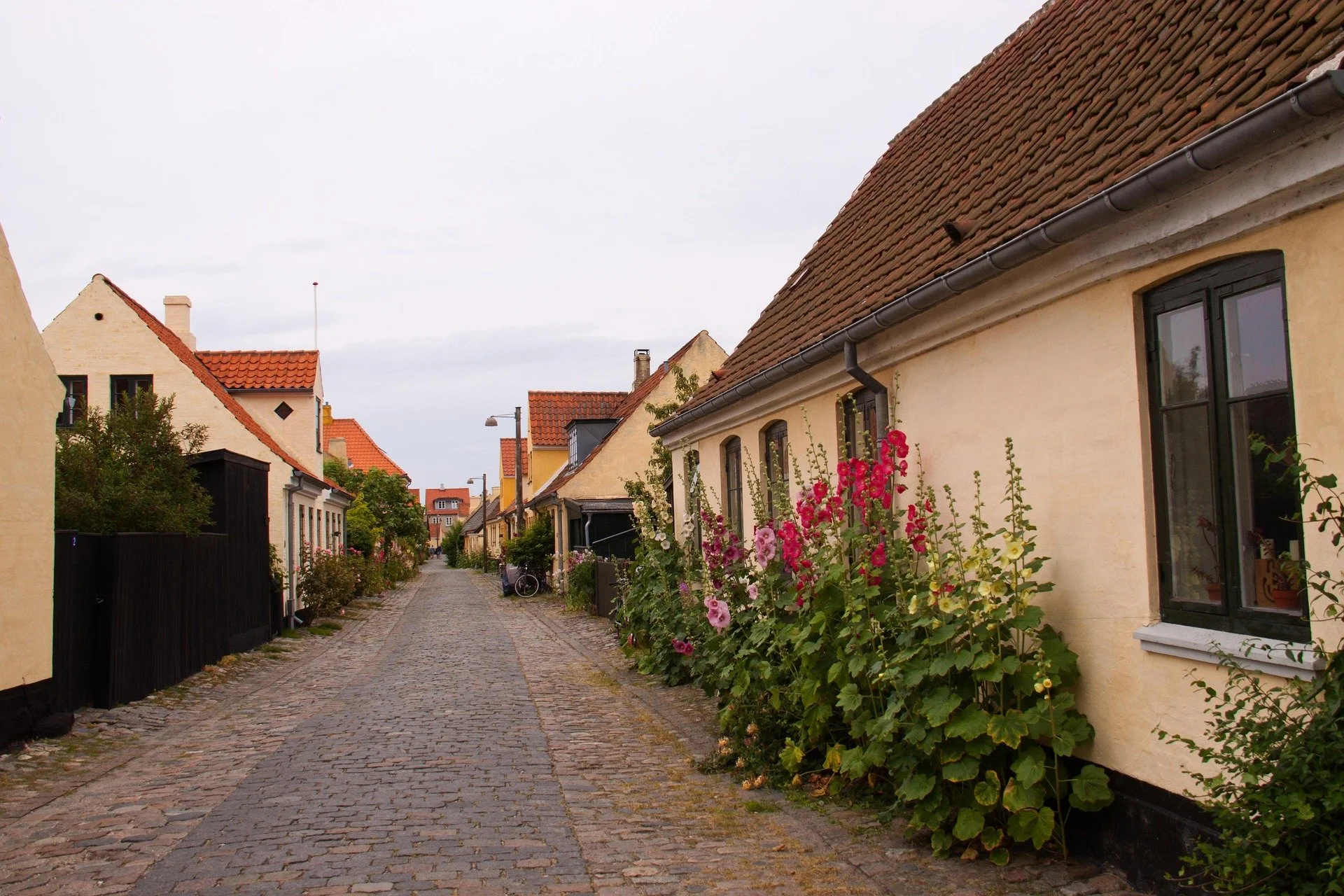
I think Dragør is exactly the kind of place I'd save for an afternoon when I don't particularly feel like sightseeing in Copenhagen anymore. Somewhere to have a long lunch, wander through a few pretty streets and get a bit of sea air before heading back into the city. And with a direct bus taking around 40–45 minutes from Copenhagen Central Station, it's a surprisingly easy little outing.
Dragør has a lovely old-fashioned character, but there's more to it than the yellow houses you tend to see in photographs. This was once a busy seafaring town, and you can still see that connection in the old harbour, the pilot tower and the wonderfully mismatched collection of fishing sheds along the waterfront. Even the café I'd choose for lunch, Café Espersen, occupies what used to be the ticket office for the ferry to Sweden. I'd happily make the journey for a plate of fried plaice on rye bread and a look around the harbour.
And I'd definitely leave time for the coast. Just south of the harbour, the houses start to disappear and the path continues towards Sydstranden, with open water, salt meadows and, on a clear day, views of the Øresund Bridge. You don't have to walk particularly far to enjoy this part of Dragør, which is rather nice when you've already spent the morning exploring Copenhagen.
I wouldn't plan an entire day around Dragør, though. Two and a half to three and a half hours in town is plenty for lunch, the old streets and a decent walk, and I'd be less enthusiastic about going on a cold, rainy day when sitting outside or walking by the sea isn't especially tempting. For a longer outing with more to see indoors, I'd look at Helsingør or one of the other small towns near Copenhagen instead. But give me a reasonably pleasant afternoon and the prospect of a good fish lunch by the harbour, and Dragør would be very high on my list.
Walk from Kongevejen to the old harbour
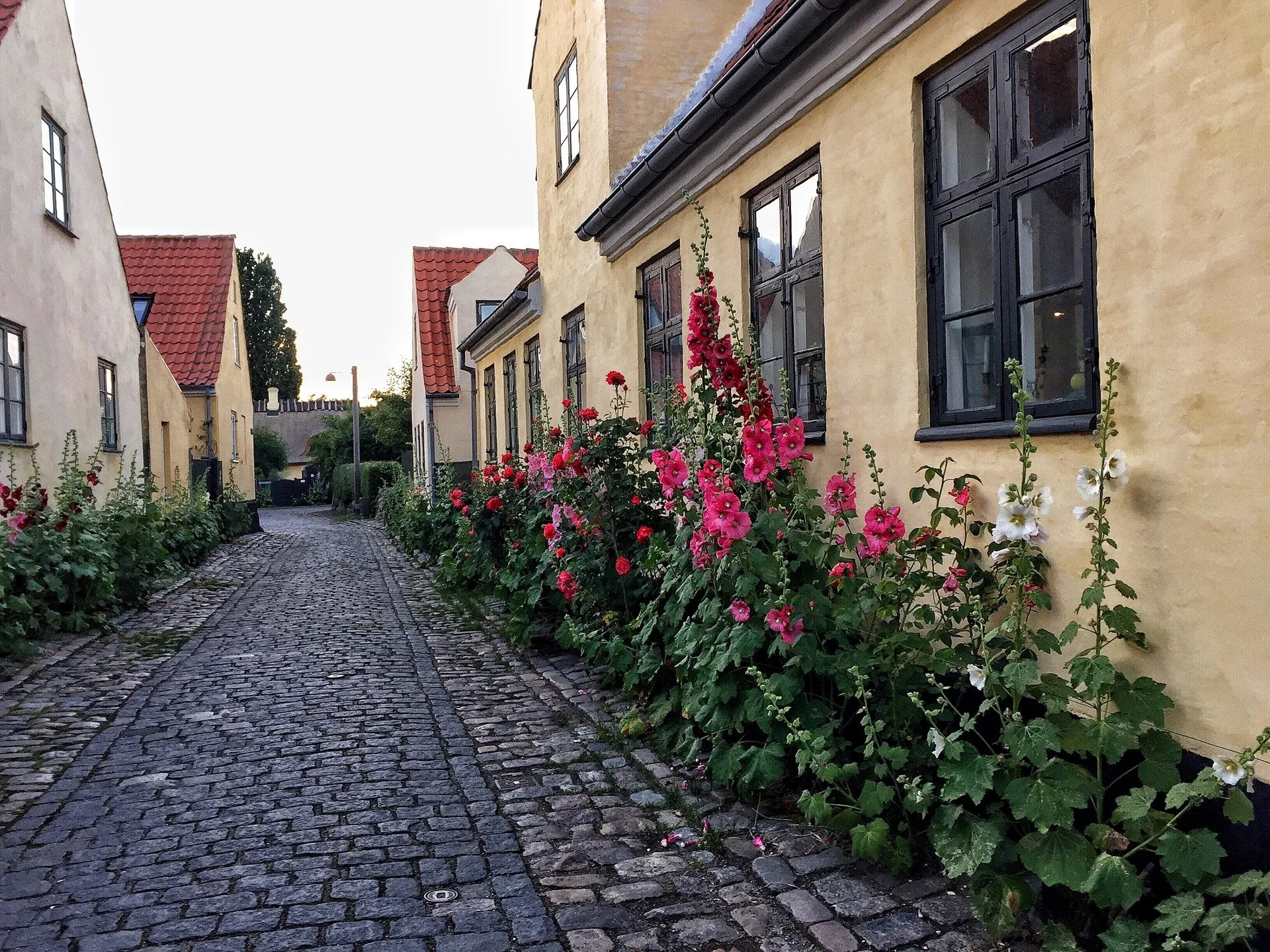
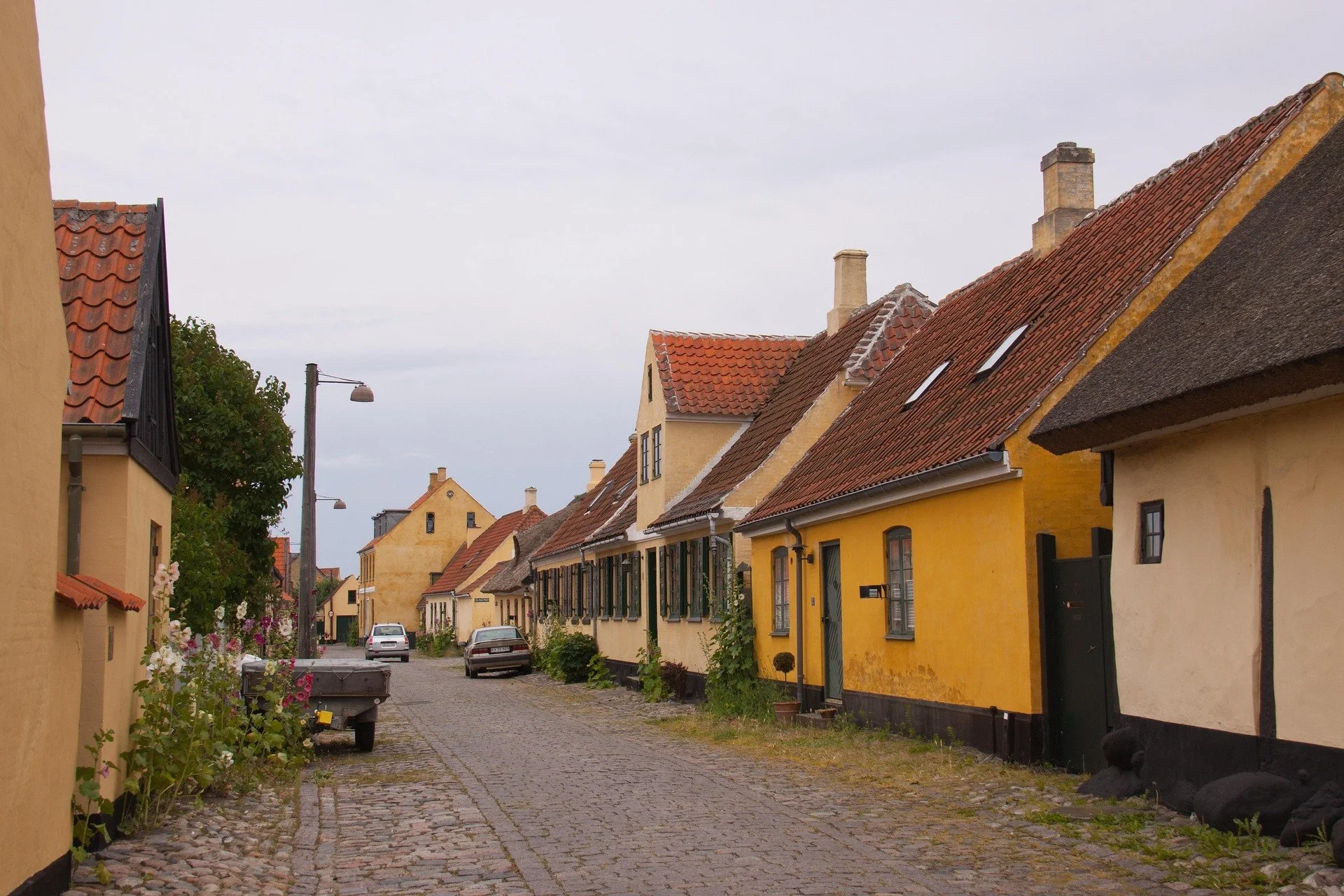
Once you get off the bus at Dragør Stationsplads, you're only a few minutes from the old town. Start along Kongevejen, the main street leading towards the harbour, but don't be too quick to head straight for the water. Some of Dragør's prettiest corners are tucked into the little residential lanes on either side, where the houses sit close together with painted doors, small windows and tiled roofs.
One place I'd make a point of finding is Badstuevælen, a rather unusual little square surrounded by historic houses. Unlike the neat, orderly squares you might expect in an old Danish town, this one has an irregular shape, and there's a surprisingly practical reason for it. The space was once a clay pit, where clay was dug out for building and other local uses. Over time, the former excavation became part of the town itself. It's a lovely example of how Dragør developed around everyday life rather than some grand architectural plan.
The old town is still very much a residential neighbourhood, which is part of its appeal. These aren't museum streets, and behind those attractive façades are people's actual homes. I'd wander a little rather than try to follow every lane on a map, although it's worth remembering that the courtyards and gardens are private. The pleasure here is in the small details: an old doorway, a slightly crooked roofline or the way the narrow passages suddenly open onto a little square.
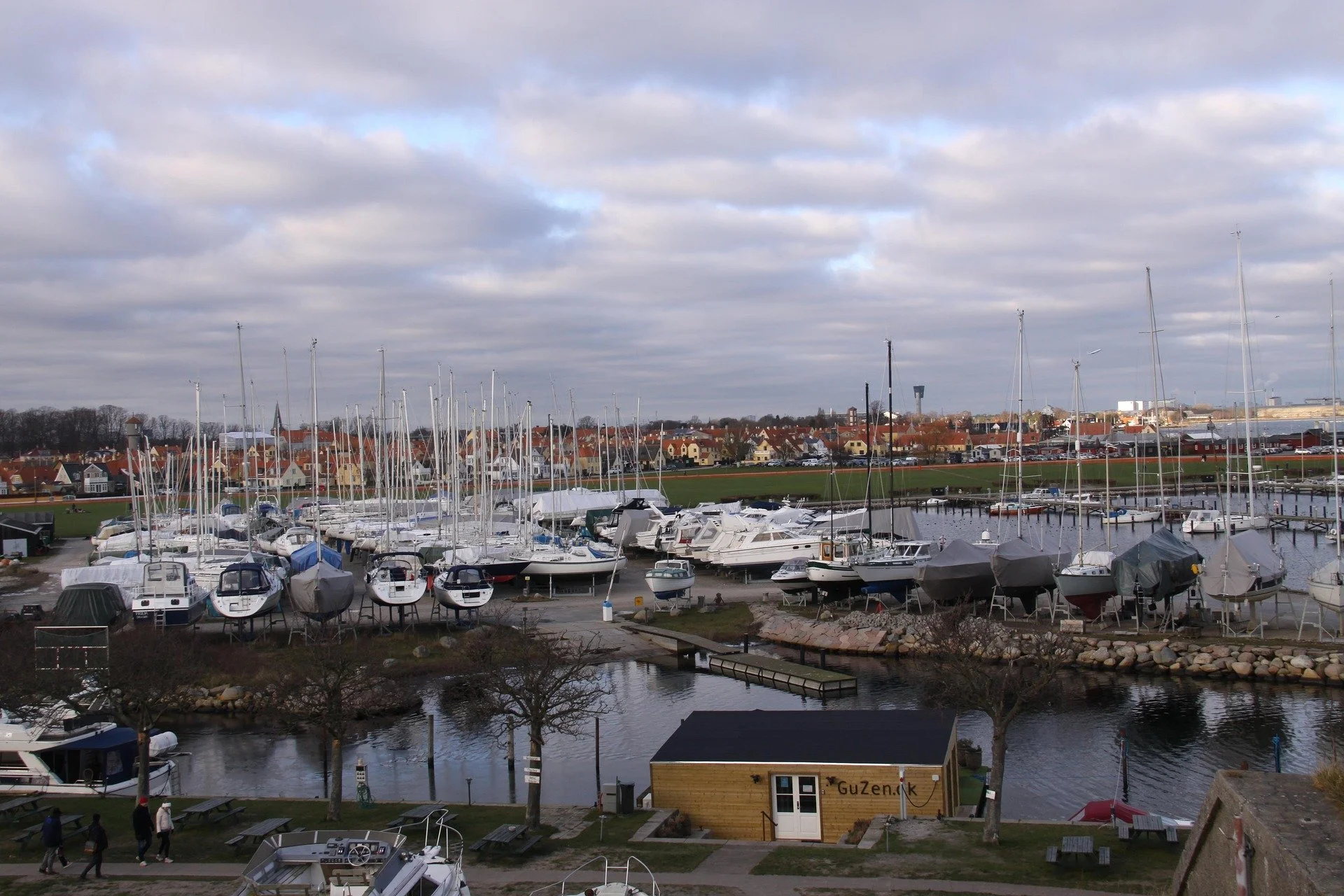
From there, make your way down towards Strandlinien and Gamle Havn, the old harbour. Look for Lodstårnet, the historic pilot tower, which makes an easy landmark as you approach the waterfront. This is where Dragør's maritime history becomes much more obvious. For centuries, the town's fortunes were closely tied to shipping through the Øresund, and the pilots who helped vessels navigate these waters were an important part of local life.
I particularly like the story behind Skurbyen, the little collection of harbour sheds around Kapselstræde. They're a wonderful contrast to the tidy houses a few streets back, and they tell you something about the practical side of living beside the sea. Strandlinien originally followed the shoreline, so the working harbour was once even more closely connected to the houses than it appears today. It's worth taking a look around the public paths here rather than treating the harbour as somewhere to pass through on the way to lunch.
There's also a more serious piece of history connected to the harbour. The fishing cutter Elisabeth K571, usually moored near the pilot tower, was used to carry Jewish refugees across the Øresund to safety in Sweden in October 1943, during the German occupation of Denmark. It's a remarkable story, particularly when you consider how short the crossing looks on a map. The boat isn't always in its usual berth, but knowing what happened here adds another dimension to this otherwise rather peaceful little harbour.
By this point, you'll have walked through most of the historic centre without needing a complicated route. And with the harbour cafés and fishing boats nearby, it's a very natural place to stop for lunch before heading further along the coast.
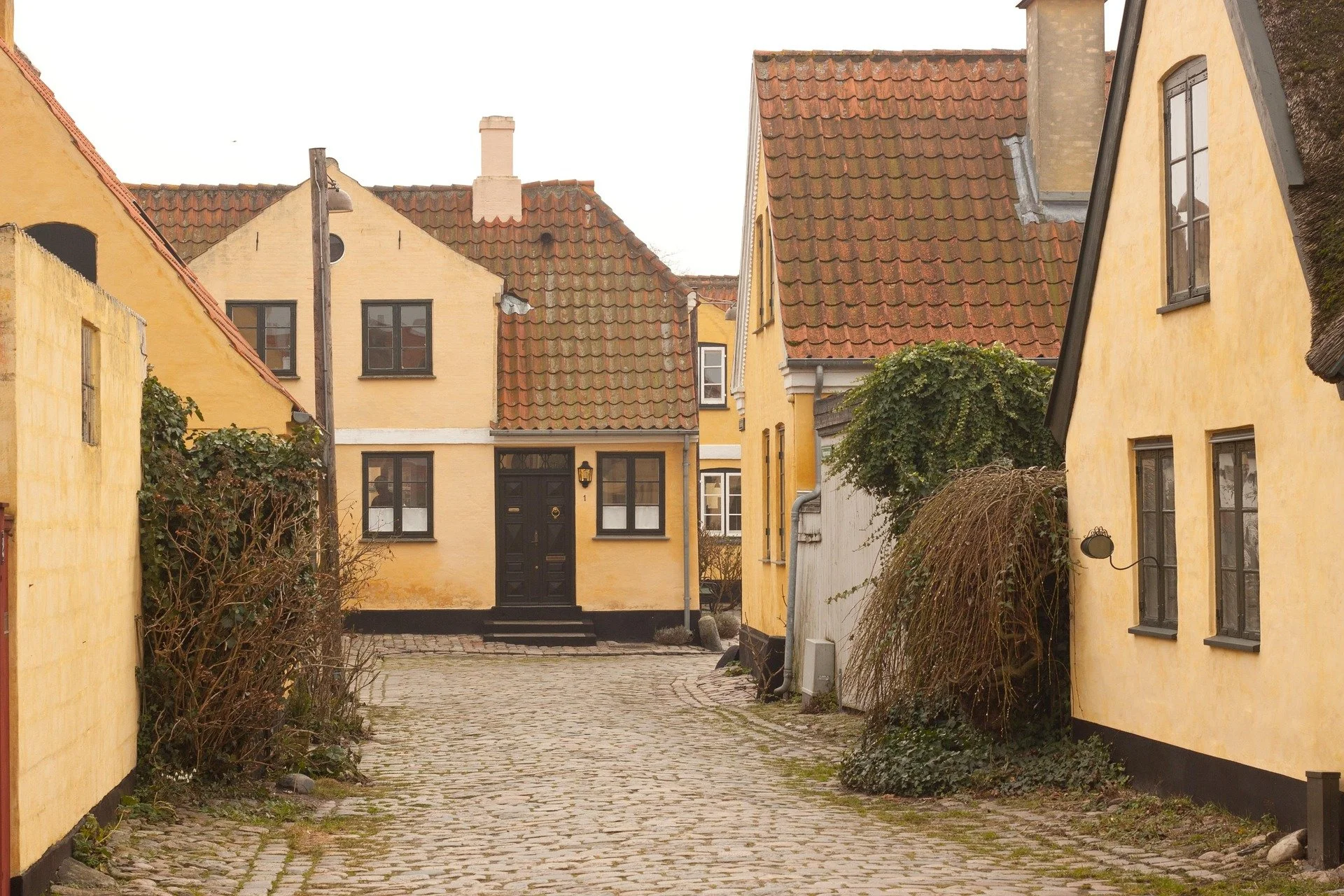
If you enjoy exploring little Danish towns with historic houses and plenty of local character, there are some other lovely towns in Denmark worth getting to know, although a few require considerably more time than an afternoon from Copenhagen.
Decide where to have lunch
For lunch, I'd head to Café Espersen on Færgevej 3. It's the sort of place where I'd rather sit down and order something properly Danish than settle for a sandwich on the go. The menu is reassuringly traditional, with plenty of smørrebrød, herring and seafood, alongside a few “heartier” dishes.
The fried plaice is still my pick, but there are actually two versions worth knowing about. The simpler one comes with remoulade and lemon on rye bread, while the more elaborate version is topped with hand-peeled prawns, asparagus, caviar and mayonnaise. Both are served as smørrebrød, so you're getting a proper Danish open sandwich rather than a whole fish dinner. And if fish isn't your thing, there's also roast beef with crispy onions and remoulade, or a classic potato smørrebrød with caramelised red onion and tarragon mayonnaise.
There are plenty of Danish classics on the menu, including herring with egg, capers and onions. And if you have room for dessert, the traditional Danish apple cake with macaroons and redcurrant jelly sounds particularly tempting. I'd be quite happy making a proper lunch of it rather than rushing back out to explore.
Café Espersen serves lunch from 11:30 to 15:30, so I'd try to get there around midday and enjoy a leisurely meal before heading out along the coast. You can browse the menu and current prices here. I'd also book a table in advance, particularly at weekends, rather than leave lunch to chance.
For something more casual, Dragør Røgeri at Gamle Havn 6–8 has a completely different vibe. This is a working fish shop and smokehouse, selling fresh fish, smoked salmon, herring and its popular fiskefrikadeller, Danish fishcakes. The fish is traditionally smoked over alder wood, and the smokehouse says it sells between 1,200 and 1,500 fishcakes a day during the summer months, which gives you some idea of how much of a local institution the place has become.
If the weather is nice, you can pick up a fishcake to take away or sit down on the terrace for something more substantial when it's open. Just check the current opening hours, as these change throughout the year.
I'd go for Café Espersen if I fancied a long lunch and a glass of wine, but the smokehouse is a lovely alternative if you'd rather grab something quick and spend more of the afternoon walking along the coast.
Walk as far along the coast as you feel like
Once you've finished lunch, I'd leave the harbour behind and head south towards Sydstranden. You don't need hiking boots or any particular walking plan for this part of Dragør. Just follow the public coastal path, with the Øresund on one side and the town gradually disappearing behind you. It's a lovely way to spend another half hour or so before heading back to Copenhagen, although I'd happily keep going if the weather was on my side.
The first landmark you'll come across is Dragør Fort, sitting on its own little artificial island just off the shore. It was built as part of Copenhagen's coastal defences in the early 1900s, which seems rather grand for such a small town. The fort is privately owned today, with limited access, so there's no need to try to get inside. You'll get a perfectly good look at it from the public path.
Keep walking and you'll reach Dragør Søbad, the town's traditional sea bathing facility. I rather like that Dragør has managed to keep this part of Danish seaside culture, where going for a swim isn't necessarily something reserved for a hot summer holiday. The bathing facility itself has seasonal access, but the surrounding shore is enjoyable without going in. If you've already spent a good part of the day exploring the old town, this is a nice place to turn around.
But there's one rather peculiar little place further along the coast that I'd be tempted to continue for: Gåserepublikken, which translates to the Goose Republic. It's an actual collection of small sheds associated with the local tradition of keeping geese. Apparently, even the geese once had their own little neighbourhood in Dragør, which I think is rather wonderful. You don't often come across something quite like that on an afternoon walk.
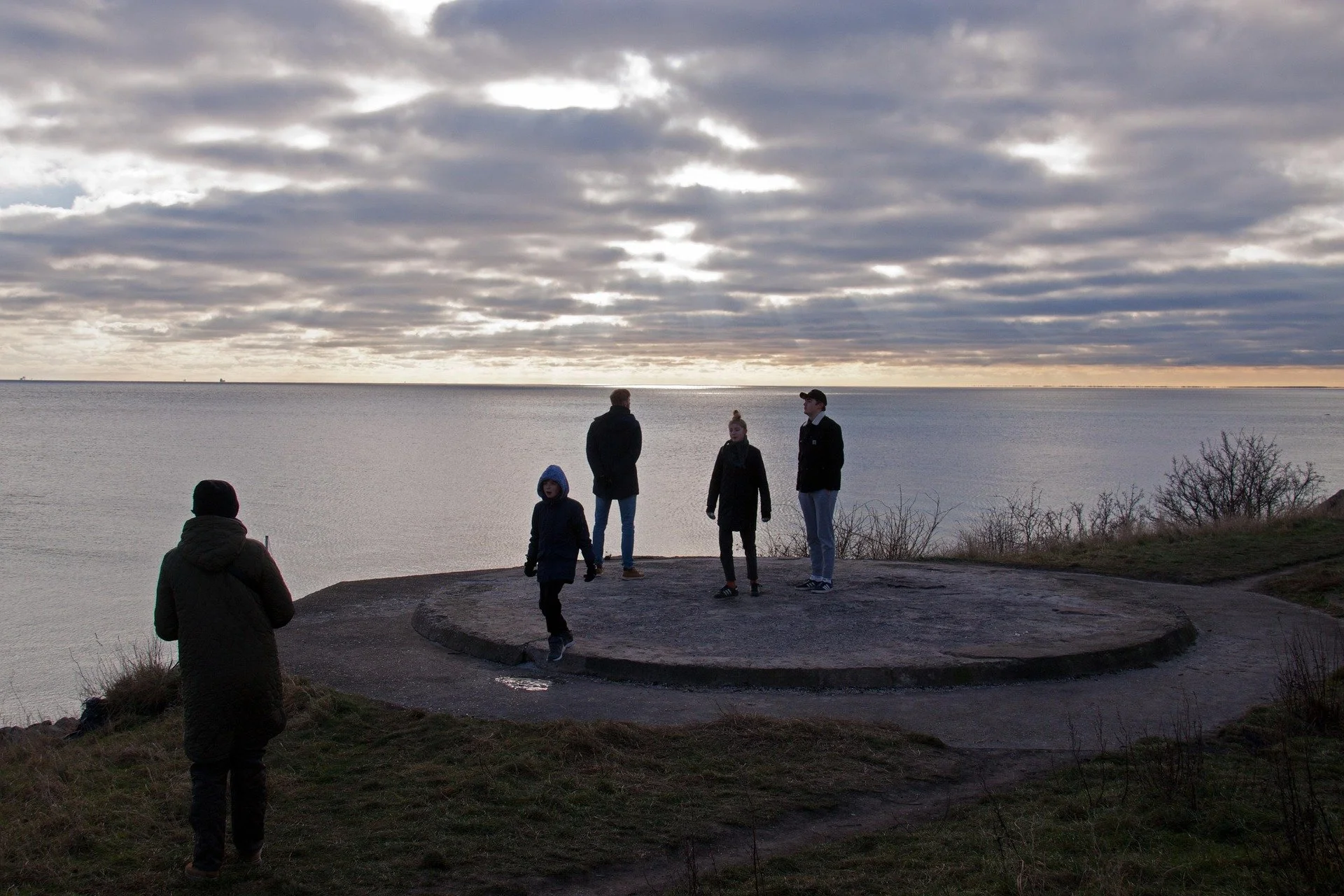
Around here, the coastline becomes more about the landscape than the town. Sydstranden is part of a protected coastal area, with salt meadows, low grasses and wide views across the water. It's not a sandy beach lined with cafés, and I'd actually be rather disappointed if it were. There's something appealing about having this open stretch of shore so close to Copenhagen, particularly when you can see the Øresund Bridge in the distance on a clear day.
I'd set aside around 30–60 minutes for the walk, depending on how far you fancy going. You could turn back near the sea bath or continue towards the Goose Republic if the weather is nice. There's no particular reason to walk further than you feel like, and with the same coastal views to enjoy on the way back, I'd simply take my time and head towards the harbour whenever I'm ready.
How to get to Dragør and how much time to allow
The easiest way to reach Dragør from central Copenhagen is by taking bus 250S, which goes directly to the town in around 40–45 minutes. No changing trains or figuring out connections, which is always rather nice when you're only heading out for an afternoon.
From Copenhagen Central Station, look for the stop called Hovedbanegården, Tivoli (Bernstorffsgade) on the Tivoli Gardens side of the station. Take the 250S towards Dragør Stationsplads and get off at the final stop. You're then only a short walk from Kongevejen and the old town.
One thing I'd check before leaving is the return bus. You can find departures on Rejseplanen, Denmark's public transport journey planner, which also shows the correct boarding stop if you're staying somewhere else in Copenhagen. There's no point travelling all the way to Central Station if the same bus stops closer to your accommodation.
Tickets are quite simple, too. Dragør is covered by the Copenhagen City Pass Small, so you can use that if you've already bought one for your stay. Otherwise, just check the appropriate single ticket in Rejseplanen.
And if you're staying near Copenhagen Airport, you can take bus 35 from Københavns Lufthavn (Ellehammersvej) to Dragør Stationsplads instead. The journey takes around 15 minutes.
For the whole outing, I'd allow roughly 4–5½ hours from central Copenhagen and back, including the bus journeys, lunch and time to explore. If you're happy with a shorter walk, you can certainly spend less time in Dragør, but I wouldn't try to squeeze the entire trip into a couple of hours. The bus ride alone would take up too much of your afternoon.
When to go to Dragør, and what changes in winter
If I were planning a trip to Dragør, I'd probably aim for May, June or September. There's something particularly appealing about visiting a little Danish harbour town when the days are long enough to enjoy being outside, but you don't necessarily need a whole summer holiday atmosphere. A sunny afternoon in early autumn would suit me just as well.
Late spring and summer are the easiest months to make a little more of your visit. You have longer daylight hours for the coast, and the seasonal attractions start opening again. Dragør Museum, down by the old harbour, is worth considering if you're curious about the town's maritime past. Its exhibitions give you a closer look at the shipping trade and everyday life in the community that grew around it.
There's also the smaller Pilot Museum, connected to the harbour pilots who once guided ships through the Øresund. This one has a particularly short summer season, so I wouldn't make a special trip without checking. You can find the current opening dates for both museums on the Museum Amager website.
If you're visiting Copenhagen in spring, Dragør could also fit nicely into a longer city break. I've put together a guide to spending a spring weekend in Copenhagen, with more ideas for enjoying the city at that time of year.
Is Dragør worth visiting in winter?
I wouldn't rule out Dragør in winter, but I'd be a little more selective about the day. The museums generally close outside their regular season, and with shorter daylight hours, there isn't quite as much flexibility for spending the afternoon outdoors.
On a dry, clear day, a wander through the old town followed by lunch would still be rather nice. On a wet and particularly windy afternoon, though, I'd probably save Dragør for another visit. The coast is a big part of its appeal, and I'd hate to travel all the way from Copenhagen only to spend most of the afternoon sheltering from the weather.
There is one exception that might tempt me out even in December: Dragør's Christmas market.
Rather than taking place in a large city square, the market is held at Badstuevælen, surrounded by the old town's historic houses. It's quite a different setting from Copenhagen's bigger Christmas markets, and I think that alone makes it worth considering if you're spending a festive weekend in the Danish capital.
For 2026, the market takes place on five weekends: 21–22 November, 28–29 November, 5–6 December, 12–13 December and 19–20 December, with opening hours from 12:00 to 17:00. Check the official Jul i Dragør programme for the latest details, and consider booking lunch ahead if you're visiting on a market day.
I'd personally choose a quieter weekday for exploring the old town and harbour, but if you're travelling in the weeks before Christmas, the market gives you another rather lovely reason to make the journey.