
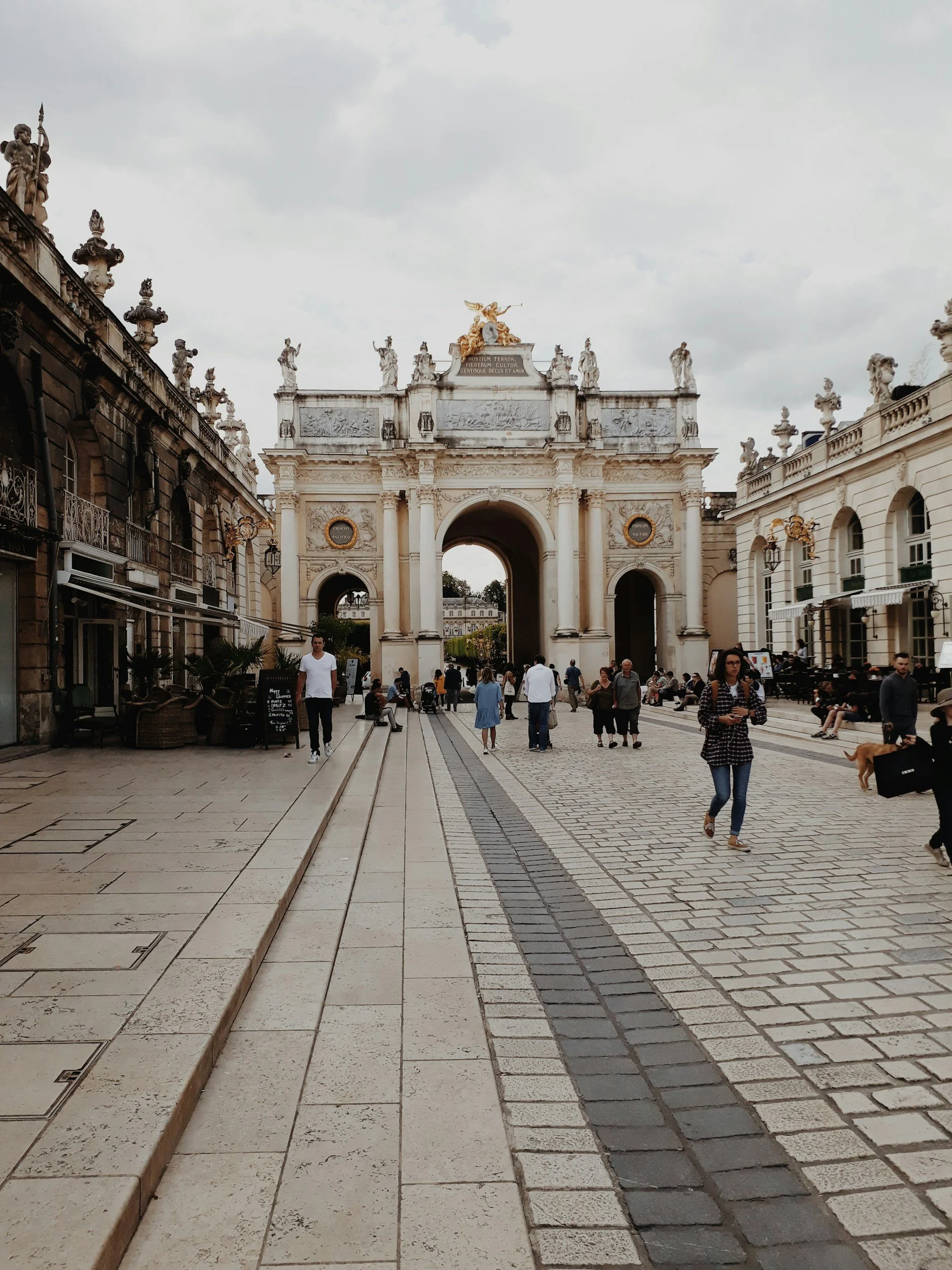
I have a feeling Nancy would be one of those places where I'd go for the weekend and come home with about a hundred photos of windows, doors and beautiful old buildings. There's just so much to look at, especially if you have a soft spot for Art Nouveau, vintage interiors and those wonderful French cafés that seem to have changed very little over the years.
Take the Excelsior, for example. It's a brasserie just around the corner from the train station, but inside you'll find gorgeous stained-glass windows, old wooden furnishings and all the little details you'd normally expect to see in a museum. Except here, you can actually sit down and order breakfast. And if that sounds like your kind of place, you'll probably love the Musée de l'École de Nancy, where the furniture, lamps and decorative pieces are just as interesting as the rooms themselves.
I'd also make time for the streets around the museum, where some of Nancy's lovely Art Nouveau houses are tucked into an otherwise ordinary residential neighbourhood. It's quite fun to think that people still live behind those elaborate façades. And then there's Villa Majorelle, a beautiful old family home that takes the whole idea of carefully designed interiors to another level.
But I wouldn't want to spend the entire weekend inside museums. Nancy also has a lovely old town, with narrow streets, cafés, a grand square and a small Sunday morning market selling food and flowers. I'd save that part for the following day, with plenty of time for coffee, a wander along Grande Rue and perhaps a long lunch before catching the train home. And somewhere along the way, I'd definitely stop for a box of Nancy's traditional almond macarons.
Two days feels about right for Nancy. You can spend one day enjoying the Art Nouveau side of the city and the next exploring the older streets, without trying to squeeze everything into one afternoon. And since it's only around an hour and a half by direct train from Paris, it's an easy weekend to plan, even without a car.
Start with breakfast at the Excelsior
Normally, I wouldn't suggest making a restaurant your very first stop in a new city, but I'd make an exception for the Brasserie Excelsior. It's only a short walk from Nancy's train station, and if you love those grand old European cafés with proper tablecloths, beautiful interiors and a little history, you'll probably want to spend some time here.
The Excelsior has been a brasserie since 1911, and one of the nicest things about it is that the original Art Nouveau design is still part of the dining room. Take a look at the large windows, where Jacques Gruber worked leaves and branches into the stained glass. The furniture was made by the Majorelle workshops, a name you'll come across again when exploring Nancy's Art Nouveau heritage.
It's quite something to think that all this attention went into a restaurant where people would simply come to eat and drink. And more than a century later, you can still take a seat and have breakfast in the same historic dining room! There's no need to book an expensive dinner just to appreciate the interior, although I'd certainly allow a little extra time here rather than rushing through your coffee.
Breakfast is served between 8 am and 11:30 am, which makes it a particularly nice first stop if you're arriving on an early train. If you're getting into Nancy later, you can also drop by for afternoon refreshments between 3 pm and 6 pm.
If you're here for breakfast, the Brasserie breakfast comes with coffee, mini pastries, bread, butter, jam and freshly squeezed orange juice. But I'd also be tempted to come back in the afternoon for the Tout-Nancy, a frozen dessert with pieces of Nancy's famous macarons, bergamot and mirabelle plum coulis. It sounds delicious! The food is good but maybe won’t blow your mind, but with an interior like this, I'd be quite happy just ordering a coffee and something sweet and enjoying the surroundings.
You'll find the Excelsior at 50 Rue Henri Poincaré, just a few minutes from Nancy-Ville station.

Give the Musée de l’École de Nancy the most time
If you love antique furniture, beautiful glasswork or those wonderfully elaborate interiors that people used to have in their homes, I think you'll really enjoy the Musée de l’École de Nancy. It's housed in the former home of art collector Eugène Corbin, a little outside the old town, and honestly, some of the furniture here is enough to make you wish you had a much bigger house (and a very generous decorating budget).
One of the things I'd most like to see is the Masson dining room. The museum has recreated the entire room, with furniture by Eugène Vallin, a painted ceiling by Victor Prouvé and lighting by Daum. And when I say the entire room, I mean that the furniture, ceiling and lighting were all designed to go together. Imagine inviting someone over for dinner in a room like that! It must have made an ordinary Tuesday evening feel rather special.
There are plenty of other pieces worth a closer look, including Émile Gallé's Aube et crépuscule bed, with its beautifully carved wood and nature-inspired design. It's quite a contrast to the furniture we're used to seeing today, and I suspect this is one of those museums where you end up spending far longer than you originally planned. I'd allow at least an hour, preferably closer to 90 minutes if you enjoy looking at the smaller details.
And don't head straight back into the centre afterwards, because there's a lovely little street nearby that's worth finding. Rue Félix-Faure has a collection of early 20th-century Art Nouveau houses designed by César Pain, and the stretch around numbers 24–30 is particularly interesting. Look at the façades and you'll spot climbing clematis worked into the decoration. I always find it fascinating when ordinary houses have this much character, especially knowing that they're still private homes. Imagine living somewhere with that kind of detail around your front door.
The museum is at 36–38 Rue du Sergent Blandan, around a 20-minute walk from Nancy-Ville station. It's normally open Wednesday to Sunday, 10 am to 6 pm, and adult admission is €7.50. You can check the latest details on the official museum website.
I'd definitely make this the main museum visit of the weekend, and then see how much time you have left for Rue Félix-Faure before heading to Villa Majorelle. Even a short wander along the street would be worthwhile, particularly if, like me, you can never resist stopping to admire an interesting old house.
For another winter trip in eastern France, Montbéliard's Christmas market is worth considering, especially for its elaborate festive illuminations and traditional market stalls.
Is Villa Majorelle still worth visiting during the works?
If you're anything like me and love having a nose around beautiful old houses, Villa Majorelle will probably be high on your list. It was built in the early 1900s for Louis Majorelle, one of Nancy's best-known furniture designers, and it's quite a house. He clearly had some wonderful ideas about what a family home should look like, and fortunately, he had the right people around him to bring them to life.
The house was designed by Henri Sauvage, and there's so much attention to detail in the rooms. I'd be particularly interested in seeing the dining room fireplace, made from glazed stoneware by Alexandre Bigot. It's an impressive piece that actually divides the room into two areas. Imagine having something like that in your dining room! Even the practical parts of the house were treated as opportunities to create something beautiful.
Now, there's a small catch if you're planning to visit soon. Since 28 October 2026, only the ground floor has been open while restoration work is taking place. You can still see the reception rooms, including that wonderful fireplace, but the upstairs rooms are currently off-limits. There's no confirmed date for when the full house will reopen, so it's worth checking the official Villa Majorelle website for updates.
The good thing is that admission has been reduced to €5, and with fewer rooms to see, you probably won't need more than 30–60 minutes. Visits are available Wednesday to Sunday, from 2 pm to 6 pm, and you'll need to reserve a time slot in advance. If you're visiting the Musée de l'École de Nancy on the same day, have a look at the combined ticket too, which normally costs €9.
I'd still include Villa Majorelle if you enjoy historic interiors, especially since you're already exploring this part of Nancy. But if the available times don't work with your plans, I wouldn't worry too much about missing it this time. The museum and the houses along Rue Félix-Faure already give you plenty of lovely Art Nouveau details to enjoy.
And if you're ready for a coffee afterwards, Cam' Café at 14 Rue de la Commanderie is a handy little stop on the way back towards the centre. It's part of the Caméo cinema, so quite a change from the grand old interiors you've been admiring all afternoon.
If you enjoy French cities with beautiful old buildings, traditional cafés and plenty of places to explore on foot, Burgundy is worth considering for another weekend. I've also put together a guide to Dijon or Beaune, including which one I'd choose as a base if you're travelling without a car.
Sunday in the old town, from Saint-Epvre to Porte de la Craffe
I'd save Sunday for Nancy's old town, especially since there's a little food and flower market near Saint-Epvre that's worth getting up for. And after a Saturday spent looking at Art Nouveau furniture and beautiful old houses, I think it'll be nice to spend the morning exploring a completely different part of the city. There are medieval streets, little cafés, some rather impressive buildings and plenty of excuses to stop along the way.
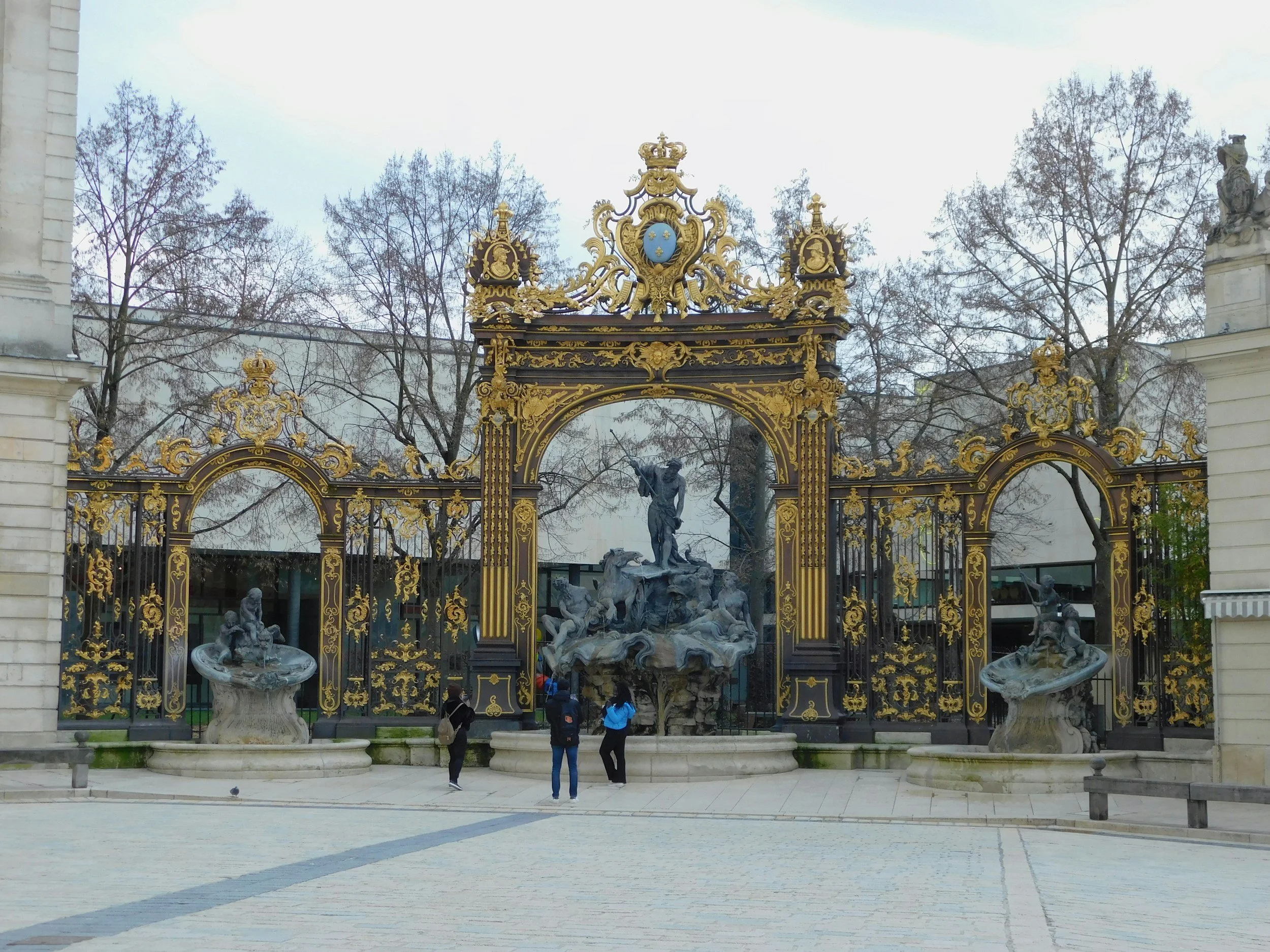
Start at Place Stanislas, even if you've already seen it the day before. It's one of those squares where you could probably come back several times and still notice something new. The gilded gates are ridiculously elaborate, and have a look at the fountains in the corners too, especially the one with Neptune. You can see why Nancy is so proud of this place.
From here, walk through Arc Héré and across Place de la Carrière towards the old town. The buildings gradually change as you get closer to Place Saint-Epvre, where you'll find narrow streets, old façades and the impressive basilica overlooking the square. Its tower is 87 metres tall, so it's rather difficult to miss.
A little Sunday market near Saint-Epvre
Just around the corner from the basilica, along Rue Pierre Gringoire, you'll find the Marché de la Ville Vieille. It's a small Sunday market selling food and flowers, and exactly the kind of place I'd want to have a look around before finding somewhere for coffee.
You won't need hours here, but that's part of the appeal. Local traders have sold everything from cheese and honey to fresh produce and râpés de pommes de terre, Lorraine's traditional potato pancakes. The stalls can change from week to week, but I'd definitely keep an eye out for those potato pancakes if someone's making them. And a little jar of local honey or some regional cheese wouldn't be a bad souvenir either, especially if you're travelling home by train.
The market is open Sundays from 8 am to 1 pm, so I'd aim to arrive sometime in the morning rather than leave it until lunchtime. Have a browse, see what looks good and then head towards Grande Rue for coffee.
Coffee, old streets and a medieval gateway
From Saint-Epvre, wander onto Grande Rue, one of the oldest streets in Nancy. It was once the main street of the ducal city, and there's still plenty here to remind you of that. You'll pass old stone buildings, interesting doorways and little streets that are worth a quick look down, even if you're not following a particular route.
For coffee, there's Café Jeanne at 72 Grande Rue, which is conveniently right along the way. I'd stop here for a while before carrying on towards the northern end of the old town. There's no need to hunt down five different cafés in one morning when you've already got a nice place to stop.
One building you really shouldn't walk straight past is the Ducal Palace. The entrance has some beautiful Renaissance stonework, and although the museum inside is currently closed for renovation, you can still admire the exterior. Just nearby is the Église des Cordeliers, where members of Lorraine's ducal family are buried. It's worth a look inside if it's open when you pass.
And do take a little detour into Rue du Maure qui Trompe. The name alone is enough to make me curious, and it's one of those short old streets I'd rather wander into than stick religiously to a map.
Carry on towards the end of Grande Rue and you'll reach Porte de la Craffe, which looks like something straight out of a medieval castle. There are two enormous round stone towers on either side of the gateway, and it's quite something to think that this was once part of Nancy's defences. The gate even served as a prison until the 19th century.
I particularly like how different this part of Nancy is from Place Stanislas. You've gone from golden gates and elegant 18th-century buildings to a proper medieval fortress in the space of a morning.
Stay for a proper Sunday lunch
After all that walking, I'd be looking forward to a good lunch, and La Petite Cuillère at 123 Grande Rue would be my pick. It's close to Porte de la Craffe, so you can finish exploring before finding your table, without having to walk halfway across Nancy again.
The restaurant serves French cooking with a few modern touches, and the menu changes with the seasons. Some of the dishes listed include roasted Camembert with honey and rosemary, Vosges-style salad with potatoes and bacon, and orzo with mushrooms and truffle. And if brioche French toast with caramel happens to be on the dessert menu when you visit, I think that would be rather difficult to resist.
They're open for Sunday lunch from 12 pm to 2 pm, and I'd book a table if you're planning your afternoon around a train departure.
If you'd rather have a long brunch instead, Madeleine at 24 Rue Héré, near Place Stanislas, is another idea. They serve a set Sunday brunch from 9 am to 2 pm, and reservations are recommended. You could start your morning there and explore the old town afterwards, although I'd probably choose the market first and save my appetite for lunch on Grande Rue.
And that's a pretty lovely way to spend a Sunday in Nancy. A little market browsing, coffee somewhere along Grande Rue, a few interesting old streets and a proper lunch before heading home. If you've got some time left before your train, head back towards Place Stanislas for another look around. There's no need to find another attraction to fill the afternoon when you've already had a morning like that.
Getting to Nancy and where to stay
Nancy is surprisingly easy to reach by train, which makes it a lovely option for a weekend without a car. You can leave Paris after breakfast and be in Nancy in time for lunch, and once you've arrived, most of the places you'll want to explore are within walking distance. Just make sure you book the right station, because there are two with very similar names, and they're definitely not interchangeable!
From Paris Gare de l'Est, direct trains to Nancy-Ville take around 1 hour 30 minutes. Strasbourg is roughly the same by direct regional train, while Metz is only about 40 minutes away on some services. You can check connections and prices on SNCF Connect, but I'd pay particular attention to the Sunday return journey before choosing your hotel. A late-afternoon train makes quite a difference when you're hoping to fit in the Sunday market and a proper lunch.
And when booking, choose Nancy-Ville, the station right in the city centre. Lorraine TGV might look convenient when comparing train journeys, but it's actually outside Nancy and requires an onward transfer. Nancy-Ville puts you just a few minutes from the Excelsior, with Place Stanislas around 10–15 minutes away on foot.
One small thing I'd arrange before travelling is somewhere to leave your luggage. If your hotel can't take your bags before check-in or after check-out, SNCF lists partner luggage storage locations near Nancy station. They're bookable online, so you can leave your suitcase somewhere rather than dragging it around the old town on Sunday.
Where I'd stay in Nancy
I'd be quite particular about the location for a short weekend. Nancy has a few different neighbourhoods worth exploring, but there's no real benefit in staying beside the Art Nouveau museums unless you have another reason to be in that area.
My first choice would be somewhere between Place Stanislas and Nancy-Ville station, particularly around Rue Gambetta or the streets leading towards the square. It's a convenient part of Nancy for arriving by train, heading out for dinner and getting back to your hotel without having to think too much about transport.
And there's a nice little bonus to staying around Rue Gambetta. The traditional Maison des Sœurs Macarons is at number 21, so you can pick up a box of Nancy's famous almond macarons while you're in the neighbourhood. The shop also sells bergamotes, those little golden sweets flavoured with bergamot that are another Lorraine speciality. I'd make this a Saturday stop, since the shop doesn't list regular Sunday opening hours.
If you prefer old streets and historic buildings right outside your door, I'd also look around Ville Vieille, particularly near Place Saint-Epvre and Grande Rue. This is where I'd be tempted to stay for a two-night visit. You'd have the old town on your doorstep, with restaurants and cafés nearby, and you could head out on Sunday morning without first crossing the city.
One thing I'd check before booking, though, is exactly where the accommodation sits. The streets around Saint-Epvre have restaurants and bars, so I wouldn't automatically assume a room overlooking one of the squares will be peaceful on a Saturday night. If you're a light sleeper, I'd ask about a courtyard-facing room or look at accommodation on one of the smaller surrounding streets.
If you're travelling through eastern France during Advent, you might also enjoy the small Christmas markets near Strasbourg, particularly if you prefer exploring smaller Alsatian towns by train.
Getting between the old town and the Art Nouveau neighbourhood
Nancy is a good walking city, but it helps to understand that the old town and the main Art Nouveau sights are in different parts of it.
The old town, Place Stanislas and the station are all relatively close together. The Musée de l'École de Nancy and Villa Majorelle are further west, towards Nancy Thermal and Parc Sainte-Marie.
From Place Stanislas, allow around 25–35 minutes to walk to the museum, then another 10–15 minutes between the museum and villa. I wouldn't mind that walk on a nice day, especially with the interesting houses around Rue Félix-Faure to explore, but it's worth allowing enough time if you've booked an afternoon visit.
There's also a useful little detail that makes Nancy even easier for a weekend: local buses on the Stan network are free on Saturdays, Sundays and public holidays for journeys within Greater Nancy. You don't need to buy a ticket for those trips.
So if you've spent most of the afternoon walking around the Art Nouveau neighbourhood and would rather catch a bus back, there's no reason not to.
For the Musée de l'École de Nancy, look for the Painlevé or Nancy-Thermal stops. For Villa Majorelle, the relevant stops include Commanderie and Sacré Cœur. I'd check the Stan journey planner on the day, particularly for Sunday services, rather than trying to memorise bus routes before travelling.
If you enjoy French cities with interesting architecture, independent cafés and plenty to explore on foot, Montpellier in winter is another lovely option for a weekend away, especially if you're planning a trip outside the busy summer months.
Is one night enough in Nancy?
I think one night is perfectly reasonable, provided you choose your train times carefully. Ideally, I'd arrive on Saturday morning, leave my bags at the hotel and spend the afternoon exploring Nancy's Art Nouveau side. That gives you Saturday evening to enjoy the centre and Sunday morning for the old town market, coffee and lunch before heading home.
If you're arriving late on Saturday, things get a little trickier. You can still have a lovely weekend, but I'd be more selective about the museums. Villa Majorelle only offers individual afternoon visits, so a Sunday departure before late afternoon makes that difficult. In that case, I'd concentrate on the Musée de l'École de Nancy and enjoy the old town with whatever time remains.
Two nights would be my preference if the train times aren't ideal, particularly if you're travelling from further away or want a full Saturday without worrying about arrival times. You could come on Friday evening, have dinner somewhere near your hotel and start Saturday with breakfast at the Excelsior.
And one final thing: if you're planning a Friday-to-Sunday weekend, you're in luck with the museum opening days. But I'd be careful about shifting the same trip to Sunday and Monday, because both the Musée de l'École de Nancy and Villa Majorelle are normally closed on Mondays and Tuesdays.
For this particular weekend, I'd much rather spend a little more on a well-located hotel and have the freedom to walk out for coffee, dinner or an evening stroll whenever I fancied. Nancy has enough interesting streets and places to eat that being able to enjoy the centre easily is part of the appeal, especially when you're only there for a night or two.