
These Danish towns are worth leaving Copenhagen for
Most visitors see a fairly small part of Denmark.
They spend a few days in Copenhagen, maybe take a trip to Roskilde or Helsingør, and leave feeling like they've got a good sense of the country. But some of the places that stay with people longest are usually the smaller towns, the ones where life feels a bit more tied to the harbour, the bakery, the ferry timetable, or whatever happens to be going on in the town square that day.
Places like Ribe, where medieval streets aren't something you visit for an hour before moving on, they're simply part of everyday life. Or Ærøskøbing, where bicycles lean against colourful houses, ferries arrive with a mix of visitors and locals carrying shopping bags, and nobody seems particularly interested in rushing anywhere. Even Skagen, despite being one of Denmark's better-known destinations, feels completely different from Copenhagen once you're standing by the fishing harbour or walking along the windswept coastline north of town.
One of the things I like most about Denmark's smaller towns is that they don't blur together! Ebeltoft feels different from Ribe. Ribe feels different from Ærø. Some places revolve around the water, others around old market streets, and some are really just collections of cafés, bakeries, and everyday routines that somehow make you want to stay longer than expected.
This guide focuses on Danish towns that are easy to reach, enjoyable to explore on foot, and well worth adding to a Copenhagen trip if you'd like to see a side of Denmark that most visitors never quite get around to.
If you’re starting your trip in Copenhagen, it doesn’t take much to shift the pace. A slow morning at one of the best breakfast spots in Copenhagen, followed by a short trip out of the city, can turn a busy itinerary into something that actually feels like a break.
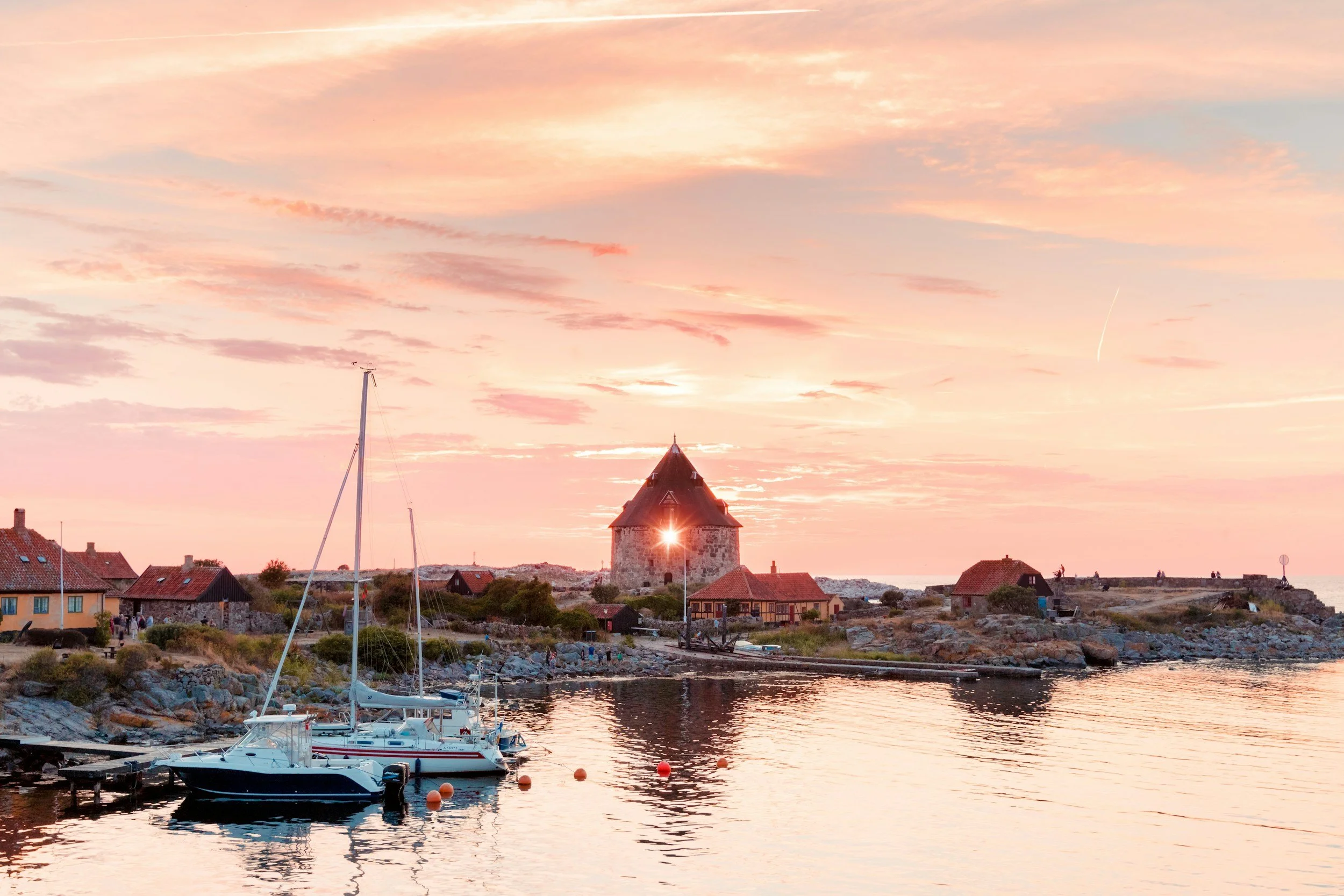
Ærøskøbing: colourful houses, harbour swims, and one of Denmark's prettiest island towns
Getting to Ærøskøbing already feels different from most day trips in Denmark. The ferry from Svendborg takes just under an hour, and by the time you arrive, things have already started slowing down a bit. People roll bicycles off the ferry, collect groceries, greet someone they know on the quay, and disappear back into town. Within a few minutes, you're doing the same, walking straight from the harbour into streets that feel a world away from Copenhagen.
Ærøskøbing isn't particularly large, which is part of the reason it works so well. A few turns from the harbour and you're surrounded by cobbled streets lined with yellow, peach, blue, and pale pink houses, many of them dating back to the 1700s. Some have hollyhocks growing against the walls in summer, others have tiny gardens squeezed into spaces that barely seem large enough for a chair. Around Brogade, Vestergade, Søndergade, and Gyden, it's easy to lose track of where you're going because there's always another doorway, weathered sign, old merchant house, or crooked shutter catching your attention.
One thing I like about Ærøskøbing is that it never feels as though it's trying to entertain you. The town square, Torvet, is small by Danish standards, and even in the middle of summer it feels more like a meeting place than an attraction. People stop for coffee, lock up their bicycles outside shops, or sit chatting on benches while the ferry passengers wander past. If you're up early, you'll often have much of the old town almost to yourself apart from the occasional resident cycling through the streets.
The harbour is where most people eventually end up. Fishing boats sit alongside sailing yachts, people walk along the waterfront with an ice cream, and on warm days you'll often see locals heading down to the water for a swim before dinner. If you keep walking beyond the marina towards Vesterstrand, the coastline opens up and the colourful beach huts begin appearing one by one along the shore. They're one of the most recognisable sights on Ærø and somehow make the whole stretch of coast feel even more Danish.
Lunch is usually simple here. Ærøskøbing Røgeri near the harbour is known for its smoked mackerel and other island favourites, while Café Aroma is a good place to stop for coffee and one of the local pancakes that many visitors end up talking about afterwards. Neither place feels particularly trendy, which is probably why both fit so naturally into the town.
If you're interested in the island's maritime history, Flaske-Peters Samling is worth a quick visit. The museum houses hundreds of ships in bottles, all created by a local sailor, and somehow feels exactly right for a town where the sea has shaped daily life for centuries.
What surprised me most about Ærøskøbing was how different it felt once the last day visitors left. The ferry comes and goes, the streets empty out again, and suddenly you're hearing bicycle wheels on cobblestones, seagulls over the harbour, and not much else. Around sunset, people drift towards Eriks Hale on the opposite side of the water, where the views stretch back across the harbour and the evening light catches the colourful houses along the shoreline.
It's one of the few places I've visited where doing very little genuinely feels like the right thing to do. You wander through town, stop when something catches your attention, maybe end up by the water again later, and somehow the day feels full anyway.
If Ærøskøbing ends up being your kind of place, you’ll probably want more of it. Denmark has a way of doing island life quietly, and this guide to Denmark’s slow and scenic islands might give you a few ideas worth saving for later.
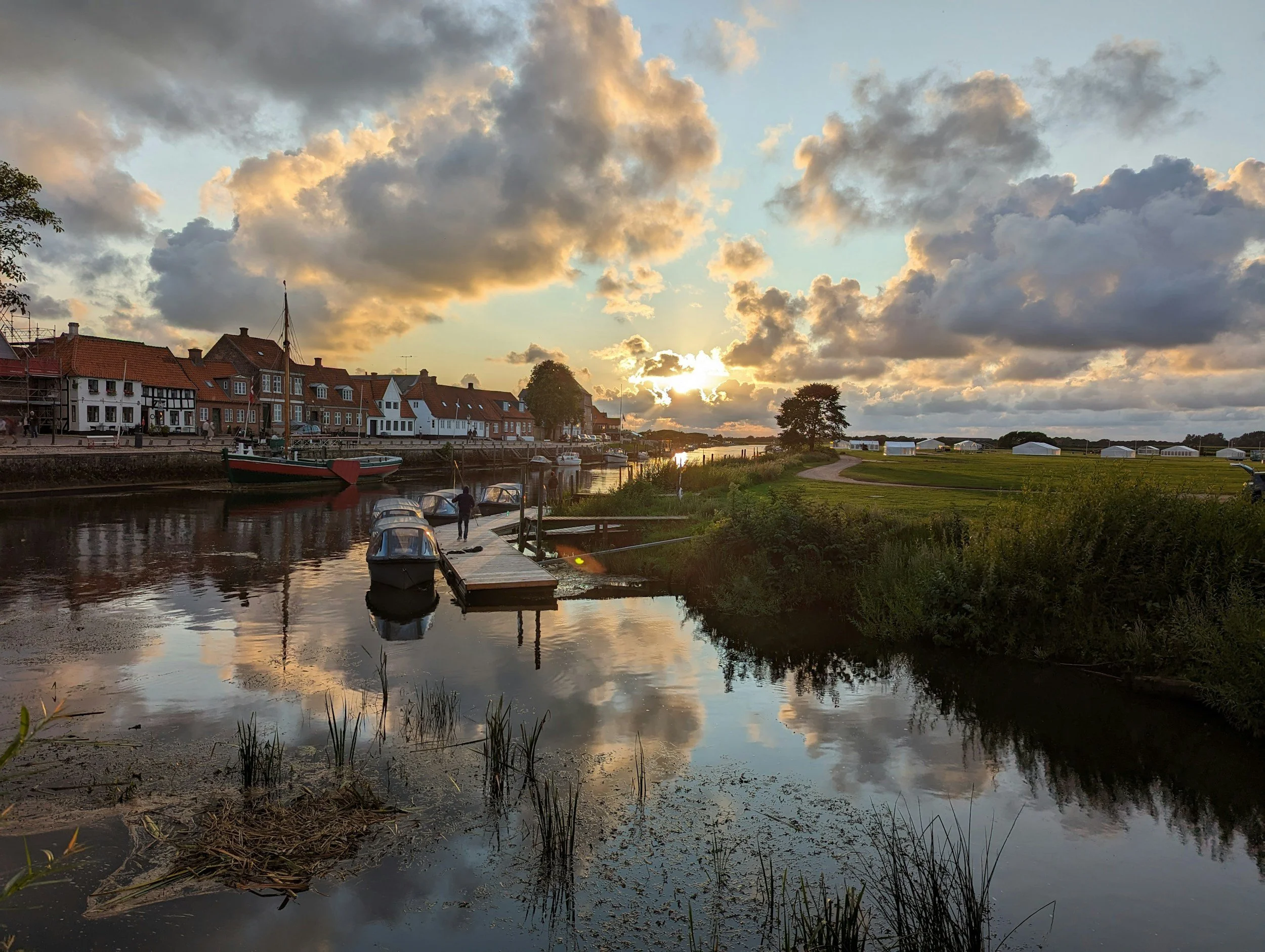
Ribe: Denmark's oldest town and one of its most rewarding places to wander
Ribe is the sort of place where you keep looking up.
Not because there are famous sights around every corner, but because the rooftops, chimneys, church towers, and crooked old buildings constantly pull your attention away from wherever you thought you were heading. Some of the houses date back hundreds of years, and in a few places the streets still seem to follow routes that existed long before anyone was thinking about cars.
Most people arrive through Torvet, the main square, where Ribe Cathedral rises above everything else. Early in the morning you'll often find locals cycling across the square while bakery doors are opening for the day. Around the edges of the square, people are picking up bread, grabbing coffee, or sitting outside before the town becomes busier. If you look closely around the older buildings, you'll also spot flood markers showing how high the water reached during some of Ribe's historic floods, a reminder of how closely connected the town has always been to the surrounding marshes.
The cathedral is worth visiting, but I think Ribe becomes much more interesting once you leave the square behind. Streets like Dagmarsgade, Sortebrødregade, Puggårdsgade, and the lanes around Von Støckens Plads are where the town starts revealing itself properly. You'll walk past houses that lean slightly towards one another, tiny courtyards hidden behind gates, and gardens squeezed into spaces that don't seem large enough to exist. In summer, hollyhocks appear against walls throughout the old town, while storks occasionally nest on rooftops and chimneys, something Ribe has become famous for over the years.
One corner I always like is around Sct. Catharinæ Church and the former monastery buildings beside it. The atmosphere changes almost immediately. The cathedral area attracts most of the attention, while these quieter streets feel more residential and everyday. People walk dogs, sit in small gardens, or cycle through without paying much attention to the fact that they're moving through one of Denmark's oldest urban areas.
Eventually you'll find yourself drawn towards Skibbroen and Ribe Å. This part of town has a different character altogether. The old merchants' houses facing the river hint at Ribe's trading history, while today you'll see kayaks gliding past, people sitting by the water with coffee, and visitors watching ducks drift along the river. On a sunny afternoon, it's one of the nicest places to pause for a while.
For lunch, Weis Stue is still one of the classic addresses in town. The low ceilings, timber beams, and historic interiors are part of the experience, but there are also smaller cafés tucked around the centre where locals stop for smørrebrød, pastries, and coffee throughout the day. I often think Ribe is one of those towns where the bakery windows are almost as tempting as the attractions.
What makes Ribe unusual isn't just the town itself, but what's waiting beyond it. Within a short distance you're out in the Wadden Sea National Park, one of the most important coastal landscapes in northern Europe. Depending on the season, you might see huge flocks of migrating birds, sheep grazing on the marshes, or the vast tidal flats that stretch towards the horizon. The contrast between the medieval town and the open landscape is part of what makes Ribe memorable.
If you have extra time, the Ribe VikingeCenter is worth considering. Unlike many history museums, it feels surprisingly hands-on, with reconstructed Viking buildings, craftspeople, and demonstrations that help explain how this part of Denmark looked long before the cathedral towers appeared.
By evening, the pace shifts again. Day visitors start disappearing, café tables empty out, and the sound of cathedral bells carries across the rooftops. During summer, the Night Watchman still walks through town singing traditional songs and telling stories from Ribe's past, a tradition that feels perfectly at home here.
Ribe is often described as Denmark's oldest town, but after spending time here, that's rarely what people remember most. Usually it's a particular street, a view across the marshes, a bakery they stumbled across, or simply the feeling of wandering around for a few hours without once checking the time.
For those who are all about slowing down, taking a breather, and really connecting with nature, Corsica’s hidden coastal villages are a dream come true.
Ebeltoft: cobbled streets, glass art, and a harbour you'll keep coming back to
Ebeltoft is one of those towns where people constantly stop to take photographs, and then immediately put their phones away again because it's actually nicer to just walk around.
The centre isn't particularly large, but it has a way of stretching a simple stroll into an entire afternoon. You start somewhere along Adelgade, notice a pottery studio, wander into a side street, find a tiny gallery, stop to look at old houses covered in hollyhocks, and before long you've completely forgotten where you were originally heading.
What I like about Ebeltoft is that it doesn't feel like a place built around one attraction. The old town, the harbour, the galleries, the cafés, and the coastline all blend into each other. There isn't really a beginning or an end to the day here!
Adelgade usually gets most of the attention because it's one of Denmark's longest cobbled streets, but some of my favourite parts of town are the smaller lanes branching away from it. Around Juulsbakke, Overgade, and the streets leading down towards the harbour, you'll find colourful front doors, old merchant houses, tiny courtyards, and workshops where artists are still working behind the shopfronts. In summer, hollyhocks seem to appear everywhere. Some houses have flowers growing almost all the way to the roofline.
One thing many visitors miss is Det Gamle Rådhus, the old town hall. It's one of the most photographed buildings in Denmark, but because people tend to stop for a picture and move on, they often overlook the little square around it. Early in the morning, before most visitors arrive, it's one of the nicest corners of town.
The creative side of Ebeltoft feels very genuine. This isn't the sort of place that suddenly decided to become artistic because it was fashionable. Glassmakers, painters, ceramic artists, and craftspeople have been part of the town for years. Glasmuseet Ebeltoft is the obvious example and probably one of the best-known glass museums in Europe, but you'll notice smaller studios throughout town as well. Sometimes the most interesting thing isn't the museum itself but watching someone work behind a window as you walk past.
Eventually you'll end up by the water. Everyone does.
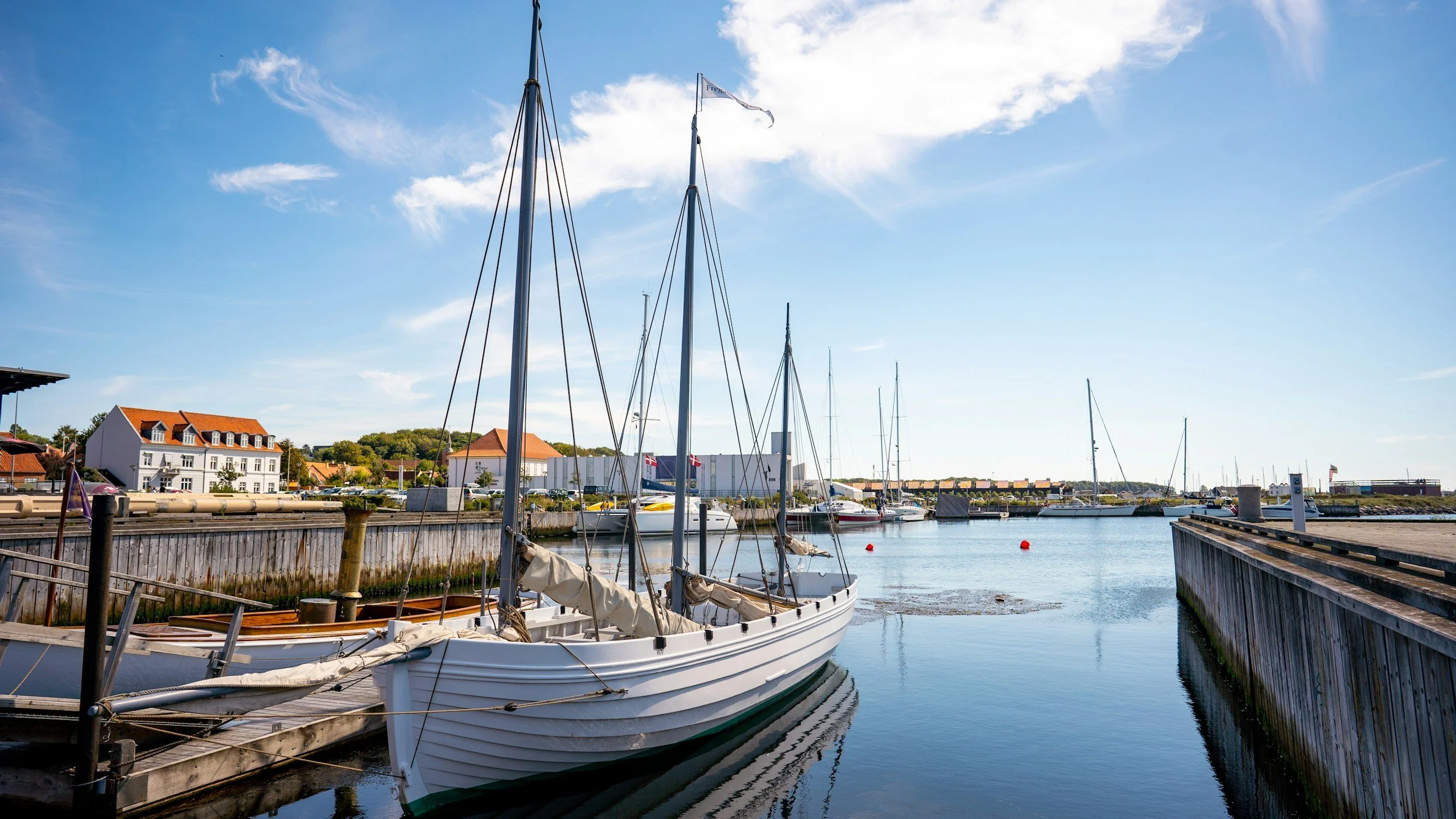
The harbour feels like the centre of gravity here. Fishing boats sit alongside sailing yachts, people stroll along with ice cream, and locals seem to have an endless ability to find a sunny spot near the water. On warm evenings, families sit along the quayside while children jump into the harbour basin from the bathing platforms. It feels relaxed without trying to be.
Fregatten Jylland dominates one end of the harbour. Even if you don't go onboard, it's worth walking over simply because the scale of the ship is hard to appreciate from photographs. Standing beside it makes you realise how ambitious Danish shipbuilding once was.
A few minutes away, Maltfabrikken has become one of the town's most interesting gathering places. What used to be an old malt factory now houses a library, exhibitions, workspaces, events, and cafés. You'll see students working on laptops, locals meeting friends for coffee, and visitors stopping in without really knowing what they're looking for. It's a good example of how Ebeltoft manages to feel historic without getting stuck in the past.
Lunch is easy here. Smag is popular for good reason, but some of my favourite stops have been far less planned. Picking up pastries from a bakery near Torvet, grabbing smoked fish from the harbour, or finding a table outside somewhere that wasn't even on my radar ten minutes earlier. Ebeltoft is one of those places where spontaneous decisions usually work out well.
What makes the town even more interesting is what's sitting right outside it. Within a short drive or bike ride, you're in Mols Bjerge National Park, where the landscape suddenly changes into rolling hills, grazing cattle, heathland, and coastal viewpoints overlooking Ebeltoft Vig. Many people come for the town and end up talking just as much about the scenery surrounding it.
I think Ebeltoft is at its best later in the day. The day-trippers start heading back towards Aarhus, the queues outside the ice cream shops disappear, and the harbour settles into a quieter rhythm. The light softens across the bay, boats gently move against their moorings, and people linger over dinner instead of rushing anywhere.
It's a town that gives you plenty to do, but somehow the moments that stay with you tend to be the unplanned ones.
If a place like Ebeltoft feels right, where the day unfolds slowly without much effort, there are more towns like this across Scandinavia. This cozy traveler’s guide to Scandinavia is a good one to keep open in another tab when you start planning.
If you’re mainly looking for an easy day trip, I’ve also put together a guide to the small towns that are simplest to reach from Copenhagen by train.
Skagen: where Denmark slowly disappears into sand, sea, and sky
Skagen doesn't really feel like a town sitting at the top of Denmark. It feels more like a place that happens to exist because people eventually ran out of land.
The further north you travel, the more open everything becomes. The forests thin out, the landscape flattens, and by the time you arrive, the horizon seems to stretch in almost every direction. Even the light feels different here. It's brighter, softer, and somehow larger. After a few hours in Skagen, you start understanding why generations of artists packed up their belongings and travelled all the way north to paint it.
The harbour usually gets most of the attention when people first arrive. Fishing boats still land their catches here, seafood restaurants line parts of the waterfront, and on summer mornings you'll see cyclists stopping for coffee while fishermen prepare for the day ahead. If you're walking around early enough, you can still catch the smell of fresh fish drifting from the working parts of the harbour before the cafés begin filling up.
But I actually think Skagen becomes more interesting once you leave the marina behind.
The streets around Østerby and Vesterby feel surprisingly residential. Yellow houses sit behind rose-covered fences, gravel driveways disappear into gardens, and bicycles seem to outnumber cars. Some afternoons it feels as though the entire town is moving at walking pace. One minute you're looking at a gallery window, the next you're standing outside Anchers Hus or Brøndums Hotel, imagining the conversations that helped shape the Skagen Painters more than a century ago.
What always surprises me is how quickly you can leave the town behind. Within minutes, you're cycling through dunes, passing patches of heathland, and heading towards landscapes that feel almost empty. Denmark isn't usually thought of as a dramatic country, but parts of Skagen can feel surprisingly wild.
Most people make their way out to Grenen eventually. The meeting point between the Skagerrak and Kattegat is famous, but the walk there is often more memorable than the destination itself. Seals occasionally rest along the shoreline, seabirds circle overhead, and the coastline seems to stretch endlessly in both directions. If you arrive early in the morning, before the tractor wagons start carrying visitors towards the tip, the area feels completely different.
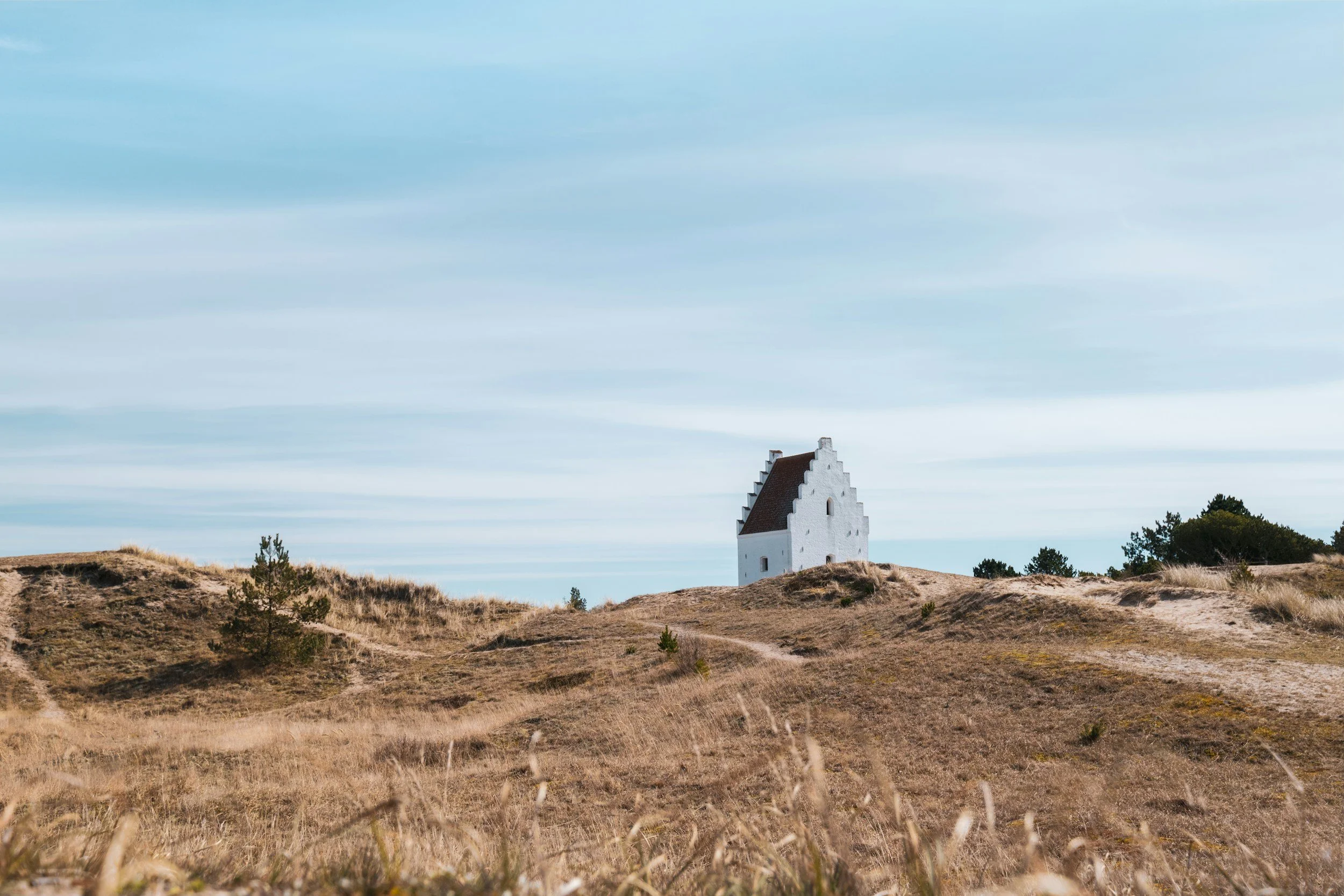
A few kilometres away, Den Tilsandede Kirke tells another story entirely. Only the tower remains above the sand today, but standing there gives you a sense of how much the landscape around Skagen has always been moving. Wind and drifting dunes have shaped this part of Denmark for centuries, and nowhere makes that clearer than the church.
The same feeling continues at Råbjerg Mile. People often expect a dune and end up finding something that feels closer to a small desert. The sand moves several metres every year, swallowing vegetation and slowly changing the landscape as it goes. Walking across it feels oddly disconnected from the rest of Scandinavia.
Back in town, Sønderstrand changes character throughout the day. Early mornings belong to swimmers and walkers. Mid-afternoon brings more activity. By evening, people drift towards the beach again as the light softens across the water. Further west, around Gl. Skagen and Solnedgangspladsen, locals and visitors gather for one of Denmark's most famous sunsets. Nobody seems particularly interested in hurrying home.
Food is easy here. Some days it means seafood at the harbour. Other days it's a pastry from a bakery near Sct. Laurentii Vej and a coffee carried down to the beach. One thing I've learned about Skagen is that plans tend to become less important once you're there.
What I remember most isn't actually Grenen, the museum, or any single attraction. It's hearing the halyards tapping against sailboat masts in the marina late at night, cycling back through quiet streets after sunset, and realising there wasn't really anywhere else I needed to be.
That's what makes Skagen different. The town is interesting, but it's really the landscape around it that keeps pulling you outside.
Skagen tends to stay with people for how it feels more than what you do there. If that quiet, open landscape is what you’re drawn to, you might find something similar on Anholt, one of Denmark’s most remote islands - this Anholt dark sky island guide gives you a sense of just how still it can get.
Looking for more cozy travel ideas?
Sign up for the Trippers Terminal newsletter to get new destination guides, slow travel tips, and peaceful escape ideas sent straight to your inbox.
Dragør: yellow houses, sea air, and the easiest escape from Copenhagen
What always surprises me about Dragør is how quickly Copenhagen stops feeling relevant.
You can leave Nørreport after breakfast, sit on the bus for half an hour, and suddenly you're walking through streets that feel more like a small coastal village than part of Denmark's largest urban area. The pace changes almost immediately. People are cycling home with shopping bags hanging from their handlebars, chatting across garden gates, or carrying coffee down towards the harbour.
The old town isn't large, but that's part of why it works. Around Strandgade, Badstuevælen, Kongevejen, and the tiny lanes branching off them, you'll find rows of mustard-yellow houses sitting behind low walls covered with hollyhocks in summer. Many of the houses belonged to pilots and sea captains when Dragør was an important maritime town, and some still have plaques showing the names of former residents. If you slow down, you'll notice details everywhere. Old lanterns hanging above doorways, worn cobblestones, crooked shutters, fishing nets drying in courtyards, and bicycles parked outside houses that look much the same as they did generations ago.
One thing I like is that people genuinely live here. These aren't streets that empty out once visitors leave. Laundry hangs in courtyards, children cycle past on their way home from school, and neighbours stop for conversations in the middle of the street because there isn't much traffic to interrupt them.
The harbour still feels like the centre of village life. Fishing boats, pleasure craft, and old wooden vessels share the same space, while small red fishing sheds line parts of the waterfront. If you're there around lunchtime, you'll often smell smoked fish before you even see where it's coming from. Locals sit on benches facing the water, winter swimmers use the harbour ladders year-round, and on sunny days people seem perfectly happy spending an entire afternoon doing very little.
I always find myself walking out onto the old harbour pier. Looking back towards the village from there gives you one of the best views of Dragør. The church tower rises above the rooftops, yellow houses stretch towards the shoreline, and on clear days you can see the Øresund Bridge cutting across the horizon towards Sweden.
The coastline south of town has a completely different feel. The harbour disappears behind you and suddenly it's just open shoreline, sea grass, seabirds, and long views across the water. During summer, patches of sea lavender add colour to the coastal meadows, while cyclists follow the paths towards Kongelunden and the protected landscapes of Sydamager. It's hard to believe you're still this close to Copenhagen.
If you want somewhere to sit for a while, Café Espersen remains a favourite, but I actually enjoy wandering until something catches my eye. Maybe an ice cream from the harbour, a pastry from a local bakery, or a table overlooking the water. Dragør isn't really a place that rewards planning every detail.
One small detail many visitors miss is Dragør's history as a link between Denmark and Sweden. Before the Øresund Bridge existed, ferries regularly connected the village with Malmö. You still get a sense of that maritime identity today. The sea doesn't feel like a backdrop here. It feels like the reason the village exists at all.
Later in the day, the atmosphere changes again. The buses back to Copenhagen fill up, day-trippers disappear, and the streets become noticeably quieter. Church bells drift across the rooftops, people head down to the harbour for an evening walk, and the low sunlight catches the yellow facades that have made Dragør famous.
It's one of those places that proves you don't always need to travel far to feel like you've left the city behind.
Dragør is what you go for when you don’t want to plan much at all, just step out of the city and let the day unfold. If you’re building a longer trip, it’s often worth mixing in places like this with a few countryside stays, like the ones in these sleepy stays in Sweden - it changes the whole vibe.
A different side of Denmark
What surprised me most about these towns wasn't how different they felt from Copenhagen. It was how different they felt from each other.
Ribe sits beside the Wadden Sea and feels closely tied to the landscape around it. In Ærøskøbing, ferries arrive carrying groceries, bicycles, and people returning home to the island. Ebeltoft mixes old streets with galleries, workshops, and the coastline of Djursland. Skagen feels shaped by the sea, the dunes, and the fact that Denmark simply runs out of land there. Dragør still carries traces of its history as a fishing and pilot town despite being less than half an hour from the capital.
They're all relatively small, but none of them feel interchangeable.
If you're planning a trip to Denmark, it can be tempting to add as many places as possible. I'd probably do the opposite. Pick one or two that genuinely interest you and give yourself time to see more than the main street, harbour, or viewpoint.
Some of the best moments happen away from the obvious places anyway. A walk through a residential street in Ribe. An evening by the harbour in Ærøskøbing after the ferry has left. Watching cyclists arrive back into Ebeltoft after a day in Mols Bjerge. Sitting on the beach in Skagen long after most people have headed back into town.
Those are usually the things that end up sticking with you.
Join our Cozy Travel Club to get thoughtful travel ideas, detailed guides, and places across Europe that feel just as easy to settle into.
FAQ: Small towns in Denmark
What are the best small towns to visit in Denmark?
Some of the most enjoyable small towns in Denmark include Ribe, Ærøskøbing, Ebeltoft, Skagen, and Dragør. Each offers something different, from island life and coastal scenery to historic streets, galleries, and harbour towns. Which one is best depends on whether you're looking for beaches, history, nature, or a quieter alternative to Copenhagen.
What are the best day trips from Copenhagen?
Dragør is one of the easiest day trips from Copenhagen and can be reached in around 30 minutes by bus. Roskilde and Helsingør are also popular options, but Dragør offers a completely different atmosphere, with a historic harbour, yellow houses, and coastal walks along the Øresund.
What is the prettiest town in Denmark?
There isn't one clear answer, but Ærøskøbing, Ebeltoft, Ribe, and Skagen are often mentioned among Denmark's most beautiful towns. Ærøskøbing is known for its colourful houses and island setting, Ribe for its medieval centre, Ebeltoft for its harbour and galleries, and Skagen for its beaches, dunes, and distinctive light.
Is Ribe worth visiting?
Absolutely. Ribe is Denmark's oldest town and one of the country's most interesting places to explore on foot. Beyond the cathedral and historic streets, it's also a gateway to the Wadden Sea National Park, making it a good choice for travellers interested in both history and nature.
Can you visit Danish small towns without a car?
Yes. Denmark is one of the easiest countries in Europe to explore without driving. Ribe, Skagen, and Dragør are easy to reach by public transport, while places like Ærøskøbing can be reached by combining train and ferry connections.
Which Danish town is best for a weekend trip?
Skagen works well if you enjoy beaches, cycling, and nature. Ribe is ideal for history and culture, while Ebeltoft combines coastal scenery with galleries, cafés, and access to Mols Bjerge National Park. For a short weekend, any of these towns offers enough to fill a few relaxed days.
What is the best Danish island town to visit?
Ærøskøbing is one of Denmark's most charming island towns. Located on the island of Ærø, it's known for colourful houses, a historic harbour, quiet streets, and a pace of life that feels noticeably different from mainland Denmark.
When is the best time to visit Denmark's small towns?
Late spring through early autumn is usually the easiest time to visit. May, June, and September often offer a good balance of pleasant weather and fewer visitors, while July tends to be the busiest month in many coastal destinations.
Is Skagen worth visiting?
Yes, especially if you enjoy nature and coastal landscapes. Skagen is famous for Grenen, where two seas meet, but many visitors end up enjoying the dunes, cycling routes, beaches, and art museums just as much.
What are the best quiet places in Denmark outside Copenhagen?
Ribe, Ærøskøbing, Ebeltoft, Dragør, and parts of Skagen all offer a calmer experience than Copenhagen. While none are completely undiscovered, they tend to attract fewer visitors and offer more space, particularly outside peak summer weekends.
Which Danish town is best for art and culture?
Ebeltoft and Skagen stand out. Ebeltoft has galleries, workshops, and the renowned Glasmuseet Ebeltoft, while Skagen remains closely connected to the famous Skagen Painters through its museums and historic artists' homes.
Are Denmark's small towns worth visiting in autumn?
Yes. Autumn is one of the most underrated times to visit Denmark's smaller towns. Places like Ribe, Ebeltoft, and Ærøskøbing are quieter, accommodation is often easier to find, and the changing light and coastal scenery can make the towns feel even more atmospheric than during summer.
Want more peaceful places like these?
If you love quiet, beautiful small towns, Uzès in southern France is exactly that kind of place. Stone streets perfect for slow wandering, a relaxed market that feels local not touristy, and cozy spots where you can sit with a coffee and not feel rushed.
We’ve created a guide to help you enjoy Uzès at your own pace (where to go, when to go, and how to make the most of the town’s quiet atmosphere). Just a peaceful trip that feels thoughtful and easy.