
How to explore French and Spanish Basque Country without a car
A car-free week across both sides of the Basque Country is very doable, but only if you resist the urge to treat the map like a checklist. The coastal spine is where the trip comes together: Bayonne as the practical French base, then Donostia/San Sebastián and Bilbao, with Biarritz and Saint-Jean-de-Luz folded in as day trips instead of extra hotel moves. That gives you variety without spending half the week repacking a suitcase or waiting for connections that looked more elegant on Google Maps than they feel in real life.
Even the border crossing is less of an “event” than it first appears. You arrive at Hendaye on the French side, walk to the adjacent Hendaia Euskotren terminus and continue to Donostia. The systems are separate, but the physical transfer is straightforward once you know what you are looking for.
The one place I would happily abandon the idea of a rail-only itinerary is Donostia to Bilbao. Euskotren takes roughly 2h40, while a direct coach can get you there in around 1h20. With only a week, I would rather arrive in Bilbao in time for lunch than spend another hour and twenty minutes collecting local-train stops.
The catch is that this is a coast-and-city itinerary, not a clever substitute for having a car in the countryside. Inland villages, cider houses and remote viewpoints become much harder to combine spontaneously. If those are the reason you are coming, I would plan a different trip. For this route, six nights works with a late departure from Bilbao on Day 7; seven nights is the nicer version if you want that final day to belong to the trip rather than the journey home.
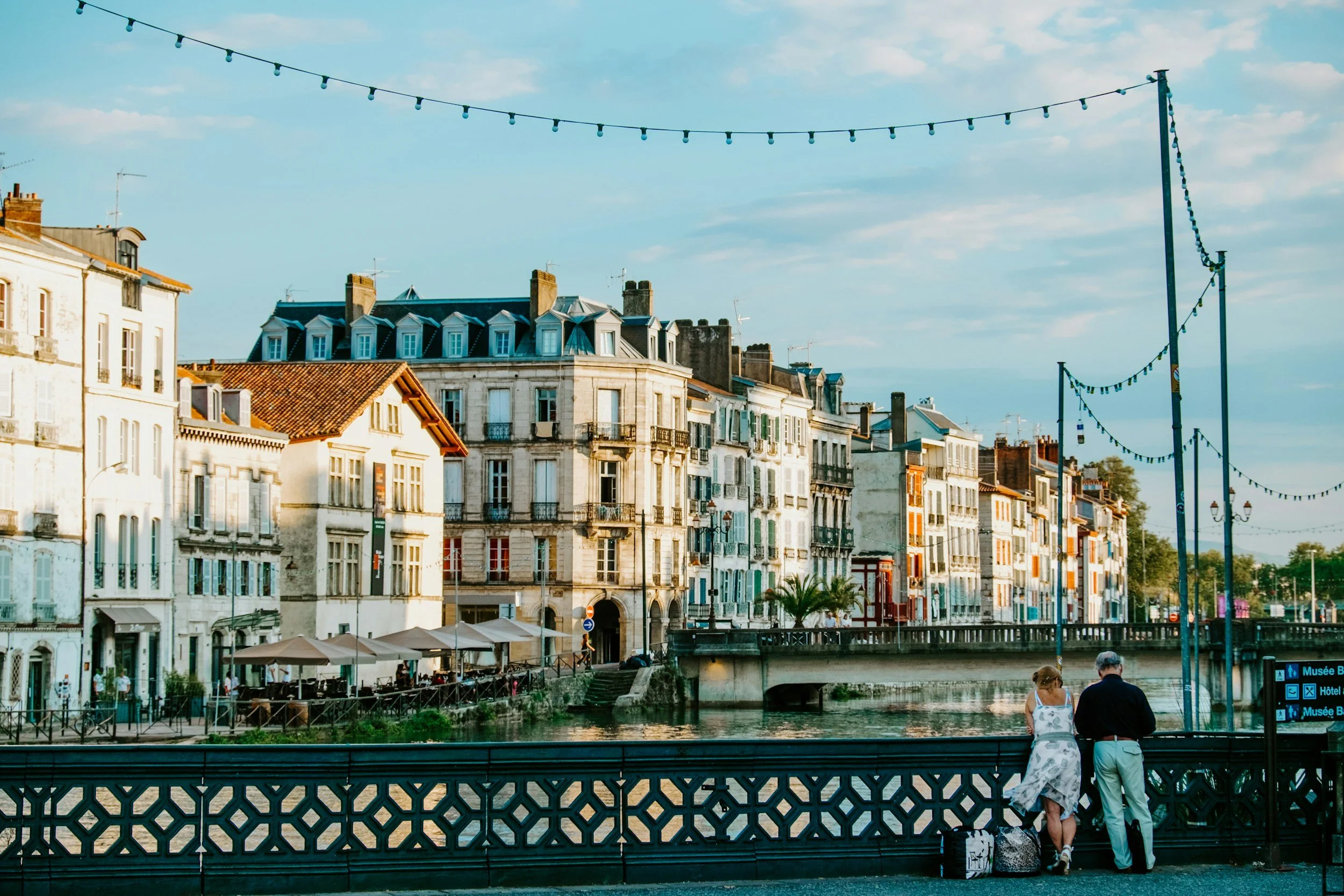
The route at a glance: three bases, not seven hotels
The week is simpler than the number of places suggests. You spend the first three nights in Bayonne, even though two of those days take you elsewhere. Day 1 is your arrival day, then Biarritz and Saint-Jean-de-Luz each get a day of their own. There is no real advantage in moving hotels along this stretch: both are easy day trips, and coming back to the same room is far more pleasant than building luggage storage and another check-in into the middle of the day.
Those two outings do not need to be fixed in that order either. If Tuesday or Friday falls during your Bayonne stay and you want to see Saint-Jean-de-Luz when its larger food market is running, put it on that morning and move Biarritz to the other day. It is a small adjustment, but exactly the sort that is worth making before the hotels are booked rather than discovering it afterwards.
On Day 4, you leave Bayonne and cross into Spain. The journey runs down the coast to Hendaye, then continues from the neighbouring Hendaia Euskotren station to Donostia/San Sebastián. You stay in Donostia for two nights, which means Day 5 is completely yours rather than being another half-day framed by checkout and onward transport.
Day 6 is the move to Bilbao. From here, there are two sensible ways to finish the trip. If you spend one night in Bilbao and leave late on Day 7, the itinerary is six nights in total: three in Bayonne, two in Donostia and one in Bilbao. Stay a second night and travel on the morning of Day 8, and Day 7 becomes a genuinely free Bilbao day. That is the version I would lean towards when flights and accommodation prices cooperate. A late departure can look wonderfully efficient when you book it, then suddenly you are checking out at 11, finding somewhere for your suitcase and keeping half an eye on the clock all afternoon.
There is one calendar detail I would check before locking in those final days. If Bilbao falls on a Monday and the Guggenheim is high on your list, check its current opening calendar. Its usual weekly closure can turn an otherwise sensible Day 7 into the wrong day for the visit you were most looking forward to.
The cleanest flight or rail plan is to arrive at one end and leave from the other. Come in through the French side, whether that means Biarritz, Bayonne or a train down from Bordeaux, then leave from Bilbao. There is little joy in reaching Bilbao only to spend part of your final day retracing the route back toward France. The itinerary works in reverse as well, so if the better fare takes you into Bilbao first, there is no need to force the trip the other way around.
You can cut the trip down to two bases, but then you are making a different trip. Bayonne and Donostia give you a quieter week with fewer hotel moves and more time around the eastern coast, but Bilbao is the obvious thing to lose. Trying to keep it as a day trip just puts the travel time back in through the side door. For a first week that genuinely includes both the French coast and Bilbao, three bases is the point where the route still feels comfortable rather than over-planned.
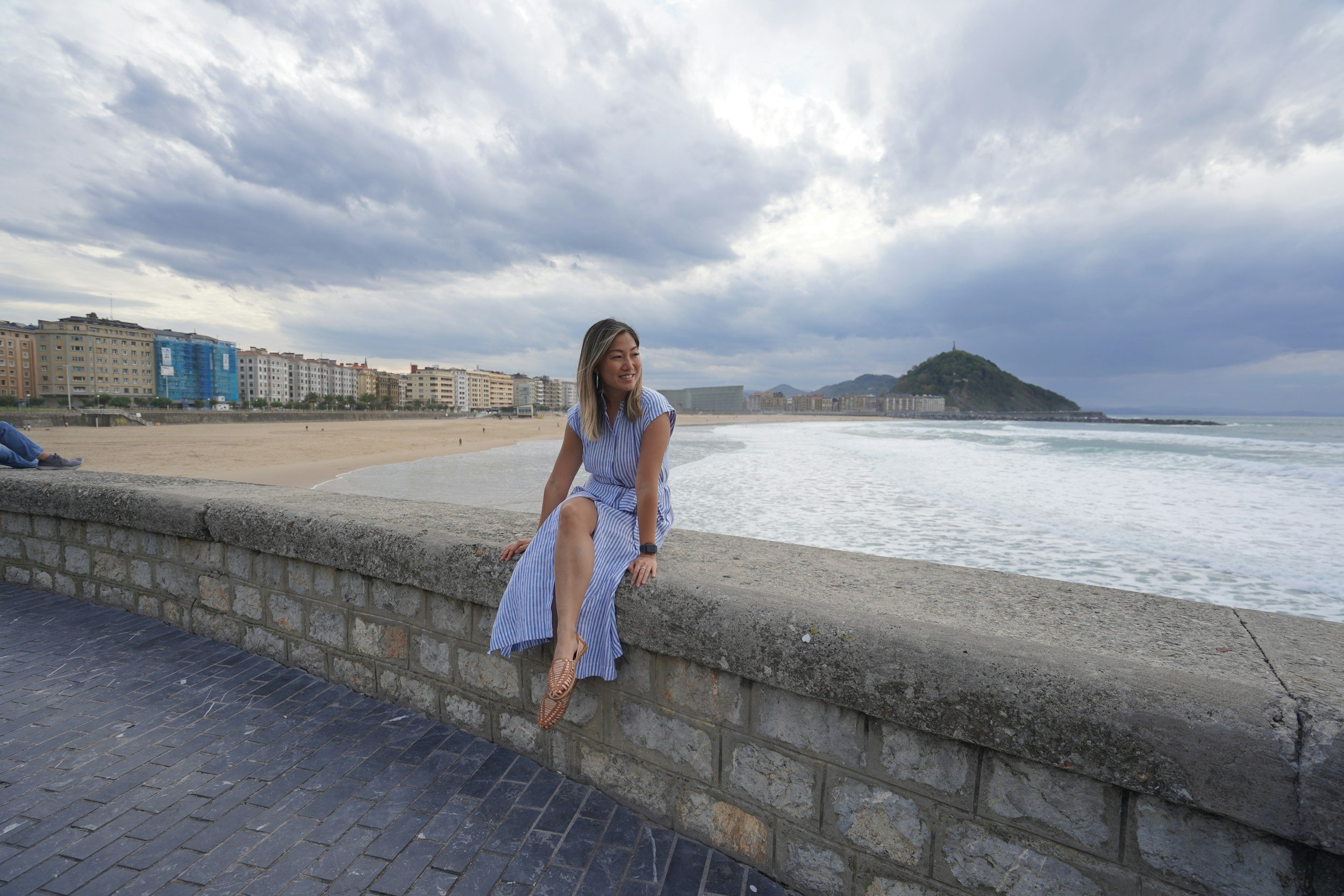
When TER starts appearing in your plans, this guide to using France’s regional trains is useful to have open alongside SNCF Connect. It explains the parts that tend to become confusing once you move beyond the TGV network.
Before you book: the six transport systems you’ll actually use
The slightly annoying thing about planning this trip is that the Basque Country may feel like one region when you are looking at the map, but the transport certainly does not behave like one. By the time you reach Bilbao, you will have crossed several networks, bought tickets in different ways and used stations with names that are very easy to mix up.
You do not need six apps, six passes or an elaborate spreadsheet. You just need to know which system you are using before you press “buy”.
Around Bayonne and Biarritz, that system is TXIK TXAK. At the time of research, a single journey costs €1.40 and includes transfers for 90 minutes, and paying contactless with a bank card gives the same fare with a €3.80 daily cap per person. There are day and multi-day passes too, but I would not buy a three-day pass simply because you are sleeping in Bayonne for three nights. On this itinerary, only some of those journeys are on TXIK TXAK. Saint-Jean-de-Luz and Hendaye are reached by TER, and your French bus pass does not cover those trains.
That is the first distinction to keep straight: TXIK TXAK for the local buses, SNCF/TER for the French coastal railway. When you go to Saint-Jean-de-Luz or travel south to Hendaye, look up the journey through SNCF Connect or TER Nouvelle-Aquitaine and buy that ticket separately. There is little benefit in trying to optimise every €1 fare here. The simpler option is often to tap your card for local buses and buy the occasional TER ticket when you need it.
At Hendaye/Hendaia, the system changes again. You arrive at the French SNCF station, walk over to the neighbouring Euskotren terminus and buy a separate ticket for the E2 Topo to Donostia. This is a local train rather than something you need to reserve weeks ahead, so there is no reason to treat it like a TGV booking. The current indicative fare is around €2.90, and I would allow roughly 45–50 minutes for the ride rather than building the day around the quickest time you happen to find online.
One station detail is easy to miss in Donostia: the Topo arrives at Donostia-Amara, while the Renfe station and underground bus station are over at Atotxa. They are separate places, which matters later when you take the coach to Bilbao from the bus-station side of town. It also matters for luggage storage, because the lockers are at the Atotxa complex rather than Amara. So if a hotel or locker listing says it is “near the station”, check which station it means.
For getting around the city, Dbus covers Donostia itself, while Lurraldebus is the one you are more likely to use for trips farther into Gipuzkoa. You will also come across the Mugi card, which was €5 when I checked. With only two nights in Donostia, I would not buy one automatically. Unless you are planning several bus journeys, paying as you go is usually simpler than adding another transport card to the mix.
The one ticket I would book ahead is the Donostia–Bilbao coach. ALSA and Avanza/PESA both run direct services, with the faster departures taking around 1h20. In summer or at weekends, I would choose the time you want in advance rather than hoping the convenient one still has space on the day. The coach arrives at Bilbao Intermodal in San Mamés. If you decide to take the slower Euskotren E1 instead, you arrive at Bilbao-Matiko, so it is worth checking both against your hotel before assuming “near the station” means the same thing for either option.
Once you are in Bilbao, the metro, tram and Bizkaibus will cover most of the journeys you are likely to make. You may come across the Barik card, which was €3 when I checked, but I would only bother with it if you are planning enough local trips to make it useful. The same goes for Mugi in Donostia. On a short trip, carrying both cards can easily become more hassle than saving.
If you already have Interrail or Eurail, check exactly what your pass covers for your dates. It can be useful for some SNCF/TER journeys, but it will not cover every local system you use here. TXIK TXAK, Euskotren, city buses and the coach to Bilbao all need to be looked at separately, so I would verify the journeys you are genuinely taking rather than assuming one rail pass will sort out the whole week.
For this trip, I would keep the ticket strategy simple. Tap or buy locally for short urban journeys, use SNCF for the French TER legs, buy your Euskotren ticket when you need it, and reserve the Donostia–Bilbao coach in advance. There is very little to gain from trying to squeeze every possible discount out of a seven-day itinerary if it means carrying several transport cards and spending your evenings working out fare zones.
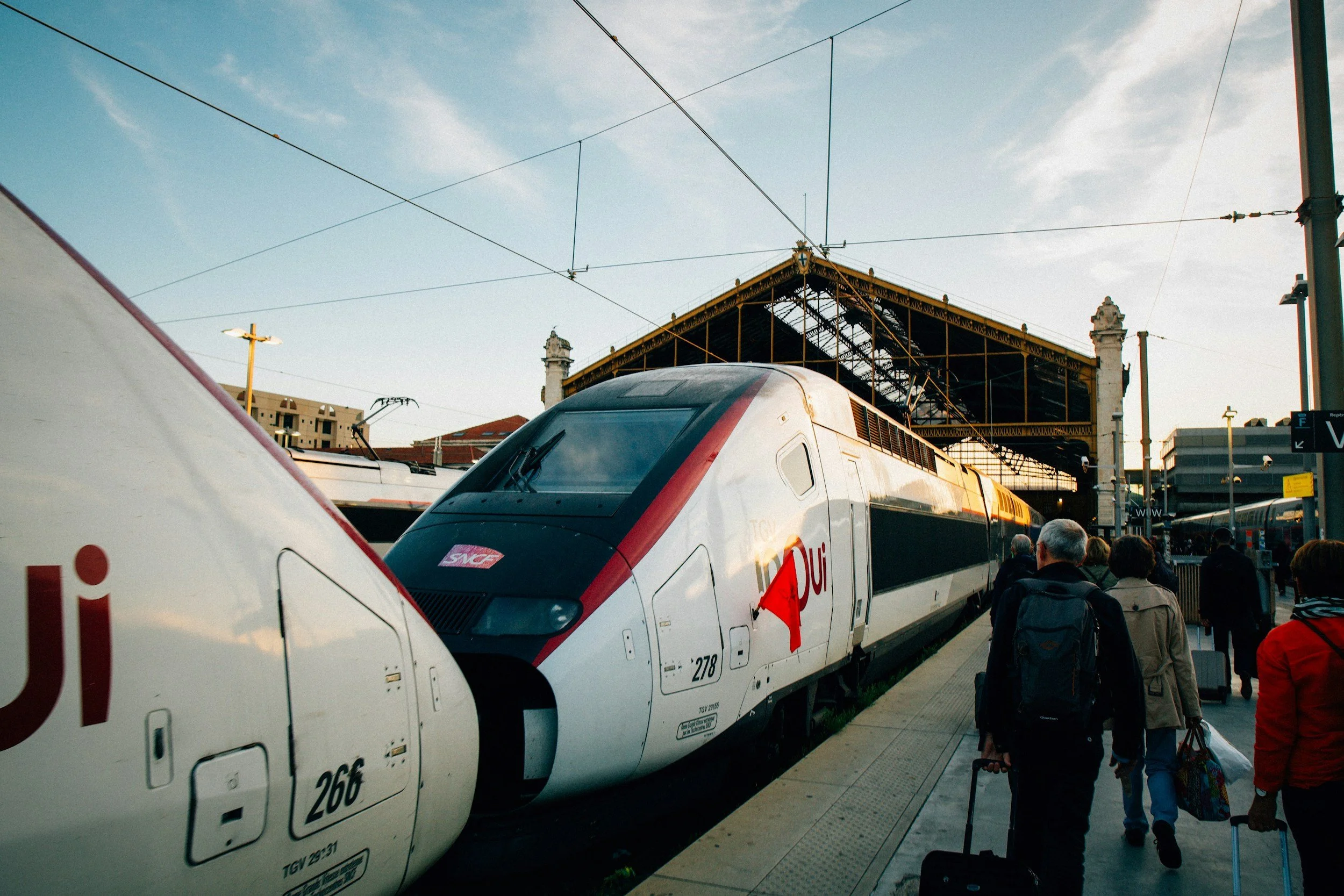
San Sebastián is one of those cities where “the station” is not specific enough. I have a separate guide to using Renfe trains in Spain if you want to get the Renfe side straight before you start mixing it up with Euskotren and Amara.
Day 1: arrive in Bayonne and keep things simple
On paper, Biarritz can look like the obvious place to start. It has the coast, the famous name and plenty of hotels. For this particular week, though, I would unpack in Bayonne.
Bayonne station is in Saint-Esprit, on the opposite side of the Adour from Grand Bayonne. That sounds slightly inconvenient until you look at the scale of the place: the historic centre is close enough that arriving by train does not immediately create another transport problem. Drop your luggage, cross the river and you are already where you are likely to spend the evening.
I would be fairly fussy about hotel location here. Look around Saint-Esprit near the station and river, or Grand Bayonne within an easy walk of the bridge. There is little benefit in choosing somewhere on the outer edge of town just because the room is prettier or slightly cheaper. Over the next few days you will be heading out towards Biarritz, Saint-Jean-de-Luz and eventually Hendaye, so adding a local bus ride before every departure gets old quickly. Bayonne is supposed to remove that friction, not relocate it to 8 a.m.
This is also why I would not continue to Biarritz with your suitcase unless you specifically want to sleep there. Its railway station sits away from the seafront centre, so arriving by train does not deposit you neatly beside the part of Biarritz most visitors have in mind. From Bayonne, you can visit the centre on the TXIK TXAK T1 instead and return that evening without turning the day into another hotel change.
How much you do on Day 1 should depend on when you arrive, rather than on an itinerary telling you that arrival day somehow contains eight usable hours. If you get in with plenty of afternoon left, walk across the Adour into Grand Bayonne, continue towards Petit Bayonne if you still feel like exploring, and have dinner in town. If your flight or train runs late, you have not lost anything that needs to be rescheduled. Bayonne is compact enough that even a short first evening gives you some sense of the place.
That is why Bayonne works so well on the first day. You can arrive late, drop your bag and still have an easy evening in town without feeling as though you have missed anything important. Save Biarritz and the coast for tomorrow, when you can enjoy them without luggage or an eye on the clock.
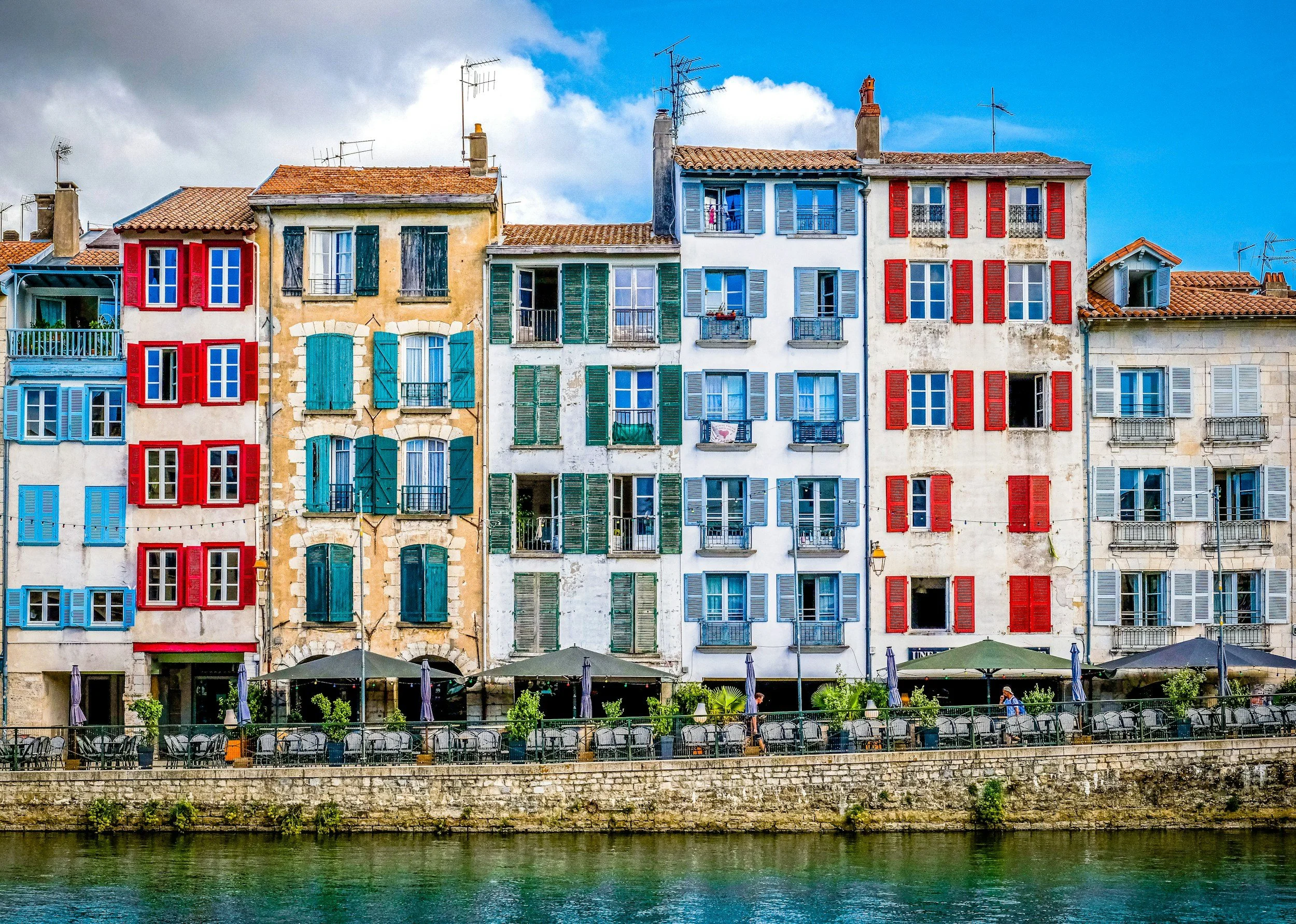
If you are considering Interrail or Eurail for a longer trip around Europe, this is how I would decide which Eurail pass is actually useful. Just remember that a rail pass will not magically absorb every local bus, Euskotren journey and coach into one ticket.
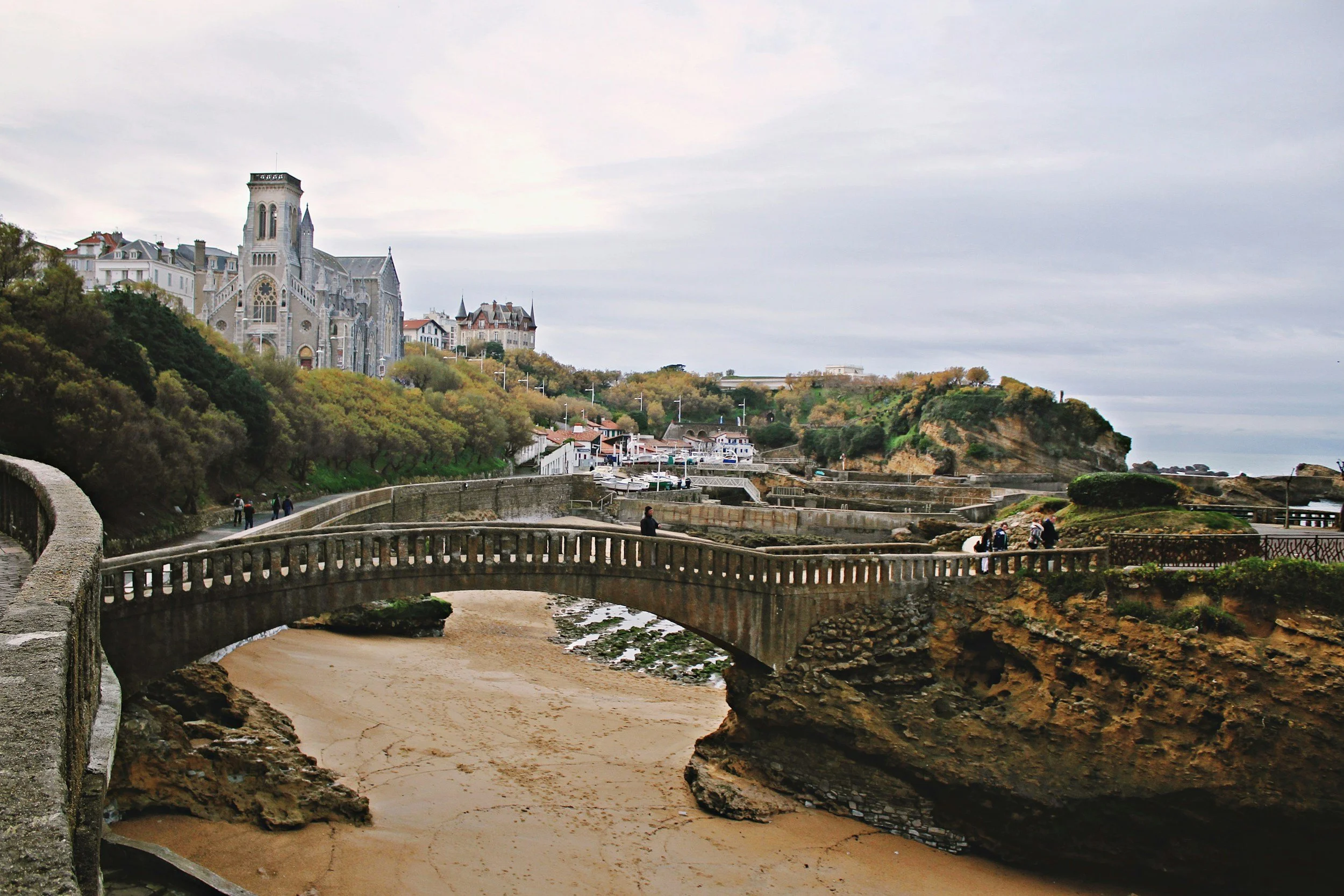
Day 2: skip the station and take the Tram’bus into Biarritz
Biarritz is a good example of why a car-free itinerary should not automatically become a train itinerary. The railway reaches the town, but the station sits inland from the centre. For a day when you want to step off public transport and start walking, TXIK TXAK’s T1 Tram’bus is the more useful choice.
From Bayonne it runs into central Biarritz in under half an hour. If you are staying around Saint-Esprit, you can pick it up near Gare de Bayonne; from Grand Bayonne, check the live route planner before walking back across the river because one of the central stops may suit you better. At the other end, Mairie de Biarritz L. Barthou leaves you in the middle of town rather than at the SNCF station with another connection still to make.
From there, I would let the day run roughly north to south rather than bouncing between sights. Grande Plage is right in the centre, between the Hôtel du Palais end of the bay and the Bellevue, so it is an easy first look at the Biarritz people have usually come for. The railway station, by comparison, is more than a 20-minute walk from this central seafront area.
If you want the food-market side of town as well, go to Les Halles before leaving it too late. The covered market currently opens every morning from 7:30 to 14:00, and on Saturday mornings there is also an outdoor producers’ market until 13:00. That makes it much more useful as a late-morning or lunch stop than something to save for 4 p.m. when you wander back from the beach and find the market part of the experience already over.
From the central seafront, continue south towards the Port des Pêcheurs, the little harbour below the Atalaye, then on to Port-Vieux. These stops are close enough to make one continuous walk rather than three separate destinations. Port-Vieux is also connected back into the centre via Rue Mazagran, which is handy if the weather turns and you decide you have had enough Atlantic wind for one afternoon.
If the weather is behaving, carry on to the Rocher de la Vierge before turning back. It is free and open year-round, so there is no timed ticket dictating the day. I would stop there rather than feeling obliged to keep marching south just because the Côte des Basques is on another “things to do in Biarritz” list. You have plenty of time in Biarritz, so I would not turn the afternoon into a mission to cover every stretch of coast. Leave room for lunch, a coffee or simply stopping somewhere by the water when you find a spot you like.
Let the weather decide how far you go. If it is wet or very windy, spend more time around Les Halles and the centre and keep the coastal walk shorter, around Grande Plage and Port-Vieux. If the sun is out, carry on farther along the waterfront and take your time. There is no need to lock the whole day into a fixed route before you have even left Bayonne.
The TER still has its uses, particularly if you happen to be staying beside Bayonne station and have a specific reason to travel via Biarritz SNCF. For this day, though, it adds a last-mile problem that the T1 avoids. Take the bus into the centre, spend the day on foot and check the live TXIK TXAK departures before heading back to Bayonne that evening. Tomorrow, for Saint-Jean-de-Luz, the train becomes the better tool again.
If this trip has left you wanting more of northern Spain rather than another big city, I put together the northern Spanish villages I’d choose in autumn. It is a much better place to start than randomly adding another stop to this seven-day route.
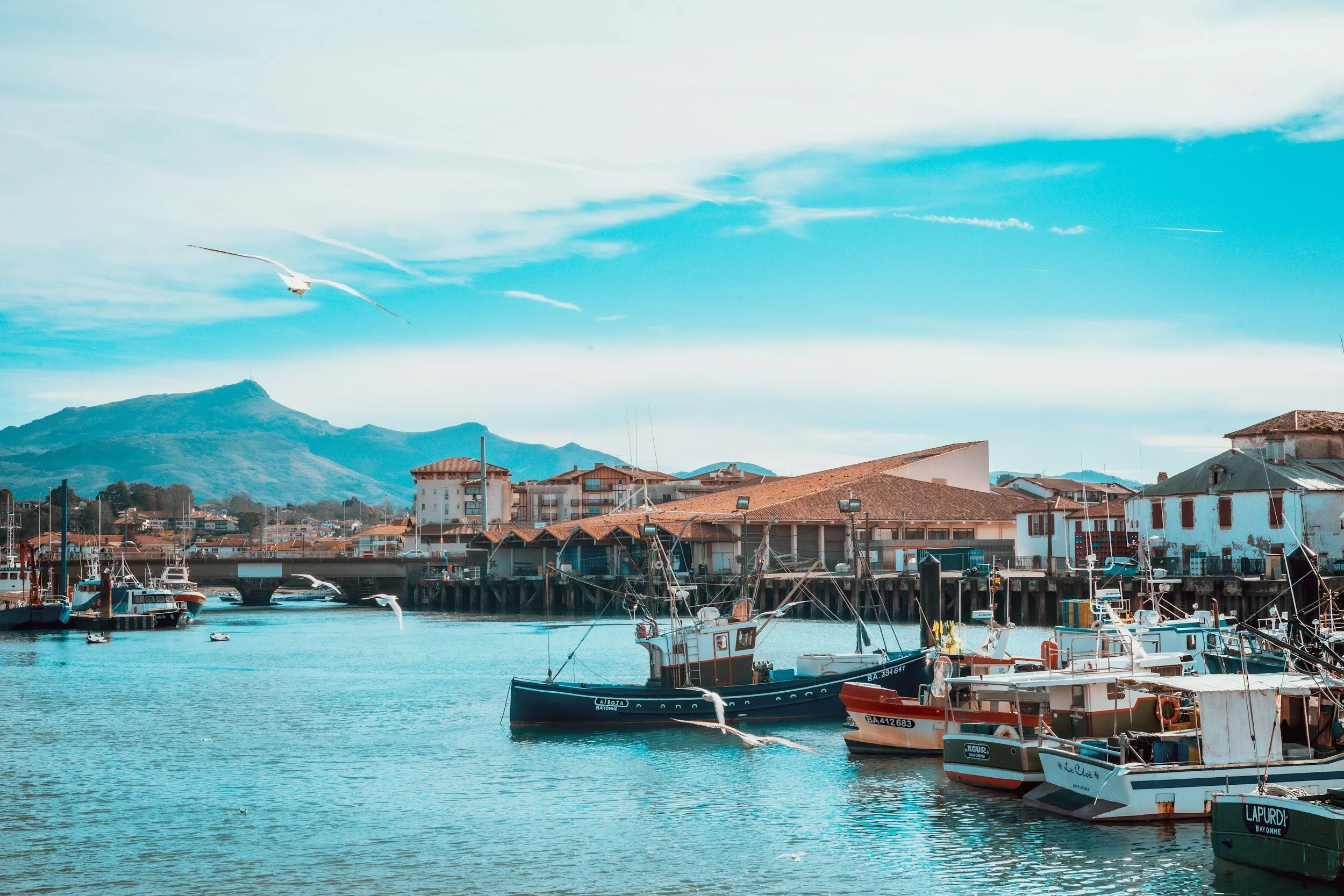
Day 3: Saint-Jean-de-Luz is better in the morning
If a Tuesday or Friday falls during your three nights in Bayonne, I would use it for Saint-Jean-de-Luz. Those are the mornings when the larger food market is usually running, and it is one of the few details in this itinerary that is worth moving a day around for. Take an earlier TER rather than drifting in around lunchtime, then check the current market calendar before you travel in case of holidays or seasonal changes.
This is also one of the easiest day trips of the week once you step off the train. The station sits close to the centre, with Les Halles, the port and the bay all within the same compact area, so you are not spending the first half hour figuring out another bus or walking in from the edge of town.
I would go to Les Halles first while the morning market is still part of the day, then head towards the port and the waterfront afterwards. There is no need to map out every street in advance. Saint-Jean-de-Luz is small enough that lunch, the harbour and time around the bay fit together naturally without making the day feel like a sequence of stops.
I would give Saint-Jean-de-Luz the morning rather than trying to tack another coastal stop onto the day. Arrive early enough to catch the market at its busiest, then leave the afternoon open for the port, lunch and the bay. If the weather is good, you can stay by the water; if it turns, you are never far from the centre.
I would also treat it as a straightforward day trip from Bayonne. Checking out first and stopping here with luggage on the way to Spain only works if you have already confirmed somewhere reliable to leave your bags. Otherwise, you have taken one of the easiest days in the itinerary and made it unnecessarily awkward.
Before lunch, have a quick look at the TER departures back to Bayonne and note the two or three trains that would suit you later. The coastal service varies by date and can be affected by works, so I would not build the afternoon around the assumption that there will always be another train exactly when you want one. The station you return from is the same one you arrived at, so once you know your options, there is very little else to organise.
Day 4: Bayonne to Donostia, without making Hendaye complicated
This is the part of the trip that looks far more confusing on a booking screen than it feels on the day. The French train finishes at Hendaye, Euskotren starts from Hendaia, and San Sebastián suddenly becomes Donostia-Amara. Once you know those three names, most of the mystery disappears.
Take the TER from Bayonne to Hendaye SNCF. When you get off, do not start looking for another SNCF platform to Spain. Head out towards the station forecourt and follow the signs for Hendaia, Euskotren’s terminus next door. The stations sit beside each other, so this is a short walk rather than a transfer across town. You do need a second ticket, though: the French TER and Euskotren are completely separate systems.
I would still give yourself 20–30 minutes between the two trains. You probably will not need all of it, but that is rather the point. It gives you time if the TER arrives a little late, if you walk out of the station in the wrong direction for thirty seconds, or if buying the Euskotren ticket takes longer than expected. There is very little to gain from designing the tightest possible connection when the E2 generally runs around every half hour from Hendaia.
When you use the Euskotren planner, search Hendaia → Donostia-Amara. The E2, usually called the Topo, takes you across the border and into central Donostia. The fare is currently around €2.90, and I would allow about 45–50 minutes for the journey. You may see shorter times quoted elsewhere, but published figures do not always agree and the network has been changing, so this is a journey I would check again shortly before travelling rather than memorising a timetable months ahead.
The station name at the other end matters! Donostia-Amara is near Plaza Easo and is not the same place as Atotxa, where the Renfe station and underground bus station are. If you have booked somewhere in Centro or Amara, the Topo leaves you in a very convenient part of the city. If your hotel says it is “near San Sebastián station”, check which station it means before congratulating yourself on the location.
I would not try to squeeze sightseeing into Hendaye on the way through. This is the day to leave Bayonne, make the border change calmly and get to Donostia with enough afternoon left to settle in. The transfer itself is easy enough once the names stop looking like three different versions of the same place.
Day 5: give Donostia the whole day
I would leave Donostia alone today rather than using it as a base for another excursion. Zarautz, Zumaia and Hondarribia are all possible without a car, which is exactly why they are so tempting when you are planning the trip. But once you start adding one of them here, your only full day in San Sebastián becomes another morning spent getting somewhere and an afternoon spent thinking about the return. For a first week across both sides of the Basque Country, I would keep those places for another time.
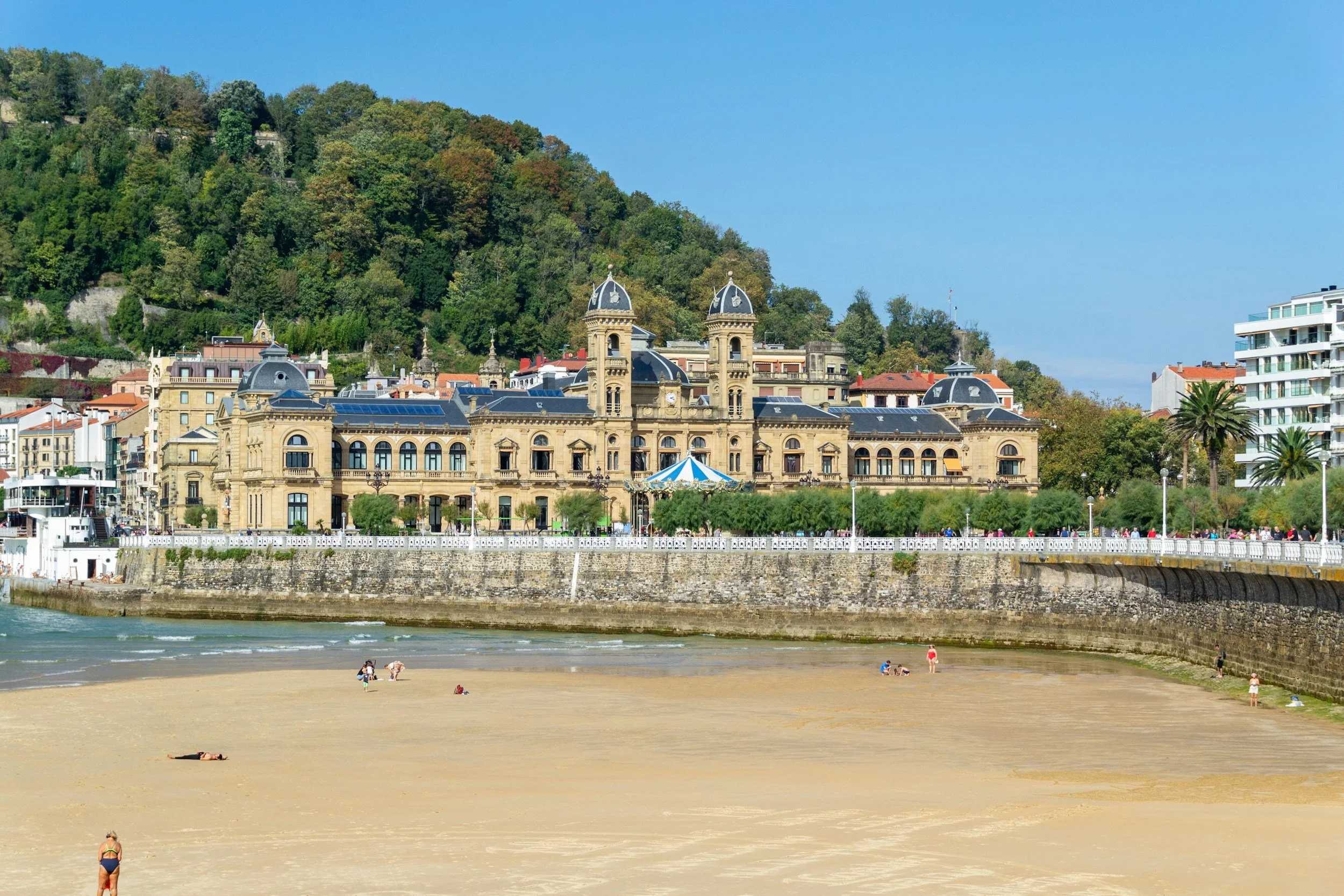
You do not need a complicated route through the city. Start around Centro and La Concha, follow the bay for as long as you feel like walking, then head towards Parte Vieja when you are ready for lunch. From there, it is easy to cross the Urumea into Gros later in the afternoon. That already gives you very different parts of Donostia in one day, and because they sit close enough together, you can spend more time in whichever area you like rather than constantly moving on to the next stop.
If you want one longer walk or viewpoint, Monte Urgull fits most naturally into this day. It rises directly behind Parte Vieja, with several paths starting around the old town, including near the Basilica of Santa María and San Telmo Museum. That means you can have lunch in Parte Vieja and decide afterwards whether you still have the legs for the climb, rather than crossing the city just to reach a viewpoint. On a clear day, the lookouts over La Concha and the coast are reason enough to go up; if it is raining hard or blowing sideways, I would skip it and carry on across the Urumea towards Gros and Zurriola instead.
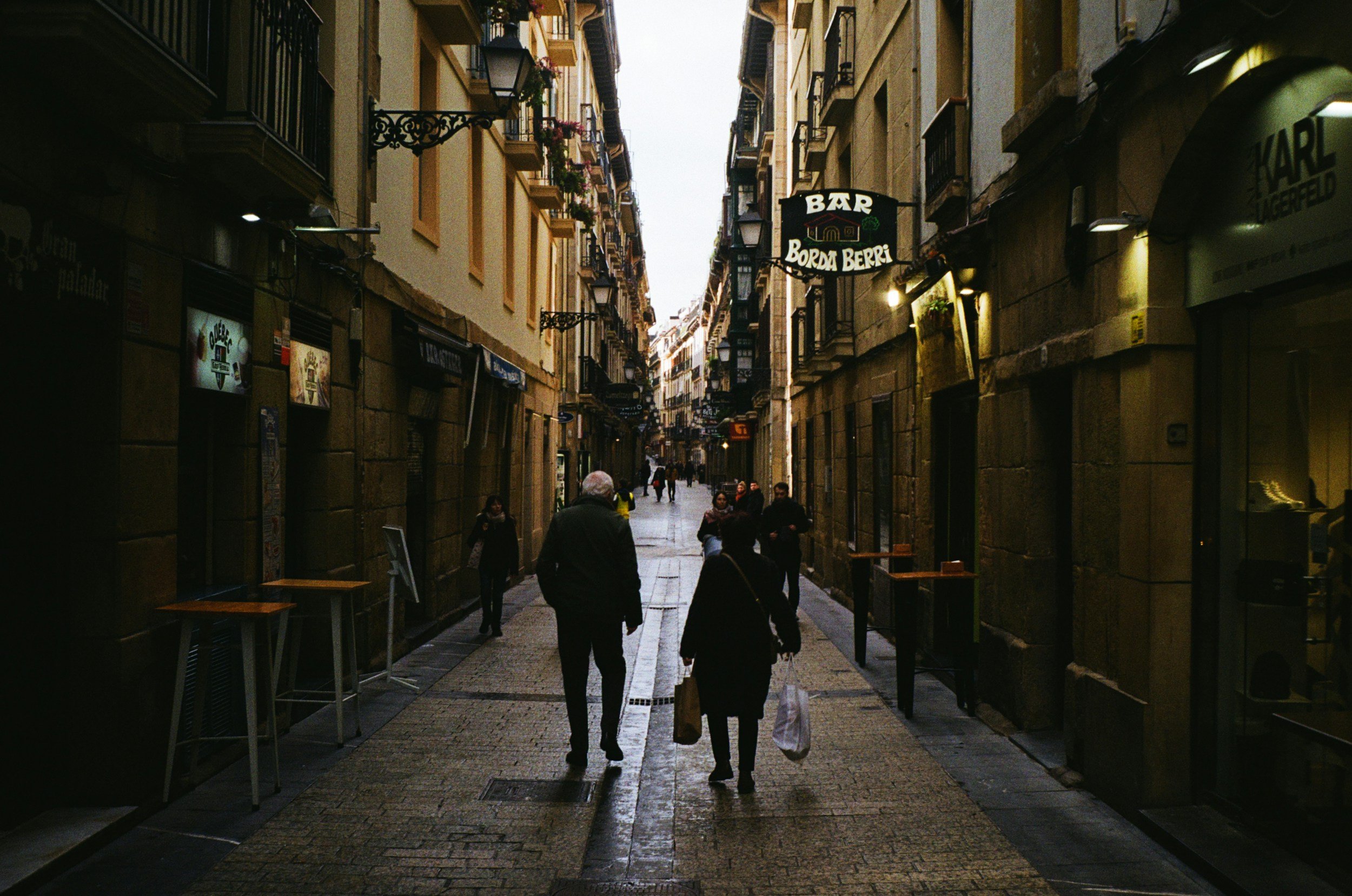
I would keep food equally flexible, but you can still be more deliberate about where you stop. Parte Vieja has the densest concentration of pintxo bars, especially around streets such as 31 de Agosto, while Gros gives you another busy food area without having to stay in the old town all evening. Unless there is a restaurant you specifically want to reserve, I would rather have lunch when you reach Parte Vieja, continue walking afterwards and decide on dinner later. You are sleeping in Donostia again tonight, so there is no last train dictating when you need to order the bill.
And if you have a few extra days and want somewhere smaller, these Spanish towns are especially easy to explore on your own, which is handy when you want somewhere interesting without needing a car or a complicated plan.
Day 6: take the coach to Bilbao and keep your afternoon
This is the transfer where I would stop trying to make the train fit. The direct coach gets you from Donostia to Bilbao in around 1h20–1h30, while Euskotren’s E1 takes roughly 2h40–3 hours. You already know the time difference by this point; the more useful detail is what that means for the day. With the coach, you can leave Donostia in the morning and still arrive in Bilbao with several usable hours left. With the E1, the journey becomes a much bigger part of Day 6.
The coach leaves from the Atotxa bus-station complex, not Donostia-Amara where the Topo brought you in from France. If you are staying around Centro or Amara, that is still easy enough to reach, but it is worth putting the correct station into Maps rather than searching vaguely for “San Sebastián station” and hoping for the best. The bus station also has lockers if your checkout time leaves you with an awkward gap before departure, although I would only use them if you genuinely need to rather than building another stop into the morning.
I would book the coach you want in advance, particularly for a summer weekend. ALSA and Avanza/PESA both operate direct services, and choosing the departure ahead of time means you can plan the morning around it rather than checking out and then discovering that the convenient service is full. The coach arrives at Bilbao Intermodal in San Mamés, where you can continue by metro or tram instead of needing a long walk with luggage.
I’d choose the E1 only if you like the idea of spending a good part of the morning on a slow local train. It stops frequently, usually runs without reservations and arrives at Bilbao-Matiko, so it feels very different from a direct intercity journey. Before choosing it, check Matiko against your hotel as well as Bilbao Intermodal. Depending on where you are staying, the arrival point may suit you better than you expect.
For this seven-day trip, though, I would still take the coach. It gets you into San Mamés much earlier and leaves far more of the day for Bilbao. The E1 is the better choice when the journey itself is something you want to spend time on, not when you are simply trying to stay loyal to the railway.
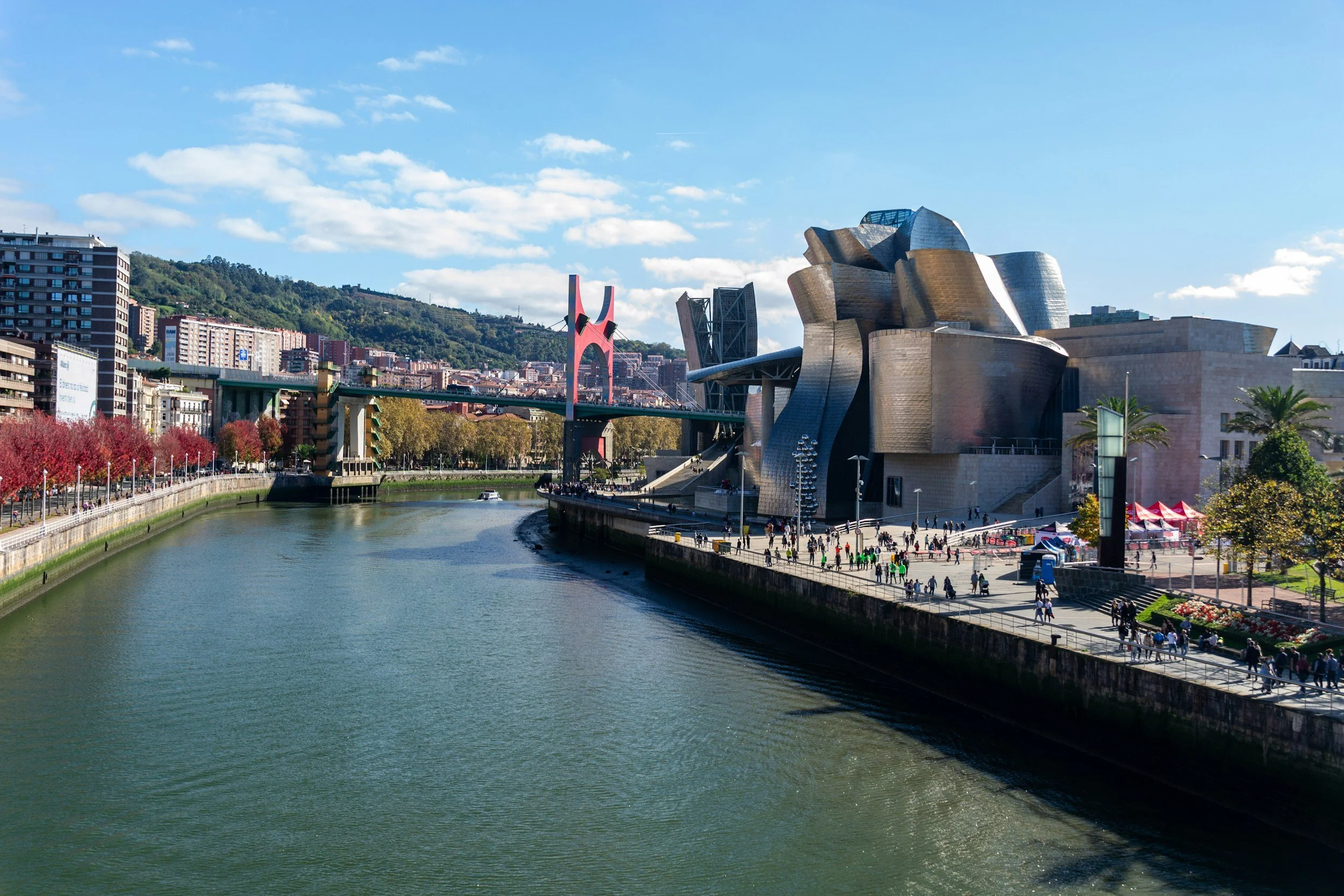
Day 7: Bilbao, but check the day of the week first
If this is your only full day in Bilbao, I would keep it in the city. The easiest way to use it is to follow the river from the Guggenheim towards Casco Viejo and Mercado de la Ribera, rather than trying to squeeze in Getxo as well. You can cover a lot on foot along this stretch, and the tram is useful when the weather turns or your legs have had enough by Day 7. The metro is better saved for longer journeys across the city.
Before fixing anything else, check the weekday. The Guggenheim usually follows a Tuesday-to-Sunday opening pattern, so a Monday can completely change the order of the day. If going inside matters to you, check the current calendar and book a timed entry once your dates are set. If it happens to be closed, I would not spend the morning trying to replace it with three lesser museums. Keep the river walk, continue into Casco Viejo and use the extra time there instead.
Sunday needs a little attention too. Mercado de la Ribera is still worth passing through as part of the Casco Viejo side of the day, but do not plan around a busy fresh-food market on a Sunday. The fresh stalls are morning-led and are commonly closed then, even when the food and hospitality areas are operating. If seeing the market properly is important to you, it is worth checking where Sunday falls before you lock in the whole week.
I would leave Getxo for another trip unless you have a second night in Bilbao. The metro makes it look like an easy add-on, but by the time you have gone out there and come back, you have given away a fair part of your only day in the city. I would much rather keep that time for Casco Viejo, have lunch without rushing, and walk back along the river at your own pace rather than spending the afternoon working around another departure.
If you are flying out that evening, I would plan the day backwards from the airport rather than treating the whole afternoon as free time. Bilbao Intermodal at San Mamés is useful because the airport bus leaves from the same area, but you still need to collect your luggage and get back there with enough time to spare. An evening flight can make Day 7 look longer than it really is, especially once checkout and bags are involved. If the timings start to squeeze the city into half a day, that is when I would add a second night in Bilbao. One full day is enough to enjoy the city properly; a few rushed hours between checkout and the airport is a very different kind of ending!
Continuing farther west? I would look at the Asturias towns I’d stay in without a car before booking anything. Asturias is gorgeous, but choosing the wrong base there can turn a car-free trip into far more work than it needs to be.
What I’d leave for another trip…
This is the point where I would stop adding pins to the map. Once you start looking properly, there is always one more Basque village, another stretch of coast or somewhere that is technically reachable by bus. The problem is that seven days disappears very quickly when half a day starts revolving around one connection there and another one back.
On the French side, I would leave Espelette, Ainhoa, Sare and La Rhune out of this route. They sit beyond the easy coastal line that makes the first part of the week so simple, and once you start linking them together the day becomes much more dependent on bus times. If one of them is a real priority, I would give it its own day and remove Biarritz or Saint-Jean-de-Luz rather than trying to squeeze it in as a bonus stop.
Around Donostia, the choice is slightly different because Hondarribia, Zarautz and Zumaia are all quite reachable. Hondarribia has Lurraldebus connections, while Euskotren runs towards Zarautz and Zumaia. The issue is simply that they would take over the one full day you have in San Sebastián. Getaria fits better into that same longer Gipuzkoa-coast version of the trip, rather than being added on top of everything else. And if a cider-house evening is high on your list, plan around it properly. A reservation outside the centre plus the journey back is a different evening from just staying in Donostia for dinner.
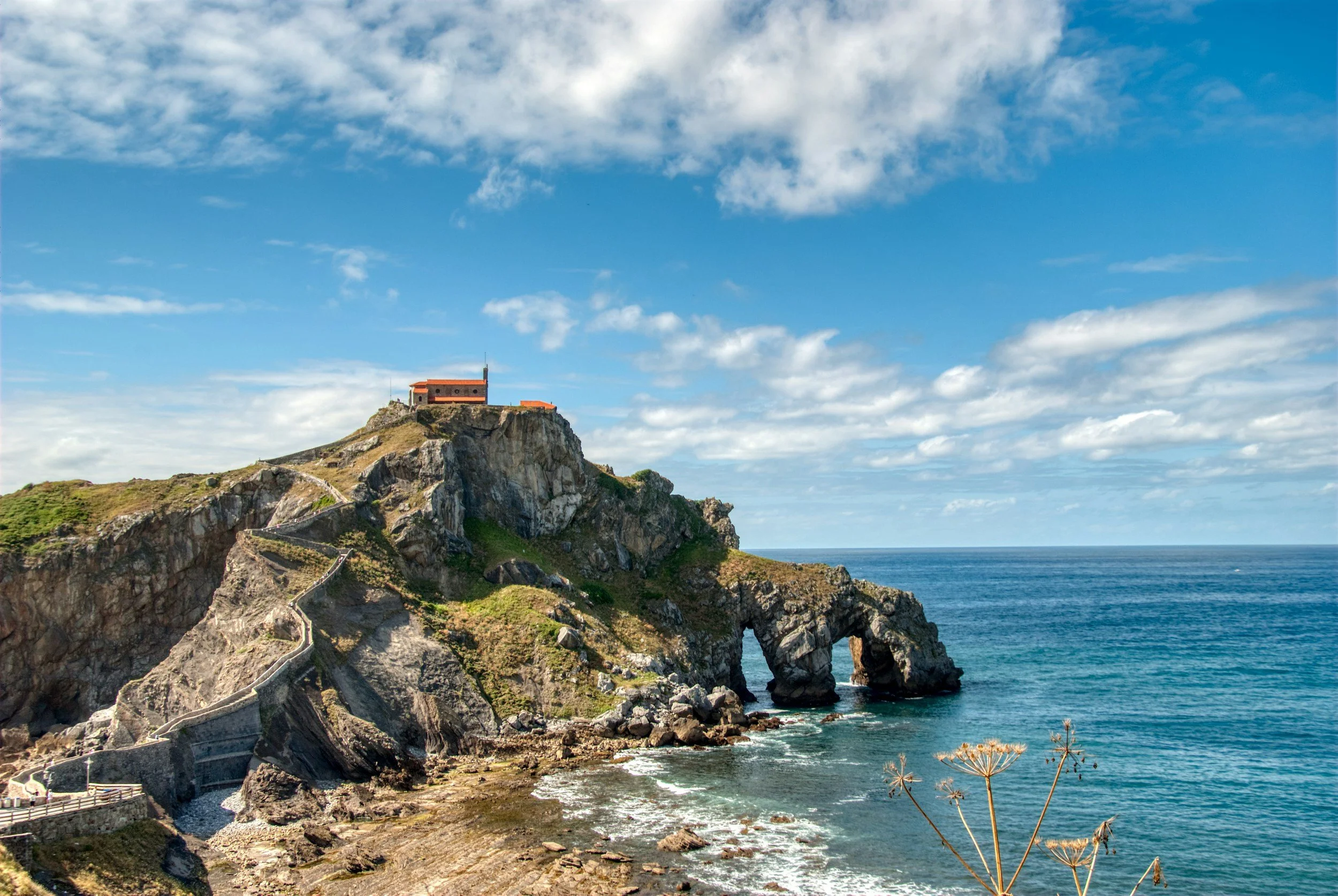
Then there is the Bilbao side. Gernika, Bermeo and Gaztelugatxe are the ones I would save for an extra day rather than trying to cram them into Day 7. Public transport can get you into that part of Bizkaia, but once you start combining places, the return journey becomes part of the plan whether you want it to or not. Gaztelugatxe can also require timed access depending on the date, so it is not something I would casually add because you happen to have a few hours free. If it is one of the main reasons you are coming, add another night in Bilbao or book a tour and give it the time it needs.
The easiest way to decide what deserves more time is to look at the place you would be genuinely disappointed to miss. If that is Gaztelugatxe, give Bilbao another night. If you keep coming back to Zumaia or Getaria, I would spend longer around Donostia and let Bilbao go this time. And if it is Espelette, Ainhoa or La Rhune that keeps pulling you in, the trip probably wants to be more focused on the French Basque countryside in the first place.
It is much nicer to make that choice before you go than to keep adding stops until half the holiday is spent checking whether you are going to make the next bus.
If the week needs a little reshuffling
This route is not so delicate that one rainy day ruins it. The part I would move around most freely is the Bayonne block. If Tuesday or Friday lines up with the Saint-Jean-de-Luz market, keep that morning for Saint-Jean-de-Luz. If the forecast gives you one bright day and one day of sideways Atlantic rain, give the better one to Biarritz. There is no reason to stubbornly follow “Day 2, Day 3” because a plan written months ago says so. Once you reach the Bayonne–Donostia transfer, though, I would stop rearranging things and keep the hotel moves as booked.
Summer dates deserve a quick calendar check before you pay for anything non-refundable. Fêtes de Bayonne, Semana Grande in Donostia and Aste Nagusia in Bilbao are big enough to change the feel of the cities, and the San Sebastián International Film Festival can have a similar effect on accommodation. You may love landing in the middle of one of them, but it is better to choose that knowingly than wonder why every sensible hotel has suddenly become wildly expensive and your usual bus stop has disappeared behind a temporary barrier.
In winter, I would still do the trip, just with less optimism about how much can be added at the edges. The cities and main coastal route remain usable, but shorter daylight and rough Atlantic weather leave less room for the “we could also pop over there” ideas that look so harmless on a map. A missed connection at 15:30 feels rather different when it is nearly dark. Keep the core days, check the live services and let some of the longer walks be optional.
If long walks, stairs or luggage are going to make the trip harder, I would spend more energy choosing the right hotel location than hunting down the cheapest transport card. In Bayonne, stay close to the station, river and bridge into Grand Bayonne. In Donostia, Centro or Amara keeps the Topo arrival and most of the city within easy reach. In Bilbao, being close to metro, tram or San Mamés will be far more useful than a hotel that saves you a few euros but adds a long walk every time you leave. I would also give Hendaye/Hendaia a generous connection and check lift and platform information shortly before travelling, because works and replacement buses can change what is easy on the day.
TXIK TXAK does have TAD and TPMR services, but I would not keep them in reserve as a simple tourist backup. TPMR requires advance registration and a French Carte Mobilité Inclusion, while TAD needs booking and depends on availability. If step-free travel or assistance is important, check the key journeys individually before committing to hotels rather than assuming there will be an on-demand solution once you arrive.
And if two hotel changes already sound irritating while you are still sitting at home planning, listen to that feeling. The much calmer version is Bayonne + Donostia, with Bilbao left for another trip. You move once, gain more time around the French coast and Gipuzkoa, and can add Zarautz, Zumaia or Hondarribia if you want to. I would much rather do that than keep Bilbao and turn it into an exhausting out-and-back purely because it feels wrong to leave a famous city off the itinerary.
With six nights, I would still keep the same route and spend just one night in Bilbao, as long as you can leave fairly late on Day 7. If your departure is earlier than that, something needs to go. I would much rather lose one stop properly than keep all three bases and end up rushing through each of them. Bayonne should still feel like a beginning, Donostia needs its full day, and Bilbao deserves more than a quick lunch before you head to the airport.
The Basque Country trip I’d book
If I were booking this tomorrow, I would start with three nights in Bayonne, two in Donostia and one or two in Bilbao, then check the two journeys that can genuinely affect the plan: Hendaye/Hendaia on Day 4 and the Donostia–Bilbao coach on Day 6. Once those line up with your dates, I would book the hotels and stop trying to improve the route. At some point another hour of tabs just produces another village you now feel guilty about leaving out.
And I would keep a few smaller things saved for when you are there, rather than filling every day with reservations. In Bayonne, Xokola Etxetera is a lovely one to know about: it is a small family chocolate shop with more unusual flavours including Espelette-chilli chocolate, ewe’s-milk ice cream and black cherry in the warmer months. Much more fun than buying the first generic box of chocolates you see on the main shopping street.
In Donostia, I would save Gros for an evening rather than spending the entire trip around Parte Vieja. If your stay happens to include a Thursday, pintxopote starts around 19:30 in the neighbourhood, when bars offer a pintxo and drink together and the streets get noticeably busier. Bodega Donostiarra Gros on Peña y Goñi is an easy place to have saved if you want somewhere specific to start rather than wandering around hungry trying to judge every bar from the doorway.
And in Bilbao, I would put Mercado del Ensanche in Maps as well as Mercado de la Ribera. It is near Moyúa, opens in the morning from Monday to Saturday and is still very much a fresh-food market, with fish, meat, bread and produce stalls rather than being mainly a visitor stop. It fits particularly well if you are already around the Guggenheim/Ensanche side of the city and want somewhere more everyday before heading towards Casco Viejo. If rain catches you nearby, Azkuna Zentroa is also a good detour: the old wine warehouse now has exhibitions, cafés, a reading area and the slightly surreal sight of its rooftop swimming pool through a transparent floor above the atrium.
I’d keep those extra places as ideas to have saved rather than things you feel you have to fit in. They are useful when you happen to be nearby, but the trip is better when every good recommendation does not immediately become another plan.
If you keep thinking about Gaztelugatxe, give Bilbao another night. If it is Zumaia, Getaria or the Gipuzkoa coast that you are most drawn to, stay longer around Donostia instead. And if the inland villages are the part you really want to see, I would give that section of the trip more time and consider a car for a couple of days rather than trying to reach everything by bus.
If Bayonne, Biarritz, Saint-Jean-de-Luz, Donostia and Bilbao are already the places you most want to see, though, I would leave the route alone. Book the three bases, check the two important transport days and stop trying to squeeze one more place into the week. You will almost certainly leave with somewhere else you want to come back for, which is a much nicer “problem” to have.
FAQ: planning the Basque Country
Can you visit both the French and Spanish Basque Country without a car?
Yes, as long as you are happy to build the trip around the coast and cities rather than trying to reach every inland village. Bayonne, Biarritz, Saint-Jean-de-Luz, Donostia/San Sebastián and Bilbao fit together surprisingly neatly. Where I would stop relying on public transport is a trip built mainly around village-hopping, cider houses and countryside viewpoints. You can reach some of them, but the timetable starts running the holiday rather than helping it.
Is there a direct train from Biarritz to San Sebastián?
No, and this is one of those searches that makes the journey look more confusing than it is. You take the French train to Hendaye, walk over to the neighbouring Hendaia Euskotren station and continue on the E2 Topo to Donostia. I would not waste time hunting for a magical through-ticket from France to San Sebastián. Plan the two legs separately and give yourself a comfortable connection at the border.
Are Hendaye station and Hendaia Euskotren the same station?
They are two separate stations sitting beside each other. Hendaye is the SNCF station on the French network; Hendaia is Euskotren’s terminus for the E2 towards Donostia. That distinction matters when you are searching timetables, but on the ground the transfer is short. I would still allow around 20–30 minutes rather than building the day around the tightest possible connection.
Which San Sebastián station does the train from Hendaye arrive at?
The Euskotren E2 arrives at Donostia-Amara, near Plaza Easo. It does not arrive at the Renfe station or the underground bus station at Atotxa. This is worth knowing before you book a hotel or search for luggage storage because “San Sebastián station” can mean several different places depending on which transport company you are using.
Should I stay in Bayonne or Biarritz without a car?
For this particular trip, I would stay in Bayonne. It gives you the better position for Saint-Jean-de-Luz, Hendaye and the eventual move into Spain, while Biarritz is easy to visit by Tram’bus for the day. I would choose Biarritz instead only if waking up by the sea matters more to you than making the rest of the route easier. That is a perfectly fair trade, but it is a different priority.
Is it better to take the train or bus from San Sebastián to Bilbao?
I would take the coach unless you specifically want a slow local-train journey. The direct coach takes around 1h20–1h30, while Euskotren’s E1 takes roughly 2h40–3 hours. The E1 can be enjoyable if you like local rail and are happy to give the journey most of the morning; for a seven-day trip, I would rather arrive in Bilbao earlier and keep the time.
Is the Euskotren from San Sebastián to Bilbao scenic?
Parts of the E1 journey are attractive, and the slower local route gives you much more of a sense of the towns between Donostia and Bilbao than the motorway coach does. I still would not choose it purely for the scenery unless you enjoy slow rail for its own sake. It is nearly twice the journey time, so this is one of those cases where “scenic” needs to be something you genuinely want, not just a nicer word for slow.
How many days do you need for the French and Spanish Basque Country?
I think seven days is the minimum I would choose for both sides if you want Bayonne, the French coast, Donostia and Bilbao without rushing. Six nights can work with a late departure from Bilbao on Day 7; seven nights is much nicer if you want the final day completely free. With fewer days, I would remove a place rather than shorten everything.
Can you do Biarritz, Saint-Jean-de-Luz and San Sebastián without changing hotels every night?
Yes, and I would strongly recommend it. Stay in Bayonne for three nights, visit Biarritz and Saint-Jean-de-Luz with a day bag, then move to Donostia. Both French coast days are easier when you are not checking out, finding somewhere for a suitcase and checking back in a few hours later.
Do I need a Mugi or Barik card for a one-week Basque Country trip?
Probably not both. With only two nights around Donostia and one or two in Bilbao, I would look at the journeys you are genuinely planning before buying regional cards. For this itinerary, paying separately for a handful of local trips is often simpler than collecting transport cards because a guide told you they were “essential.”