
Where I'd stay in Scotland if the night sky was the priority
Scotland in winter isn’t always an obvious choice. The days are short, the weather shifts quickly, and most travel guides quietly steer you towards spring or summer instead. But if what you’re actually looking for is dark sky, not scenery in daylight, this is when Scotland starts to make sense.
By early evening, especially north of Inverness or inland around Kingussie, the light drops off quickly and stays gone. You don’t have to wait until midnight or drive hours into remote terrain. Leave a town, follow a smaller road for ten or fifteen minutes, and the sky changes in a way that’s easy to notice. Street lighting disappears, traffic thins out, and what’s above you starts to feel clearer, not because it’s spectacular in a cinematic way, but because there’s very little interfering with it.
What most people underestimate is how much the experience depends on where you stay, not where you “go.” Pulling up at a designated viewpoint sounds like the right idea, but it often means headlights, people coming and going, and light you didn’t account for. A cabin just outside somewhere like Cannich or along a quieter stretch near Loch Ness will usually give you better conditions without any effort. You finish dinner, step outside, and you’re already in the right place.
This guide focuses on that version of Scotland. Not the well-known stops, but the areas where winter evenings actually work, where you don’t need to build your night around driving or timing. Places where the sky is consistently dark enough to matter, and where the rest of the stay supports that without overcomplicating it.
If you want to pair your stargazing nights with daytime walks, these scenic paths across the UK give you some beautiful routes to add to your trip.
Dalriada Lodges: coastal stargazing & quiet luxury in Aberdeenshire
Dalriada Lodges sits just far enough outside Oban to feel removed, but not so far that getting there turns into a project. You follow the A816 south, past the bend at Loch Feochan where the road hugs the water for a few minutes, and then continue beyond Arduaine Garden. It’s that stretch, between Arduaine and Kilmelford, where things start to thin out properly. Fewer houses, longer gaps between lights, and by the time you turn inland towards the lodges, it’s already darker than it was ten minutes earlier.
The lodges aren’t set up as a “stargazing destination”. They sit slightly back from the coast, surrounded by open ground and low tree cover, and once you’ve closed the door behind you in the evening, there’s very little left competing with the sky. No nearby main road, no passing foot traffic, and only the occasional distant light from a farmhouse further down the valley.
Step outside after 7 pm in December and your eyes take a second to adjust. Not because it’s pitch black in a dramatic way, but because it’s consistently dark in every direction. You’re not dealing with stray light from a car park or a cluster of houses nearby. It’s just low, even darkness, which is exactly what you want if you’re hoping to actually see anything.
A small but important detail here is how the cabins are positioned. Several face out towards fields rather than directly towards each other, so you’re not standing there trying to angle yourself away from someone else’s window or outdoor light. You walk out, maybe onto slightly frosty grass, and you can look straight up without thinking about it. That sounds obvious, but it’s surprisingly rare.
If you want to get a slightly wider horizon, it’s worth driving about 10–15 minutes towards Clachan Bridge. Take the B844 road just before the bridge onto Seil Island, and pull over near the shoreline after crossing. There’s very little lighting out there, and because you’re surrounded by water on both sides, the sky feels more open. On still nights, you’ll see reflections in the narrow channels between the islands, which adds more depth than you get inland.
Back at Dalriada, evenings tend to fall into place without much planning. Most people stop in Oban before heading down, picking up food along George Street or grabbing something simple from the deli counters near Stafford Street. Once you’ve left town, there isn’t much reason to go back out. By early evening, the A816 has quieted down, and after that it’s mostly just you and the occasional car passing in the distance.
Weather here is less predictable than further inland, but it moves quickly. You can have low cloud sitting over the hills early in the evening, then a clear break opens up around 9 or 10 pm when the wind shifts. It’s worth checking the sky more than once instead of writing the night off. The coastal air can clear faster than expected, and when it does, visibility is sharper than you’d assume this close to the Atlantic.
Dalriada Lodges works because nothing about it feels forced. You’re not driving out late at night to stand in a car park, and you’re not relying on a single viewpoint to “deliver.” You’re already in the right place. You step outside, give your eyes a moment, and the sky does the rest.
If you’re spending a few days in the city before heading north, this guide to Edinburgh’s bookshops and cosy corners helps you slow down between travel days.
Killiehuntly Farmhouse & Cottages: highland stillness just outside Kingussie
Killiehuntly sits in a quiet pocket of the Cairngorms that most people drive straight past without realising what’s there. You turn off the A9 at Kingussie, follow the road past the railway line and the golf course, then continue out towards the B970 where things start to feel more open. From there, a smaller single-track road leads you past scattered farmhouses and low stone walls before the landscape flattens out near the edge of Insh Marshes. That’s where Killiehuntly is set, slightly raised, with long views across the valley.
It doesn’t feel too remote. You’re still only a few minutes from Kingussie, and trains run regularly along the line just beyond the trees. But at night, the area quiets down completely. There’s very little through-traffic, and the nearest consistent light source is far enough away that it barely affects the sky.
Step outside after dinner and the first thing you notice is how still it is. The marshes absorb sound, and in winter, especially when there’s frost on the ground, everything feels slightly muted. You can sometimes hear the faint movement of birds settling in the reeds, or the distant rumble of a late train heading north, but otherwise it’s just silence.
The sky here isn’t about drama, it’s about clarity. Because you’re set in a broad, open valley rather than deep forest, the horizon feels wider, and you can see more of the sky without needing to move around. On clear nights, constellations sit low over the outline of the hills beyond Newtonmore, and the lack of nearby lighting makes even smaller stars easier to pick out.
A short walk makes a noticeable difference. If you follow the track out towards the marshes, even just five minutes from the farmhouse, you leave behind the last traces of light from the buildings. The ground can be uneven in winter, sometimes frozen or slightly boggy at the edges, but once you’re out there, the openness changes how the sky feels. It’s less enclosed than forest locations, more expansive, especially when the air is clear.
If you want a slightly different perspective, it’s worth driving ten minutes to Ruthven Barracks after dark. The ruins sit on a small rise just outside town, and from the top, you get a wider view back across the valley towards the Cairngorms. Park near the entrance and walk up slowly. Once you reach the top, there’s very little light interference, and the elevation gives you a cleaner horizon line.
Back at Killiehuntly, evenings tend to feel structured without being busy. Dinner is usually centred around the farmhouse itself, and that makes a difference in winter when you don’t want to be driving around after dark. During the day, you might head into Kingussie briefly, stopping at a local café along the high street or picking up something small from the deli near the station, but most of the time you stay close to where you are.
Weather here is more stable than on the west coast, but cloud can still roll in from the hills without much warning. The advantage is that when it clears, it often stays clear for longer stretches. Cold, dry nights in January and February can give you some of the sharpest visibility you’ll get anywhere in Scotland.
And if you’re travelling alone and want coastal walks with easy access to nature, this solo travel guide to Ayr fits well with a quieter Scotland trip.
Aird House & Aird Steading Cottage: a quieter side of Loch Ness that actually gets dark
Aird House and Aird Steading Cottage sit on the north side of Loch Ness, and the difference compared to the more visited side is obvious the moment you drive in.
Most people stick to the A82 along the western shore, moving between Drumnadrochit and Fort Augustus, where there’s always a bit of traffic, even in winter. Here, you come in the other way. From Inverness, you head out via Tomnahurich Street, cross the Caledonian Canal at Dochgarroch, then follow the B862 as it curves along the quieter side of the loch. It’s a slower road, narrower in places, and once you pass the turn-off towards Bona Lighthouse, you start to notice how little is actually around.
No continuous street lighting or line of cars. Just scattered houses set back from the road and long dark stretches in between.
By the time you reach Aird, it already feels like evening has settled in properly, even if it’s only just gone 5 pm in December. That early darkness is part of why this spot works so well. You’re not waiting around until late to see anything. You can have dinner, step outside, and the sky is already there.
The cottages face out towards the loch, and that changes how everything feels at night. Instead of looking up through trees or between buildings, you’re looking out across open water towards the opposite shoreline. On still nights, you’ll sometimes catch a faint reflection of the brighter stars on the surface, especially if you walk a few steps down towards the shoreline where there’s less obstruction.
It’s worth doing that. Not in a “go for a proper walk” kind of way, but just stepping away from the cottage lights for a few minutes. Follow the small road down towards Bona, or simply move a bit closer to the edge of the loch, and you’ll notice the difference almost immediately. The sky feels wider, less interrupted.
If you want a slightly different angle, there’s a small layby just before Bona Lighthouse where the view opens up across the narrowest part of the loch. It’s not marked as anything special, but it works. No overhead lights, barely any passing cars, and a clear line of sight across the water. On colder nights, when the air sharpens a bit, this is where the sky tends to feel most defined.
Back at Aird, evenings stay simple. Most people stop in Inverness before heading out, usually somewhere along Church Street or inside the Victorian Market to pick up food, because once you’re here, there’s no reason to go back out again. After 7 pm, the road is almost completely empty, and the only movement you’ll notice is the occasional distant light across the loch.
Weather is slightly unpredictable, but not in a frustrating way. Cloud can sit low over the water early in the evening, then break later on. It’s quite common for the sky to clear around 9 or 10 pm when temperatures drop, which makes it worth checking more than once instead of assuming the night’s a write-off.
Aird is not as obviously “remote” as parts of the Highlands. What it does better is consistency. It’s easy to reach, it stays quiet, and the darkness is steady rather than patchy. You don’t need to plan anything or go looking for the right spot. You’re already in it, which, in winter, is exactly what you want.
Highlands Log Cabins at Eagle Brae: above Strathglass, where the sky opens properly
Eagle Brae is one of those places where the drive in quietly sets the tone before you’ve even arrived. You leave Inverness, pass through Beauly, and follow the A831 as it winds deeper into Strathglass. It’s a calm, slightly repetitive road, river on one side, trees on the other, and then it starts to thin out. Fewer houses, longer gaps, and by the time you reach Cannich, it already feels like you’ve left most things behind.
There’s a small Spar shop in Cannich, a narrow junction, and then you turn off and begin the climb up towards the cabins. It’s not a long drive, but it changes everything. You’re no longer in the glen, you’re above it. The trees fall away slightly, the road tightens, and when you step out of the car at Eagle Brae, the first thing you notice is how open it feels.
That openness is the whole reason this place works.
At night, there’s nothing to compete with the sky. No road noise, no movement, and no nearby village glow creeping in from the side. You might spot a faint light down near Cannich if you look for it, but it’s far enough away that it doesn’t interfere. Most of the time, it just disappears into the background once your eyes adjust.
You don’t need to walk anywhere special here. That’s the difference compared to a lot of other places. Step outside your cabin, give it a minute or two, and the sky starts to come through properly. Because you’re higher up, you’re not dealing with trees blocking your view or having to shift position to get a clearer angle. It’s just open in every direction.
If you do want to move slightly, follow the gravel track that runs between the cabins. Walk a few minutes away from your own outdoor lights and it gets noticeably darker again. The ground can be uneven or lightly frozen in winter, but nothing difficult, and once you stop, the quiet is almost complete. No wind through dense forest, no water noise nearby, just still air and a wide sky.
One thing that’s worth knowing here is how quickly the weather can change. Early evening might be completely overcast, especially with cloud moving through from the west, and then around 9 or 10 pm it breaks open in patches. Because you’re above the valley, you sometimes end up above low cloud rather than inside it, which gives you clearer conditions than you’d expect just a few kilometres away.
During the day, everything stays just as low-key. Most people stop in Beauly on the way in, usually along the High Street, to pick up food or something easy to cook, because once you’ve arrived, you won’t feel like heading back out. Cannich has the basics, but it’s quiet enough that you’re not building your day around going there. You might take a short drive towards Glen Affric, especially along the road past Dog Falls where the forest opens up slightly, but most of the time you stay close.
Evenings settle early here. By 7 pm in winter, it already feels late, and that works in your favour. You don’t need to stay up waiting for darkness, it’s already there, and it stays consistent rather than coming and going with passing cars or nearby lights.
Eagle Brae works because it removes the effort. You’re not driving out to a viewpoint, you’re not checking maps for the best angle, and you’re not sharing the space with anyone else. You basically open the door, step outside, and you’re already in a place where the sky is stunning.
If you’re passing through Scotland before heading into the Highlands, this guide to Glasgow’s cafés, bookshops and quiet pubs is perfect for a slow day between travel legs.
The Buchan: northeast Scotland where the sky feels wide and close to the sea
The Buchan isn’t somewhere people talk about when they plan a Scotland trip, which is exactly why it works so well for this. Once you get north of Aberdeen, things change quite quickly. You follow the A90 out past Bridge of Don, the houses thin out after Balmedie, and by the time you reach Cruden Bay, you’re already in a part of the country that feels more open than expected.
It’s not remote in a dramatic way. There are still towns, still roads, still people going about their day. But the land is flatter, the coastline is exposed, and there’s very little blocking the horizon. That’s what makes the sky feel different here. You’re not looking up through trees or between buildings, you’re looking straight out over the North Sea with nothing interrupting it.
One of the easiest places to see that is just outside Slains Castle. Park near the end of Harbour Street in Cruden Bay, walk past the last row of houses, and follow the path along the cliffs. It only takes a couple of minutes before the village lights fall behind you. On a clear evening, the sky stretches cleanly above the water, and because the sea is so dark, there’s nothing reflecting light back at you. It feels simple, but it works.
Further north, Pennan feels even more tucked away. The road down into the village is narrow and steep, and once you’re there, it’s basically one line of houses facing the sea. In winter, especially midweek, it’s quiet enough that you’ll barely see anyone after dark. If you walk back up the road a few minutes or take the path that climbs slightly above the village, you lose the last bits of light very quickly. From there, it’s just open sky and the sound of the sea below.
Around Peterhead and up towards Fraserburgh, the same pattern continues, but you need to be a bit more selective. There’s more activity around the harbours, so it’s worth heading slightly out of town. Near Kinnaird Head, for example, if you move a little away from the lighthouse area and follow the coastal edge where there’s less lighting, you’ll notice the difference straight away.
Where you stay matters here just as much as where you walk. Cottages just outside Cruden Bay, especially along the smaller roads heading inland from the A975, tend to be darker than anything right in the village. The same goes for places a few minutes outside Peterhead, where houses are more spread out and there’s less ambient light. It doesn’t need to be remote, just slightly removed.
Daytimes are simple in this part of Scotland. You might stop somewhere along the harbour in Cruden Bay, or pick up something from a small shop in Peterhead, but you’re not filling your day with plans. That actually helps, because once it gets dark, you’re not trying to fit stargazing around anything else. It just becomes part of the evening.
Weather can move quickly along this stretch of coast. Cloud coming in from the North Sea can cover everything for a while, then clear just as fast. You’ll often see breaks forming out over the water before they reach land, which gives you a bit of warning. It’s worth stepping outside more than once rather than assuming the night is done.
What actually makes these places work once you’re there
There are a few things that don’t really show up in guides, but make a clear difference once you’ve arrived.
The first is not trusting the early evening sky too much. In places like Strathglass or around the north side of Loch Ness, it’s very common for everything to look completely grey at 6 or 7 pm. Low cloud sits over the hills, and it feels like that’s it for the night. Then an hour later, you step outside again and there are breaks you didn’t expect, sometimes just for 20–30 minutes, but enough to change the whole experience. It’s worth checking more than once instead of deciding too early.
Light from where you’re staying matters more than most people realise. At places like Eagle Brae above Cannich or the cabins near Kingussie, even a small outdoor light or a brightly lit window behind you can dull what you see. Turning everything off, stepping away from the building for a minute, and letting your eyes adjust properly makes a bigger difference than driving to a new spot.
Position is another one. You don’t need a “viewpoint,” but you do need a bit of space. Standing right next to a wall or under trees limits how much of the sky you actually take in. A short walk, sometimes just along a gravel track or a field edge, opens things up quickly. At Dalriada, that might just mean moving a few steps away from the cabin towards the darker side of the field. At Aird, it’s walking slightly down towards the loch where there’s less light behind you.
If you’re on the coast, face the water. Around the Buchan or near Bona on Loch Ness, the difference is noticeable. Inland, in the Cairngorms, it’s more about finding that balance between being sheltered and having a clear line of sight. You don’t want to be fully exposed if it’s icy, but you also don’t want to be boxed in by trees.
One practical thing people rarely mention is how quickly you cool down once you stop moving. Even if the temperature doesn’t feel extreme, standing still for ten minutes can feel very different from walking. Most people end up going in and out a few times rather than staying outside for long stretches, and that tends to work better anyway, especially on nights when the sky is changing.
And then there’s the part you can’t really plan for. You might step outside expecting a quick look, and then stay longer because your eyes keep adjusting and picking up more. Or you go out twice and see nothing, and then the third time it clears unexpectedly.
That’s usually how it works here. Not perfectly timed, not predictable, but easy to access if you’re already in the right place.
If you like the idea of something a little different without spending a fortune, these affordable castle stays in the UK are a fun alternative to cabins.
FAQ: stargazing in Scotland
Is Scotland worth visiting in winter for stargazing?
Yes, and in many ways it makes more sense than summer.
In places like Inverness or further into the Highlands, darkness settles in before 4–5 pm in December, which gives you long evenings without needing to stay up late. You’re also dealing with fewer people, less traffic, and noticeably lower light pollution once you leave built-up areas.
The trade-off is weather. You won’t get clear skies every night, but when it does clear, the visibility in winter, especially in colder, drier air, tends to be sharper than people expect.
Where can you actually stay for dark skies in Scotland (without driving at night)?
This is where most people get it wrong. It’s less about “going somewhere” and more about choosing the right place to stay.
Cabins and cottages just outside small towns tend to work best, especially around:
Kingussie and the wider Cairngorms
Cannich (Eagle Brae area)
the quieter side of Loch Ness near Bona
coastal areas like Cruden Bay and Pennan
The key is being just far enough from concentrated light that you can step outside and already be in a dark enough environment, without needing to drive anywhere in the cold.
Do you need to stay up late to see stars in Scotland in winter?
No, and that’s one of the main advantages of going in winter.
In areas like Kingussie or around Loch Ness, it’s fully dark early in the evening. You can go out at 7 pm and see just as much as you would later at night.
What matters more is checking the sky more than once. In places like Strathglass, cloud often sits in the early evening and clears later. The best conditions don’t always happen at a fixed time.
Can you see the Milky Way in Scotland without a telescope?
Yes, if the conditions are right.
In darker areas like the Cairngorms or Strathglass, and especially when you’re staying somewhere with very little surrounding light, you can see the Milky Way with the naked eye. It won’t look like long-exposure photos, but it’s clearly visible as a lighter band across the sky.
The biggest factor isn’t equipment, it’s darkness. Even a small amount of nearby light can make it harder to see.
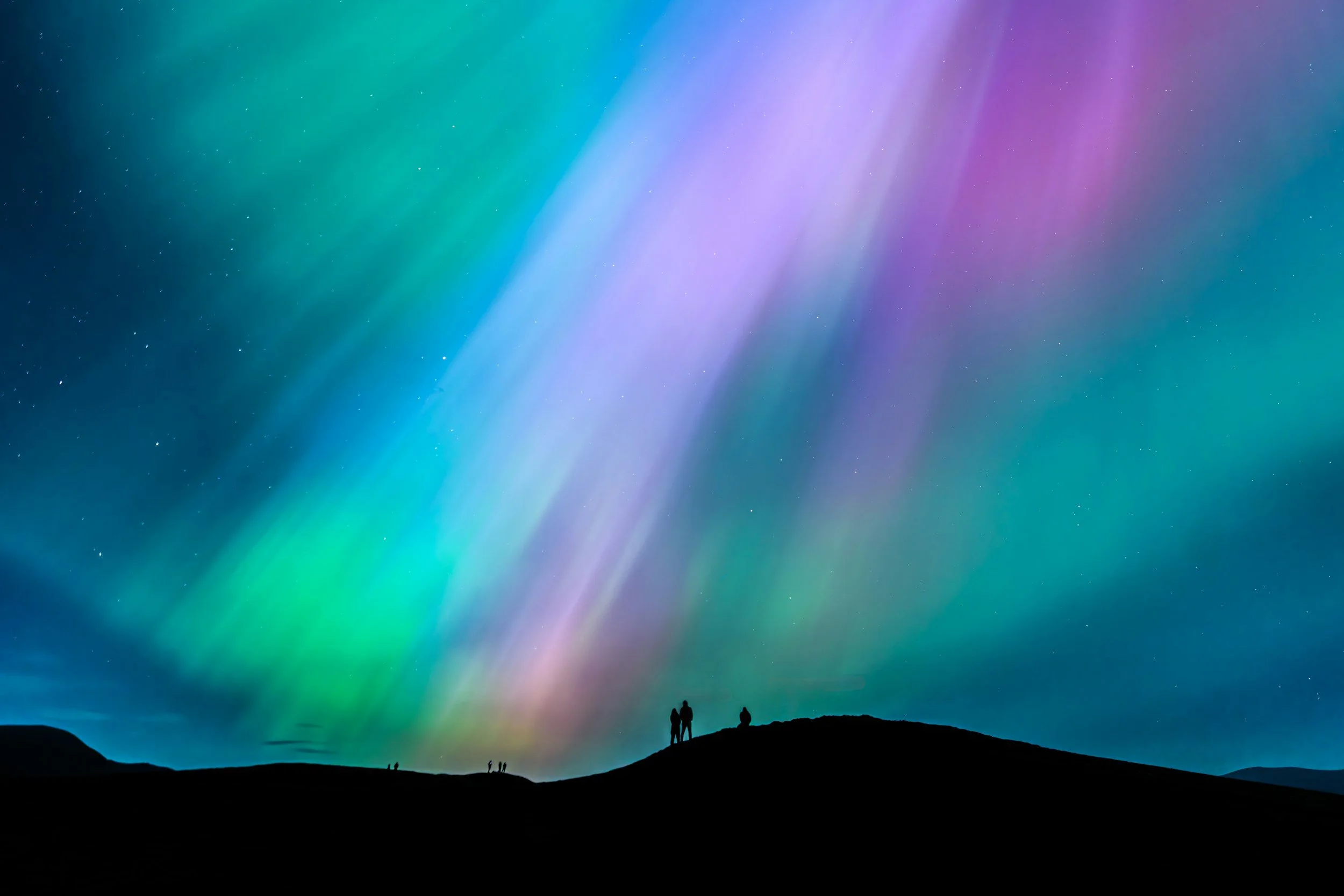
Can you see the Northern Lights in Scotland?
Occasionally, but it’s not something you should plan a trip around.
You’re more likely to catch them in darker, northern areas like around Cannich or coastal stretches in the northeast like the Buchan. Clear skies and solar activity both need to align, so it tends to be a bonus rather than a guarantee.
If they do appear, having a clear view north and minimal light around you makes a noticeable difference.
What actually ruins stargazing in Scotland (even in dark areas)?
A few small things make a bigger difference than people expect:
Outdoor lights from your accommodation
Standing too close to buildings or trees
Not letting your eyes adjust properly
Assuming the sky won’t clear later
For example, at places like Eagle Brae above Cannich, simply turning off exterior lights and stepping a few metres away from the cabin can noticeably improve what you see.
It’s rarely about needing a better location, just using the one you’re already in more effectively.
Is the Isle of Skye good for stargazing?
It can be, but it’s not always the easiest place for it in winter.
Skye has very dark areas, but also more tourism infrastructure, more driving between locations, and weather that can close in quickly. If your goal is to step outside your accommodation and have clear conditions without effort, places like the Cairngorms, Strathglass, or even the Buchan coast tend to be more straightforward.
Do you need a telescope or equipment?
No.
In most of the places mentioned in this guide, your eyes are enough. On clear nights, especially in areas like the Cairngorms or above Cannich, you’ll see far more than you would near any city.
Binoculars can add detail, but they’re optional rather than necessary.
Do you need to drive somewhere to see the stars?
Not if you choose your stay well.
At places like Eagle Brae or cabins near Kingussie, you can step outside and already have a clear, dark sky. That’s usually better than driving out to a specific viewpoint where you might deal with passing cars or other people.
A short walk away from your accommodation is often all you need.
What if it’s cloudy during your trip?
This is normal, and it doesn’t mean you won’t see anything.
Cloud cover in Scotland changes quickly, especially in areas like Strathglass or along Loch Ness. Even on overcast days, there are often short breaks later in the evening.
It’s worth checking the sky multiple times rather than assuming the conditions won’t improve.
What should you wear for stargazing in Scotland in winter?
More than you think.
Even if temperatures don’t seem extreme, standing still outside feels very different from walking during the day. Open areas like the Buchan coast or higher ground near Strathglass can feel colder because of wind exposure.
Most people go outside for shorter periods, warm up, and then head back out again, which tends to work better than staying out continuously.