
These weekly markets are reason enough to plan a summer road trip
Markets in southern France and eastern Spain follow a weekly structure, but they don’t work in the same way once you’re actually there. A Saturday market in Uzès is concentrated around Place aux Herbes and fills quickly by mid-morning, while a Sunday in L’Isle-sur-la-Sorgue spreads across multiple streets and requires more planning just to move between sections. In smaller places like Saint-Antonin-Noble-Val, the layout is shaped by narrow medieval streets, which changes how you navigate it entirely.
That difference matters when you’re deciding where to go and how to time your visit. Some markets are easier to approach early and leave before they peak, while others work better later once the initial rush has passed. In coastal towns like Cadaqués or Altea, timing is also tied to evening routines rather than morning shopping patterns.
This guide focuses on markets that are still part of a weekly routine, not just something to walk through once. You’ll notice it most clearly early in the day, when people are buying specific items rather than browsing, and again later when the same spaces slow down and become harder to move through.
Each market below is broken down in a practical way, including where it sits within the town, how to arrive, and what changes depending on the time of day. The goal is to make it easier to plan the morning around it, rather than treating the market as a standalone stop.
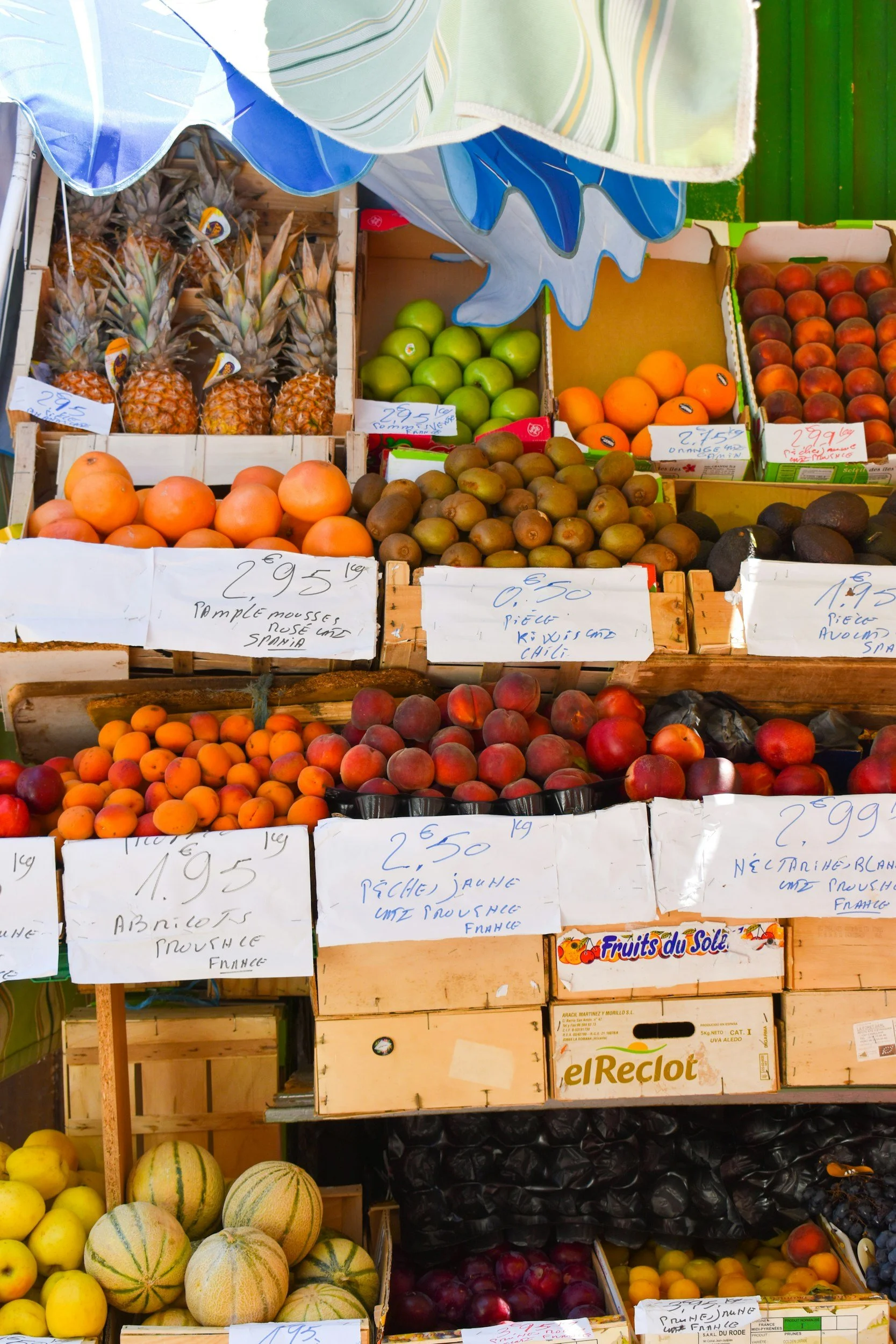
L’Isle-sur-la-Sorgue (Provence, France)
L’Isle-sur-la-Sorgue sits about 25 minutes east of Avignon, and the easiest way to arrive is by regional train to the small station just outside the centre. From there, it’s a 10–15 minute walk into town, following the river channels that loop through the old streets. If you’re driving, it’s worth arriving before 9:00, especially on Sundays, as parking areas like Parking de la Gare and Parking des Névons fill quickly once the market starts expanding.
The main market runs along the quays and into the central streets, particularly around Quai Jean Jaurès and Place de la Liberté. On Sundays, it merges with the larger antique market that the town is known for, and the scale changes noticeably. It’s not just a line of stalls but something that spreads across multiple neighbourhood pockets, with different sections that locals move between depending on what they’re buying. Food stalls tend to cluster closer to the water, while antiques and brocante stretch further out toward Avenue des 4 Otages and into the warehouse areas just beyond the centre.
If you arrive early, before 9:30, the pace is more functional. Locals are doing their weekly shop, moving directly between produce stands, cheese sellers, and bakeries without browsing much. This is when you’ll see what people are actually buying: seasonal fruit sold by weight, olives scooped into containers, and simple prepared foods that are clearly meant for lunch later that day. By late morning, especially between 10:30 and 12:30, the atmosphere shifts and the same areas become harder to move through. If your focus is food, it’s easier to buy what you want earlier and then step away from the busiest streets.
For something to eat, many people pick up items from the market and head toward the quieter edges of town rather than sitting down immediately. Along the Sorgue river, there are shaded spots just a few minutes from the main streets where you can stop without needing a formal café. If you prefer a table, the cafés around Place Rose Goudard and along the canals start filling from around 11:00 onwards, so it’s better to either go early or wait until after the peak lunch hour.
The antique side of L’Isle-sur-la-Sorgue is not limited to the market days. The town has a large number of permanent dealers, particularly in areas like Le Village des Antiquaires de la Gare, which sits slightly outside the main centre. It’s about a 15–20 minute walk or a short drive, and the layout is more structured, with individual shops rather than temporary stalls. Prices are generally higher here, but the selection is more curated, and many sellers specialise in specific categories like furniture, linens, or decorative pieces.
If you’re planning a visit around the market, Sunday is the most complete experience, but it also requires more planning. Thursday markets are smaller and easier to navigate, with more space and less pressure to arrive early. Both are worth considering depending on how you prefer to move through a place, but they feel quite different in practice.
L’Isle-sur-la-Sorgue works best when you treat the market as part of a longer morning rather than the only reason to come. The town itself is compact, and once you step a few streets away from the busiest areas, it becomes noticeably quieter. That’s where most people who know the town well spend their time after finishing their shopping.
If you’re thinking about turning a market trip into a longer stay, this guide to rural France’s family-run guesthouses is a good place to start. It focuses on smaller, welcoming stays that fit the pace of these towns.
A lot of peoplewho come for markets also end up spending a full Sunday in Provence. This piece on a slow Sunday at the L’Isle-sur-la-Sorgue flea market gives a real sense of what the day actually looks like, from browsing antiques to finding a quiet café afterwards.
Uzès Market (Occitanie, France)
Uzès is in the Gard department, about 40 minutes west of Avignon and just over 30 minutes from Nîmes. If you’re arriving by train, Nîmes is the most practical station, followed by a 35–40 minute bus or a short drive into town. Parking is straightforward if you arrive before 9:30, with areas like Parking des Cordeliers and Parking Gide within walking distance of the centre. After that, it becomes slower to access the inner streets, especially on Saturdays.
The main market takes place on Place aux Herbes, a central square lined with arcades and plane trees that provide shade later in the morning. On Saturdays, the market extends beyond the square into surrounding streets, but the core remains concentrated here. If you arrive early, around 8:30–9:00, the setup is still happening, and the space feels open enough to move through easily. By 10:30, the square is full, and most people slow down rather than browse with purpose.
What stands out in Uzès is how local the shopping still feels early in the day. You’ll see residents moving between specific stalls they already know, buying vegetables in small quantities, picking up bread from regular bakers, and stopping briefly rather than walking the full loop. Cheese stalls and olive vendors tend to be busiest between 9:30 and 11:00, while prepared food, like roast chicken or savoury tarts, becomes more relevant closer to midday when people start thinking about lunch.
If you want to eat, it’s easier to build something from the market itself and step slightly away from the square. Within a few minutes’ walk, the streets become quieter, and there are small benches and edges of town where people stop without needing a café reservation. If you prefer to sit down, places around Place aux Herbes start filling from around 11:00, and by 12:30 most tables are taken. Going earlier or waiting until after 13:30 makes a noticeable difference.
Uzès also has a second market on Wednesday mornings, which is smaller and less crowded. The structure is similar, but there’s more space to move, and it’s easier to have short conversations with vendors or take time looking at produce without feeling in the way. For a first visit, Saturday shows the town at its most active, but Wednesday is often easier to manage if you’re staying nearby.
The rest of the town is compact and worth including in the same morning. From Place aux Herbes, it’s a short walk to Duché d’Uzès and the surrounding streets, where shops and smaller food stores continue beyond the market itself. Most people who know the area don’t stay in the square for long after buying what they need. They move outward, either to eat or to walk through the quieter residential parts of town before leaving.
Uzès comes up again and again for a reason. This guide to spring in Uzès gives a good idea of what it’s like when the town is waking up for the season.
Uzès also has a different feel later in the year. This piece on autumn in Uzès is useful if you’re deciding whether to come in summer or wait until things quieten dow
Saint-Antonin-Noble-Val Market (Tarn-et-Garonne)
Saint-Antonin-Noble-Val sits in the Aveyron valley, about an hour north-east of Toulouse and roughly 45 minutes from Montauban. There is no direct train into the village, so most people arrive by car. The closest stations are Caussade or Montauban, both requiring a 25–45 minute drive through smaller roads that narrow as you approach the valley. On Sundays, it’s best to aim for arrival before 9:30, as the central parking areas along the river and near Place des Moines start to fill quickly once the market expands.
The market takes place on Place des Moines and spreads into the surrounding medieval streets, with stone arcades and narrow passages shaping how people move through it. It’s not laid out in straight lines, and that changes the experience. You don’t walk it from start to finish in one direction. Instead, you loop through smaller sections, often doubling back as you move between food stalls, crafts, and clothing.
Early in the morning, between 8:30 and 9:30, the pace is still practical. Local residents are shopping with a clear purpose, stopping at specific stalls for vegetables, bread, and cheese before leaving again. You’ll notice that many transactions are quick and familiar, with vendors already knowing what regular customers want. By late morning, especially from around 10:30 onwards, the streets become more congested, and it takes longer to move between sections. At that point, it’s easier to step out of the busiest lanes and re-enter from a different side rather than pushing through.
Food stalls are concentrated around the main square and just off the arcades. You’ll find simple options that are clearly intended for immediate eating, such as grilled meats, savoury pastries, and sweet items prepared on site. Many people buy food and walk a few minutes toward the river rather than staying in the square. The banks of the Aveyron, particularly near the old bridge, offer space to sit without needing a table, and this is where the flow of people naturally spreads out around midday.
If you prefer a café, the terraces along the main square start filling from around 11:00, and by 12:00 most seats are taken. It’s easier to either sit down earlier or wait until after the main lunch period. Service can slow down during peak hours, so expectations need to match the pace of the town on a Sunday.
What makes this market different from larger Provençal markets is the setting and how contained it feels. The village itself is small, and once you move a few streets away from the market, it becomes noticeably quieter. Most people who return regularly don’t stay in the centre for long after they’ve bought what they need. They walk along the river, cross the bridge, or head slightly uphill into the residential streets before leaving.
If you’re planning the morning around the market, it helps to think in phases: arrive early to move easily and buy food, step away during the busiest period, and then return briefly if needed before leaving. Trying to do everything at once, especially late in the morning, tends to make the experience feel more crowded than it actually is.
If you want more places like the ones in this post, this guide to French market towns for a weekend trip gives you a handful of towns that work perfectly for slow weekends.
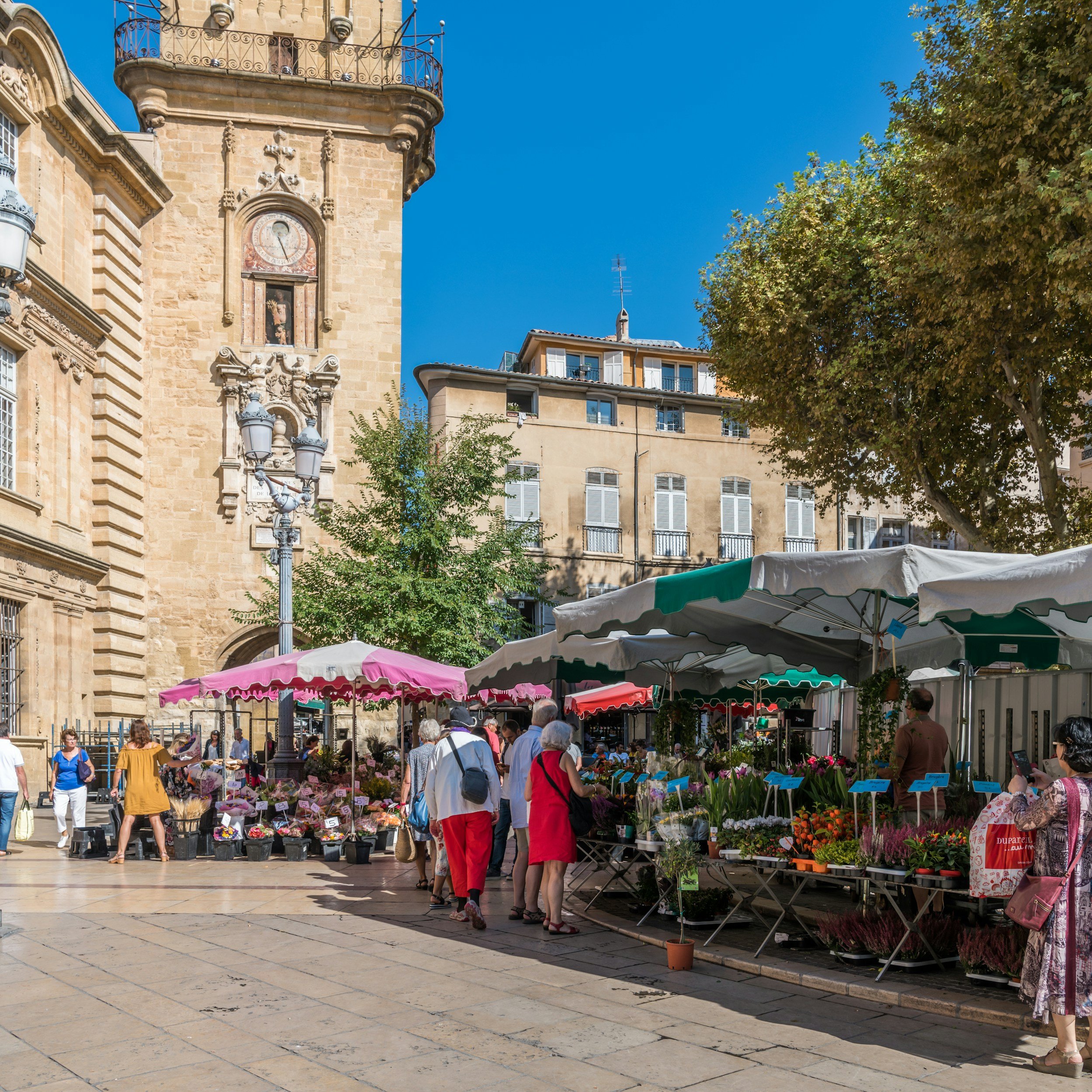
The Drôme Provençale region is one of the easiest places to slow down without feeling isolated. This look at Drôme Provençale in autumn shows what the markets and villages feel like once summer crowds have gone.
Dieulefit Market (Drôme Provençale, France)
Dieulefit sits in the Drôme Provençale, about 30 minutes south-east of Montélimar. There’s no train station in the town itself, so most arrivals are by car, either from Montélimar or from smaller villages in the surrounding hills. The roads into Dieulefit are narrow in parts but straightforward, and on market days it’s worth arriving before 9:30 to find parking close to the centre. Parking areas along Avenue du Général de Gaulle and near Place de l’Abbé Magnet are the most practical if you want to walk in within a few minutes.
The market takes place on Fridays and is spread along Grande Rue and into the adjacent streets rather than being contained in a single square. This changes how you move through it. Instead of gathering in one place, people drift between sections, and it’s easier to step out and re-enter without feeling stuck in a crowd. The layout reflects how the town functions day to day, with shops, bakeries, and cafés continuing alongside the market rather than being separate from it.
Early in the morning, around 8:30 to 9:30, the pace is steady and local. Residents move directly between stalls they already know, buying vegetables, eggs, and bread without stopping for long. You’ll notice that some vendors are set up in the same spots each week, and regulars head straight to them. By late morning, from around 10:30 onwards, more visitors arrive from nearby villages, but it rarely reaches the same density as larger markets in Provence. There is still space to move, and it’s possible to walk the full length of the market without needing to stop constantly.
Food is integrated throughout rather than grouped in one section. Cheese, olives, and baked goods are spread along the route, so it makes sense to buy gradually rather than waiting until the end. For something to eat, many people pick up items and continue walking rather than sitting down immediately. If you want a café, places along Grande Rue start filling from around 10:30, but there are usually still tables available slightly away from the centre. Service tends to follow the pace of the town, so it’s slower than in more visited areas.
Dieulefit is also known for its ceramics, and that becomes part of the market experience even though it’s not limited to temporary stalls. Several workshops and small shops remain open during market hours, particularly along the side streets off Grande Rue. It’s common to step inside briefly while moving through the market rather than treating it as a separate activity later in the day.
If you continue a few minutes beyond the busiest section, the streets become noticeably quieter, and that’s where most people who live nearby spend time once they’ve finished shopping. The transition is quick, and it’s worth allowing time to move away from the main flow before leaving.
For smaller places with a local feel, this guide to market towns in Provence highlights towns that don’t feel overly crowded.
If you’re specifically after quieter market days, this guide to quiet Provence market towns focuses on places where you can browse without feeling rushed.
Mercat Artiga (Cadaqués, Spain)
Cadaqués sits on the eastern edge of the Costa Brava, about 2 hours by car from Barcelona. The road into town narrows significantly in the final stretch, with a series of bends as you come over the ridge before descending toward the coast. There is no train connection, so the usual route is either driving or taking a bus to nearby Figueres and continuing from there. Parking is limited inside the centre, so it’s best to leave the car in the larger parking areas on the edge of town and walk in, which usually takes 10–15 minutes depending on where you stop.
Mercat Artiga takes place during the warmer months and is set within the old town, close to the waterfront but slightly removed from the main promenade. The layout follows the existing streets, so stalls are positioned along narrow lanes rather than in an open square. This affects how you move through it. You’re not walking in a straight line but turning into smaller passages and stepping aside frequently to let people pass.
The market is smaller than many weekly markets in France and works more as a local addition to the town rather than a main event that draws people in from surrounding areas. You’ll find a mix of handmade goods, small-scale food stalls, and local products, but the selection is limited compared to larger regional markets. It’s easiest to visit earlier in the evening, before the streets fill with people coming down toward the harbour for dinner. After around 19:30, movement slows considerably, especially in the narrowest sections.
Food tends to be simple and designed for immediate eating rather than shopping for later. You’ll see small plates, baked items, and drinks that people carry with them as they walk. If you’re planning to eat a full meal, most people move back toward the harbour, where restaurants begin filling from around 20:00. Tables along the waterfront are usually the first to go, so it helps to either eat earlier or walk a few streets back where availability is better.
Because Cadaqués is compact, it doesn’t take long to move between the market, the waterfront, and the residential streets above. A short walk uphill changes the atmosphere quickly, and that’s often where people go once they’ve passed through the market. The transition is part of the experience, especially in the evening when the town shifts from day visitors to people staying overnight.
Mercat Artiga is best approached as something to pass through rather than plan an entire evening around. It fits naturally into a slower walk through the old town, especially if you arrive before the busiest dinner hours and give yourself time to move beyond the centre afterward.
Cadaqués is one of the coastal towns people often add on after market days inland. This Cadaqués market weekend guide shows how to make a full weekend out of it.
If you’re leaning toward Spain but want something calmer, this round-up of Spain’s quietest summer markets points you toward places where markets still feel genuinely local.
Sóller Market (Mallorca, Spain)
Sóller is in the north-west of Mallorca, set back from the coast in a valley surrounded by the Tramuntana mountains. The most direct way to arrive without a car is via the historic train from Palma de Mallorca, which takes about an hour and arrives at the station just a few minutes’ walk from the centre. If you’re driving, the Ma-11 road connects Palma to Sóller through the tunnel, and parking is usually easiest in the larger areas on the edge of town rather than trying to enter the central streets.
The market takes place on Saturdays and is centred around Plaça de la Constitució, extending into Carrer de sa Lluna and the surrounding streets. The square acts as the main anchor point, but the market is not confined to it. Instead, it spreads outward, with different sections forming naturally along the pedestrian streets that lead away from the centre. This makes it easier to step out of the busiest areas and return without having to move through the same crowd.
Early in the morning, between 8:30 and 9:30, the activity is more practical. Residents move through the stalls with a clear purpose, buying produce, bread, and small quantities of food for the weekend. The space is still open enough to walk directly between sections. From around 10:30 onwards, the number of visitors increases, especially with arrivals from Palma on the train, and the central square becomes more congested. Movement slows, and it’s easier to shift into the side streets if you want to continue browsing.
Food stalls are spread throughout rather than grouped in one place. You’ll find fruit, vegetables, cheeses, and baked goods along the main routes, with prepared food appearing closer to midday. Many people buy a few items and then move away from the centre to eat, either in quieter streets or further toward the edges of town. If you prefer to sit down, cafés around Plaça de la Constitució begin filling from around 10:30, and by midday most tables are occupied. Walking a few minutes away from the square usually makes it easier to find space.
Because Sóller is compact, it’s easy to combine the market with a walk through the rest of the town. From the square, it takes only a few minutes to reach quieter residential streets or to continue toward the tram that runs out to Port de Sóller. Most people who know the area don’t stay in the centre for long after finishing their shopping. They move outward, either to eat or to continue the morning elsewhere before the busiest period peaks.
If you’ve ever thought, “I just want to sit by the sea somewhere no one talks about yet,”
Cedeira is your town. Read more and get inspired:
The Tiniest Beach Town in Europe? Discovering Cedeira, Spain Before It’s on the Map
Mercadillo de Altea (Costa Blanca, Spain)
Altea is on the Costa Blanca, about 45 minutes north-east of Alicante. It’s accessible by car via the AP-7 or N-332, and there is also a tram connection along the coast that stops near the town. The market is not held in the old town itself but in the newer part of Altea, close to the train and tram stops, which makes it easier to reach without needing to drive into the historic centre.
The weekly market takes place on Tuesdays and is set up in a large open area around Carrer Filharmònica and the surrounding streets. Unlike smaller village markets, this one is more structured, with long rows of stalls arranged in clear sections. Produce, clothing, household items, and food are grouped separately, so you can move directly to what you need without walking the entire market.
Arriving before 9:30 makes a noticeable difference. Early in the morning, the pace is more functional, with local residents moving quickly between stalls to buy fruit, vegetables, and everyday items. By 10:30, the market becomes busier, especially as visitors arrive from nearby coastal towns, and the central rows slow down. Because of the layout, it’s usually possible to step into a quieter section rather than staying in the busiest lanes.
Food stalls are spread throughout but are more concentrated toward the centre. You’ll find fresh produce sold by weight, as well as simple prepared foods that are clearly intended for later in the day. Many people shop first and leave rather than eating on site, as there are fewer places to sit compared to markets set in historic squares. If you want to eat, it’s more practical to head toward the seafront or up into the old town after finishing your shopping.
From the market area, it takes around 10–15 minutes to reach the older part of Altea, where the streets narrow and the layout changes. Most people combine the market with a short walk uphill toward the church square, where there are cafés and restaurants that start filling from around midday. The transition between the two areas is quick, and it’s common to leave the market once you’ve bought what you need rather than staying for long periods.
Mercadillo de Altea works best as part of a broader morning rather than a standalone destination. The structure is straightforward, and once you’ve moved through the sections that interest you, there’s little reason to stay unless you plan to continue into the older part of town.
Summer in France and Spain
If you’re planning more than one market in the same trip, it helps to think in terms of spacing rather than trying to fit them back-to-back. A Saturday in Uzès followed by a Sunday in L’Isle-sur-la-Sorgue works in theory, but in practice it often turns into two similar mornings with very little time to absorb the towns themselves. It’s usually more useful to leave a day in between, especially in places where the surrounding area is just as relevant as the market.
It’s also worth checking how each town functions outside its main market day. Some places keep a smaller version midweek, like Uzès on Wednesdays, while others shift entirely and feel much quieter once the stalls are gone. That difference affects where you stay. If the market is the main reason for visiting, staying the night before makes the timing easier. If not, it can be just as effective to visit from nearby and leave once the centre starts to fill.
One practical detail that often gets overlooked is how limited certain items are later in the morning. In smaller markets especially, vendors don’t restock throughout the day. If you’re looking for specific produce, bread, or prepared food, it’s better to buy it when you first arrive rather than assuming it will still be there an hour later.
Finally, it helps to adjust expectations depending on the setting. Not every market is meant to fill a full morning, and forcing it usually leads to staying longer than needed. Some work best as a short, focused visit before moving on, while others hold your attention longer because of their size or layout. Knowing the difference in advance makes the experience feel more natural once you’re there.
Andalusia has a very different feel from northern Spain or Provence. This slow travel market guide to Andalusia gives a clear sense of what market days look like there.
Common questions about local markets in Spain and France
What are the best market days in southern France and Spain?
Markets follow fixed weekly schedules, and planning around them makes a noticeable difference. Uzès runs on Saturdays in Place aux Herbes, with a smaller version on Wednesdays. L’Isle-sur-la-Sorgue is most extensive on Sundays, when the antique sections spread beyond the central quays, while Thursdays are more contained. Dieulefit takes place on Fridays along Grande Rue. In Spain, Altea runs on Tuesdays in the newer part of town, while markets in Cadaqués are seasonal and often tied to evening hours rather than mornings.
What time should you arrive at markets in France and Spain?
Between 8:30 and 9:30, movement is still direct and practical. In Uzès, you can cross Place aux Herbes without stopping, while in Saint-Antonin-Noble-Val the narrow streets are still passable without needing to step aside constantly. By 10:30, both layouts change. The square in Uzès compresses, and in Saint-Antonin the smaller lanes slow down significantly, making it harder to move between sections.
Are these markets mainly for locals or visitors?
Early in the morning, they are still used as part of a weekly routine. In Dieulefit, residents move along Grande Rue stopping briefly at the same stalls each week, while in Uzès many people cross the square with a short list rather than browsing. By late morning, the same spaces shift toward slower movement and longer stops, especially in places that attract visitors from nearby towns.
Which market in Provence is best for antiques?
L’Isle-sur-la-Sorgue has the most developed antique market, particularly on Sundays when brocante stalls extend beyond the central streets and into surrounding areas. The structure changes depending on where you are, with smaller items closer to the centre and larger furniture further out. Permanent dealers are also based slightly outside the main town, which changes how you approach it compared to the weekly stalls.
Do you need a car to visit these markets?
Some are accessible without one, but flexibility changes the experience. L’Isle-sur-la-Sorgue can be reached by train from Avignon, and Altea is connected by coastal tram. Uzès requires a connection via Nîmes. Smaller places like Saint-Antonin-Noble-Val and Dieulefit are more practical by car, especially because arrival time affects parking and access. The road into Cadaqués is narrow and winding in the final stretch, which also affects when it’s easiest to arrive.
What should you buy at a French or Spanish market?
It depends on where you are and when you arrive. In Uzès, most early purchases focus on vegetables, bread, and cheese within the square. In L’Isle-sur-la-Sorgue, food and antiques sit alongside each other, so people often move between sections rather than buying everything in one place. In Dieulefit, ceramics are part of the weekly routine, not separate from it. In smaller markets like Saint-Antonin-Noble-Val, prepared food becomes more relevant closer to midday as people move toward the river to eat.
Are markets in Spain and France open all day?
Morning markets usually run from around 8:00 until early afternoon, with the busiest period between 10:30 and 12:30. After that, stalls begin to pack down. Evening markets, such as those in Cadaqués, follow a different pattern and are tied to dinner hours, with the busiest period starting later in the day.
Which markets are less crowded in summer?
Midweek markets are generally easier to move through, but layout also plays a role. Dieulefit remains more manageable because it stretches along Grande Rue rather than concentrating in one square. Uzès on Wednesdays uses the same central space as Saturdays but with fewer people, which changes how quickly you can move across it. Larger markets like L’Isle-sur-la-Sorgue on Sundays require earlier arrival to avoid congestion.
Planning around the time of year can make a big difference. This guide to Provence markets by season helps you pick the right month based on what you want to experience.
Is it better to stay overnight for market visits?
If timing is important, staying the night before makes access easier, especially in places where parking fills early. In L’Isle-sur-la-Sorgue and Uzès, arriving before mid-morning changes how easily you can move through the market. In coastal towns like Altea or Cadaqués, it’s also possible to visit as a day trip, but arrival time still affects how much space you have once you’re there.
How long should you spend at each market?
Most markets work best over one to two hours, depending on layout and size. L’Isle-sur-la-Sorgue takes longer if you include the antique sections, while Saint-Antonin-Noble-Val is more contained due to its street structure. Staying beyond the busiest period often adds time without changing the experience significantly.