
Besançon is only about an hour from Dijon by train, so you could easily visit for the day. But I'd be tempted to stay the weekend, especially if you enjoy French food markets, old neighbourhoods and spending a good part of the day exploring on foot.
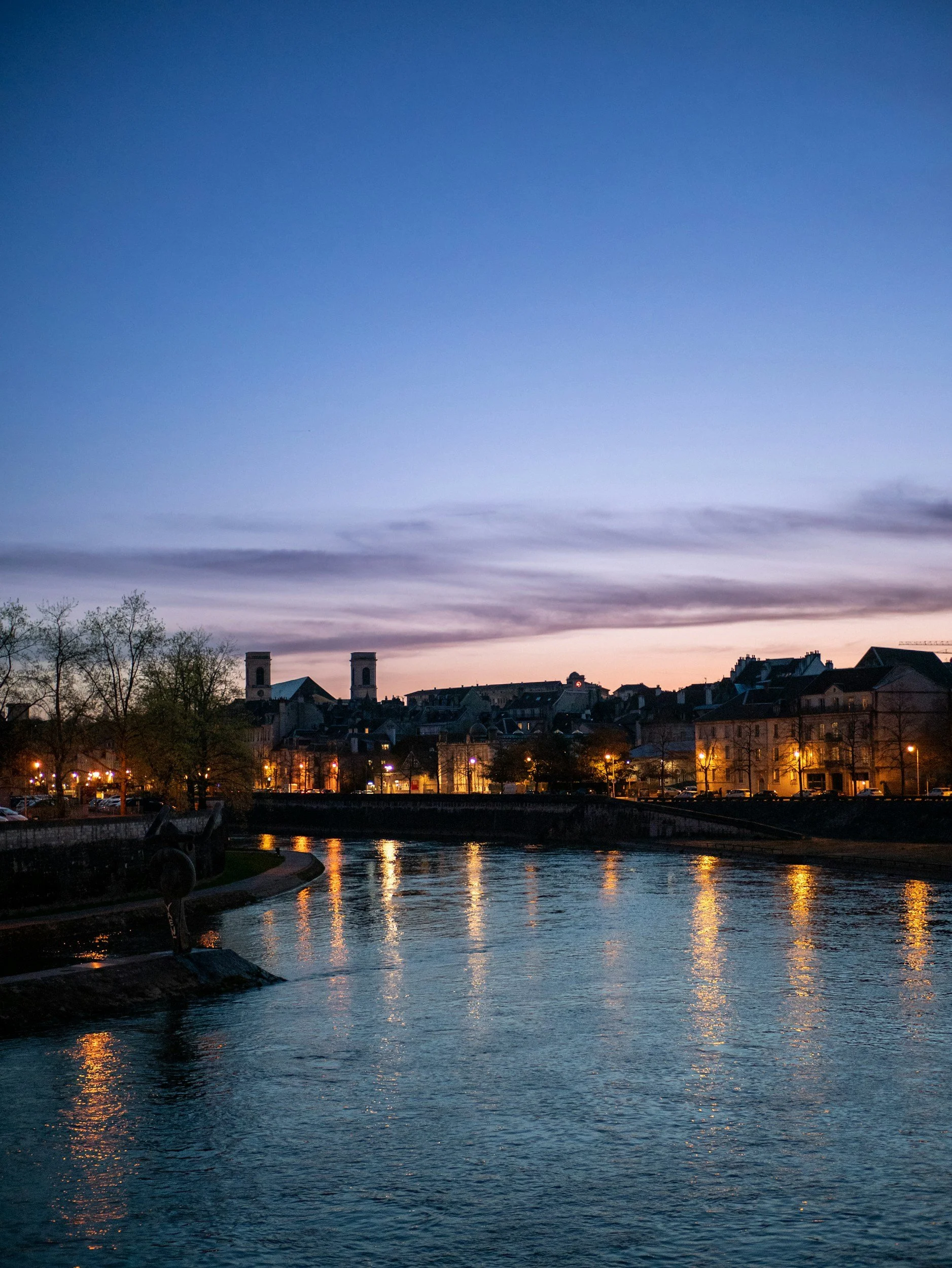
What makes Besançon interesting is its unusual setting. The old town sits inside a huge bend of the Doubs River, with the Citadelle high above it and the former winegrowers' neighbourhood of Battant just across the water. It's called La Boucle, and once you look at a map, you'll understand why.
I'd give myself Saturday morning for the market and the old town, then spend Sunday exploring Battant and walking along the river. The Citadelle is worth considering too, but it's quite a climb and deserves several hours if you want to see more than the entrance.
For me, one night would be enough if you can arrive early on Saturday and leave on Sunday afternoon. If you're travelling further or particularly want to visit the Citadelle, arriving on Friday evening would give you more flexibility. And you can do the whole weekend without a car.
Saturday morning at the Halles and along Grande Rue
I'd aim to get to Place de la Révolution around 9 am on Saturday (preferably without having had too much breakfast…). There's an outdoor market on the square as well as the covered Halles Beaux-Arts just around the corner, and I'd want enough time to have a look around both before heading into the old town.
Start with the stalls outside, then wander into the Halles on rue Claude Goudimel. I'd definitely stop at Fromagerie Bouchet for a look at the cheeses. Comté is the local favourite, and if you enjoy stronger cheeses, ask about the more mature varieties. You might also spot cancoillotte, which is quite different from what you'd normally picture when someone mentions French cheese. It's soft, almost runny, and often served warm with potatoes or bread. Personally, I'd be tempted to buy a few things here and save them for lunch by the river.
You don't need to be particularly organised about the market. Have a coffee, see what looks good and enjoy having a Saturday morning with nowhere urgent to be. The covered Halles is open until 6.30 pm, although some traders finish earlier, and it also opens on Sunday from 8 am to 1 pm if you don't arrive in time on Saturday.
Before heading off, take a look at the Musée des Beaux-Arts et d'Archéologie across Place de la Révolution. The building used to be a grain hall, so it's rather nice that there's still a food market right beside it. I'd leave the museum itself for later, but it's worth remembering where it is.
Grande Rue is worth exploring beyond the shopfronts. Some of the old buildings have courtyards behind their street entrances, and Palais Granvelle is a particularly good one to look out for.
One you shouldn't miss is Palais Granvelle. It's a Renaissance palace with a lovely arcaded courtyard, built for a man who was an adviser to Emperor Charles V. Today it's home to the Musée du Temps, which makes sense given Besançon's history of watchmaking. You don't have to visit the museum to appreciate the building, and I'd happily stop here for a few minutes before carrying on.
If the cheese shopping hasn't turned into lunch, Les Tables d'antan on rue Bersot would be my choice for a proper meal. They specialise in traditional food from Franche-Comté, so it's somewhere I'd consider if I wanted to try the region's cooking rather than just grab a sandwich. It's closed on Sundays, making Saturday a better opportunity, and I'd book a table in advance.
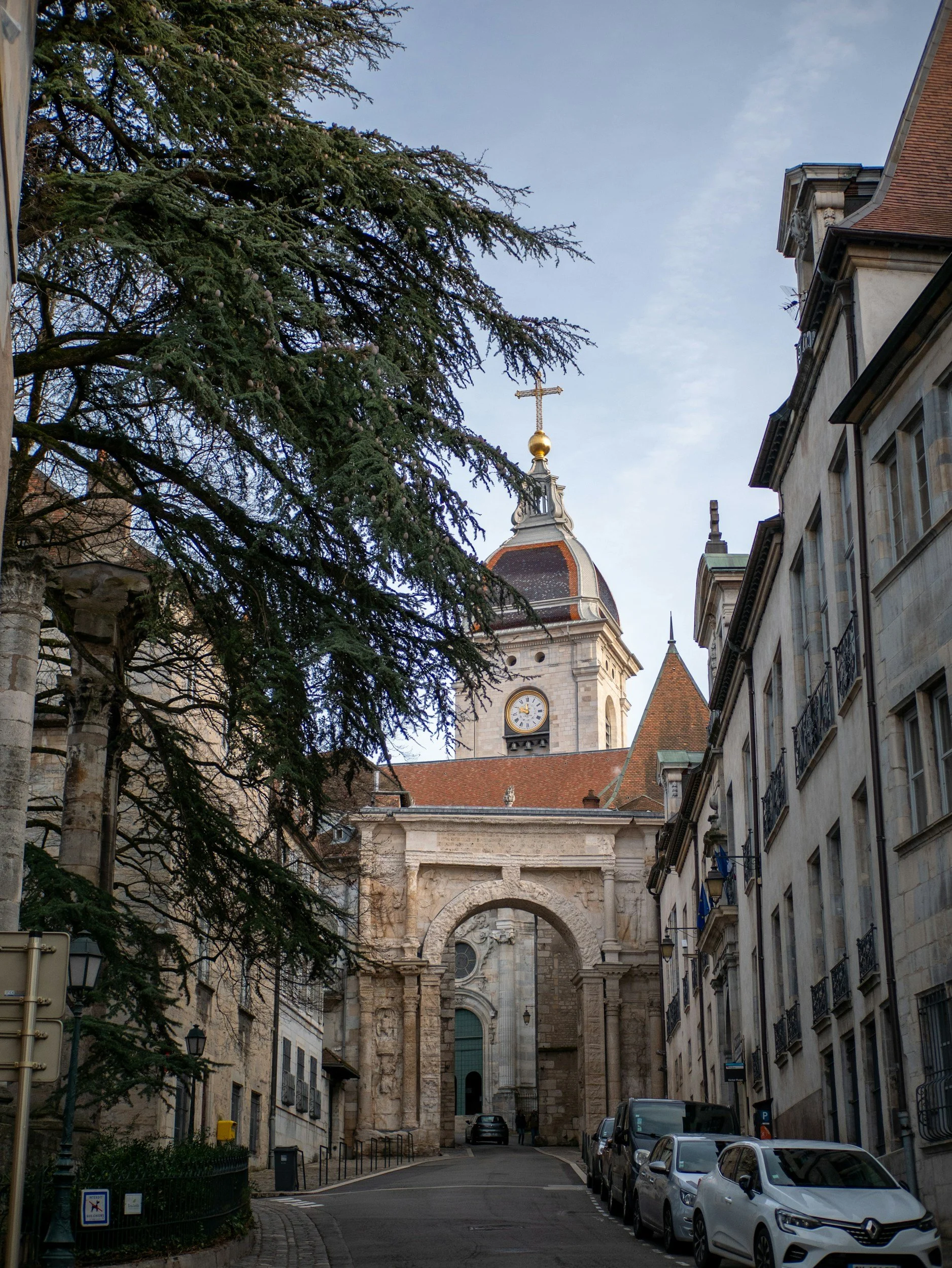
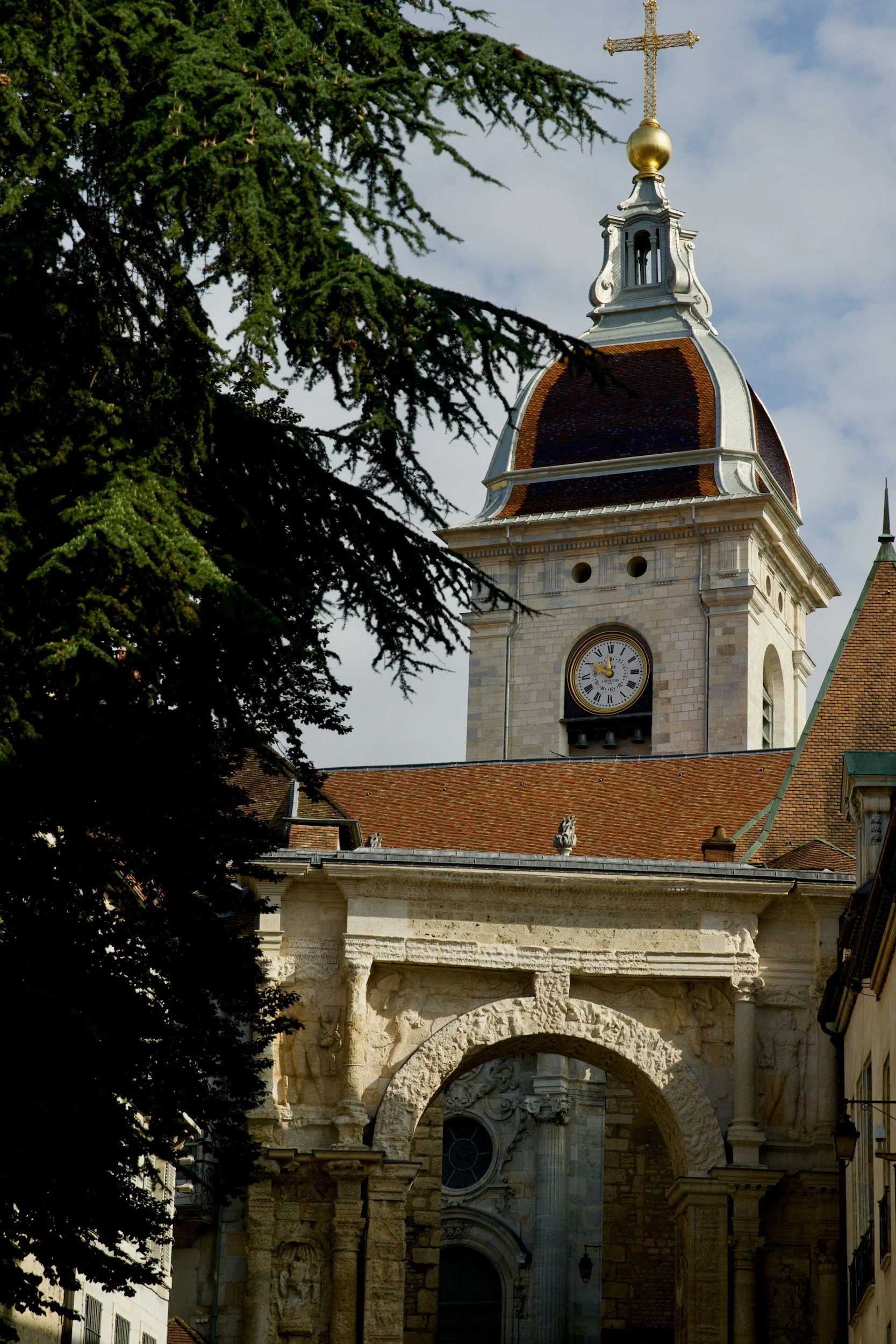
As you continue along Grande Rue, you'll eventually reach one of the most interesting little corners of Besançon. Near Saint-Jean Cathedral is Square Castan, where bits of the Roman city are still standing among the trees. Right beside it is Porte Noire, a triumphal arch built nearly 2,000 years ago. I love the idea of coming across something that old while you're simply walking from one part of town to another, rather than having to make a separate trip to see it.
I'd spend a little time around the cathedral before deciding what to do next. You've already covered a good part of the old town, and from here the streets start climbing towards the Citadelle. If the weather is on your side and you've still got the afternoon free, that's where I'd head next.
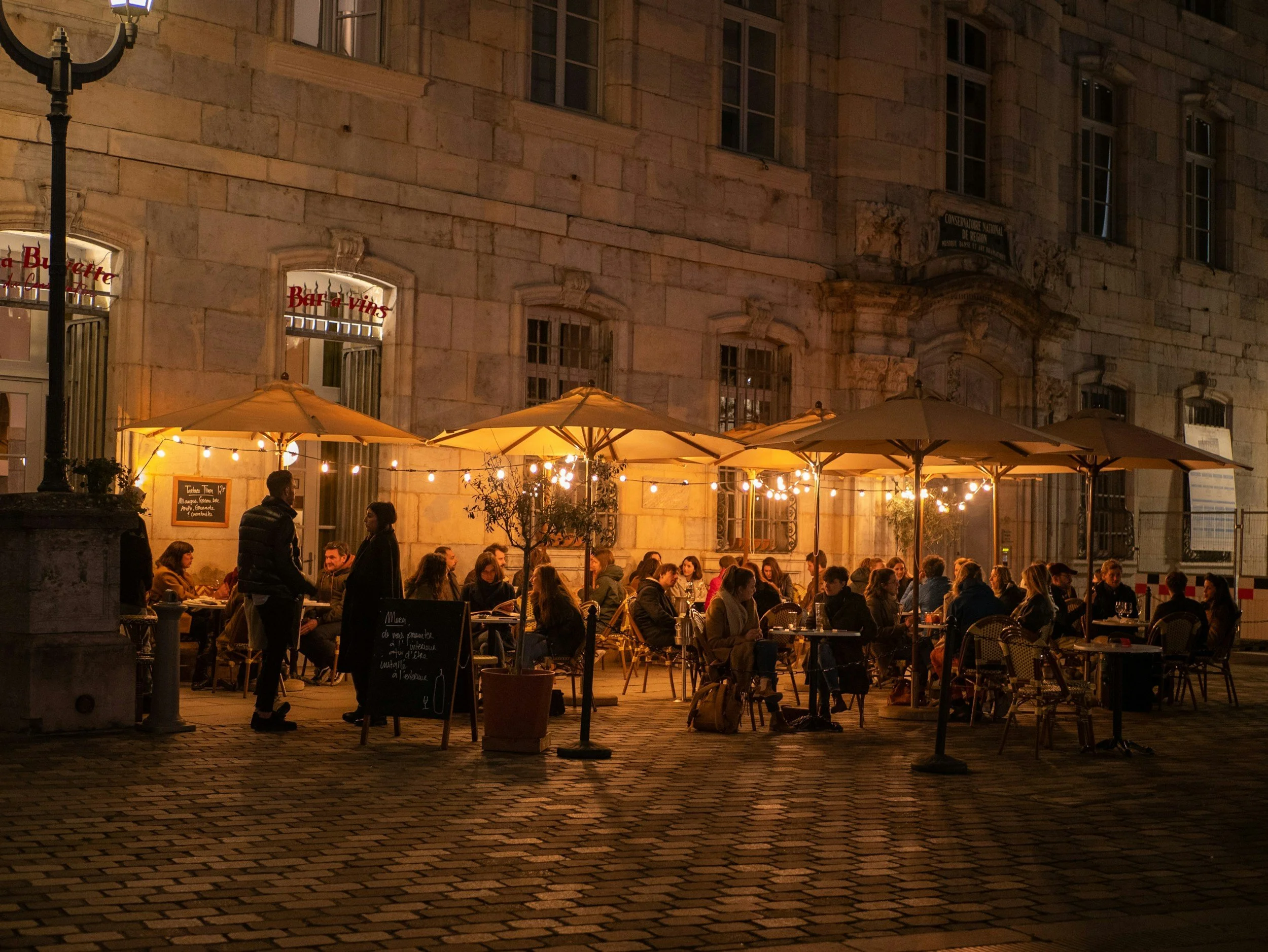
If you're visiting Franche-Comté in December, you could also consider Montbéliard's Christmas market. It's worth looking into if you'd like to spend another day in the region.
A few shops and cafés I'd make time for
If you enjoy browsing bookshops and little independent stores, I'd leave some extra time around Grande Rue and the nearby streets on Saturday. There are a few places here I'd happily make a detour for, especially if you're in no hurry to head up to the Citadelle.
One place worth a look is Les Sandales d'Empédocle at 95 Grande Rue, an independent bookshop specialising in children's and illustrated books. I'd particularly enjoy browsing the picture books here, especially the French editions and illustrations you might not come across at home. It's a lovely little stop to add while you're exploring Grande Rue.
Just along the street, at number 103, there's a relatively new coffee shop called Lazy Dogs. It opened in September 2026, run by a couple who returned to Besançon after spending time working in other creative fields. They take their coffee seriously, with lighter roasts and different brewing methods, but there are also homemade cakes, cookies and cinnamon rolls. I'd choose somewhere like this for an afternoon coffee rather than automatically stopping at the first café on the main square.
If you fancy bringing something home from Franche-Comté, have a look at Doubs Direct on rue Pasteur. It's a regional food shop working with more than a hundred local suppliers, so there's much more to browse than the usual selection of souvenirs. I'd be tempted to pick up a few things here, especially something that would be difficult to find back home.
There are also local makers selling ceramics, jewellery and home accessories at La Boutique des Artisans in Passages Pasteur. It's a nice alternative if you prefer bringing home something handmade rather than another fridge magnet.
I'd do this little shopping detour on Saturday, as most of these places are closed on Sundays. And if you end up spending longer than expected in the bookshop or over coffee, I wouldn't worry too much. That's part of the pleasure of having a full weekend rather than trying to squeeze Besançon into a day trip, right?!

When to give the Citadelle half a day
By the time you've reached Saint-Jean Cathedral, the Citadelle isn't much further on the map. But don't let that fool you. There's still a fairly steep climb ahead, and if you're going all the way up, I'd make a proper afternoon of it rather than treating it as another quick stop on your walk.
The fortress was designed by Vauban in the 17th century and sits on the high ground above the old town. It's part of Besançon's UNESCO-listed fortifications, and the views from the ramparts are probably the biggest temptation. From up there, you can see just how tightly the Doubs wraps around the historic centre. It's one of those places where the unusual shape of the city suddenly makes sense.
I'd allow around half a day for the climb, the ramparts and a museum. The Musée de la Résistance et de la Déportation would be my choice if you're interested in history. It covers the French Resistance and the experiences of people deported during the Second World War, including artwork created in captivity. Some of that material is understandably difficult, and I wouldn't want to rush through it just to fit in another exhibition.
Walking up from the old town takes roughly 30 minutes, with steps along the marked routes. If you don't fancy the climb, there's a seasonal Ginko bus that runs up from Chamars via the centre, including Granvelle. Besançon's local transport is currently free on Saturdays, so it's worth checking whether the bus is running when you're there.
You don't necessarily have to buy a ticket just to see the entrance to the fortress. The first section, between Front Saint-Étienne and Front Royal, is free to enter during opening hours. Beyond that, you'll need a ticket for the paid ramparts and museums. I wouldn't make the climb just for the free section unless you particularly enjoy walking uphill, but it's an option if you want a closer look without committing to the whole visit.
I'd keep the Citadelle flexible rather than deciding in advance that Saturday afternoon has to be the day. If Sunday looks clearer and you have enough time before your train, you could swap things around. Just check the opening calendar first, especially outside summer. The fortress closes earlier in the colder months, and there's also an annual winter shutdown when you can't visit the site at all. I'd check the last admission time too, as there's little point making the climb if you won't have enough time to enjoy what's up there.
If it's closed, I'd be perfectly happy spending that time in the old town instead. The Musée du Temps and the fine arts museum are both good alternatives, and you can still see plenty of Besançon's fortifications from below.
If you'd rather avoid the steep climb or have difficulty with stairs, have a look at the Citadelle's access information before you go. There's a shuttle you can request to take you from the entrance to the upper part of the fortress, although some areas may still be difficult to access…
Sunday across Pont Battant and along the Doubs
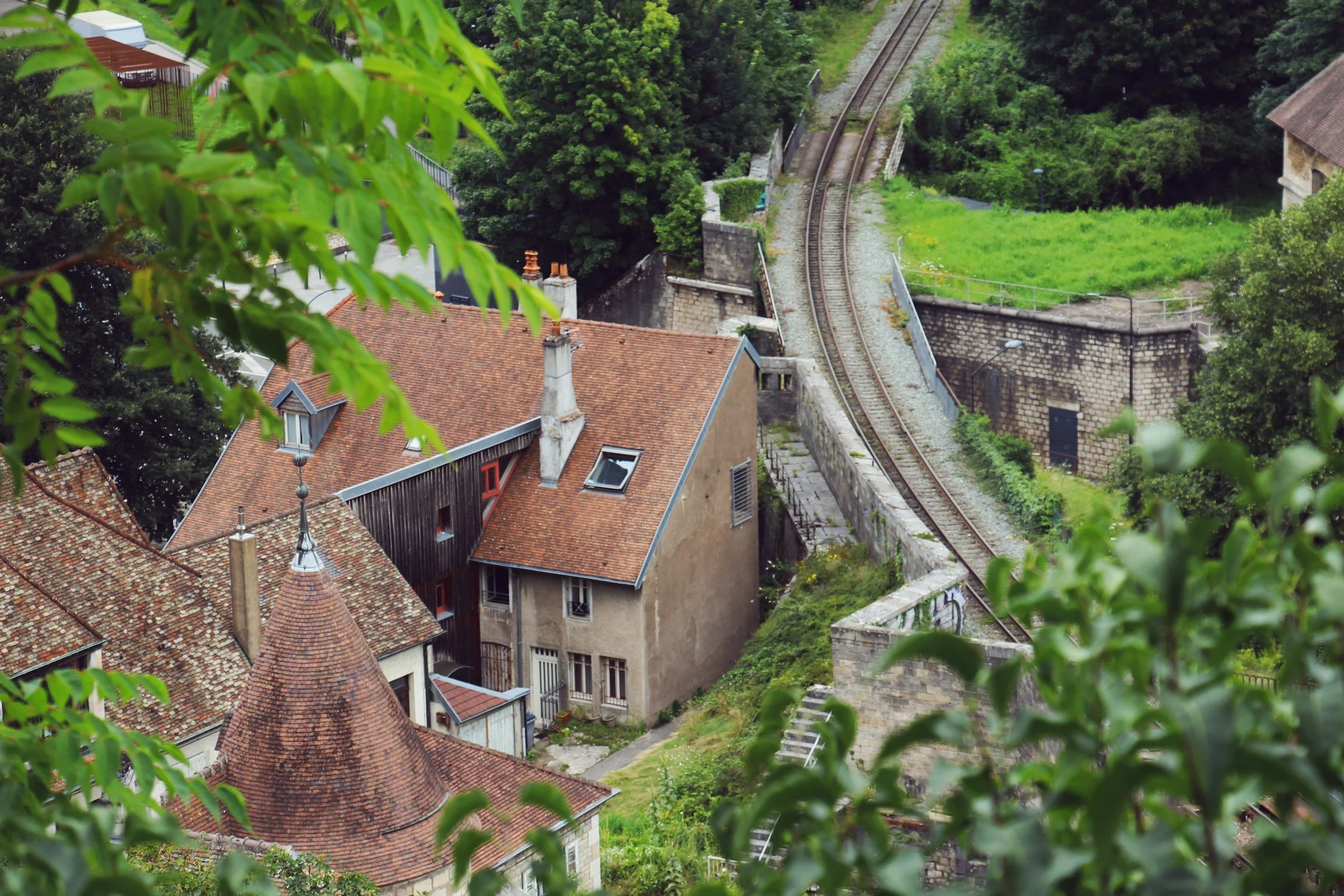
After spending Saturday in the old town, I'd head across Pont Battant on Sunday morning. Before you leave the bridge, turn around and have a look at Quai Vauban. The long row of stone houses facing the Doubs is one of the prettiest views in Besançon, and I think it's even nicer from this side of the water.
On the other side of the bridge is Battant, a neighbourhood that once belonged largely to the city's winegrowers. It's worth wandering a little way up rue Battant, where the streets climb away from the river and the buildings feel quite different from those along Grande Rue. You don't have to go far to get a sense of the neighbourhood, although Fort Griffon is further uphill if you're curious to see more of Besançon's old fortifications.
I'd be tempted to stop at Bousbots Bar, at 30 rue Battant, particularly because it's run by a local association rather than being another ordinary café in the centre. It's a neighbourhood meeting place, and a nice spot to include in a Sunday morning spent exploring this side of town. The bar currently opens on Sundays between 10 am and 2 pm, so you could stop for a drink before heading back towards the river.
Along Quai de Strasbourg, you can look back towards the old town across the Doubs. It's a different perspective from the busy streets around Grande Rue, with the river and the old stone façades in front of you.
Continue towards Promenade Micaud, a park beside the river with paths through the trees and views towards the Citadelle. After a morning walking around the old streets, I'd happily find a bench here for a whilee! It's also a good place to stop if you've brought something from the market, or simply want a little time outside before heading home.
You don't need the whole morning for this walk, although I'd leave a little extra time if you fancy stopping at Bousbots Bar or sitting in Promenade Micaud. Pont de la République makes a useful place to finish: you can cross back into the centre from there, rather than continuing around the river. If you've got an early train, I'd keep the walk to Battant and the quays and save the longer riverside route for another visit.
For anyone who really enjoys walking, Besançon also has a longer route called Rives et remparts du Doubs. It starts at Pont de la République and follows a 4.7 km circuit past old defensive towers, riverside gardens and sections of the city's fortifications. Allow about two hours for that one. You can find the walking route here.
If you're staying for lunch, Restaurant 1802 on Place Granvelle would be a nice choice. It serves Sunday lunch, and there's a terrace on the square when the weather is good. I'd book ahead if you want a proper meal before leaving. Otherwise, the Halles is open until 1 pm if you'd rather pick up something simple.
There's also the option of taking a boat along the Doubs. Bateau Le Vauban runs sightseeing cruises from Pont de la République on selected dates, with a route through the canal tunnel when conditions allow. It could be fun if you'd rather see more of the river from the water, although I'd choose the walk through Battant and along the quays first.
I think a good market can be reason enough to plan a weekend somewhere. If that's your kind of trip too, I've picked out a few French market towns I'd happily stay overnight in, rather than visiting for just a few hours.
Where to go if it rains
If Sunday turns out to be rainy, I'd forget about the longer river walk and head to one of Besançon's museums instead. There are two I'd consider, both right in the old town, and I'd choose between them depending on what I was in the mood for.
I'm particularly curious about the Musée du Temps, partly because Besançon has such an interesting history of watchmaking. During the 19th century, the city became an important centre for French watch production, with skills and influences arriving from neighbouring Switzerland. Today, the museum is filled with clocks, watches and objects connected to how people have measured time over the centuries. And since it's inside Palais Granvelle, you also get to spend some time exploring that beautiful Renaissance building.
The Musée des Beaux-Arts et d'Archéologie would be my other choice, especially if you've enjoyed seeing the Roman remains around Porte Noire. There's quite a bit more of that history here, including mosaics from ancient Vesontio, alongside paintings and sculptures. It's on Place de la Révolution, so you could easily have a look around the Halles before heading inside.
Both museums normally open on Sundays from 10 am to 6 pm, and there's a combined ticket if you fancy visiting both. They're also usually free on the first Sunday of the month, which is a nice bonus. You can check the latest opening times and admission details on the official museum website.
Personally, I'd choose one museum and take my time rather than spend the whole morning moving between exhibitions. And if the weather clears up, you can still fit in a walk along the Doubs before leaving.
If you're planning to spend a little longer in this part of France, I've also compared Dijon and Beaune as bases for exploring without a car. They're quite different places to stay, particularly if you're hoping to explore beyond the city itself.
Getting to Besançon and where to stay
If you're coming by train, make sure your ticket takes you to Besançon Viotte. It's the city station, about a 15 to 20-minute walk from the old town, and you can head straight down through Battant and across Pont Battant when you arrive.
The other station, Besançon Franche-Comté TGV, is outside the city at Les Auxons. Some trains stop there instead, in which case you'll need a connecting TER train to Viotte. The journey between the stations takes around 15 minutes, plus waiting time, so I'd book the whole journey through to Viotte rather than treating the TGV station as your final destination.
From Paris Gare de Lyon, some direct trains reach Viotte in around two and a half hours, while Dijon is roughly an hour away. If you're travelling with luggage, there's also a tram between Gare Viotte and Révolution, close to the covered market. You can check connections through SNCF Connect.
For somewhere to stay, I'd look around Place de la Révolution or Place Granvelle. Both are in the old town, with restaurants and most of the places you'll want to visit within walking distance. I'd much rather stay here for a weekend than spend time travelling in and out of the centre.
Battant is another option, especially around Pont Battant, although I'd check how far uphill the accommodation is. And if you're arriving late or leaving very early, staying near Viotte might make more sense.
You won't need much public transport once you're settled in. If you plan to visit both the Citadelle and a city museum, it's worth comparing individual tickets with the Besançon Pass Tourisme, which includes local transport and admission to several attractions. Otherwise, I'd keep things simple and explore on foot.
If you're travelling around France by train, it's worth getting familiar with the regional TER services. They're particularly useful for journeys between smaller cities, and I've put together a guide to using TER trains in France if you're planning a longer trip.