
Luxembourg has more than 70 castles. Start with these.
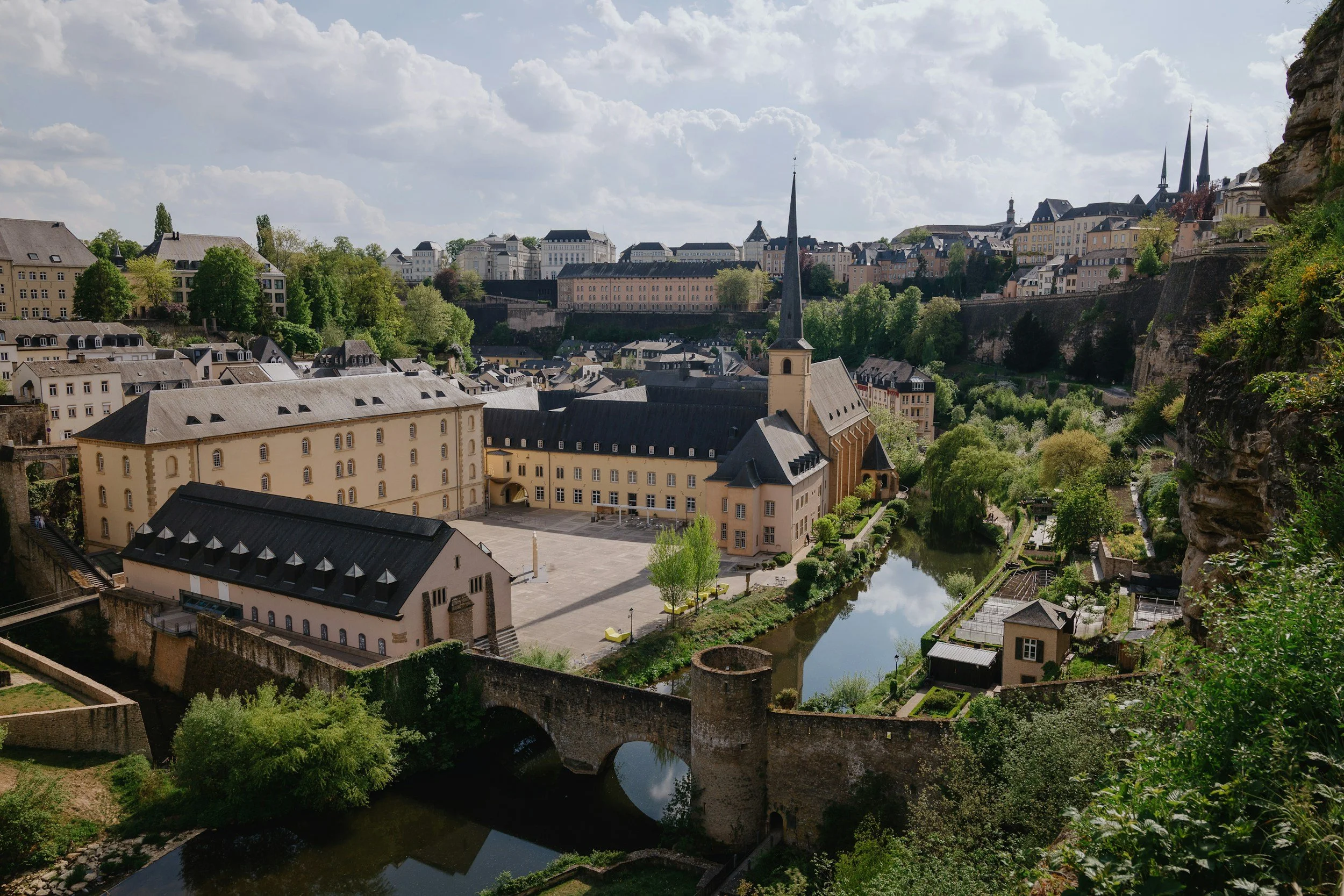
Luxembourg has more than 70 castles, which is one of the highest densities of castles in Europe. Some are beautifully restored. Others are half-forgotten ruins you can wander into without seeing another person. But what makes them unusual isn’t just the number. It’s the way they’re folded into daily life.
Castles here aren’t just “tourist” spots. They’re part of the landscape! You’ll spot them above village rooftops, next to playgrounds, or half-covered in ivy behind a bakery. Some are used for community events. Others are empty and open, with no one checking who comes or goes. One or two are owned privately and only visible from the road. A few don’t even have signs.
The thing is, Luxembourg’s history is far more layered than most people realise. This small country has been occupied, divided, and fortified for centuries. In the Middle Ages, it sat at the crossroads of several powerful territories (Burgundy, France, the Holy Roman Empire) which made it one of the most fought-over regions in Europe. That’s why so many castles were built in the first place: not for show, but for defence.
Later, during the Napoleonic period and well into the 20th century, many castles were dismantled or left to decay. Some were looted for building materials. Others were simply forgotten. The ones that remain today are a mix of eras - from medieval ruins to 18th-century manor houses. And what’s striking is how unmanaged many of them feel. You can just… go.
That feeling of being allowed in without the usual formalities, is part of what makes castle-hopping in Luxembourg different. There are no entry fees for most sites. No timed tickets. No busloads of tour groups. And since public transport is free nationwide, you can take a train to a small town, hop on a local bus, and walk straight into a centuries-old ruin without paying anything or planning ahead.
This guide focuses on the castles that aren’t usually listed in “Top 10” posts. Some are off-track. Some are barely restored. But all of them are easy to reach without a car, and worth visiting slowly - especially if you’re the kind of traveller who likes noticing small details, wandering through quiet places, and taking your time.
If you’re looking for the kind of castles where you can sit with a sandwich on a crumbling wall and hear nothing but the wind, you’ll find them here.
In case you’re thinking about turning this into more of a walking trip rather than just visiting a few stops, this castle-to-castle route shows how the days can actually fit together.
Clemency Castle: a castle stay in Luxembourg’s quieter countryside
Not many people plan a trip to Luxembourg and end up in Clemency. It’s not a name that shows up on every travel list or souvenir magnets - and the castle there isn’t the kind you’d recognise from a drone shot. It’s small, square, and quiet. And that’s what makes it interesting!
Clemency Castle isn’t a tourist place. There’s no museum, no ticket desk, no coach parking. What it offers instead is something much harder to find: a castle you can actually stay in that feels like someone’s home, not a novelty or an “experience” curated for Instagram.
The building itself has roots going back to the 17th century, though the feel inside is softer - not grand or formal. There are three guest rooms, each styled a little differently but with the same quiet charm: wooden floors, old mirrors, light that changes the colour of the walls depending on the time of day. One room has a 1920s feel with velvet upholstery, soft wallpaper, a freestanding bath. Another has a Sherlock Holmes-style study corner, with small curiosities on the shelves. None of it feels staged. It feels like the person who put it together lives there, or at least really cared while doing it.
That’s probably because the person who runs the place once arrived for just a one-night stay - and never left. There’s something about that story that says a lot… There’s no spa, no big views, no activities on offer. But the feeling of calm is immediate and surprisingly rare.
Mornings start in the former stables, now converted into a breakfast room with mismatched mugs, simple ceramic plates, and windows that look out over the garden. The food is quiet and local: soft-boiled eggs, good bread, butter with actual taste, and coffee that doesn’t come from a machine. If you’re the only one staying, it might feel like having breakfast at a friend’s place. Not in the forced “make yourself at home” way, but just cozy.
Outside, the small town carries on with its day. A bakery opens. Someone walks their dog past the castle wall. A few cyclists pass through on their way toward the hills. There’s a small path near the back garden that leads to a field, and a few winding roads that make for a good afternoon wander. Especially cozy in autumn, when the air starts to cool and the light gets that end-of-summer stillness.
The surrounding region (sometimes called the Red Lands) was shaped by Luxembourg’s steel industry. It’s not known for castles or countryside, which is exactly why it’s worth staying here a while. It’s the kind of place you’d overlook if you were rushing. But if the pace is slower, if the day isn’t packed, you start to notice more: a fruit tree behind a fence, an old tiled roof in the distance, a mural tucked into a side street. It’s a good area for people who like to walk without having a destination.
As you may understand by now, Clemency Castle isn’t for everyone. If you want guided tours and fancy rooms, it won’t deliver that. But if you want a couple of days with no schedule, a bed that creaks, walls that hold a bit of history, and the sense that you’re borrowing someone’s deeply personal space - it’s a rare find.
Getting there: From Luxembourg City, take the train to Pétange (about 35–40 minutes). From there, a local bus gets you to Clemency in under 15 minutes. Public transport is free, so there’s no ticket to worry about - and it runs smoothly, even in quieter regions.
Koerich Castle: a ruin you can walk through at your own pace
Koerich is a small village not far from Luxembourg City. It doesn’t feel remote though. The castle here sits quietly in the middle of the village - not above it or hidden behind trees, just there. You don’t need directions. You’ll spot the stone walls from the road, next to a small car park, across from the church and a few tidy houses.
There’s no formal entrance, and you don’t have to queue or check opening times. The space is open during the day, and you can walk in freely. Locals do it all the time! To cut through on their walk, let the dog run, or take a shortcut to the bakery. It doesn’t feel like a preserved monument; it feels like part of the town.
What’s left of the castle is a roofless rectangle of stone. It dates back to the 12th century, though it’s been rebuilt, damaged, and partially restored over time. The central keep still stands tall, and a few inner walls mark out where rooms and passages once were. There’s a rough stone staircase, a platform where small events are sometimes held, and grassy patches that catch the sun in late afternoon. If you stand still for a bit, you’ll notice the sound of birds or church bells more than anything else.
There are no wax figures or reconstructed furniture. It’s just open space, with walls that have been through a lot, and that makes it feel oddly relaxed. You’re not being told how to experience it so feel free to walk, sit, explore, or just look.
Sometimes there’s a local art installation tucked inside the ruin. Sometimes a yoga group meets on the grass. Once in a while, there’s a quiet concert or theatre piece put on by people from nearby towns. Most of the time, though, it’s just empty in the best way. If you bring a book or a sandwich, you will be able to sit and relax.
There’s something very uncurated about Koerich that’s hard to find elsewhere. You won’t feel pressure to learn everything about its history, or take a perfect photo. You can just let it be background to your afternoon.
The village itself is small, tidy, and very calm. A few older houses line the main street. There’s a bakery five minutes away that sells good pastries and strong coffee, and a quiet terrace where you can sit outside if the weather’s good. You might see a cyclist or two roll through, but otherwise, not much happens here. That’s the charm.
A visit to Koeric fits easily into a slow afternoon - especially if you’re travelling without a full agenda. The kind of place where you stop, walk a bit, sit for a while, and keep going when you feel like it. And maybe, that’s exactly what makes it worth the stop.
You won’t need to book anything in advance, as the castle is open during the day and there’s no entry fee. There’s also no staff on site, which means you can take your time, walk around as you like, and leave when you’re ready. There aren’t any facilities at the castle itself, but the cafés nearby are easy to duck into if you need a toilet or just want to sit inside for a bit.
An hour here is enough if you’re just passing through, but it’s also the kind of place that makes sense to stretch into a longer visit - especially if you’ve brought a book, or you feel like walking a bit further into the countryside.
If the day’s clear, there’s a quiet road that leads to Septfontaines, a nearby village with another set of castle ruins. The bus line runs between the two, but walking is more interesting. It’s not far, and the path gives you a much better feel for the landscape: mostly open fields, a few scattered trees, and not much traffic. It’s a simple way to turn one small visit into a fuller day, without adding any pressure.
How to get there without a car:
From Luxembourg City, take a train or tram to Mamer or Capellen (both take around 20 minutes), then switch to a local bus heading toward Koerich. The journey is short and straightforward, and completely free - like all public transport in Luxembourg.
Buses typically drop you off near the main road, just a short walk from the castle. Schedules run steadily throughout the day, but check return times in advance if you’re staying out into the evening.
Larochette Castle: restored just enough to explore properly
Some castles feel too “finished”. The kind where everything’s been rebuilt to look the way someone imagines the Middle Ages should’ve looked. Larochette isn’t one of those. It's a castle that still shows its age, even with parts of it patched up and open to visitors.
It sits above a small town of the same name (Larochette), and you can walk up to it from the main square in about ten or fifteen minutes. The path winds up through trees, then opens out to a wide space with a stone wall along the edge. It’s not a huge site, but it has a bit more to explore than some of the other ruins in the country. There’s a gatehouse, a few towers, parts of the old living quarters, and some viewpoints that look out over the valley below.
The castle’s been standing here in one form or another since at least the 11th century. It was damaged by fire in the late 1500s and then left mostly alone until recent restoration efforts cleaned it up just enough to open safely. It’s not polished. There are still exposed beams, broken walls, and wild plants growing between the stones. Some areas have wooden walkways, others are just bare stone. It feels somewhere in between ruin and restoration…
What stands out about Larochette, though, isn’t just the castle itself - it’s the setting! The town below is compact and easy to navigate, with a couple of bakeries, a decent pizza place, a few guesthouses, and some small shops. You don’t need a plan to fill the rest of your day. A walk, a coffee, a chat with someone in a shop. That’s enough.
The surrounding area is also one of the more scenic parts of Luxembourg. Larochette is just outside the edge of the Mullerthal region (often called “Little Switzerland”), and it’s a great jumping-off point for some genuinely beautiful walks. If you’re already travelling on foot, this castle makes sense as part of a longer trail day. If not, it’s still a solid half-day stop that doesn’t feel stressful.
Inside the castle, you’ll find a few printed signs and diagrams, but nothing overwhelming. No headsets, no audio guides. The place is mostly quiet, except for the wind and maybe a few other visitors if you’re there during school holidays. The views from the top are worth the climb - especially early or late in the day when the light hits the valley just right. You can see rooftops, treetops, and the occasional hiking group winding their way down below.
Even though it’s more “visitor-friendly” than some of the other places in this guide, it still doesn’t feel touristy. You’re unlikely to be in a crowd. Most people don’t stay long. But if you give it time (wander slowly, sit at one of the edges, take in the air and the silence) there’s more here than just the usual ruin walk.
There’s a circular hiking trail that loops out from Larochette and passes through nearby forest paths and rock formations. Even if you only walk part of it, it gives you a good sense of how close nature and history sit together in this part of Luxembourg. It’s easy to drop back into town afterward for a coffee or an early dinner before catching the bus back.
There’s a small entrance fee to access the castle, usually around 5 EUR. It’s open seasonally, typically from April through October. There are toilets inside the castle grounds, and places to sit if you bring something to eat. The paths can be uneven, so shoes with grip are a good idea.
Getting there without a car:
Larochette is well connected by bus from Mersch or Luxembourg City. The bus stops right in the middle of town, and from there it’s a short uphill walk to the castle. Free public transport makes this an easy half-day trip, especially if you’re staying somewhere central.
Esch-sur-Sûre: a riverside village with a castle overlooking it
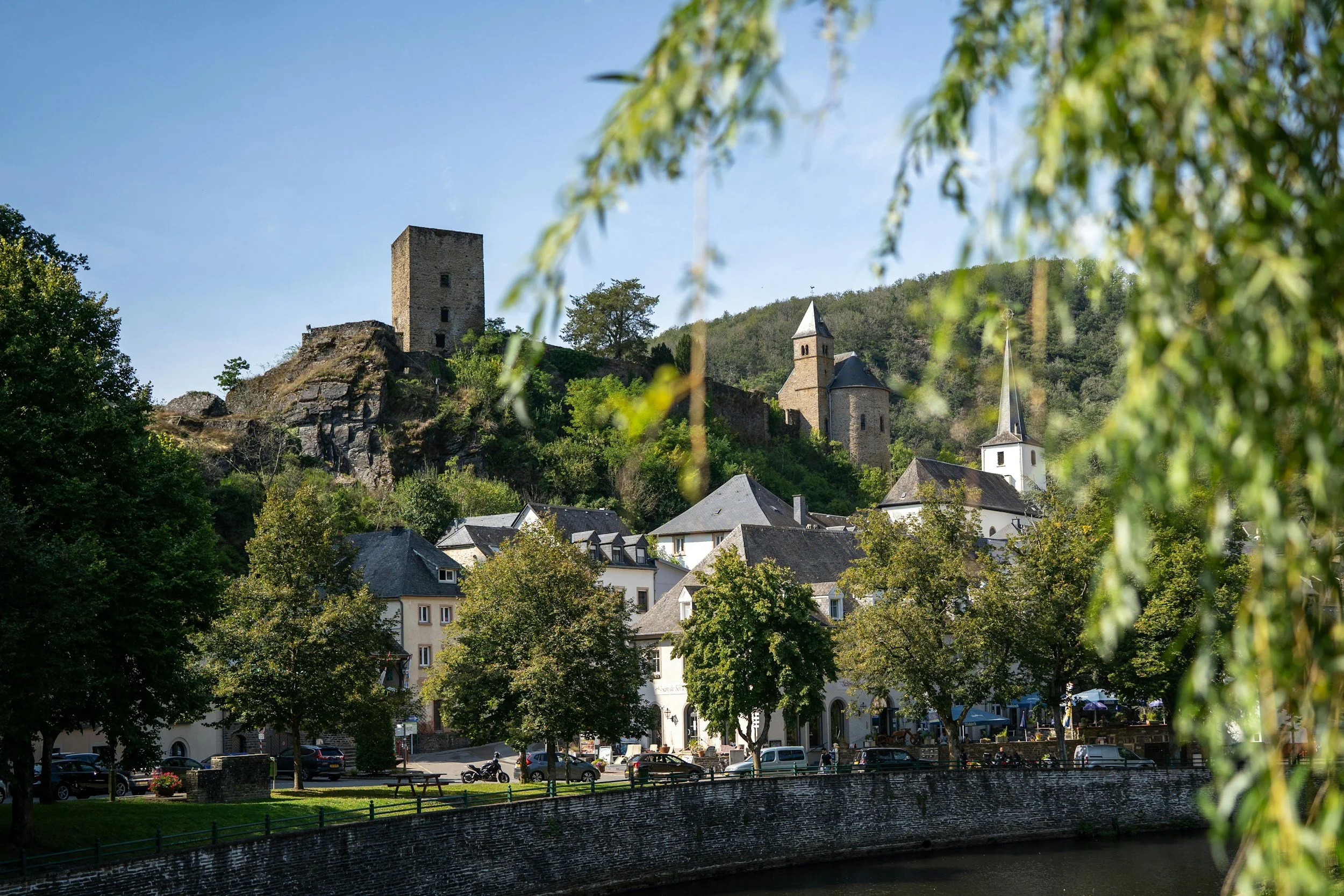
The village of Esch-sur-Sûre sits in a loop of the river, surrounded by hills and trees. It’s quiet, easy to walk around, and small enough that it only takes a few minutes to figure out where everything is. On the hill just above the village, the remains of a castle are still standing and it feels like part of the view rather than the main attraction.
You don’t need a ticket or a guide. There’s a short footpath that leads up from the centre, and you’re in. It’s not a big site, just a couple of walls, the base of a keep, and some uneven ground where other buildings used to be. There’s not much information posted around, and there’s no effort to make it interactive or impressive. Which works! It’s not trying to be anything other than what it is: old stone on a hill, with a good view over the rooftops.
If you sit up there for a while, you’ll probably see the same handful of locals walking back and forth along the river, or maybe someone stopping to take a picture and heading back down again. It’s not busy. But it’s a good place to stop and catch your breath, especially if you’re travelling at a slower pace.
The best thing here is the setting. The hills fold around the town in a way that makes it feel tucked in. The river’s always nearby. If you’re walking through early in the day, especially in autumn, you might catch the mist sitting low across the water. In summer, the valley is green and quiet and still. It’s a calm place, and the castle is just one part of it.
There’s not a lot going on in the village itself, but you can get coffee, bread, or something warm if you’re here around lunchtime. A couple of guesthouses are open most of the year, and the area gets a bit more traffic in summer from hikers and cyclists. But even then, it doesn’t feel like a “tourist” stop. More like a detour that some people happen to take.
There’s no signage once you’re in the ruins, so just walk carefully… the ground’s uneven in places. The climb is short, maybe five minutes from the centre. No toilets at the castle itself, but the cafés in town are used to visitors and you won’t need to ask twice.
If the weather’s good and you’re not in a hurry, walk a bit past the village. There’s a small dam and reservoir, and a few low-key trails that take you into the hills without needing hiking boots.
Getting there without a car:
Take the train to Ettelbruck, then a local bus to Esch-sur-Sûre. The trip takes around 40 minutes from Ettelbruck. The bus drops you right in the centre of the village: no transfers, no uphill walk to get there. Like everywhere in Luxembourg, the ride’s free.
Bourscheid Castle: wide valley views without the crowds
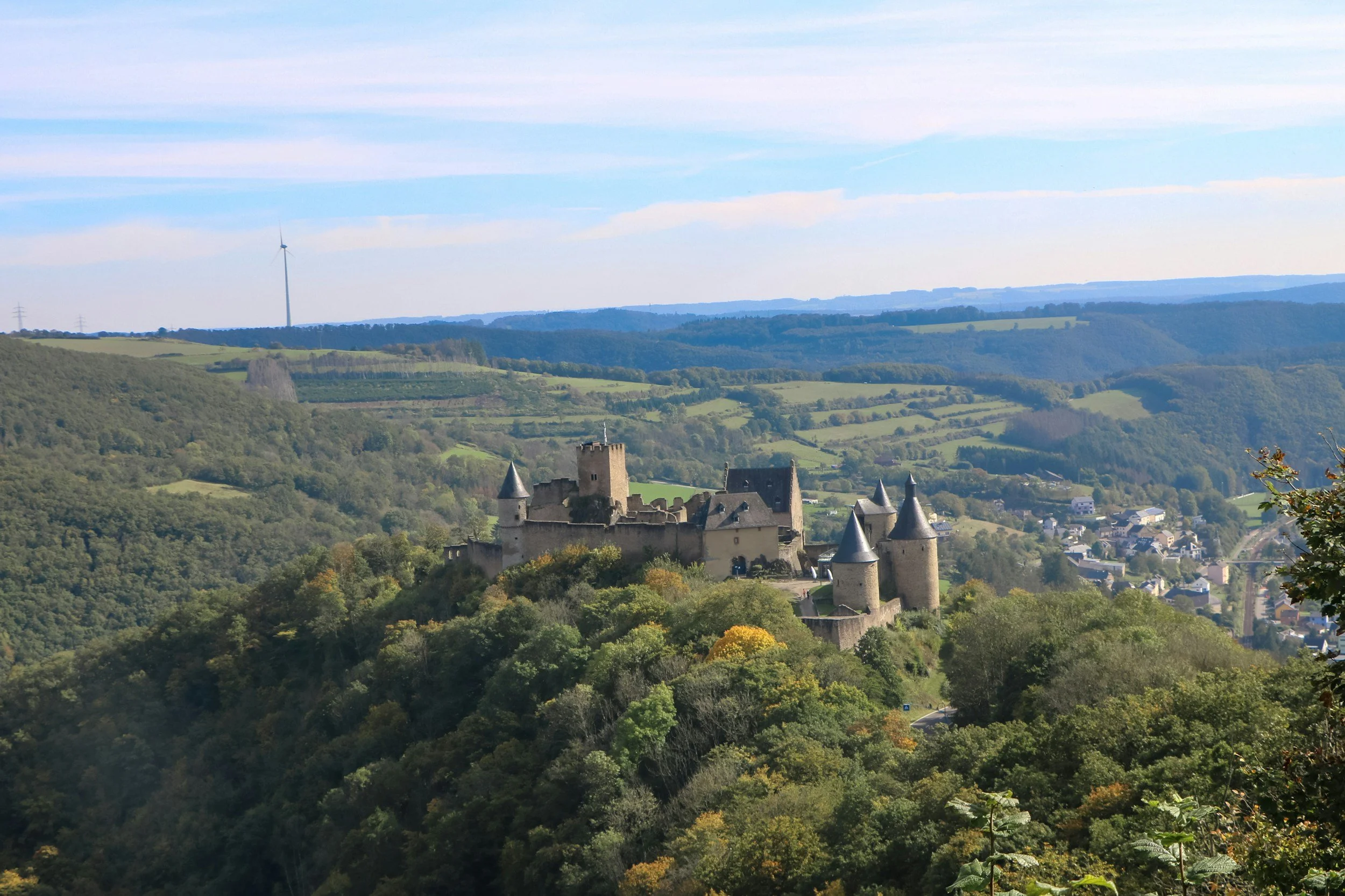
Bourscheid is the biggest castle on this list, and the most put-together. There are towers, walkways, wide-open courtyards, and actual information panels - the kind that tell you what this room was used for and when the roof last collapsed. You can spend a decent amount of time here, especially if you like seeing the full outline of a place rather than just the bones of it.
But it still doesn’t feel like a tourist site. It’s big, yes, but it’s also quiet. No groups, no noise, no one trying to sell you anything. The castle sits up on a ridge with a long view over the Sûre River, and you mostly just hear wind and birds, maybe a bit of rustling if someone else is walking nearby.
If you get there early (or later in the afternoon) you might have whole corners of it to yourself. There’s something about standing alone on one of the towers, looking out across the valley, that puts you in a different frame of mind. You get a real sense of how far the landscape stretches out. It’s hard to rush when the space around you is this open.
Inside the grounds, there’s a mix of restored areas and more weathered ones. Some towers are climbable, others are partly closed off. One section leads to a chapel. There’s a wooden walkway along one side where you can stop and see how the walls curve with the shape of the ridge. It’s not over-explained, which is good - there’s just enough information if you want it, but no pressure to follow a path or listen to a guide.
The walk up from the village takes a bit of effort (around 25 to 30 minutes uphill) but it’s steady, not steep. If you’re travelling without a car, this is probably the only part of the day that requires a little planning. The views at the top are worth it though, especially if the weather’s clear.
There’s a small reception building with toilets and a place to buy water or something basic. You do have to pay to get in (around 7 euros) but everything else feels pretty low key. No barriers, no one watching over your shoulder. You can walk, sit, take it in, and leave when you’ve had enough.
If you’ve only seen the smaller castle ruins scattered through the countryside, Bourscheid gives a different kind of perspective. It shows how serious these structures once were: how many people lived here, how much space they took up. But it still fits the slower way of travelling. You don’t have to see it all. You don’t even have to stay long. Just give yourself time, avoid the midday crowd, and don’t treat it like a checklist stop.
Getting there without a car is doable. The easiest route is to take the train to Ettelbruck, then catch a local bus toward Bourscheid. You’ll get dropped off in the village and walk up from there. Like everything else in Luxembourg, the whole journey is covered by free public transport, and buses run pretty reliably. If you don’t feel like walking up the hill, a taxi from Ettelbruck to the entrance is also an option. It’s a short ride, nothing complicated.
If you want to make more of the day, there are some hiking trails that loop through this part of the country. You can head out toward Dirbach or Goebelsmuhle, depending on how far you want to go. Otherwise, just walk back down to the village and stop at the small inn near the bus stop. A drink, a snack, a view - that’s usually enough.
Brandenbourg Castle: a quiet ruin in northern Luxembourg you can visit for free
This one doesn’t show up on many lists, which makes it a good place to go if you’ve already seen the bigger names or just want a quieter stop along the way. Brandenbourg Castle is up in the north of the country, near a small village with the same name. You won’t see signs for it all over the region, and unless you’re already looking for it, you might not know it’s there.
The ruins are just off the road, built into the hillside above the village. It’s not gated or fenced off - there’s a short path, and then you’re in. There’s no entrance fee, no staff, and most of the time, no one else around. It’s the kind of place that still feels like it belongs to the landscape more than to tourism.
What’s left of the castle is mostly outer walls and bits of interior space. Some sections are more complete (archways, windows, stone steps that lead up to open viewpoints) but a lot of it has been left as it is. There are panels near the entrance with some background, but you’re free to just walk, look, and sit wherever you like.
It’s quiet here. Really quiet! You’ll hear your own footsteps, the wind in the trees, maybe a dog barking from the village below. If you stay a while, you’ll notice the shape of the valley from different points, or the way the light moves across the stone depending on the time of day. It’s stunning here!
You don’t need to “do” much here. Bring something to eat, sit on a wall, take your time. There’s enough open space to wander, and enough structure left to feel the scale of what used to be here, but not so much that you feel directed.
The village itself is small and quiet, with a few residential streets and views of the surrounding hills. No cafés or shops directly on site, but the nearby towns have enough for a meal or a coffee before or after. Most people pass through Brandenbourg on a longer walking or cycling route, but it also works as a short detour if you’re staying nearby.
It’s worth coming here not because it’s impressive, but because it’s uncomplicated. No schedule, no signage telling you what to feel. Just a structure that’s still standing, in a place that hasn’t tried to turn it into anything else.
To get there, you can take a train to Diekirch or Ettelbruck, then a local bus to Brandenbourg. From the bus stop, it’s a short walk up. As always, all public transport is free, and most routes run a few times per day- but if you’re heading back late, it’s worth checking the return times in advance. There’s no tress, but also not many options after dark.
Wear decent shoes, especially in wet weather, as the ground is uneven in places, and parts of the path can be muddy. Otherwise, it’s as easygoing as it gets. You walk in, you walk around, you stay as long as you feel like, and you leave when you’re ready.
Most castles here are day visits, but if you’re curious what it looks like to spend the night in one, these stay-in castles give a good sense of how that works.
Hollenfels Castle: a quiet stop along Luxembourg’s Seven Castles route
Hollenfels isn’t the kind of castle that gets recommended in travel round-ups. It’s not ruined enough to be romantic, not restored enough to be impressive. But it’s worth knowing about, especially if you’re heading through the Valley of the Seven Castles - one of the better areas in Luxembourg for slow travel.
The castle is perched on a rocky ledge above the Eisch River, and it looks more dramatic than it is. From a distance, it’s all vertical lines and stone: a tall square tower, a few outbuildings, and a wooded drop down to the water. Up close, it’s quiet. You might see a group of local school kids on a field trip or someone using the walking trails nearby. It’s not set up for tourists in the usual sense.
Most of the building is now used as a youth education centre, so you can’t always go inside. However, you can still walk the grounds, sit on the benches, and get a feel for the structure. There’s a small garden, a bridge, and views across the trees and hills that surround the valley. In spring and early summer, the paths are especially nice. Green, shaded, and mostly empty!
What makes Hollenfels interesting is where it is. It sits right along the Valley of the Seven Castles route, which is a 37-kilometre trail that links together, as you’d guess, seven different castle sites. Some are more intact than others. A few are private, others barely more than a wall. But together, they make for a route that’s well worth exploring if you’re walking or cycling in the area.
You don’t need to do the whole trail. A section between Hollenfels and nearby Ansembourg makes for a good half-day trip - especially if you’re not in a rush and want to stop for coffee or sit by the river somewhere along the way.
Public transport to Hollenfels is straightforward. Take a train to Mersch, then a short bus ride. It drops you near the centre of the village, and the castle is a short walk from there. Like everywhere else, it’s covered by Luxembourg’s free public transport network, which means you can make last-minute decisions without worrying about ticket costs.
There’s not much infrastructure around the castle itself (no café, no shop, no formal “attraction” feel) but there are places to eat and rest in the surrounding towns. Koerich, Ansembourg, and Septfontaines are all reachable from the same route, either by bus or on foot, depending on how you’re planning your day.
If you’re already exploring the central-western part of Luxembourg, Hollenfels is a good addition. Not as a destination on its own, but as part of a slower route through a part of the country most people miss.
If you’re trying to picture a slower version of this across multiple regions, this guide to castle hiking in Europe helps you see how it can work beyond one country.
One small detail that’s easy to miss in Luxembourg
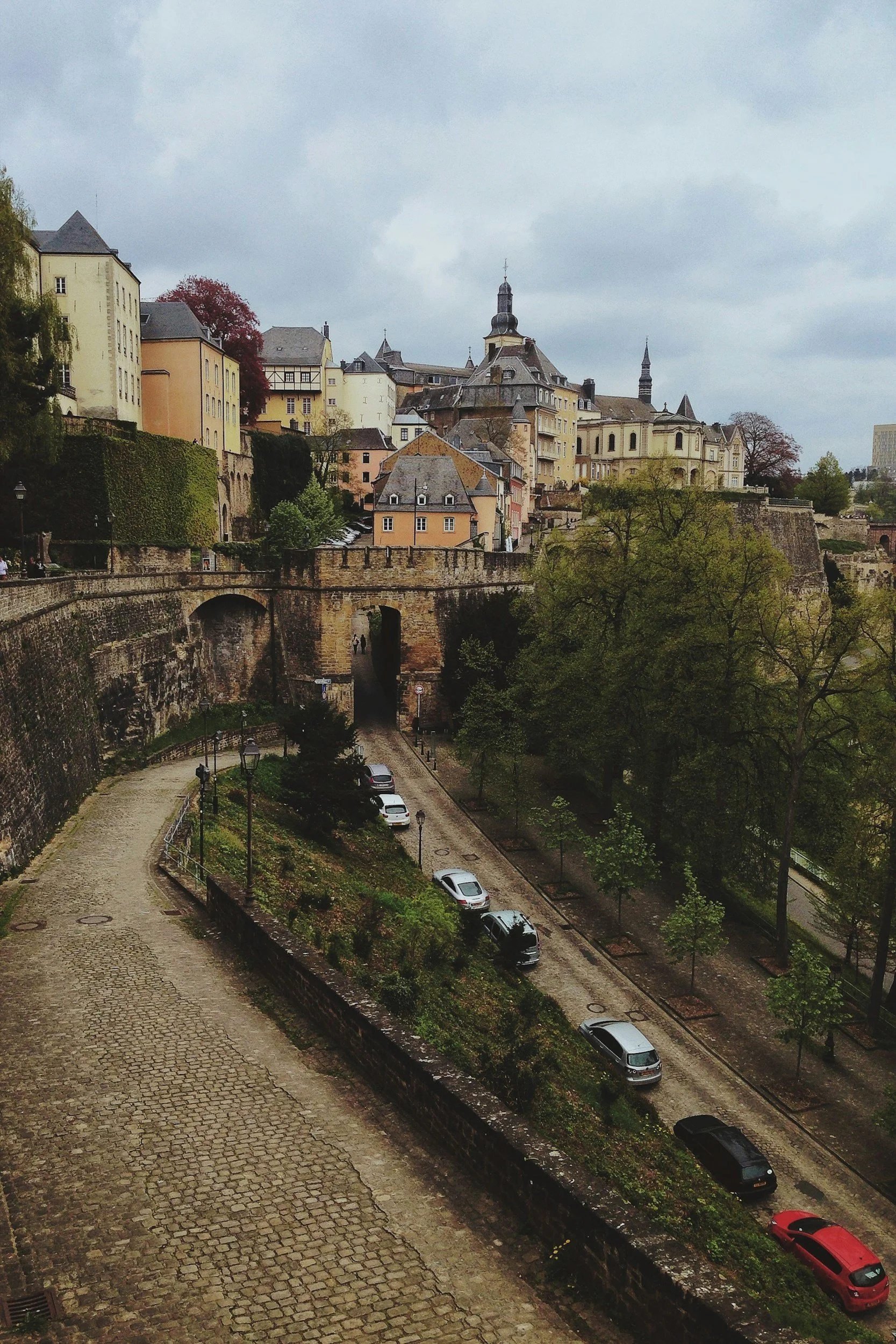
Most countries don’t make slow travel easy. Even if you’re in a rural area, you usually need to rent a car. Then you’re dealing with fuel costs, parking, road signs, entry fees, and long drives just to see one or two things. You start making decisions based on effort instead of interest. And if a place isn’t “worth it,” you feel like you’ve wasted time or money.
Luxembourg is different - in a way that’s easy to underestimate.
You can visit some of the most peaceful parts of the country by public transport alone. And that’s not just possible - it’s free. Trains and buses run all over the country, from the city centre out to small villages, forest areas, and valleys. You can decide in the morning to head out to Brandenbourg, or Koerich, or Esch-sur-Sûre, and still change your mind halfway there. You’re not locked into anything.
That kind of flexibility is rare especially in Europe, where rural transport can be complicated or unreliable. In Luxembourg, it works. You don’t need a car. You don’t need a strict plan. You can string together small places without overthinking it. That’s not something most travel guides highlight, but it makes a big difference when you’re travelling independently.
The castles themselves reflect that same attitude. Most of them are open without fanfare. No one is hovering. There’s no headset to rent. Some don’t even have signs. You’re just allowed to be there to walk around, to take it in, or to leave after five minutes if it doesn’t speak to you. That might not sound like much. But if you’ve ever felt drained by over-managed travel, you’ll notice how different that feels.
It’s not a country built around “must-sees.” It’s a place that makes room for you to move at your own pace. Where a ruin in a village is reason enough to go somewhere. Where sitting on a low wall overlooking a river feels like a full day.
And it’s that (more than any one castle) that makes Luxembourg such a surprisingly good destination for slow travel. Quiet places are easy to reach., and the logistics don’t get in the way.
Some people end up comparing this with southern France before deciding, and these castle towns in France give a slightly different feel with easier train connections.
Spain feels quite different again when it comes to castles, especially if you’re okay with things being less structured, and these abandoned Spanish castles are a good reference point.
FAQs about visiting castles in Luxembourg
What are the best castles to visit in Luxembourg?
Some of the most interesting castles to visit in Luxembourg include Bourscheid Castle for wide valley views, Larochette Castle for a more accessible hilltop ruin, and Vianden Castle if you want a fully restored medieval castle experience. Smaller ruins like Brandenbourg Castle and Koerich Castle feel quieter and much less visited.
Can you visit castles in Luxembourg without paying an entrance fee?
Yes, several castles in Luxembourg are free to access, especially ruins like Brandenbourg Castle and Koerich Castle. You can walk through the remains freely, while larger sites such as Vianden Castle usually have a small entrance fee due to restoration and upkeep.
Which castles in Luxembourg are least crowded?
If you want quieter places, smaller ruins like Koerich Castle, Hollenfels Castle, and Brandenbourg Castle tend to be much less busy than the more famous stops. Even on weekends, you’ll often find yourself walking through them with very few other people around.
What is the Valley of the Seven Castles in Luxembourg?
The Valley of the Seven Castles is a scenic route in western Luxembourg where several medieval castles are spread across a relatively small area. It includes places like Hollenfels Castle and surrounding castle ruins, and it can be explored by car or as part of a slower road trip between villages and forested valleys.
How long do you need to visit Luxembourg castles?
You can visit one or two castles in a half day, but a slower itinerary of 2–3 days works better if you want to include multiple stops like Bourscheid Castle, Larochette Castle, and smaller ruins along the way. This allows time to explore without rushing between locations.
Is Luxembourg good for a castle road trip?
Yes, Luxembourg is ideal for a short castle-focused road trip because the distances are small and many castles are located within 30–60 minutes of each other. You can combine well-known sites like Vianden Castle with quieter stops such as Koerich Castle and Hollenfels Castle in a single trip.
What is the most impressive castle in Luxembourg?
Vianden Castle is often considered the most impressive due to its size, restoration, and hilltop setting above the town of Vianden. However, many travellers also prefer the quieter atmosphere of castles like Bourscheid Castle or Larochette Castle.
When is the best time to visit castles in Luxembourg?
Spring and early autumn are the best times to visit castles in Luxembourg, with fewer crowds and softer light across the valleys. Summer is busier, especially at major sites like Vianden Castle, while winter is quieter but some smaller sites may feel more limited depending on weather.