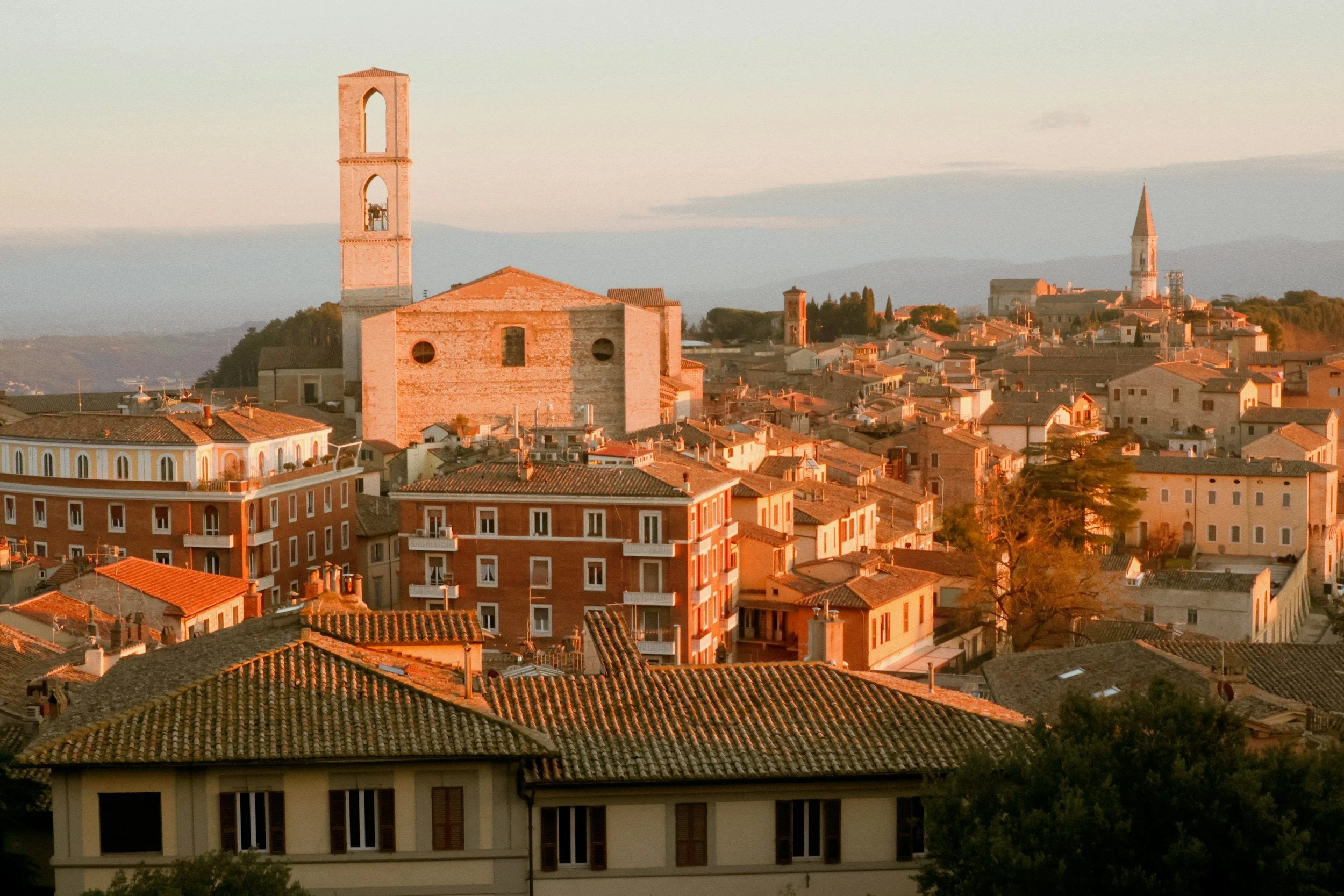
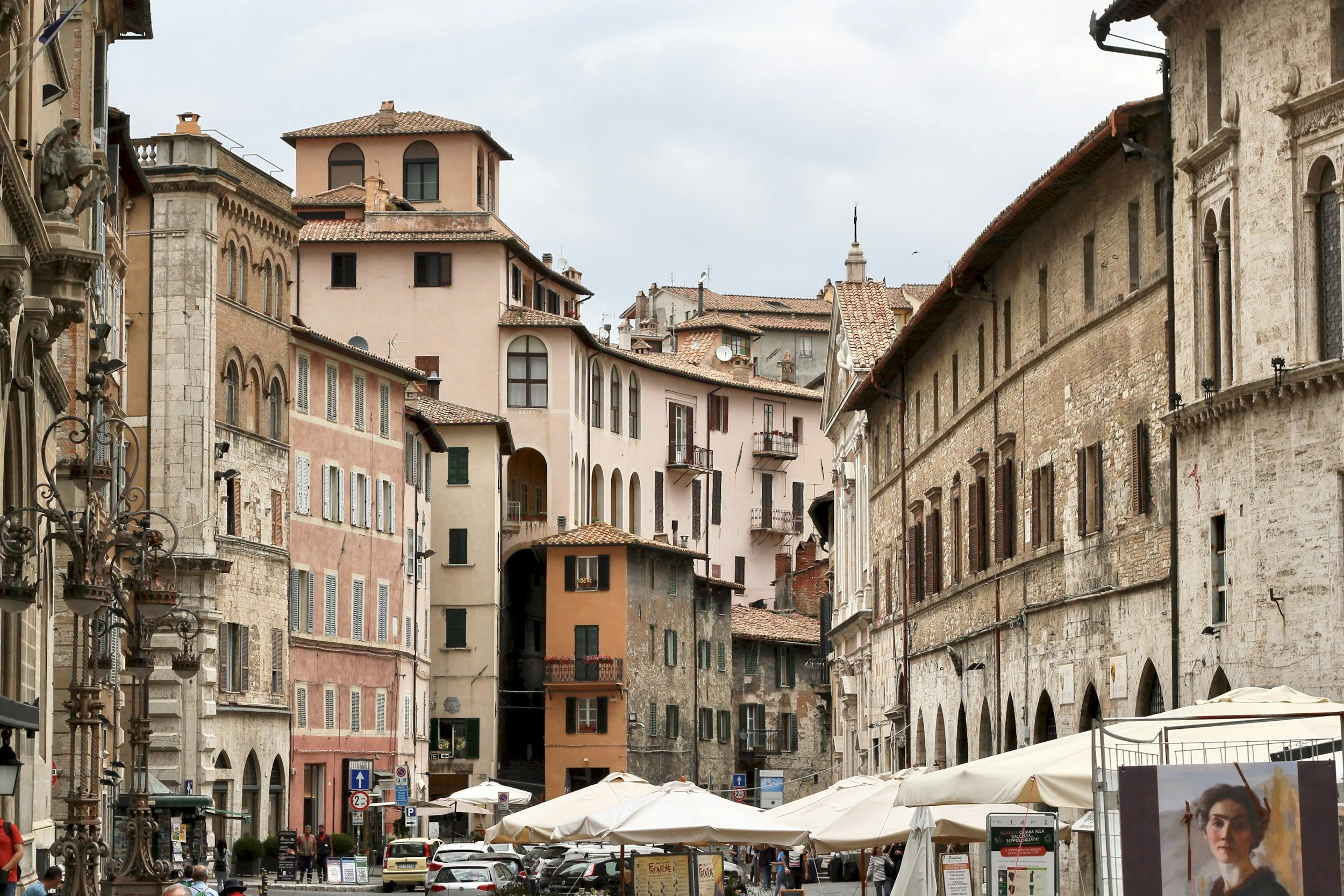
Perugia is famous for chocolate, but I suspect the cafés and food might be just as good a reason to spend a weekend here. There's Sandri, a beautiful historic café on Corso Vannucci, little streets filled with restaurants serving Umbrian cooking, and an entire chocolate museum inside the city's former covered market. You can spend Saturday exploring the old town, stop for something made with fresh cream at Antica Latteria, and still have time for a long dinner on Via dei Priori.
And you can do all of it without a car!
There is one thing to know before booking, though. Perugia's main railway station, Fontivegge, sits below the historic centre, and the old town is decidedly hilly. The easiest way up is the Minimetrò towards Pincetto, followed by a short journey into the upper centre. Stay around Corso Vannucci or Piazza IV Novembre and most of the weekend can be spent on foot, with cafés, restaurants and chocolate shops close enough that you won't need to keep thinking about transport.
The chocolate side of Perugia is particularly interesting now that you don't have to travel out to the Perugina factory to experience it. The new Città del Cioccolato museum is right in the centre, while Turan offers smaller chocolate tastings and workshops. The Perugina factory in San Sisto is still an option if you're curious about the history of Baci, but it means setting aside part of Saturday for a separate trip.
Personally, I think the appeal of Perugia is having enough to fill two days without needing to organise every hour. A morning coffee at Sandri, a walk past the fountain in Piazza IV Novembre, perhaps a chocolate tasting, and later a meal built around Umbrian ingredients, local wine and something you might not have tried before. There's also Rocca Paolina, where you can walk through streets that were enclosed beneath a 16th-century fortress.
For a weekend like this, two nights give you a full Saturday for the cafés, chocolate and a good Umbrian dinner, with Sunday left for a final wander and perhaps lunch before catching the train home.
Saturday starts with coffee on Corso Vannucci
There's something rather appealing about starting a weekend in an Italian city with a proper café, especially one that's been serving people for more than 160 years. Sandri, at Corso Vannucci 32, dates back to 1860, when a Swiss confectioner from the Engadine region established the business in Perugia. It's one of those places where the interior is as much a reason to visit as the coffee, with its historic pastry-shop character and a history that connects nicely with the city's longstanding fondness for sweets.
Corso Vannucci is the main street through Perugia's upper old town, so you're already in the middle of things. From Sandri, you can continue towards Piazza IV Novembre, but there's another café nearby that deserves a mention, particularly if you have a weakness for whipped cream.
Antica Latteria, tucked away at Via Baglioni 5, has been around since 1925 and is known for its fresh cream. It's a very different proposition from Sandri, with its roots in the old dairy tradition rather than grand historic pastry shops. Depending on the weather and what's available, something cream-based with coffee or hot chocolate could be a rather nice way to start the morning. Antica Latteria normally closes on Sundays, so Saturday is the day to consider it.
As you continue along Corso Vannucci, the street eventually opens into Piazza IV Novembre, one of the loveliest parts of central Perugia. The Fontana Maggiore stands in the middle, with the cathedral on one side and Palazzo dei Priori on the other. The fountain was completed in the 13th century, and its carved panels are surprisingly interesting once you start looking at them. Alongside religious and symbolic figures are scenes connected to the months, agricultural work and ordinary medieval life. It's a reminder of how closely the city was once tied to the countryside around it.
If you're already thinking about chocolate, Turan has a café at Piazza IV Novembre 35, where you can stop for coffee and something sweet while enjoying the square. The chocolatier also runs tastings and workshops elsewhere in the old town, which we'll come to later.
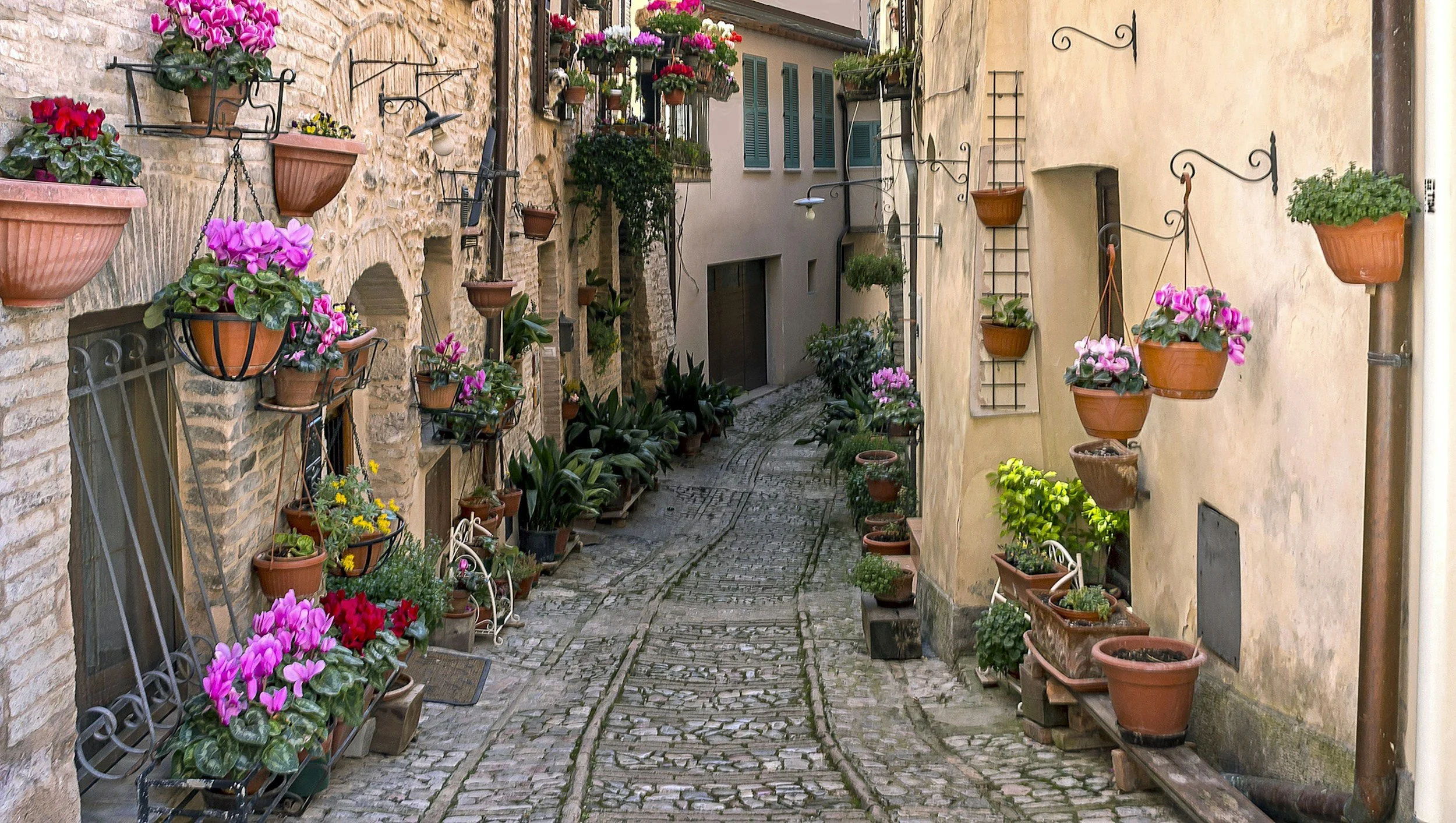
Before heading on, have a look at the smaller streets branching off from the square. Some lead downhill between tall medieval buildings, while others take you into quieter corners of the old town. Via dei Priori is particularly worth following, with some interesting old buildings along the way and a couple of good places to eat.
Follow Via dei Priori for chocolate and Umbrian food
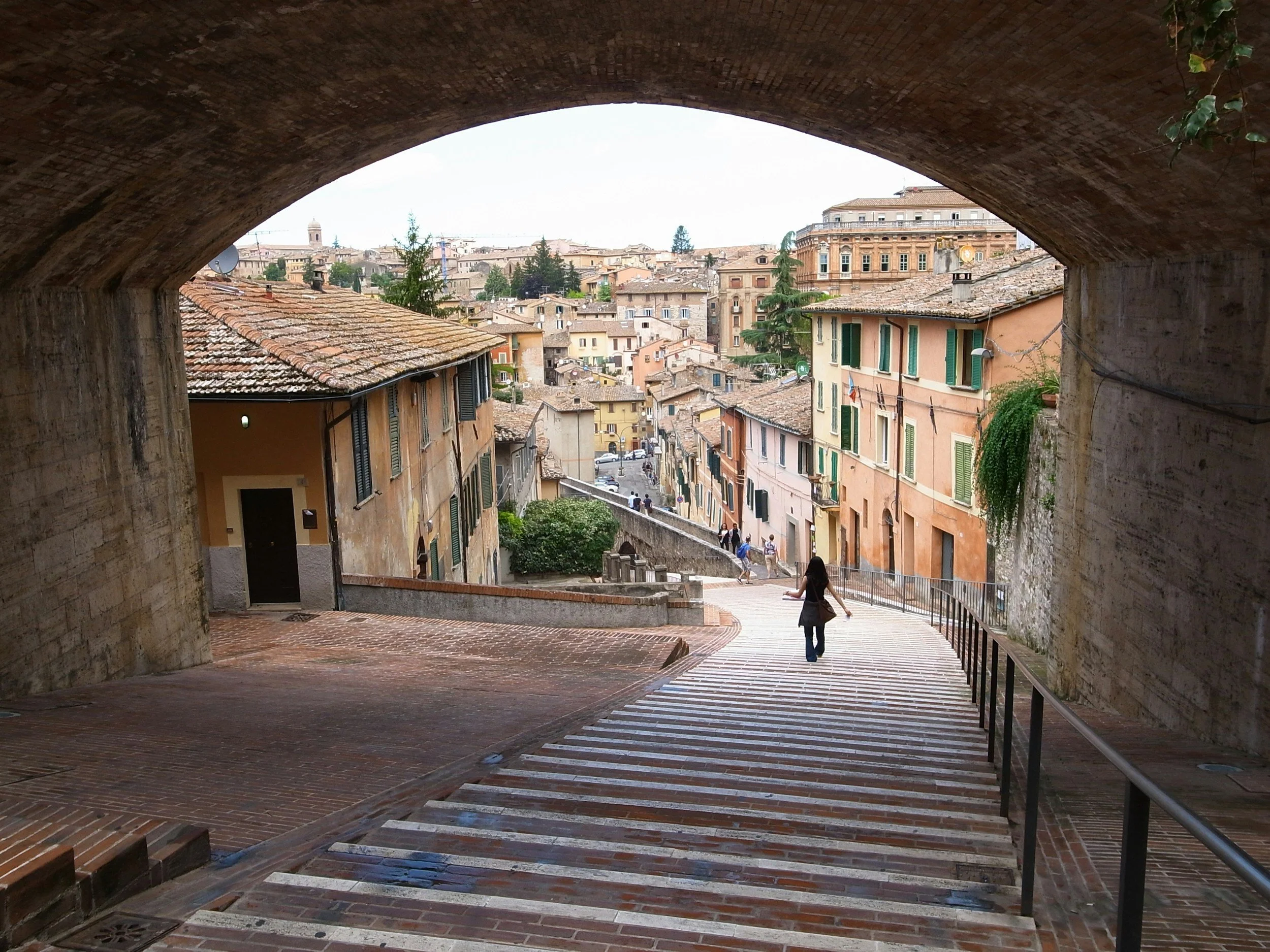
Just beside Palazzo dei Priori, an archway leads you down Via dei Priori, one of the oldest streets in Perugia. It was once part of an important route west towards Lake Trasimeno and Tuscany, and you can still see traces of its medieval past in the buildings and narrow lanes branching off it.
It's also a street with quite a lot going on. There's Turan Accademia at number 52, where chocolate tastings and workshops take place, and Osteria a Priori at number 39, which is where I'd book dinner.
For a little more of the neighbourhood, follow Via dei Priori farther downhill towards Torre degli Sciri. At around 46 metres tall, it's one of the few surviving medieval family towers in Perugia. Wealthy families once built these towers as symbols of their status, and the Sciri family's tower is a particularly striking reminder of that period. Nearby, the smaller lanes lead towards San Francesco al Prato, where the tightly packed streets give way to a more open area around the church.
Along Via dei Priori, smaller streets such as Via della Luna and Via delle Streghe are worth a look, too. You'll find narrow passages between the buildings, with occasional glimpses of courtyards and gardens above street level.
For dinner, Osteria a Priori is particularly appealing because of its close relationship with Umbrian food producers. It also has a shop selling regional ingredients, including cheeses, cured meats, olive oils and pulses. That connection to local agriculture is a big part of what makes the restaurant interesting. You're getting a taste of the region beyond Perugia itself.
Umbrian cooking has some wonderful traditions that don't always get much attention outside Italy. One is torta al testo, a round, savoury flatbread named after the heated plate it's cooked on. It's often split and filled with cheese, vegetables or cured meats, making it something to look out for if you want a lighter meal during the weekend.
Then there's norcineria, the art of making sausages and cured pork products, associated with the Umbrian town of Norcia. The tradition is so well established that norcineria has become a familiar word for pork butchery and charcuterie in Italy.
But there's another side to Umbrian cooking that I find equally interesting: the reliance on simple ingredients such as lentils, beans, handmade pasta and olive oil. Pasta dishes might feature umbricelli, a thick, hand-rolled pasta, or strangozzi, another regional speciality. Sometimes the most interesting thing on the menu is the dish with the fewest ingredients, especially when those ingredients come from nearby farms.
At Osteria a Priori, have a look at what's currently being served rather than arriving determined to order one particular dish. With the restaurant's emphasis on regional producers, the menu is a good opportunity to discover something you wouldn't necessarily recognise from a typical Italian restaurant.
For another Italian weekend where the food is a big part of the reason to go, have a look at my Bologna food guide. The cooking is quite different from Umbria, and it's another city where markets, food shops and restaurants are worth making time for.
I'd book Osteria a Priori for Saturday dinner, particularly if you're interested in trying some of the region's lesser-known ingredients. If it's fully booked, Bottega dei Priori at number 21 is another option nearby, with regional dishes including cured meats served with torta al testo.
One last thing about Via dei Priori: it really does go downhill. Quite steeply in places. If you've followed it all the way towards Torre degli Sciri, you'll have a climb back to Piazza IV Novembre. That isn't necessarily a problem, but it's worth knowing before setting off in shoes that looked much more comfortable in your hotel room.
If you're interested in how much Italian food changes depending on where and when you travel, I've also written about the best time to visit Italy for seasonal food. It's surprising how much difference a few weeks can make to what's being served.
A short afternoon through the Rocca Paolina
Perugia has an unusual approach to public transport. In one part of the city, you can step onto an escalator and travel through the remains of a neighbourhood that was buried inside a fortress almost 500 years ago.
That's Rocca Paolina, and it's one of the places I'd make room for on Saturday, even if you're not especially interested in military history.
The story behind it is rather dramatic. In 1540, Perugia came into conflict with Pope Paul III over a salt tax, an episode known as the Salt War. After the city was brought back under papal control, the pope ordered an enormous fortress to be built on the southern side of the old town. It wasn't exactly a friendly gesture.
The construction swallowed up part of the medieval neighbourhood associated with the powerful Baglioni family. Houses, streets, courtyards and workshops were enclosed beneath the new fortress, while other buildings were demolished to make room for it. Much of Rocca Paolina itself was later torn down in the 19th century, but parts of the older streets survived inside.
Today you can walk along Via Bagliona, an old street beneath the fortress, passing stone arches, former doorways and spaces that once belonged to houses and workshops. What makes it so interesting is that these weren't built as underground passages. They were ordinary streets before the fortress was constructed around them.
Even more unusually, the city installed escalators through the complex in the 1980s. They're still used to get between Piazza Partigiani, where the bus terminal is, and the upper centre. So while visitors are exploring the old passageways, other people are simply using the escalators to get across Perugia.
You can enter the complex near Piazza Italia, at the southern end of Corso Vannucci. There's no need to travel all the way down to the bus terminal, and you can return to the upper centre through the same network of passages and escalators.
Another detail to look out for around the fortress is Porta Marzia, an ancient Etruscan gateway. When Rocca Paolina was built, the architect Antonio da Sangallo incorporated the upper portion of the old gate into the fortress wall rather than destroying it completely. It's quite a remarkable mixture of Etruscan and Renaissance architecture, especially when you consider how much of the surrounding neighbourhood was lost.
Before or after exploring the fortress, head over to Giardini Carducci, beside Piazza Italia. The gardens are named after the Italian poet Giosuè Carducci, who wrote about Perugia during a visit in 1877. There's a monument to the painter Pietro Vannucci, better known as Perugino, along with views over the valley and distant mountains.
It's a lovely contrast to the underground passages, particularly on a clear afternoon. One minute you're looking at old stone walls beneath the city, and a few minutes later you're standing above the rooftops with the Umbrian countryside stretching out beyond them.
With a Saturday dinner reservation on Via dei Priori, this makes a good way to spend the afternoon without adding another museum or trying to see every historic building in Perugia.
Where to enjoy Perugia's chocolate, beyond buying a box of Baci
Perugia and Baci have been inseparable for more than a century. You probably recognise the little hazelnut chocolates in their silver-and-blue wrappers, each with a romantic message tucked inside. Some are rather sweet, others wonderfully dramatic. Apparently, even chocolate needs a little Italian romance…!
But there's more to Perugia's chocolate tradition than bringing home a box of Baci. You can join a tasting with a local chocolatier, explore the history of cacao in a museum that opened in 2025, or visit the Perugina factory where the famous chocolates are made.
For this weekend, I'd choose between a tasting in the old town and the central chocolate museum, unless visiting the Perugina factory is something you've particularly wanted to do.
Turan: for people who'd rather taste the chocolate
If spending an hour learning about cacao sounds interesting, but you'd prefer someone to hand you actual chocolate while explaining it, Turan Accademia is a lovely option.
You've already passed its workshop on Via dei Priori 52 during your Saturday wander. Unlike the Turan café on Piazza IV Novembre, this is where the chocolate-making and guided tastings happen.
The guided tasting lasts around 45 minutes and introduces you to different single-origin chocolates. It gets into the differences between cacao varieties and why chocolate from one part of the world can taste quite different from chocolate made with beans grown somewhere else.
It's quite interesting how much the flavour of chocolate depends on where the cacao is grown, something that's easy to overlook when you're standing in a shop trying to decide which bar to buy.
Turan also runs a workshop where you can make your own chocolate bar, which sounds like fun if you enjoy getting involved rather than just tasting the finished product. For a weekend in Perugia, though, the guided tasting would be my pick. Forty-five minutes is enough to learn something new, try a few different chocolates and still have most of the afternoon ahead of you.
When checked, both experiences lasted around 45 minutes, with the tasting priced at €20 per person and the chocolate-making workshop at €35. It's worth contacting Turan before booking, especially if you're travelling alone. Ask which sessions are available in English and whether you can join an existing group, as some activities are arranged for couples or groups.
Città del Cioccolato: the old covered market has a new purpose
Città del Cioccolato is a fairly new addition to Perugia, having opened in October 2025. It occupies the former covered market beside Piazza Matteotti, a building where people once came to shop for everyday groceries. These days, the shopping is rather more chocolate-focused, with the old market transformed into a museum exploring cacao, chocolate-making and the history behind one of Perugia's favourite products.
Although Perugia is famous for Baci, the museum goes well beyond the city's own chocolate-making history. You'll learn where cacao comes from, how different cultures have used it over the centuries and how it eventually found its way into the chocolate we eat today.
It's a self-guided visit, so you can spend more time on whatever catches your interest. Perhaps you'll get completely absorbed in the history of cacao, or perhaps an hour of chocolate facts will leave you thinking mainly about which ones to buy in the shop afterwards. Both seem like perfectly reasonable ways to spend a morning in Perugia.
The museum suggests allowing around 60 to 90 minutes for the full visit, so it fits comfortably into Sunday morning. It's also one of the more reliable Sunday options in Perugia, when several smaller shops and restaurants are closed.
There are additional chocolate-making activities, including Bean to Bar workshops, but these are booked and paid for separately. Unless you're particularly interested in making chocolate, the regular museum visit should be plenty.
One detail I especially like is that you don't have to buy a museum ticket to visit the chocolate shop or the terrace Chocolate Bar. So if you're travelling with someone who would rather sit with a coffee than spend an hour learning about cacao, you can quite happily do different things for a while…
The museum is at Piazza Matteotti 18, close to the Pincetto Minimetrò station, which also makes it convenient before travelling home. Have a look at the official ticket page for current admission prices and any separately booked activities.
Is the Perugina factory worth leaving the old town for?
Now, if Baci are the reason you became interested in Perugia in the first place, there's another experience you might prefer!
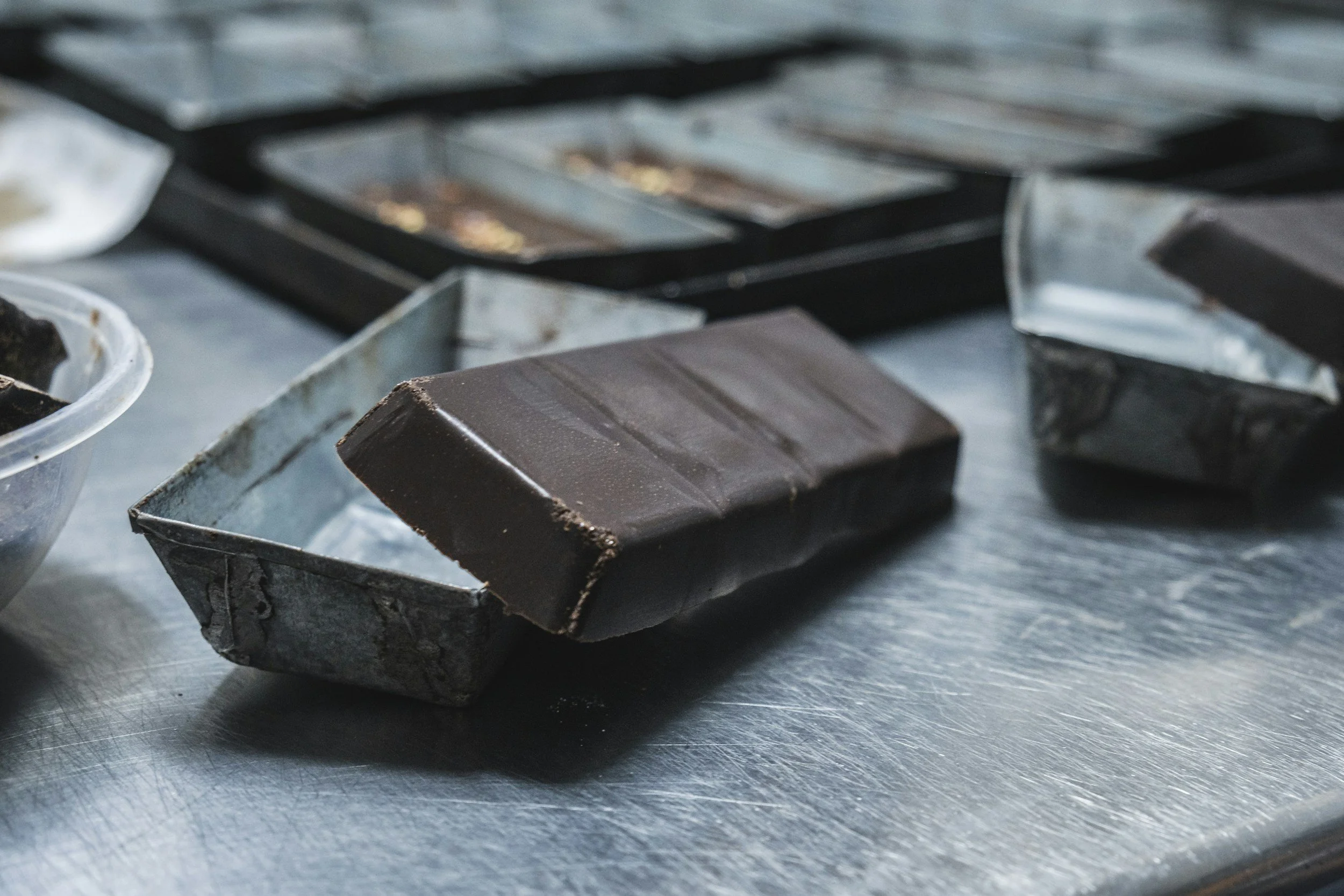
Casa del Cioccolato Perugina is at the actual Perugina site in San Sisto, outside the historic centre. It's the place to learn about the company, its famous chocolates and how the brand developed over the years.
There's something quite appealing about visiting the home of a chocolate you've probably seen in shops all over Europe. And the little love notes inside Baci have become such a recognisable part of the product that the history behind them is interesting in its own right.
The visit includes an introduction to Perugina's history and a chocolate tasting, with the possibility of walking through part of the factory. There's an important distinction here, though: seeing chocolate being made on the production lines isn't guaranteed. Factory access depends on technical and production requirements, so don't book solely because you're expecting to watch thousands of Baci coming off a conveyor belt.
The factory is in San Sisto, outside the old town, so you'll need to arrange transport and book your visit in advance. It's normally open Monday to Saturday, with shorter visiting hours on Wednesdays, and closed on Sundays and public holidays. There are occasional special openings, particularly around events such as Eurochocolate, so it's worth checking the official Perugina website if you're visiting during a festival.
If you're visiting without a car, getting to San Sisto takes a little more planning than the chocolate stops in the old town. Have a look at the Busitalia timetables before booking your visit, particularly for the journey back. A taxi might be worth the extra expense if it means spending less of your Saturday waiting for buses.
Unless you're particularly interested in Perugina itself, though, I'd save the trip to San Sisto for another occasion. There's already plenty of chocolate to enjoy in the old town. Turan is the more personal option, with someone guiding you through the tasting, while Città del Cioccolato gives you the freedom to explore at your own pace. The museum also fits nicely into Sunday, leaving Saturday free for a longer lunch, a wander through the old streets and that Umbrian dinner you've hopefully booked.
Sunday in Perugia: one last coffee and a good lunch
If you've got a few hours before your train home, I'd stay in Perugia rather than try to squeeze in somewhere else. You might have passed a little shop on Saturday that you wanted to look inside, or spotted a café that was already full when you walked past. Sunday is a good chance to go back, especially when you don't have dinner reservations or a chocolate tasting to organise your day around.
If you saved Città del Cioccolato for Sunday, it normally opens at 10 am, so there's time for a visit before lunch if your train leaves later. Otherwise, I'd head towards Via Pinturicchio for a different part of the old town.
You could also head north from Piazza IV Novembre towards Via Pinturicchio. It's a different stretch of the old town from the one you explored on Saturday, and at number 2 you'll find Augusta Perusia, a local artisan chocolatier. This is a good place to pick up something a little different from the usual Baci, perhaps a few chocolates to take home or give to someone who wasn't lucky enough to come along.
The shop usually opens on Sunday mornings, with a break in the middle of the day, but check before going. You don't want to walk over specifically for chocolate and find the shutters down.
Since you're already near Via Pinturicchio, have a look at some of the side streets before heading back to the main square. This part of Perugia is only a few minutes from Corso Vannucci, but it's easy to miss when most of your weekend is spent around the cafés and restaurants farther south. You might find yourself following a narrow lane simply because you want to see where it goes.
As for breakfast, Sunday might require a little flexibility. Antica Latteria is normally closed, and Sandri's opening hours are worth checking. Rather than making a special trip across town for a particular café, see what's open around Piazza IV Novembre. A cappuccino and a fresh pastry are a perfectly good start, and you can decide what to do next over breakfast.
One last Umbrian lunch before leaving
If your train leaves in the afternoon, I'd try to stay for lunch. Especially if you're heading back to Rome or Florence, where you'll probably have plenty of other things to do once you arrive. An extra hour at the table in Perugia sounds much more appealing than eating something you've picked up at the station.
Ristorante Ferrari, at Via Scura 1, is a good place to have in mind for Sunday lunch. It's just off Corso Vannucci and serves a mix of Italian and regional dishes, with seasonal changes to the menu. After all the chocolate, pastries and Umbrian specialities you've probably enjoyed over the weekend, you might fancy something a little lighter. The region has plenty of lovely ingredients beyond its cured meats and pasta, including lentils, beans, seasonal vegetables and olive oil, so see what's on the menu when you visit.
It's also handy to know that Ferrari normally opens on Sundays, as quite a few restaurants in Perugia don't. That includes Osteria a Priori and Bottega dei Priori, so Saturday really is your chance to eat at either of those.
If you're visiting Umbria in autumn, there's another food tradition worth knowing about. During Frantoi Aperti, olive mills across the region welcome visitors during the harvest. I've put together a separate guide to the towns I'd consider staying in for the event.
If you're heading home in the afternoon, book an early lunch and leave enough time to collect your bags afterwards. You'll still need to get down to Fontivegge, so I'd rather have a little extra time than spend the end of lunch worrying about missing the train.
For anyone catching a morning train, I'd forget about lunch plans altogether. Have breakfast, buy something for the journey if you need it, and leave yourself enough time to get down the hill. The Minimetrò has its own Sunday timetable, so it's worth checking that your departure fits.
Getting to Perugia without a car, and where I'd stay
One thing I'd be quite particular about when booking a hotel in Perugia is its location. And I don't just mean how close it is to the main square. Perugia is built on a hill, so a hotel that looks wonderfully central on Google Maps might involve a surprisingly steep walk every time you leave it.
For a weekend, I'd look for somewhere around Corso Vannucci, Piazza IV Novembre or Piazza Matteotti. That's where you'll spend much of your time anyway, with cafés, restaurants and little streets to explore just around the corner. It's also nice being able to walk back after dinner without having to think about transport.
You might find some lovely accommodation along Via dei Priori, too, but check exactly where it is. The street slopes downhill quite noticeably, and while that's perfectly fine when you're out exploring, you might feel differently about it when you're dragging a suitcase back towards the main square.
I'd also check whether your hotel has a lift! Some of the older buildings in Perugia have beautiful interiors, but that doesn't necessarily mean they're easy to reach with luggage. A quick message to ask about stairs and the nearest place a taxi can drop you off is worth sending before booking.
Getting to Perugia by train
If you're coming from Rome or Florence, two nights would be much nicer. Arrive on Friday, have Saturday entirely to yourself and enjoy Sunday morning before travelling home. It also gives you a little flexibility if your train arrives later than planned.
Something to watch when booking is the station name. Perugia, also known as Fontivegge, is the main railway station. There are several other stations with Perugia in their names, including Ponte San Giovanni, so make sure you're choosing the right one.
The Minimetrò isn't actually inside the railway station, but it's only a short walk away. When you come out of Fontivegge, turn left past the bus area and follow the signs to the Minimetrò entrance, roughly 300 metres away. From there, the little automated cabins take you uphill towards Pincetto, where you can continue into the old town near Piazza Matteotti.
The only thing I'd be careful about is arriving late on Friday evening. The Minimetrò doesn't run all night, and its timetable changes depending on the day. The escalators and inclined lift at Pincetto have separate opening hours, too.
Have a look at the current Minimetrò timetable when choosing your train, especially if you're arriving late or leaving early on Sunday. If the times don't work, I'd arrange a taxi to the hotel. After a few hours on a train, finding your way uphill with luggage probably isn't how you want to start the weekend…
One thing to check if you're visiting in August: the Minimetrò normally closes for maintenance for around two weeks in the first half of the month. The exact dates and replacement transport arrangements are announced separately, so check the official Minimetrò website before booking your arrival.
If you enjoy visiting Italian hill towns by train, I've also put together a guide to hilltop towns in Italy you can visit without a car. It's a useful place to start if you're planning a longer trip and want a few more ideas.
Arriving from Perugia airport
If you're flying into Perugia, the Umbria Airlink bus connects the airport with the city. Before deciding where to get off, have a look at where your hotel is, because there are two stops that could work.
Piazza Partigiani is particularly handy if you're staying towards the southern end of the old town. From the bus terminal, you can take the escalators through Rocca Paolina up towards Piazza Italia. It's the same historic fortress you may have explored during the weekend, except this time you're using it to get to your hotel.
The other option is Fontivegge railway station, where you can connect to the Minimetrò towards Pincetto. That might suit you better if you're staying near Piazza Matteotti.
I'd compare the two on a map before travelling. You don't necessarily need to go all the way to the railway station just because it's the more familiar stop.
The Airlink runs to its own timetable and requires a separate ticket, so check the departure that matches your flight. You'll find the details on the Busitalia Umbria Airlink website.
Would I stay one night or two?
If you're coming from Rome or Florence, I'd book two nights rather than trying to fit Perugia into a single overnight stay. Arriving on Friday means you can start Saturday with coffee at Sandri, spend the afternoon exploring and enjoy dinner without thinking about packing up again the next morning.
It's also worth checking what's happening in Perugia on your chosen weekend. Eurochocolate and Umbria Jazz both attract visitors to the city, so accommodation can be busier and the atmosphere quite different from an ordinary weekend. That might be exactly what you're hoping for, but if you're coming mainly for the cafés, food and a wander around the old town, I'd check the event calendar before booking.
One night can still work, especially if you're already nearby, but I'd be a little more selective about what you plan. There's enough in Perugia to keep you busy for much longer than a weekend, and I think it would be a shame to spend most of your time moving between places rather than enjoying them.
Besides, when you've found a good café, discovered a few Umbrian dishes you want to try and still have a chocolate shop or two on your mind, having another morning in Perugia is hardly a bad thing.
And if you're still deciding which Italian town to visit, I've also compared Arezzo and Lucca for a trip without a car. They're both worth considering if you enjoy smaller Italian cities that are easy to explore on foot.