
White Lotus style, without the White Lotus price tag
Let’s be honest, most people have watched The White Lotus and had that exact thought… where do you actually find a place like that without it costing a fortune?
Not the drama, but the setting. Waking up somewhere that already feels complete. A room that opens onto something worth sitting and looking at. Evenings that don’t require planning because everything you need is already there.
That kind of stay exists in Europe, just on a smaller scale and without the price tag you probably expect.
You’ll find it in places where you arrive, drop your bag, and don’t immediately start figuring things out. Maybe it’s a terrace above the sea on the Italian coast, a quiet hotel set back in the Portuguese pine forests, or a countryside stay where dinner and breakfast are already taken care of. The common thread is that you don’t spend the trip moving around to make it work.
This guide is built around those stays. The ones where you can settle in quickly, stay for a couple of days, and not feel like you’re missing anything by staying put.
Quinta da Comporta near Carvalhal on the Alentejo coast
You know that stretch after Alcácer do Sal where the road goes completely flat and nothing really changes for a while? Rice fields on both sides, the Sado left behind, and long straight sections where you barely pass another car. That’s when it starts to make sense where you’re going. By the time you turn toward Carvalhal, you’ve already slowed down without deciding to.
Quinta da Comporta sits just outside the village, and it doesn’t try to interrupt that feeling. You turn off the road, drive past low vegetation and sandy tracks, and then you’re there. No big entrance, no clear front. It feels closer to farmland than a hotel at first.
You park, walk in, and it takes a bit of wandering before you understand how it’s laid out. Wooden walkways cross what used to be rice paddies, with water channels still running through parts of it. The buildings stay low, spread out, and you don’t get a full overview. You just move through it and piece it together as you go.
The rooms don’t pull you inside. Most people open the door and leave it that way. You step out onto a terrace or straight onto sand, and there’s nothing in front of you except fields, reeds, and sky. Early in the morning, you’ll hear birds before anything else, especially around the wetter parts of the land, and the light comes in low across the fields rather than from above.
At some point, you’ll drive down to Praia do Carvalhal. The road runs straight through more fields, past small clusters of houses, then you park near the dunes. From there, it’s a short walk along wooden boardwalks before the beach opens up. If you stay near the main entrance, there’s a bit more movement. Walk 10–15 minutes in either direction and it clears out quickly.
On the way back, most people stop briefly in Carvalhal. Along Rua do Alto do Pina, you’ll find a couple of cafés and small spots like Padaria da Comporta where you can grab something simple. It’s not somewhere you linger for long, more a pause before heading back.
If you continue a bit further, Comporta has slightly more going on, especially around Rua do Secador. Shops, a few casual restaurants, people moving through, but even there, it doesn’t feel busy in the usual sense. You walk through, maybe stop once, then leave.
If you’re picturing something coastal but still low-key, where you can actually relax into the setting, alentejo coast gives a much clearer idea of how that kind of stay feels beyond the photos.
Hotel Villa Honegg above Lake Lucerne near Ennetbürgen
The last part of the drive is what you remember. You leave Lucerne, follow the lake toward Stansstad, then turn inland toward Ennetbürgen. After that, the road climbs quickly. It narrows, curves tighten, and within a few minutes you’re already above the tree line in parts. There are sections where you catch glimpses of Lake Lucerne through the trees, then suddenly a clear opening where the whole lake comes into view before disappearing again around the next bend.
If you’re not driving, the closest train stops are Stans or Stansstad. From there, it’s about 20 minutes by taxi, and you’ll notice the same shift on the way up. It’s not somewhere you reach casually. You have to decide to go there. If you’re driving yourself for the first time, it’s worth arriving before dark. The road is narrow in sections and not something you want to figure out late in the evening.
Once you arrive, you realise how contained everything is. The building is compact, more like a large private house than a hotel, and it doesn’t take long to understand the layout. You can walk from your room to the pool or the terrace in under a minute.
Rooms face the lake, and that’s where your attention goes immediately. You open the curtains and the view is already there, no need to reposition anything. Balconies are used constantly, especially in the early morning when the lake is still and the light is softer, and later in the afternoon when it shifts across the water and the mountains on the opposite side.
The infinity pool sits just below the main terrace, and you reach it by a short set of steps. In photos, it looks like a feature. In person, it’s more about how it lines up with the lake. When you’re in the water, the edge blends into the horizon, and the villages below, places like Weggis or Vitznau, look much further away than they are.
People don’t treat it as a quick swim. You go in, stay for a while, get out, sit on one of the loungers, then go back in later. Late afternoon is usually when the place makes the most sense. The light shifts across the lake, most people have returned from day trips, and the terrace and pool settle into a slower pace.
Breakfast is served inside or on the terrace, depending on the weather. You’ll see the same view from a slightly higher angle, with boats moving slowly across the lake below. It’s not a large buffet, but it doesn’t need to be. Most people keep it simple and stay longer than planned.
There isn’t much to do in the immediate surroundings, and that’s part of how the place works. You can walk short stretches along the road or nearby paths, but you’re not heading out on long walks from here. This works best if you’re planning to stay on-site for most of the day. If you prefer to be out exploring constantly, the location will start to feel limiting quite quickly.
If you do want to leave for a few hours, driving back down toward Ennetbürgen or Stans brings you back into a different pace. You’re near the lake again, with small harbors and places to walk along the shoreline. You could stop in Stans for a coffee or walk briefly near Stansstad, but most people don’t stay long before heading back up.
For a completely different mood, especially if you’re debating mountains versus seaside, swiss villages shows what a slower, more grounded version of luxury looks like in the Alps.
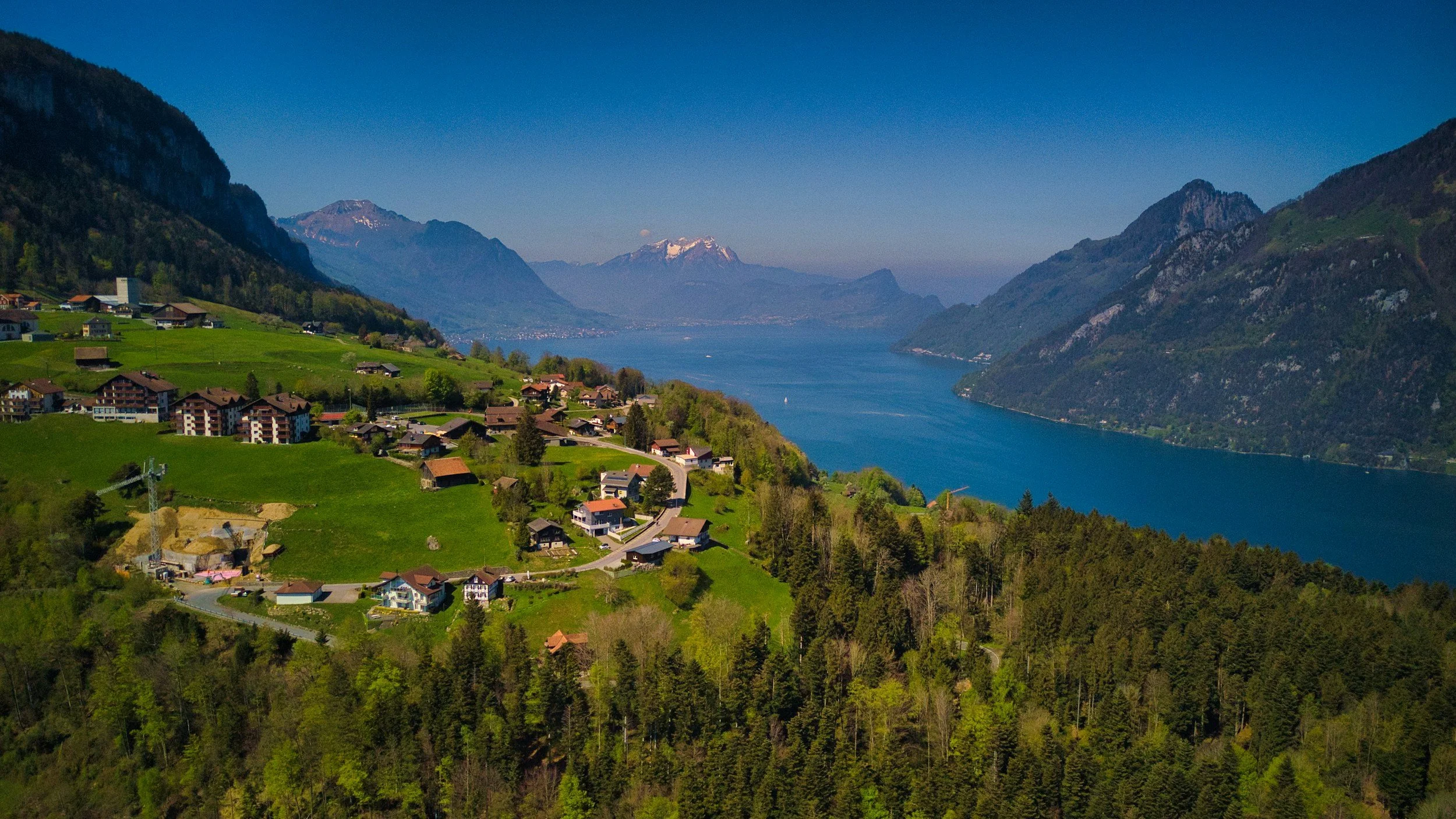
Borgo San Felice in Chianti Classico, near Castelnuovo Berardenga
You don’t really stumble into this place. You leave Siena, follow the SR222 or cut across smaller roads toward Castelnuovo Berardenga, and then it turns into a series of bends through vineyards and olive groves. The last stretch narrows, the road runs between rows of vines, and then the buildings appear all at once, like a small village rather than a hotel.
That’s exactly what it is. Borgo San Felice is a restored hamlet, not a single structure, and when you arrive, you’re not stepping into a lobby so much as into a small piazza. Stone houses, narrow lanes, a church, a few open corners where people sit, everything laid out as it was, just maintained differently.
If you’re arriving by train, Siena train station is the most practical option, about 25–30 minutes away by car. From Florence, it’s closer to 1.5 hours depending on traffic. You’ll want a car here. Without one, you’re limited to the property, and there’s nothing within walking distance beyond the estate itself.
Once you’re in, it takes a bit of time to understand how it all connects. Rooms are spread across different buildings, so you might walk along a narrow stone street, turn past a courtyard, and find your door there. No two rooms feel the same, and you notice that quickly.
Inside, the rooms follow the structure of the original buildings. Thick walls, wooden beams, tiled floors, and windows that look out onto vines, olive trees, or quiet parts of the borgo rather than back into hotel space. You’re not looking at other guests, you’re looking outward.
Mornings start slowly here, mostly because there’s no reason to rush them. You walk to breakfast through the same small streets, pass a few other guests doing the same, and sit down without much structure. Bread, pastries, local products, and coffee that usually turns into a second cup before you leave.
Most people don’t go far during the day. You walk around the borgo, sit in different corners, maybe move toward the pool or a shaded area, but you’re not covering distance. Everything is within a few minutes, and that’s enough for a while.
If you do decide to leave, the surrounding roads are part of the experience. The drive between Gaiole in Chianti and Radda in Chianti, especially along the SP408, is where most people end up without a fixed plan. Gaiole stays quieter, a few local spots, less movement. Radda has a bit more going on around Via Roma, with small shops and cafés, but you don’t need long in either place.
Closer to the estate, you’ll pass smaller wineries along the road, often with minimal signage. You turn in, park, and see if they’re open rather than scheduling anything in advance.
If lakeside hotels are on your list but you don’t want to deal with logistics, lake towns helps you figure out where it’s actually easy to stay without needing a car.
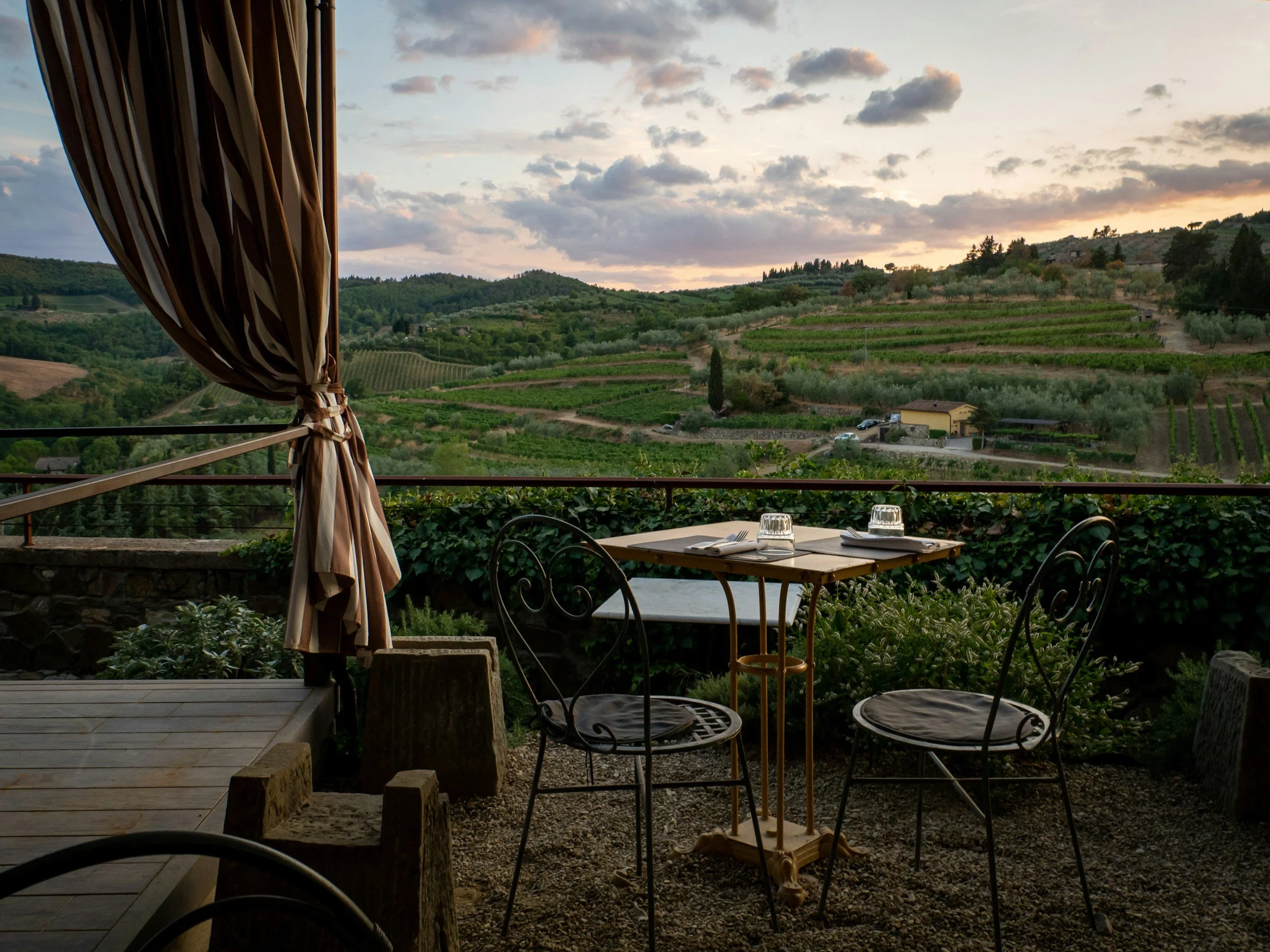
Hotel Saint James in Bouliac, just outside Bordeaux
Most people don’t set out to stay in Bouliac, it usually comes up when you’re already looking at Bordeaux and want something slightly removed without adding travel time, and that’s exactly where it fits. You leave the city, follow the river briefly, then turn inland and start climbing gently through residential streets that get quieter with each turn, until you reach the top where the view opens out across the Garonne valley.
It’s a short drive, usually 10–15 minutes from central Bordeaux or Bordeaux Saint-Jean station, but the shift is immediate once you’re up there. You’re no longer in the city, and you don’t feel connected to it in the same way, even though you can see parts of it in the distance on a clear day.
The building itself doesn’t try to dominate the setting. It sits right at the edge of the slope, and everything is oriented toward the view rather than inward. When you walk in, you understand the layout almost instantly because there isn’t much to figure out. The main room opens out toward the terrace, and that’s where people drift without needing direction.
The terrace runs along the front of the hotel and becomes the central point for most of the stay. You sit down once, look out over the river and the patchwork of vineyards and low buildings below, and that becomes your place. You’ll probably return to the same table or corner without thinking about it, especially later in the afternoon when the light drops slightly and the valley softens.
Rooms follow the same logic. Large windows facing outward, simple layout, nothing added that competes with the setting. You don’t spend time adjusting anything or trying to find a better spot in the room. You come in, drop your bag, and it works immediately.
What makes this place different is how it fits into a day rather than how you use it on its own. Most people head down into Bordeaux for a few hours, then come back up.
In the city, you’ll likely end up along Quai des Chartrons, walking beside the river where people sit outside cafés and wine bars, or moving through streets like Rue Notre-Dame, which has smaller independent shops and places that feel more local than the central areas. It’s easy to spend a few hours there without planning anything specific, just walking, stopping, and continuing.
Then you drive back up toward Bouliac, and the contrast is immediate. Within minutes, the noise drops, the streets empty, and you’re back at the hotel where everything feels slower again.
If you stay closer to Bouliac, there isn’t much to build a day around. Streets like Rue de l’Église run through the village with a handful of houses and small local spots, but it’s more somewhere you pass through than somewhere you stay.
For wine-region stays that still feel elevated but not overdone, bordeaux guide gives a better sense of where to base yourself and what kind of experience you’ll actually get.
Belmond Hotel Caruso in Ravello, above the Amalfi Coast
You don’t reach Ravello quickly, and that’s part of why it works. From Amalfi, it’s only about 15–20 minutes on paper, but the road climbs in tight bends, buses edge past each other, and everything slows down whether you want it to or not. You pass lemon terraces, low stone walls, and small viewpoints where people pull over briefly, then keep going. By the time you reach Ravello, you’re already out of the flow of the coast below.
From Naples, it’s closer to 1.5–2 hours depending on traffic, usually via Salerno and then along the coast before heading uphill. Most people arrive by car or arranged transfer. Once you’re up in Ravello, there’s very little reason to move the car again unless you plan to leave for the day.
The hotel sits just above the center, but you don’t feel connected to it in a direct way. You enter through a relatively simple doorway, then the space opens gradually. Terraces, shaded walkways, and small garden sections appear one after another rather than all at once. It takes a bit of walking before you understand how everything links together.
Rooms are set within the former palace structure, and you notice the thickness of the walls straight away. Windows face outward toward the coastline rather than into the property, and most rooms have a clear direction, so you don’t spend time figuring out where to sit. You come in, put your bag down, and there’s already a place that makes sense, usually near the window or outside on a small terrace.
The infinity pool is what most people already know before arriving, but it feels different in person because of how far above the coastline you are. You’re not level with the sea, you’re looking down at it. When you’re in the water, the horizon stretches out past Amalfi and along the coast, and places like Atrani and Minori sit much lower, almost out of reach.
People don’t treat it as a quick swim. You go in, stay, get out, sit for a while, then go back again later…
Mornings tend to start earlier than expected. The light reaches Ravello before the coast below, and you’ll see it shift across the terraces and gardens first. Breakfast is spread out, and people come and go over a longer period. You sit, have something simple, and usually stay longer than planned because there’s no pressure to move on.
Ravello itself is easy to walk through but doesn’t take long to cover. You head down toward Piazza Vescovado, pass the Duomo, and move through streets like Via Roma where small shops and cafés line the way. From there, most people continue toward Villa Cimbrone or Villa Rufolo. The walk to Villa Cimbrone takes around 15–20 minutes, along narrow lanes and stone paths, and ends at the terrace overlooking the coast, which is one of the few places that competes with the hotel’s view.
After a couple of hours, most people head back. There isn’t a need to stay longer in the town itself.
If you decide to go down to the coast, the drive back toward Amalfi is the same road in reverse. The difference is immediate. It’s busier, louder, and much more compressed. Streets are narrower, people move faster, and everything feels closer together. It works for a short visit, but most guests don’t stay long before heading back up to Ravello.
Back at the hotel, the afternoon usually settles into staying on-site. You move between your room, the pool, and the terraces without needing to plan anything. The layout supports that, everything is close enough that you don’t think about where you’re going next.
And if you’re drawn to that classic Italian coastline feel but unsure how to avoid the obvious spots, amalfi alternative breaks down how to approach it without ending up somewhere overcrowded.
FAQ: affordable luxury hotels in Europe (White Lotus–style stays)
What are the best affordable luxury hotels in Europe right now?
Examples include Belmond Caruso in Ravello (Amalfi Coast), Borgo San Felice in Chianti Classico, Villa Honegg above Lake Lucerne, and Quinta da Comporta in Portugal. These are known for strong locations, on-site dining, and layouts where you can spend most of your time at the hotel.
How much does an affordable luxury hotel in Europe cost per night?
Most fall between €250 and €600 per night depending on season. Prices increase significantly in summer, especially in Italy and the Amalfi Coast, where the same hotel can double between May and August.
Are there hotels in Europe similar to The White Lotus setting?
Yes. Look for hillside or coastal hotels where rooms face outward and most of the experience happens on-site. Places like Ravello, Lake Lucerne, or Comporta in Portugal offer that same setup without needing to move around constantly.
Is Ravello a good alternative to staying in Amalfi or Positano?
Yes. Ravello sits above the coast and is noticeably quieter, especially in the evening. You still have access to Amalfi by car, but you’re not dealing with the same level of crowds or noise.
Do you need a car for luxury hotels in Tuscany, Portugal, or rural France?
In most cases, yes. Areas like Chianti, Comporta, and the Bordeaux countryside are not walkable, and public transport doesn’t reach the hotels directly. You can arrange transfers, but having a car gives you more flexibility.
How many nights should you stay at a countryside luxury hotel in Europe?
Two to three nights is ideal. These hotels are designed for slower stays where you spend time on-site. One night often feels too short, especially if arrival takes time.
Are affordable luxury hotels in Europe all-inclusive?
No, but many include breakfast and have strong on-site restaurants. In more remote locations, most guests eat dinner at the hotel because there are few nearby alternatives.
What is the best time to book affordable luxury hotels in Europe?
May, June, and September are usually the best balance of price and weather. July and August are peak season, especially in Italy and coastal regions, where prices are highest.
Are there luxury hotels near Bordeaux that feel quiet but still accessible?
Yes. Areas like Bouliac sit just outside Bordeaux and offer views over the Garonne while staying within a short drive of the city.
Who are these types of hotels actually best for?
They work best if you’re happy staying in one place for most of the day. If your plan is to visit multiple towns or move around constantly, these locations can feel limiting.
If you found this guide helpful, make sure to sign up for our newsletter.
You’ll get hand-picked hotel recommendations, and cozy travel tips delivered straight to your inbox.
Let’s romanticize your next check-in - White Lotus vibes included.