
From roman streets to medieval Pérouges: two days out from Lyon
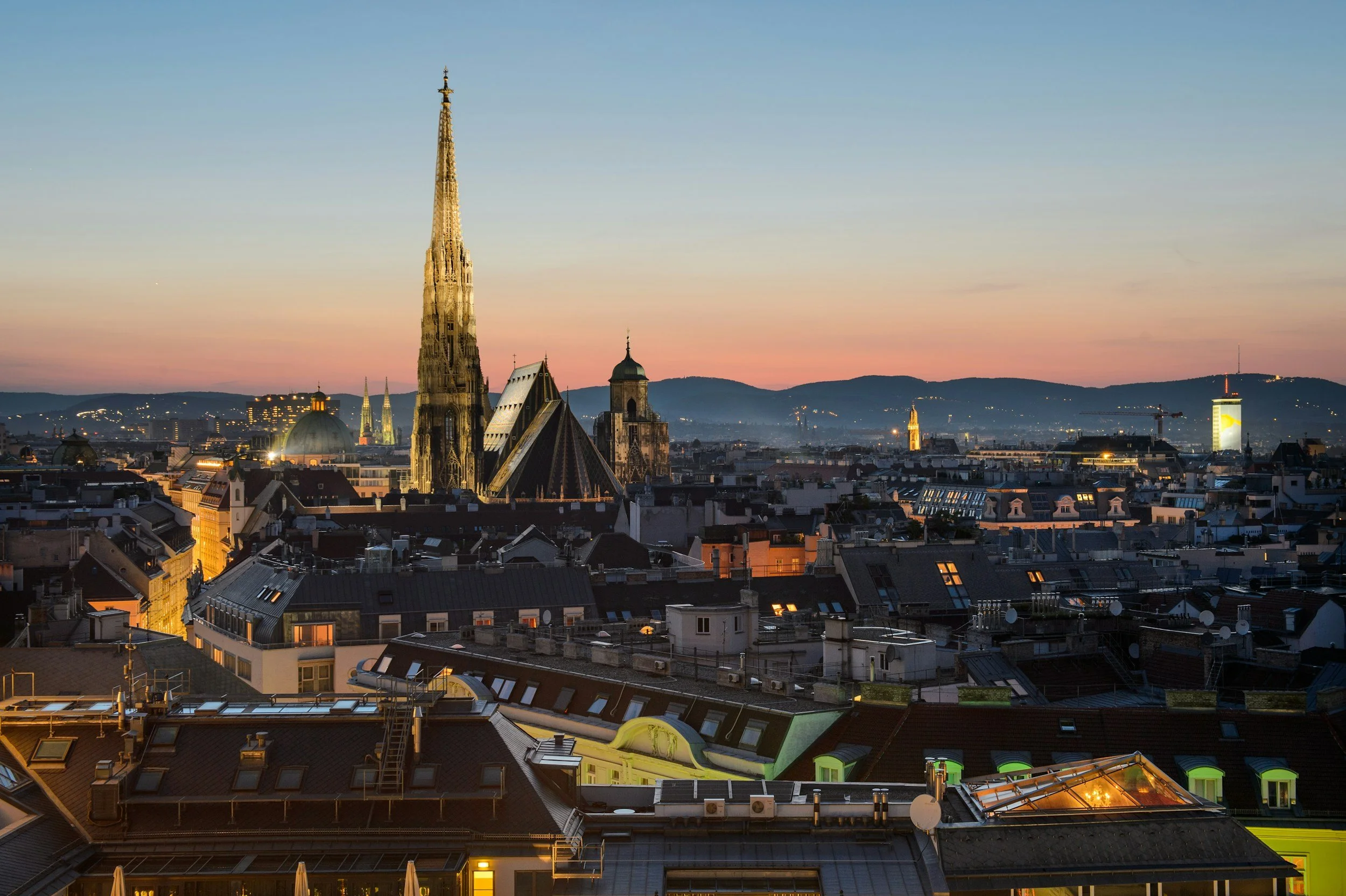
If you've got a spare day in Lyon and feel like exploring a little further, Vienne and Pérouges are both worth considering. Neither requires a car or a particularly early start, but beyond that, they offer quite different experiences, and I think one will probably appeal to you much more than the other.
Vienne is somewhere I'd happily set aside a whole day for, especially on a Saturday when the town's big market takes over the streets. You could spend the morning browsing food stalls, find somewhere for lunch and still have time to explore the Roman theatre or cross the Rhône to see the remarkable mosaics at Saint-Romain-en-Gal. Pérouges is a different sort of outing altogether. It's a tiny medieval village of cobbled lanes, old stone houses and a lovely central square where stopping for a slice of the local sugar-topped galette is practically part of the visit. You don't need an entire day there, and I actually think that's part of its appeal.
What might surprise you, though, is that Pérouges takes a little more planning to reach, despite being the smaller place. The train only gets you as far as Meximieux, and there's still an uphill walk before you reach the village. Vienne, meanwhile, is much more straightforward than you might expect.
So although I'd probably choose Vienne for a full day away from Lyon, I wouldn't automatically recommend it over Pérouges. It really depends on what you've already enjoyed in Lyon, how much time you want to spend away and, perhaps most importantly, what sounds like a lovely way to spend your day.
A morning in Vienne, between food markets and Roman history
If I were planning a day in Vienne, I'd be tempted to go on a Saturday and start with the market. The Roman history is obviously a big reason people visit, but there's something equally appealing about spending a morning in a French town where you can browse the food stalls, pick up a few things you probably didn't need and find somewhere nice for lunch without having to plan every hour.
Vienne's Saturday market is a big part of local life, and it stretches across several streets and squares rather than being confined to one market hall. I'd concentrate on rue Ponsard and rue Chantelouve, where much of the food shopping happens, and wander through Place Miremont too. You'll find cheeses, bread, seasonal vegetables and plenty of other produce, and it's a good opportunity to look out for some of the specialities from the surrounding region. The market runs until around 1 pm, although I'd aim to arrive earlier and leave myself enough time to enjoy it before thinking about lunch.
This is a great place to become a little more familiar with the food of the northern Rhône Valley. Look out for Rigotte de Condrieu, a small goat's cheese made in the hills south of Lyon, or ask a cheese seller about what's produced nearby. Condrieu itself is better known internationally for its white wine, but there's much more to the region's food culture than the vineyards. You don't need to arrive with a shopping list; half the pleasure of a good French market is seeing what's in season and deciding what looks interesting.
I'd probably keep lunch plans fairly flexible on a market morning. You might find enough bread, cheese and other things for a simple lunch, or decide you'd rather sit down somewhere in town afterwards. The market runs until around 1 pm, so I'd aim to be there well before the stalls begin packing away, particularly if it's one of the main reasons you've chosen Vienne.
Once you've finished browsing, the Roman history is almost impossible to miss. The Temple d'Auguste et de Livie is right in Place Charles de Gaulle, with cafés and later buildings surrounding something that's been standing there for almost two thousand years. It actually owes much of its survival to being converted into a church, which is a rather interesting reason for a Roman temple to still be here today.
I wouldn't be in any particular hurry to leave the square. It's a nice place to take in how different periods of Vienne's history sit alongside each other, and the surrounding streets give you plenty of opportunities to explore without needing another attraction on your itinerary.
If you want to see one of the town's larger Roman sites, the Théâtre Antique would be my choice. Built into the hillside above the centre, its rows of stone seating give you a much better sense of the scale of Roman Vienne. What makes it particularly interesting is that it's still a working performance venue, especially during Jazz à Vienne, when concerts bring thousands of people to the ancient theatre. I rather like that connection between the town's past and present. It's not simply an archaeological site that has lost its original purpose.
You could also climb towards the Pipet viewpoint above the theatre for views across Vienne, the Rhône and the surrounding hills, although I'd save that for a clear day when you actually feel like walking uphill. There's no need to turn a relaxed morning into a march between monuments.
On a weekday, when the big Saturday market isn't happening, I'd approach Vienne a little differently. The smaller food markets at Place Miremont on certain mornings can still be worth a look, but they won't have the same scale. I'd spend more time around the old centre, choose a historical visit that genuinely interests me and enjoy a longer lunch rather than try to recreate the Saturday experience.
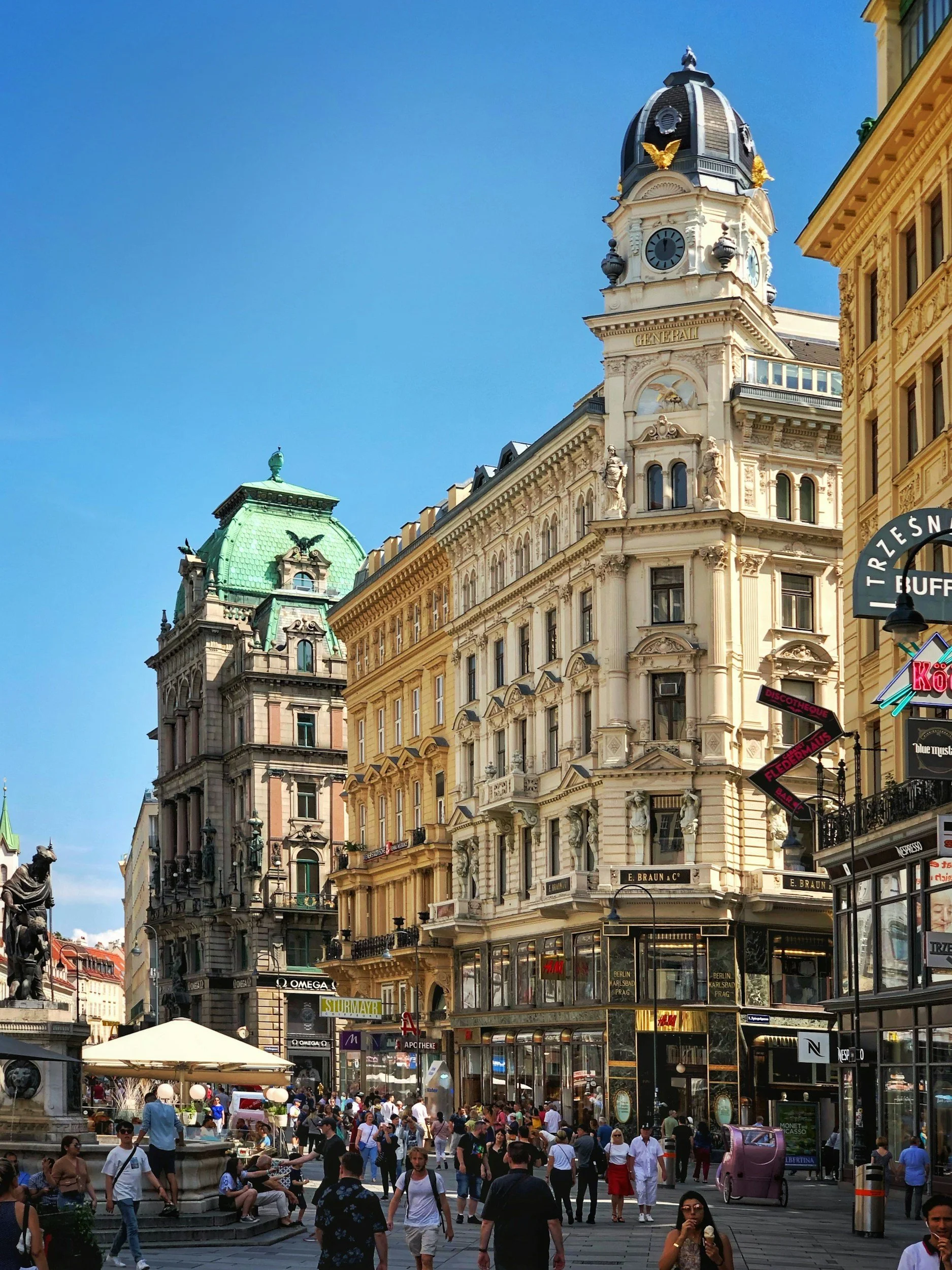
The museum across the Rhône is the reason to stay longer
After lunch, I'd consider walking across the Rhône to Saint-Romain-en-Gal. It's separate from Vienne's central streets, on the opposite bank of the river, but I think this is where the town becomes particularly interesting for anyone who enjoys understanding how people lived in the past.
If you've already visited Lyon's Roman theatres and the Lugdunum museum, you might wonder whether another archaeological museum is really worth an afternoon. I can understand that, especially when there are so many other things to do around Lyon. But Saint-Romain-en-Gal offers something a little different from simply seeing another impressive monument.
There are excavated houses, workshops, shops and bathing areas, with mosaics and everyday objects displayed inside the museum. I find that side of history particularly interesting because it gives you a better idea of how ordinary people lived. You get to see the attention that went into decorating a home, how spaces were used and the businesses that would once have been part of daily life here. It's a rather different experience from standing in front of an impressive temple and trying to imagine the town around it.
The mosaics are one of the museum's most interesting features. Some are wonderfully elaborate, and they give you an idea of the craftsmanship and expense that went into the houses of wealthier Roman residents. I find those smaller domestic details especially fascinating because they're often easier to relate to than the enormous public buildings. People were still decorating their homes, running businesses, meeting friends and looking for ways to make daily life comfortable, even if the world around them was very different from ours.
There's also something interesting about the relationship between the archaeological site and Vienne itself. The Rhône now separates the museum from the town centre, but in Roman times this was part of a much larger urban settlement extending across both banks. Visiting Saint-Romain-en-Gal helps make sense of just how important Vienne once was, and why its Roman remains are spread across such a wide area rather than concentrated around one monument.
I'd give yourself at least a couple of hours here if archaeology interests you. There's an indoor museum as well as outdoor remains, so it's worth having time for both rather than rushing through the galleries and leaving. I would also choose between a longer museum visit and some of Vienne's other historical attractions rather than automatically trying to fit everything into the same afternoon.
For a Saturday outing, a morning at the market, a little time around the temple, lunch and Saint-Romain-en-Gal would already be a lovely way to spend the day. You'll have seen quite different sides of Vienne without needing a complicated route, and there's something appealing about finishing with a walk back across the river and perhaps a coffee in the centre before returning to Lyon.
Of course, if Roman history doesn't particularly interest you, there's no need to force a museum visit simply to make the outing longer. Vienne is perfectly enjoyable as a shorter town visit, especially when the market is on. But I think Saint-Romain-en-Gal is what gives the day a little more depth, particularly if you've already enjoyed Lyon's food markets and want to see something beyond the city itself.
If Vienne's Saturday market is what appeals to you most, you might enjoy making more of a weekend of it. There are some lovely possibilities in the surrounding region, and I've written about where I'd spend a market-focused weekend near Lyon if you'd rather stay overnight than head straight back to the city.
Pérouges: old streets, a famous galette and a few hours well spent
Pérouges is one of those villages where I'd rather put my phone away for a while than spend the visit looking for the next attraction on Google Maps. Once you're inside the old walls, the streets are so compact that you can explore them quite naturally, following whichever lane looks interesting and eventually finding yourself back somewhere familiar.
Most visitors will end up at Place du Tilleul, the main square, named after the large linden tree at its centre. There are old stone buildings, restaurants and the Hostellerie du Vieux Pérouges, and it's a natural place to stop for something to eat. But I'd spend a little time exploring the streets leading away from it first, particularly rue des Princes and rue des Rondes, where you get a better look at the village's old houses.
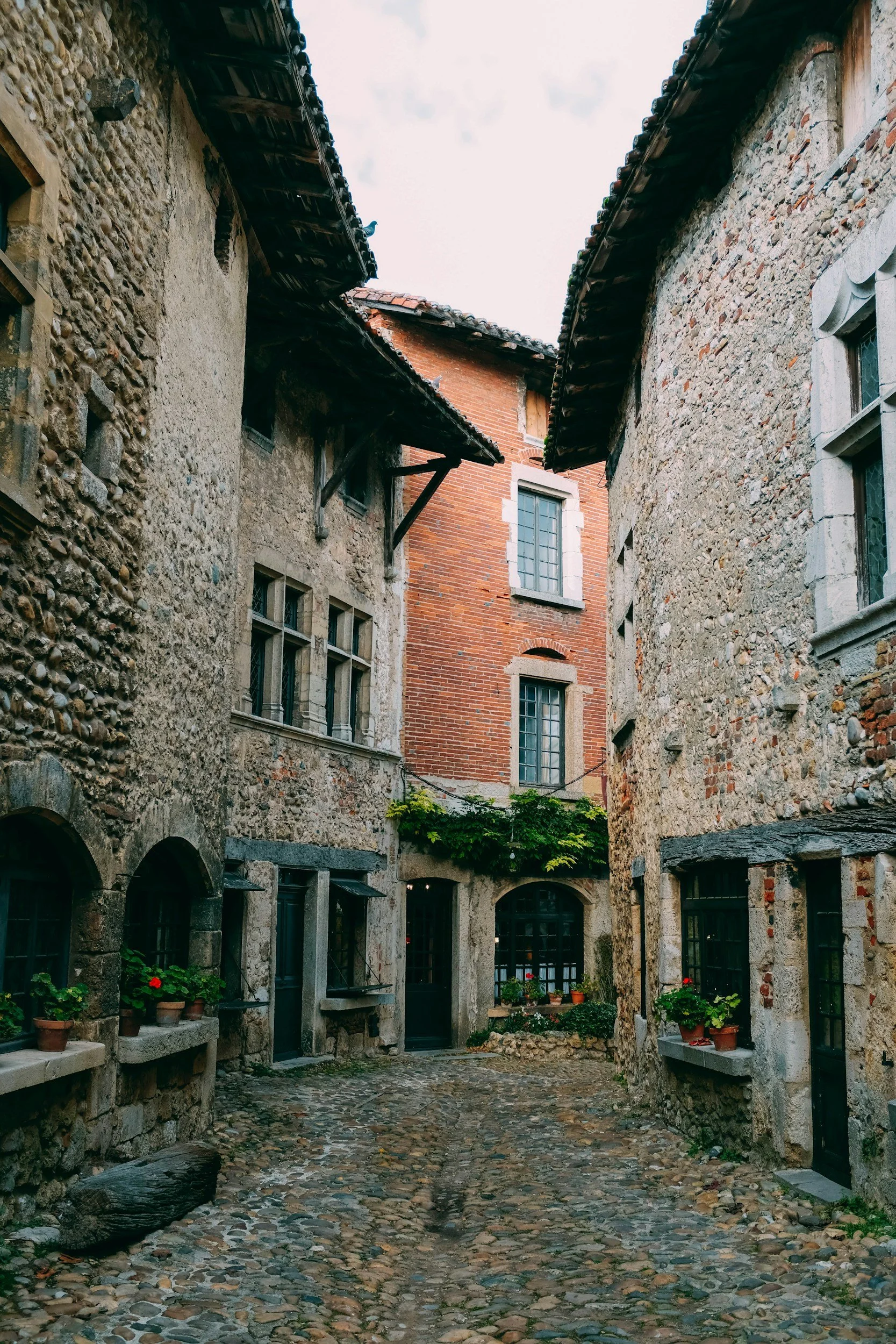
You'll notice that many of the streets in Pérouges are paved with rounded pebbles from the surrounding Plaine de l'Ain, rather than the usual flat cobblestones. They're part of what gives the old lanes so much character, but they can be surprisingly awkward to walk on, especially when wet. Comfortable shoes with a good grip are definitely worth wearing here.
The buildings are worth paying attention to as well. You'll see stone, brick and timber-framed houses, reminders of a town that once had merchants and craftspeople living and working within its walls. Pérouges has a history of weaving, and I think that makes the old houses more interesting than simply admiring them as pretty medieval architecture.
What surprised me when looking into the village's history was how close it came to losing some of that character. By the beginning of the twentieth century, buildings were deteriorating and demolition was a real possibility. A conservation committee was established in 1911 to help save and restore the old town, which explains why so much of its historic architecture can still be enjoyed today. Pérouges isn't a village that's somehow been left exactly as it was hundreds of years ago, and I actually find its preservation story more interesting than that idea.
Another place I'd consider, especially if you're continuing north towards Burgundy, is Tournus, a small town that's worth considering as a stop between Lyon and Dijon. It's a rather different trip, particularly if you're already travelling that way.
Make time for the galette, and perhaps a little local history
Now, I would absolutely make room for the galette de Pérouges. It's probably the village's best-known food tradition, and quite different from the savoury buckwheat galettes associated with Brittany.
This one is made with a thin brioche-style dough, a little lemon zest and a generous topping of butter and sugar that caramelises as it bakes. It's more of a sweet tart than a pancake, and the tradition isn't nearly as old as the surrounding houses. Marie-Louise Thibaut introduced the galette at the Hostellerie du Vieux Pérouges in 1912, and it's been associated with the village ever since.
You can stop at the Hostellerie on Place du Tilleul, where the tea room is separate from the restaurant, but that's not your only option. There's also Ô Galettes de Sophie on rue des Rondes, a small specialist shop selling slices and whole galettes, along with savoury tarts made using similar dough. It's a useful alternative if you'd rather pick something up while exploring than sit down for a restaurant meal. Opening days can be limited, particularly outside weekends, so I'd check before making a special trip for it.
I'd keep lunch fairly flexible in Pérouges. A coffee and a slice of galette might be just what you fancy after exploring the old streets, but if one of the restaurants around Place du Tilleul catches your eye, I'd happily make more of an afternoon of it. A long lunch in a setting like this can be just as enjoyable as exploring the village itself.
If you're interested in seeing something beyond the streets, the Musée du Vieux Pérouges is worth considering. It's housed in the Maison des Princes, and I particularly like that its collections include weaving equipment, old household objects, furniture and tools rather than concentrating only on the village's architecture. There's a watchtower and a small garden too, so it offers a different perspective on the place you've just walked through.
I'd probably leave the museum as an optional extra rather than plan the afternoon around it. If the weather's lovely, I'd be much more tempted to spend a little longer exploring the lanes, popping into any craft shops that happen to be open and finding somewhere for a coffee. But if you're curious about the people who once lived and worked here, the museum is worth a look, provided it's open on the day you're visiting.
Personally, I'd allow around two or three hours for Pérouges and see where the afternoon takes me. I'd want enough time to explore without watching the clock, try the local galette and perhaps settle in for lunch if somewhere caught my eye. I wouldn't worry about making the visit any longer just because you've travelled from Lyon. Sometimes a few enjoyable hours somewhere completely different are more than enough.

Vienne is a good reminder of how enjoyable a market town can be when you can simply arrive by train and walk into the centre. I've collected a few more European market towns that work particularly well without a car if that's the kind of trip you enjoy.
Getting to Vienne and Pérouges from Lyon without a car
It's easy to look at the train times from Lyon and assume both places are equally simple to reach. They're not difficult trips, but I'd plan them a little differently, especially if you're travelling on a Saturday or hoping to be back in Lyon with time for something else.
Vienne is the easier of the two. Trains take roughly 20–30 minutes, and the station is close enough to the old centre that you can start exploring almost as soon as you arrive. If you're going for the Saturday market, I'd aim for a morning arrival and head towards the food stalls around rue Ponsard and Place Miremont first. There's no need to organise transport from the station or work out how to reach a village several kilometres away.
One thing worth checking is which Lyon station your train leaves from. Depending on the service, you might depart from Part-Dieu, Perrache or Jean Macé, and I'd choose whichever is most convenient rather than automatically travelling across Lyon to the main station.
If you're planning to visit Saint-Romain-en-Gal, remember that the museum is across the Rhône from the centre of Vienne. I'd leave that for the afternoon, after you've had time to enjoy the town and have lunch, rather than walking back and forth between the two sides of the river. It's a small detail, but it makes for a much nicer day.
If you're planning to explore more of France by regional train, I've also written a practical guide to using TER trains for car-free travel in France, including how to choose connections and what to consider when the station isn't quite where you want to end up.
Pérouges is where I'd check the return journey before leaving Lyon
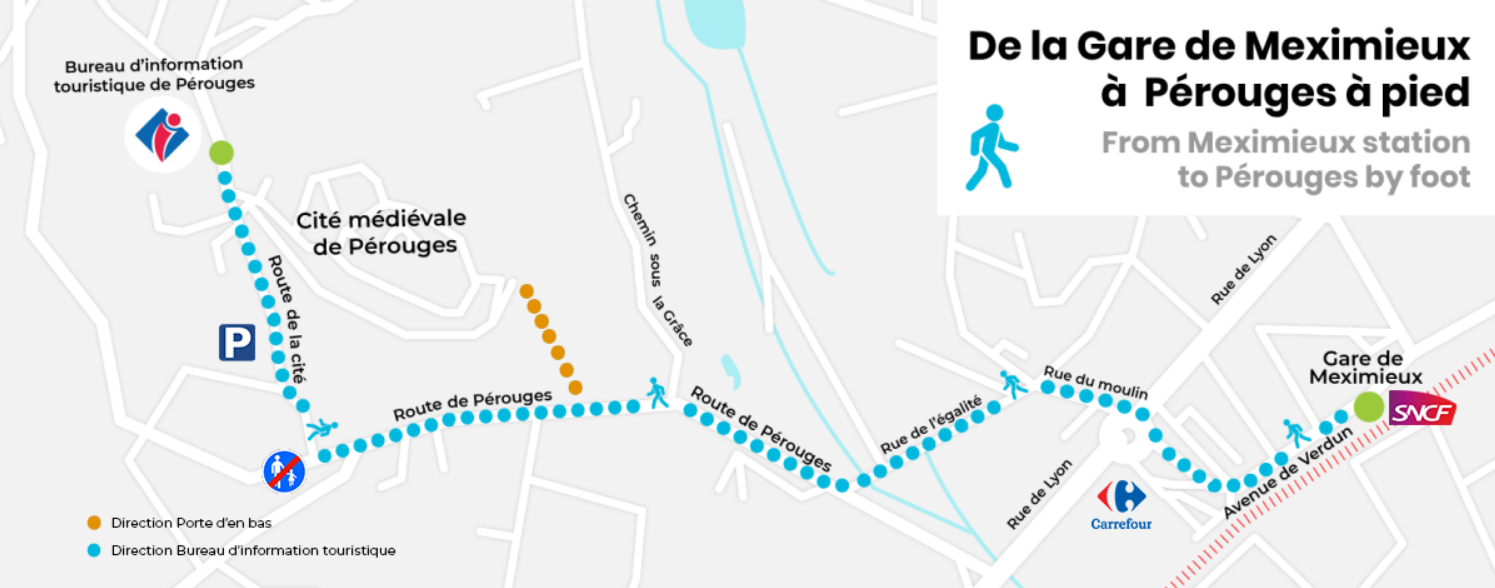
Getting to Pérouges is a little less direct. You'll take a train from Lyon, usually Part-Dieu, to Meximieux-Pérouges, which takes around half an hour on a suitable direct service. Despite the name, the station is actually in Meximieux, and you'll still have an uphill walk of around 20–30 minutes before you reach the medieval village.
I'd save the official walking map from Meximieux station to Pérouges on my phone beforehand. It's a much better idea than simply following a map pin for Pérouges and assuming it will take you to the right entrance. There's no regular shuttle from the station, and if you'd rather take a taxi, arrange one in advance instead of expecting to find one waiting.
I'd also decide roughly which train I wanted to catch back to Lyon before setting off. Not because the village needs a carefully planned itinerary, but because I'd rather enjoy a coffee or an unexpectedly long lunch without suddenly having to hurry back down the hill.
Allow at least 20–30 minutes for the return walk, plus a little time at the station. Trains aren't as frequent as you might expect, so missing one could mean a fairly long wait in Meximieux. And while the train journey itself is short, a couple of hours exploring Pérouges can easily become a four- or five-hour outing once you've included the travel in both directions.
Both places are easy enough to visit on your own, so I wouldn't bother booking a tour just to get there. With Vienne, you can be a little more spontaneous and see how the day goes. For Pérouges, I'd simply check the trains in both directions beforehand, then enjoy the village without having to think too much about getting back.
When I'd choose Vienne over Pérouges, and when I'd change my mind
Saturday is probably the one day I'd make a point of choosing Vienne over Pérouges, particularly if you're someone who enjoys a good French market. There's a big difference between visiting a town when its streets are filled with food stalls and turning up on an ordinary weekday. But if Saturday doesn't work with your plans, I wouldn't try to squeeze Vienne in just for the sake of it. The smaller markets are worth knowing about, and the Roman sites give you plenty to explore on other days.
Ps. if you love planning trips around a good food market, you might also enjoy the market towns near Lyon I'd choose for a whole weekend, particularly if you'd rather stay overnight than return to the city.
Monday is where I'd be a little more cautious, particularly if you're visiting outside summer. Saint-Romain-en-Gal is normally closed on Mondays, and the other historical attractions have their own seasonal calendars. If you've been looking forward to spending an afternoon exploring the archaeological remains, I'd save Vienne for another day rather than settle for seeing everything from the outside.
Pérouges is a little different because the village itself doesn't depend on museum opening hours. You can explore its old streets throughout the year, but I wouldn't assume that means you'll find plenty of places open for lunch or coffee, especially on a quiet weekday in winter. Its small museum also has seasonal opening dates, so I'd check those separately if you were hoping to visit.
Weather is another thing I'd take seriously, especially for Pérouges. I'd love the idea of going on a clear autumn morning, when you can enjoy the old streets without worrying too much about where to shelter. A cold, rainy afternoon is less appealing when most of what you've come to see is outdoors and the cobbles are wet underfoot. On a day like that, I'd probably favour Vienne if Saint-Romain-en-Gal was open, or simply enjoy another day in Lyon rather than travel somewhere just for the sake of it.
I'd also think about what you've already done in the city. If you've spent time exploring Lugdunum and the Roman theatres at Fourvière, you might feel like you've had your fill of archaeology for one trip. In that case, I'd be much more tempted by Pérouges, particularly if the weather was nice and you fancied a complete change of setting. There's no reason to choose another Roman town simply because it has more attractions.
I wouldn't worry too much about the difference in admission prices either. Walking around Pérouges is free, with a separate ticket for its museum, while Vienne's historical sites have their own charges. I'd check the current train fares and opening times for the day you're considering, but ultimately I'd rather spend a little more on somewhere I was genuinely excited to visit than choose the cheaper outing and spend the afternoon wishing I'd gone somewhere else.
If Pérouges has made you curious about this part of France, the surrounding Ain department also has its own wine country. Bugey is somewhere I'd consider for a quieter wine weekend near Lyon, although it's a different trip from a straightforward train excursion.
So, Vienne or Pérouges?
I'd still lean towards Vienne if I had a whole day to spare, but I think the better question is what you'd actually miss if you didn't go. If the thought of exploring Saint-Romain-en-Gal or spending a morning at the market genuinely appeals to you, Vienne is worth making time for. If it's Pérouges's old streets and village setting that have caught your attention, I'd follow that instinct instead.
One thing I'd avoid is trying to fit both into the same day. They're in different directions from Lyon, and you'd spend too much time moving between places when you could be enjoying one properly.
And if you're struggling to choose because neither particularly stands out, I'd take that as a reason to stay in Lyon. Sometimes the nicest part of a trip is having an afternoon with absolutely nothing planned.
If neither Vienne nor Pérouges is quite what you're looking for, there are a few other places worth considering. I've put together a guide to small towns near Lyon that are worth taking the train for, with ideas for exploring a little further without needing a car.