The coastal towns I'd choose over Europe's busy beach resorts
Not every coastal town in Europe stays as relaxed as the photos suggest. Some are lovely at eight in the morning, then by lunchtime the waterfront is packed, the beach is covered in sunbeds, and finding a table for dinner suddenly requires planning ahead.
The towns in this guide are different. They're places where you can arrive, walk from your accommodation to the water in a few minutes, and settle into the pace of the town almost immediately. A harbour promenade, a local bakery, a beach or swimming spot nearby, and enough restaurants that you can decide where to eat when you're actually hungry rather than days in advance.
They're spread across different parts of Europe, from Croatia and Sicily to Portugal and Spain, but they have more in common than you might expect. In Korčula, you can swim from the rocks below the old town before wandering back through medieval streets for lunch. In Cefalù, the beach sits right beside the historic centre, making it easy to move between the sea, cafés, and restaurants without ever needing a car.
Some of these destinations are known for sandy beaches. Others are better for rocky coves, clear water, and coastal walks. The common thread is that they still work as actual towns rather than seasonal beach resorts.
If you're looking for a coastal trip where you can swim, eat well, walk everywhere, and spend less time organising your day, these are some of the best places to start.
If you're still narrowing it down, there are more ideas in similar coastal towns across Europe, especially if you're trying to avoid the usual summer spots.
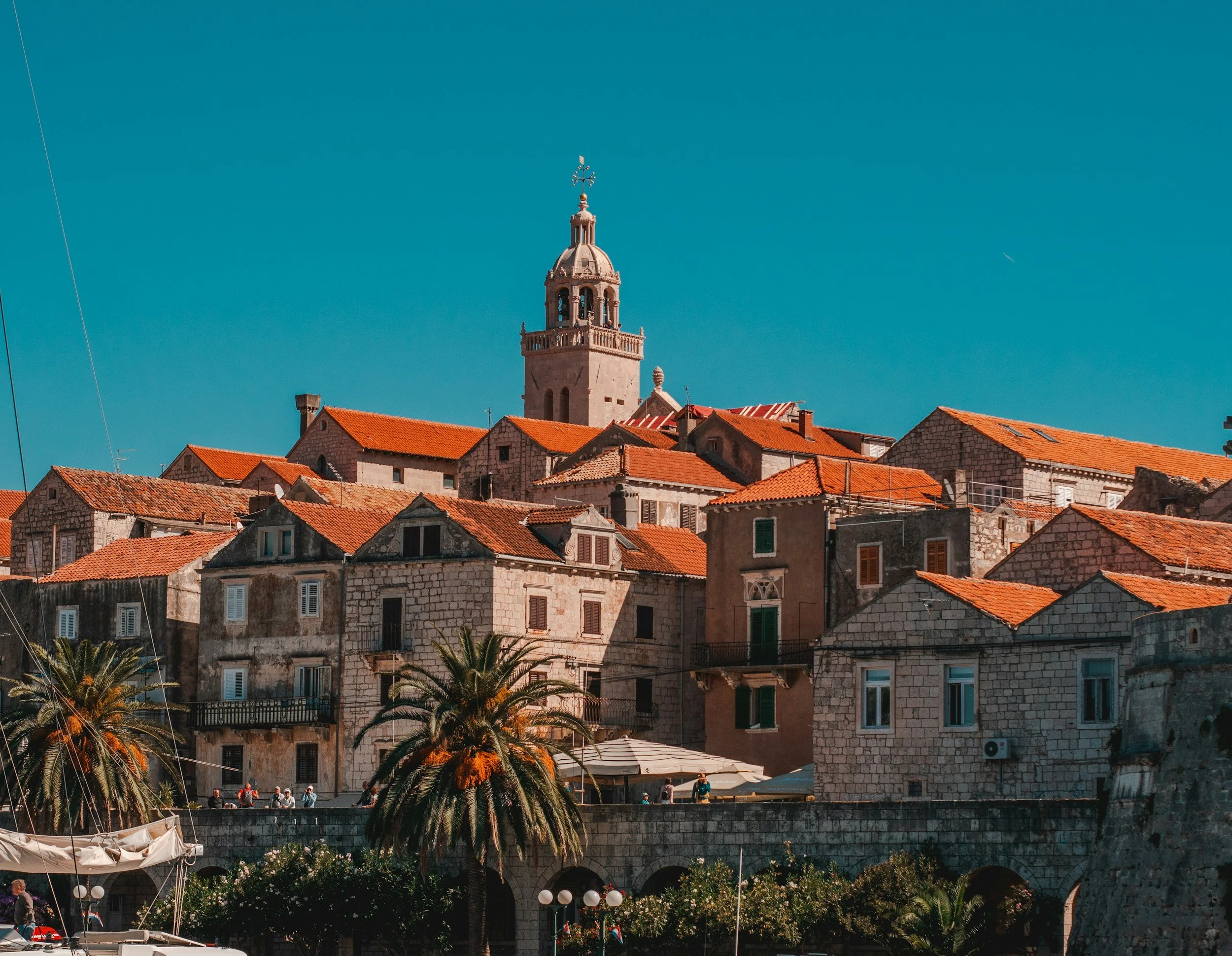
Korčula, Croatia: where medieval streets meet the Adriatic
The old town is small enough that by your second day you'll already know which alley takes you back to the harbour, where the shade sits longest in the afternoon, and which route avoids the groups arriving from the catamarans.
Most people come via Split or Dubrovnik. The catamaran drops you right by the old town walls, so within a few minutes you're already rolling your suitcase across stone streets that haven't changed much in centuries. If you're driving, the ferry from Orebić only takes about fifteen minutes, although the road down through the Pelješac Peninsula is worth taking slowly. Around Potomje and Postup you'll pass vineyards running down towards the sea, roadside stalls selling olive oil and wine, and plenty of places where it's tempting to pull over for a few minutes.
Once you're through the Land Gate, Korčula quickly becomes a place where you stop looking at maps. The old town isn't built around big attractions or famous viewpoints. Most of the time you're simply moving between Trg Svetog Marka, the harbour, the waterfront below the walls and whichever side street looks interesting at the time. Ulica Marka Andrijića is one of the prettiest streets in town, lined with old stone houses and small galleries, while the lanes around the Bishop's Treasury and St Mark's Cathedral tend to be much quieter first thing in the morning before the day-trippers arrive.
Around eight o'clock you'll already find people swimming from the rocks below Šetalište Frana Kršinića. There aren't rows of sunbeds or beach bars. People leave a towel on the rocks, climb down one of the metal ladders and disappear into the water for twenty minutes before heading off to work. A few minutes later somebody else arrives carrying coffee in one hand and flip-flops in the other. By nine o'clock the harbour is starting to wake up, deliveries are being made to restaurants, and the first ferry from Orebić is usually pulling in.
Coffee tends to happen at the same places every morning. Cukarin is always busy, not because it's fashionable but because people genuinely use it. Alongside cakes and pastries you'll find locals reading the paper, boat crews grabbing breakfast and visitors trying to work out what they're doing for the day. If you're hungry, the traditional cukarin biscuits are worth trying while you're there, especially with coffee overlooking the harbour.
By midday the old town changes completely. The stone holds the heat, the narrow lanes become noticeably busier and most people start looking for shade. That's usually when it makes sense to leave town for a few hours.
Lumbarda is only a short drive away, although plenty of people cycle there along the coastal road. The transition happens surprisingly quickly. One minute you're walking beneath medieval walls and ten minutes later you're passing vineyards, olive trees and low stone walls. This is where Grk wine comes from, something locals are understandably proud of because you won't find many places producing it outside this corner of Korčula.
Most visitors head straight for Vela Pržina. It's one of the few sandy beaches on the Croatian coast and families tend to gather there during summer. Bilin Žal, on the other side of the village, is usually a little quieter and has lovely views back towards the Pelješac Peninsula. Between the two beaches you'll pass small konobas, vineyards and family houses that make Lumbarda feel more like a village than a beach resort.
If you're curious about local wine, Bire Winery sits right in the middle of the vineyards. It's not a polished visitor centre. It's a family winery where people stop by for a glass of Grk and often leave carrying a bottle or two back to their apartment. A little further along you'll also find Popić Winery and Lovrić Winery, both producing wines from grapes grown around Lumbarda.
Back in Korčula Town, the atmosphere changes again once the afternoon catamarans leave. The busiest part of the day disappears almost instantly. Tables free up, the waterfront becomes quieter and people drift down towards the sea walls carrying takeaway gelato or a bottle of wine for later.
The walk along the western side of the walls is especially nice around sunset. Looking across the channel towards Orebić, you can usually see windsurfers heading back in, ferries making their final crossings and the mountains behind Pelješac slowly changing colour as the light drops. Nobody is really in a hurry at that hour.
For dinner, Aterina remains one of the most interesting tables in town, especially if you're interested in modern interpretations of Dalmatian dishes. Filippi has one of the best locations, tucked against the walls with views across the water, while Konoba Maha in nearby Žrnovo is often the restaurant locals mention first when talking about memorable meals on the island. The road there winds through olive groves and vineyards, and arriving feels more like heading to somebody's countryside home than a restaurant.
If you're staying longer than a couple of nights, it's worth looking beyond the old town. Žrnovo is only a few minutes away but feels noticeably quieter, with stone houses scattered among olive trees and narrow roads leading down towards beaches like Žitna Bay. Pupnat sits higher up in the hills and gives easy access to Pupnatska Luka, one of the island's most beautiful swimming spots, where clear water, pine trees and a small beach bar are pretty much all you'll find. It's the sort of place people visit once and then quietly return to several more times before they leave the island.
Korčula isn't the only place in Croatia where food and place are deeply connected. If you're curious about the ingredients, traditions, and family-run restaurants that shape Croatian cuisine, this slow food journey through Istria is well worth reading next.
If you're considering more island options with a similar feel, there are a few islands that stay surprisingly calm, especially outside peak weeks.
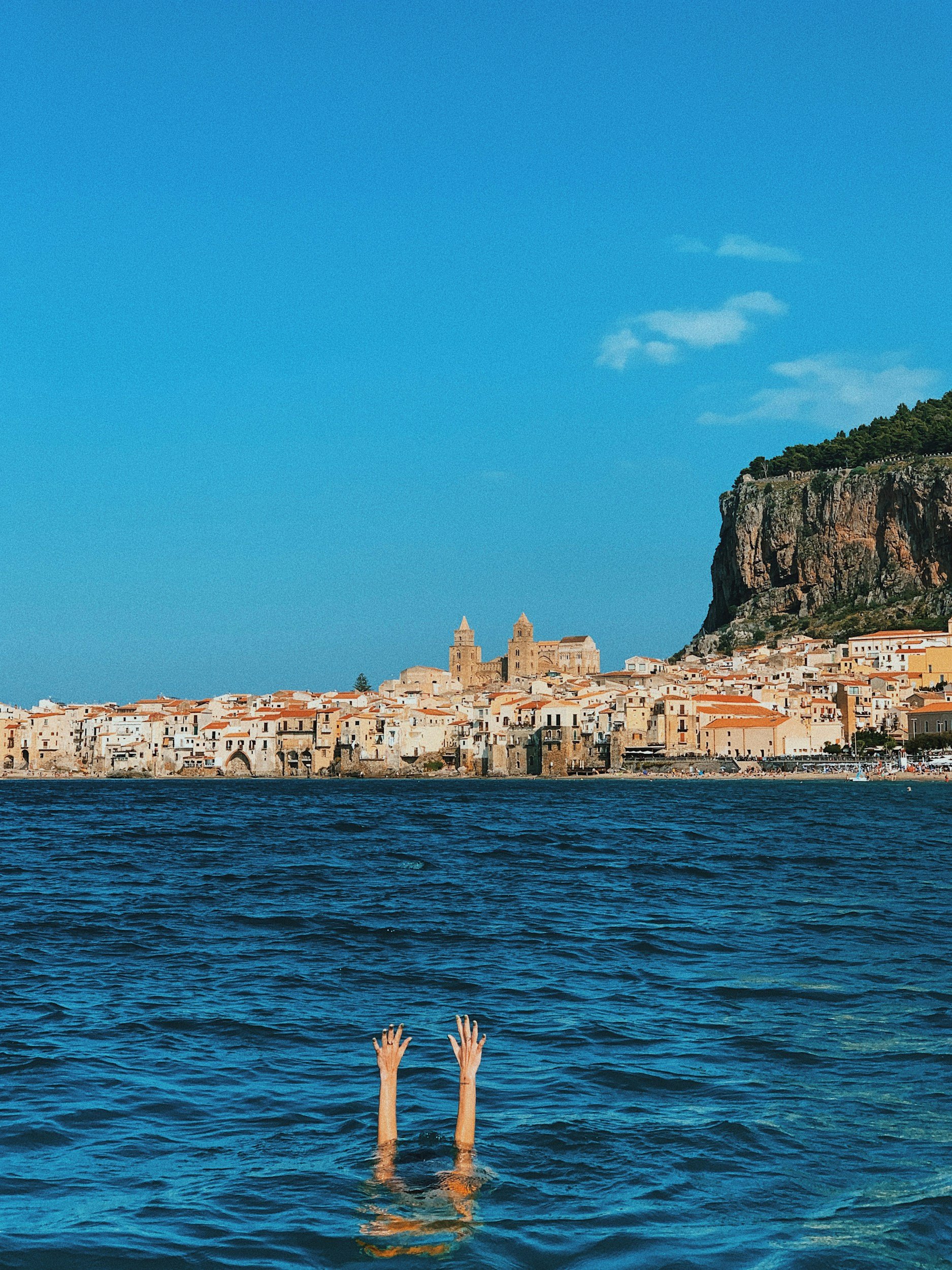
Cefalù, Sicily: a coastal town for history and peaceful beach days
The train from Palermo pulls in right by the centre of town, and within ten minutes you're walking towards the sea with La Rocca filling the skyline behind the rooftops. There isn't much figuring out to do. The beach is directly in front of you, the old town sits between the water and the rock, and after a couple of hours you'll probably stop checking Google Maps altogether.
The town feels different before breakfast. Around seven in the morning, people are already swimming from the beach below Lungomare Giuseppe Giardina while fishing boats move in and out near Porta Pescara. A few cafés are opening their shutters, deliveries are arriving along Corso Ruggero, and the cathedral square is still mostly empty apart from residents crossing it on their way to work.
Coffee usually happens standing at the counter. Qualia gets a lot of attention, but places like Bar Duomo and Caffè Centrale are just as much a part of everyday life here. Order an espresso, add a warm brioche or a genovese filled with custard, and watch the town slowly wake up around you. By nine o'clock the tables outside are starting to fill, not with tourists planning their day but with people discussing football, politics, family news, and whatever happened the night before.
Most visitors spend a lot of time on Via Vittorio Emanuele, which makes sense because it cuts through the heart of the old town, but some of the nicest corners of Cefalù sit a street or two away. The lanes around Via Mandralisca, Vicolo Bernava and Piazza Garibaldi are usually quieter, and if you follow them long enough you'll eventually end up back at the sea anyway. That's one of the things Cefalù does well. You rarely feel as though you're walking towards an attraction. You're simply moving through a town that happens to contain a lot of beautiful places.
The Lavatoio Medievale is one stop I'd keep. It takes five minutes, maybe ten. Stone steps lead down below street level where water still runs through the old wash basins. People often walk straight past it because the entrance is easy to miss, but it's one of those places that helps explain how daily life worked here long before tourism arrived.
Most people climb La Rocca at least once. The entrance sits at the edge of town, and it's worth getting there early because the Sicilian sun takes over surprisingly fast once the morning gets going. The climb isn't particularly difficult, but you'll appreciate the shade while it's still there. Looking down from the top, you can see the entire curve of Cefalù's beach, the cathedral towers, the maze of streets below, and trains tracing the coastline towards Palermo.
If the main beach feels crowded later in the day, keep walking west along Lungomare Giuseppe Giardina. Most people stop close to the old town because it's convenient, but the beach becomes noticeably quieter the further you go. Families spread out, locals set up for the afternoon, and there's usually far more space than around the central section below the cathedral.
Heading towards Caldura gives you something completely different. The coastline becomes rockier, the water deepens almost immediately, and swimming feels very different from the sandy beach in town. Around Kalura you'll find small swimming platforms built into the rocks, clear water, and some of the best views back towards Cefalù itself. Looking across the bay from here, La Rocca rises above the town in a way you never really appreciate from the centre.
The road out towards Hotel Kalura isn't especially dramatic, but the views are. Boats crossing the bay look tiny beneath the cliffs, and the cathedral towers stand out above the rooftops even from a distance. Bring water if you're walking during summer because there isn't much shade once you leave the old town behind.
By early evening everything shifts back towards the centre. Piazza del Duomo fills slowly, children run across the square beneath the cathedral, and people start appearing along Corso Ruggero with no particular destination in mind. Some stop for gelato at Duomo Gelatieri. Others wander between wine bars and bakeries before eventually ending up by the sea.
Dinner is often better once you're a little away from the cathedral square itself. Around Via Veterani and Via Carlo Ortolani di Bordonaro you'll find smaller terraces tucked between stone buildings where meals tend to move at a gentler pace. Locanda del Marinaio remains a reliable choice for seafood near Porta Pescara, Kentia hides a surprisingly peaceful garden a few minutes from the centre, and Enoteca Le Petit Tonneau is perfect if all you're after is a glass of Sicilian wine, local cheese and something small to eat.
Before dinner, it's worth walking through the old fishing quarter around Porta Pescara. Boats are still pulled up near the harbour, neighbours stop to talk across narrow lanes, and laundry hangs between buildings exactly as it has for decades. It's one of the few parts of town that still feels largely unchanged once the day visitors head back to Palermo.
One walk I always come back to starts at Bastione di Capo Marchiafava and follows the waterfront before looping back through Via Mandralisca and Corso Ruggero. There isn't anything specific to see along the way. You pass the sea, a few benches, old walls, people chatting, somebody walking a dog, somebody else carrying takeaway pizza home for dinner. It just happens to be a nice part of town to spend half an hour.
Where you stay makes a bigger difference than many people expect. Staying inside the old town means everything is within walking distance, especially if you're arriving by train. For longer stays, though, the areas around Lungomare Giuseppe Giardina or the quieter eastern side towards Kalura can be appealing because you still reach the centre easily while escaping some of the evening foot traffic. After a few days, that extra bit of space often becomes more valuable than being directly beside the cathedral.
If Cefalù has caught your attention but you're curious about a completely different side of Sicily, this guide to Sicily's tropical side explains why parts of the island now grow avocados, mangoes, and even coffee beans.
Nestled along the Normandy coast, Cabourg is one of those towns you might not hear about as often as its more famous neighbors, but that's exactly why it’s so special. Cabourg is an ideal destination for anyone seeking a quiet getaway in France.
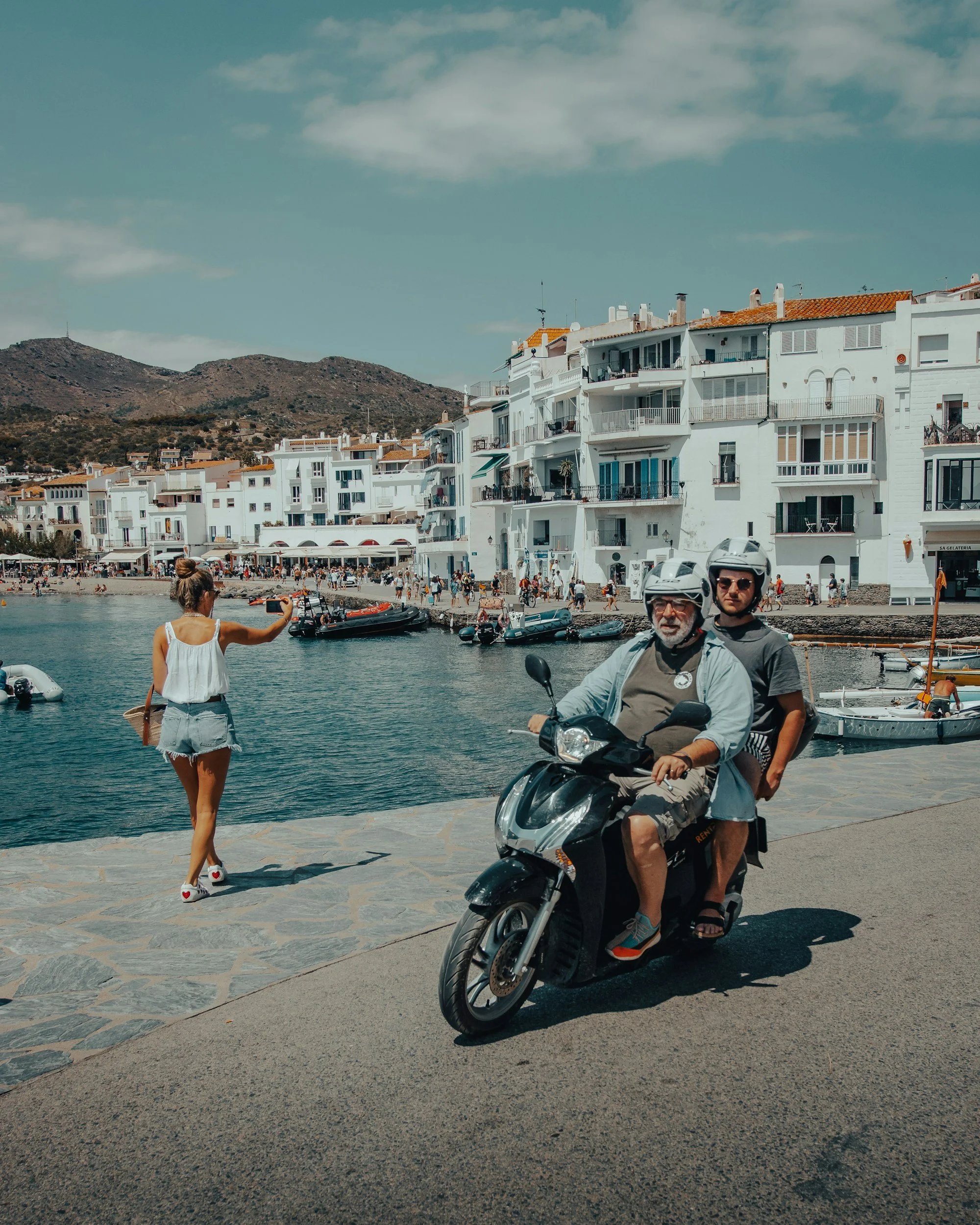
Cadaqués, Spain: a Costa Brava town that still feels like itself
The drive into Cadaqués is half the reason people remember arriving in the first place.
Once you leave Figueres behind, the road winds through the hills of Cap de Creus, passing olive groves, dry stone walls and rocky slopes where the sea appears for a few seconds before disappearing again behind another bend. Then suddenly the bay is right in front of you. White houses spill down towards the harbour, fishing boats sit anchored in the water, and the bell tower of Església de Santa Maria rises above everything else.
Even in the middle of summer, Cadaqués feels slightly removed from the rest of the Costa Brava. Part of that comes down to geography. There isn't a motorway running past the town and nobody really passes through on their way somewhere else. You came here because you meant to.
Around seven or eight in the morning, Platja Gran still belongs mostly to locals. Some people stop for a swim before work, fishermen are already moving around near Port d'Alguer, and café owners are carrying chairs and tables onto Passeig de Cadaqués while delivery vans make their way through streets that will be much busier a few hours later. The sea is usually at its calmest then, and on clear mornings the whole bay reflects the light coming across from Cap de Creus.
Coffee can happen almost anywhere. Espresso Mafia draws plenty of attention these days, especially from people searching for speciality coffee, but Meliton Bar has been looking out over the waterfront for decades and still feels woven into everyday life here. A little further back, Café de la Habana is another easy place to settle in for breakfast, while the terraces around Plaça Frederic Rahola gradually fill with people catching up before the day properly gets going.
The harbour tends to pull everyone towards it at first, but some of the nicest parts of Cadaqués sit a few streets away. Around Carrer del Call and the narrow lanes behind Església de Santa Maria, the crowds thin out quickly and the town feels more residential. Blue shutters stand open against whitewashed walls, bougainvillea spills over terraces, and every now and then a gap between the buildings opens up towards the sea.
Most people climb to the church for the view across the harbour, but the streets beyond it are often quieter than the square itself. A few minutes further uphill and you'll find yourself in parts of town where daily life feels much more visible than tourism.
The walk towards Portlligat is one most people end up doing sooner or later. Dalí's house is the obvious landmark, but the route there is just as memorable. Small coves appear between the rocks, the water turns impossibly clear in places, and every time you look back, Cadaqués seems to stretch a little further around the bay.
If you keep going beyond Portlligat towards Cala Nans, the landscape becomes noticeably wilder. The lighthouse sits several kilometres from town and the path crosses dry hillsides scattered with rosemary, stone walls and low Mediterranean scrub. It feels surprisingly remote considering you're still within walking distance of cafés, bakeries and restaurants.
If you're considering Cadaqués for a long weekend, this market guide shows what the town feels like beyond the postcard views and where locals actually shop.
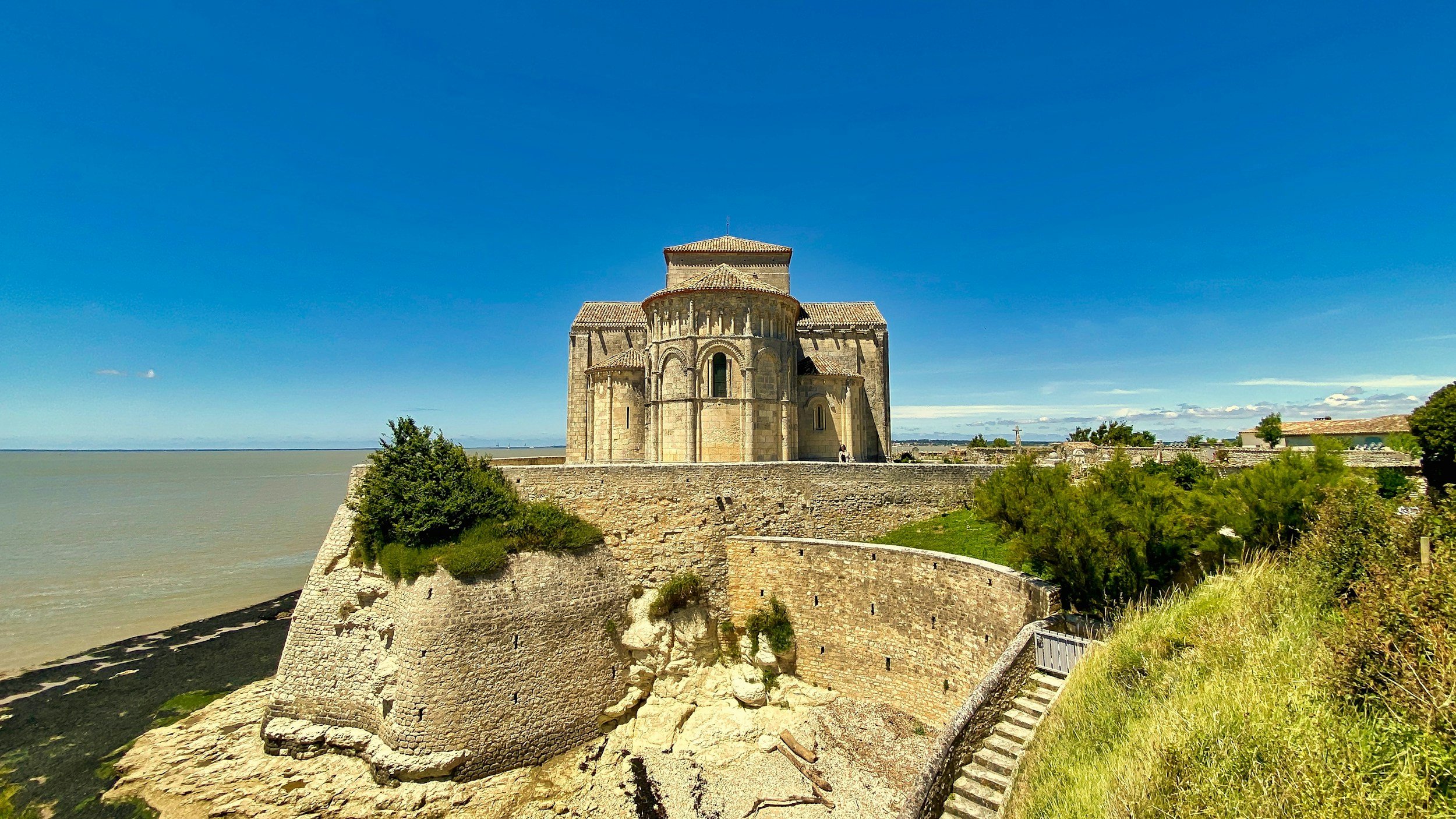
Talmont-sur-Gironde, France: a tiny village overlooking France's largest estuary
Most people arrive in Talmont-sur-Gironde expecting a quick stop. It's one of those villages that turns up on almost every list of France's prettiest villages, and from a distance it can look almost too perfect, sitting out on its little peninsula above the estuary with its pale limestone houses, flower-covered walls and church perched dramatically above the water.
What often surprises people is how small it actually is. You leave the car outside the village, walk through a narrow opening between old stone buildings and, within a few minutes, you've already seen most of the streets. There aren't huge attractions to work through or a long sightseeing route to follow. The setting is what stays with you. Wherever you walk, the Gironde seems to be right there beside you, and looking across towards the Médoc it's hard to believe you're technically looking at a river. In places the estuary stretches more than ten kilometres across, and on windy days it feels much more like standing beside the sea than inland France.
The hollyhocks are another thing people remember long after they've left. From late spring onwards they seem to appear absolutely everywhere, climbing against limestone walls, squeezing into cracks beside old doorways and filling tiny corners of the village with pink, white, deep red and purple flowers. Some grow so tall that they almost reach the rooftops, and by summer they become as much a part of Talmont as the church itself.
Most visitors naturally make their way towards Église Sainte-Radegonde. The church has been standing above the estuary since the twelfth century and occupies one of the most dramatic positions anywhere along this stretch of coast, but what often holds people's attention longer is everything around it. The small cemetery beside the church looks straight out across the water, and because the estuary is so wide here, the views seem to go on forever. On clear days you can watch boats moving slowly through the channel while the wind comes straight off the water and across the cliffs below.
One thing that's easy to miss if you're only here for an hour or two is how much the village changes with the tides. At high tide the water reaches right up towards the cliffs and the whole peninsula feels surrounded by sea, but a few hours later the landscape looks completely different. Mudflats emerge below the village, fishing channels appear where there was open water before, and huge stretches of shoreline suddenly become visible. It's one of those details that gives the place a completely different character depending on when you happen to be there.
Below the cliffs you'll spot the famous carrelets, the wooden fishing huts balanced on stilts above the water. They're one of the defining sights along this part of the Atlantic coast and you'll see more of them if you continue exploring towards Meschers-sur-Gironde or Mortagne-sur-Gironde. Even after seeing photographs beforehand, they still look slightly improbable standing out there above the estuary, connected to land by narrow wooden walkways and silhouetted against the water.
Back in the village, some of the nicest streets are actually the ones people pass through without paying much attention. After photographing Sainte-Radegonde, many visitors head straight back towards the car, while lanes like Rue du Puits and Rue de l'Église often remain much quieter. This is where you start noticing the smaller details that make Talmont feel lived-in rather than simply beautiful. Old shutters faded by years of Atlantic weather sit beside climbing roses and hollyhocks, tiny courtyards appear behind half-open gates, and small independent shops sell pineau des Charentes, local honey, handmade soaps, fleur de sel, wines from the surrounding vineyards and products that rarely seem to travel very far beyond this corner of France.
If you're planning lunch, timing makes a big difference. Around midday the village can suddenly feel much busier, particularly in summer when people arrive from Royan and the surrounding coast. L'Aquarelle remains a reliable choice if you'd like seafood and views across the estuary, although arriving before the main rush or later in the afternoon usually feels much more relaxed. Quite a few people combine Talmont with lunch in nearby Mortagne-sur-Gironde instead, where small restaurants look out across the marina and fishing boats rather than the cliffs.
It's also worth leaving the centre of the village for a while. The footpaths below the cliffs give you a completely different view of Talmont, with Sainte-Radegonde rising above the water and the limestone houses clustered together on the edge of the peninsula. Most visitors never make it down here, which is probably why it often feels quieter than the village itself. If you enjoy walking, you can continue onto sections of the Chemin des Douaniers, the old customs path that follows the coastline. Looking back from there, you get a much better sense of why the village was built exactly where it was. The church dominates the cliffs, the houses huddle together against the Atlantic winds, and the estuary seems to wrap itself around almost every side of the village.
Food and drink here are still closely connected to the landscape around Talmont. Vineyards line much of the approach road into the village, so it's no surprise that pineau des Charentes appears everywhere from restaurant menus to tiny village shops. If you've never tried it before, this is a good place to start. Somewhere between a wine and a liqueur, it's one of those drinks that feels completely tied to this part of France. The estuary shapes what's on the table too. Oysters from the Marennes-Oléron area are easy to find, alongside local shrimp, fresh bread and simple seafood platters that don't need much improving. The village shops are also good places to pick up local honey, salted caramel, fleur de sel and bottles you'll probably never come across once you've left the region.
By late afternoon, Talmont feels different again. The people who came over from Royan for a quick visit begin drifting away, the little shops become quieter and suddenly there are empty benches overlooking the estuary again. Around the church you'll often find just a handful of people standing by the stone wall looking out across the water while the light softens and the limestone starts taking on warmer colours. It's often around this time that you notice things you missed earlier in the day: the hollyhocks seem brighter, the lanes feel calmer, and the village starts looking less like somewhere people came to photograph and more like somewhere people actually live.
Staying in Talmont itself is possible, although accommodation is limited. Many people choose to stay around Mortagne-sur-Gironde, Meschers-sur-Gironde or among the vineyards near Cozes instead, then return early in the morning or later in the evening when the village feels much closer to everyday life than a sightseeing stop. That's also when Talmont is at its best. The first walk through the village is usually about the church, the viewpoints and the photographs. The second is when you start noticing the smaller things: flowers growing against old limestone walls, a gate left open into a tiny courtyard, somebody tending a garden behind a stone house, or the changing colours of the estuary below the cliffs. That's usually the point where the village starts feeling less like an attraction and more like a real place.
Travellers who love small historic towns often end up choosing between the coast and the countryside. If that's you, Semur-en-Auxois offers a completely different kind of slow escape in Burgundy.
If Saint-Rémy-de-Provence is already on your list, this morning guide helps you experience the town before the streets fill up.
For those who are all about slowing down, taking a breather, and really connecting with nature, Corsica’s hidden coastal villages are a dream come true. These places are perfect for anyone who wants to take it easy and experience Corsica’s more relaxed way of life. The magic of the island is more than just the views… it's in the laid-back charm of its villages, where you can step away from the daily grind and just be.
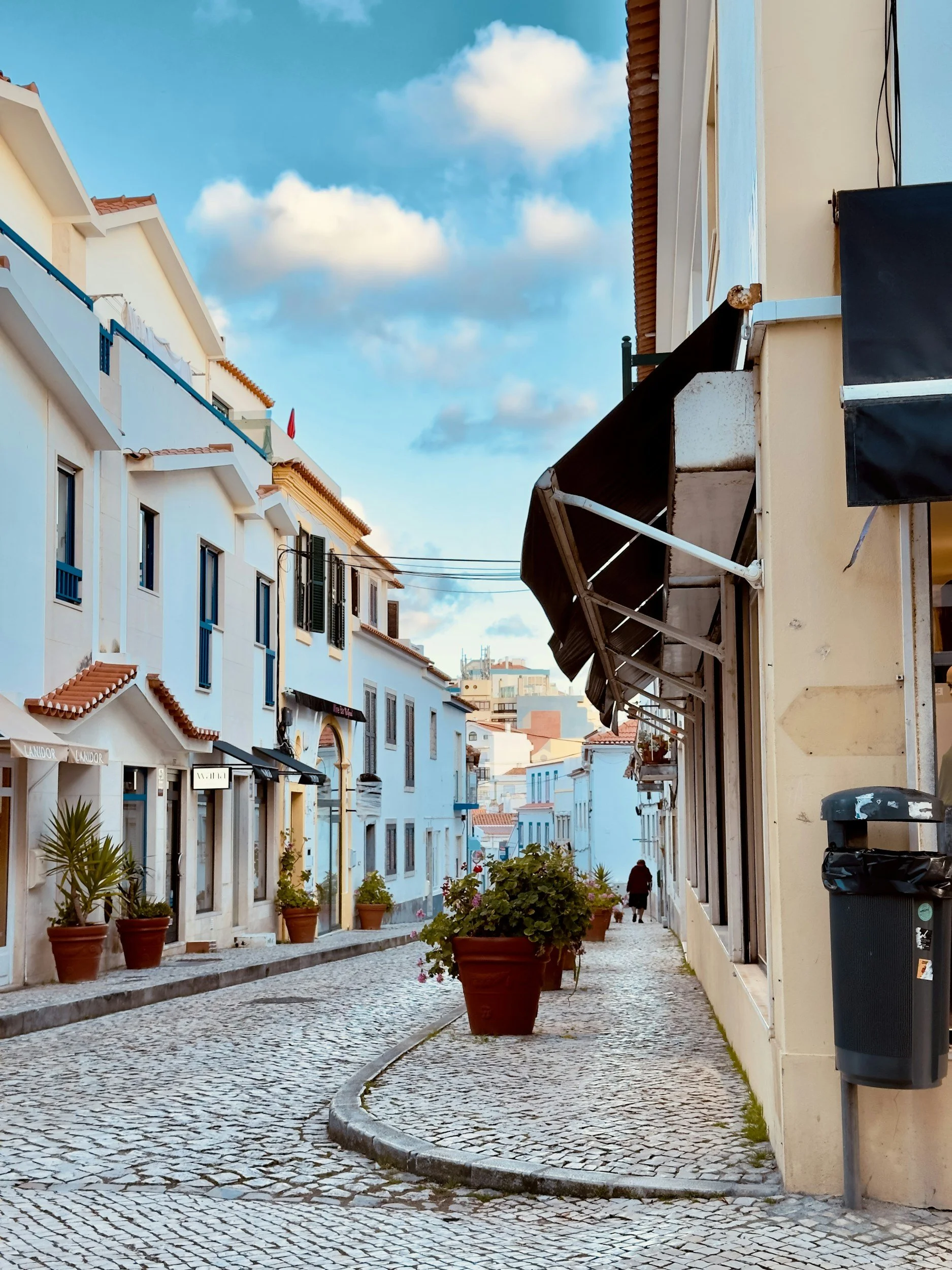
Ericeira, Portugal: a relaxed coastal town near Lisbon
Ericeira is one of those places that people often visit for a day and then immediately wish they had booked longer.
It's only about an hour from Lisbon, but it feels much further away. The city disappears surprisingly quickly, replaced by cliffs, ocean views, and a town that still revolves around the Atlantic. Even if you've never touched a surfboard, it's easy to understand why people stay.
The first thing you'll notice is the light. Whitewashed houses line the streets above the harbour, blue shutters catch the afternoon sun, and almost every road seems to lead back towards the sea. Around Praça da República, locals sit outside cafés, surfers walk barefoot through town carrying boards, and fishermen still unload catches down at Porto de Pesca de Ericeira. If you wander through Rua Dr. Eduardo Burnay or the little lanes behind Largo de Santa Marta, you'll find tiled façades, old grocery stores, tiny bakeries, and corners that feel surprisingly unchanged despite Ericeira's popularity.
Mornings are my favourite time here. Around eight o'clock, Padaria da Vila is already busy with locals picking up bread, croissants, and pastries for the day. A few streets away, Balagan Coffee has become a favourite for speciality coffee, while Dear Rose Café draws a mix of locals, surfers, and remote workers settling in for breakfast. If you're more in the mood for something simple, stop at one of the small pastelarias around Rua de Santo António, order a galão and a warm pastel de nata, and watch the town wake up around you.
Most visitors stay close to Praia dos Pescadores, the small beach tucked beneath the centre, but there are plenty of reasons to keep walking. Praia do Sul sits just beyond town and is popular with locals for a swim after work. Head north instead and you'll pass Praia do Norte before reaching the coastline around Ribeira d'Ilhas. Along the way you'll come across little viewpoints where people sit with coffee, watch the surf, or simply stare out at the Atlantic for a while.
One walk that's worth doing is the stretch between Ericeira and Ribeira d'Ilhas. The path follows the cliffs past rocky coves, patches of wildflowers, and views that keep making you stop for "just one more minute". Looking back, you can see the white houses of Ericeira clinging to the cliffs above the sea. Early in the morning you'll often have long sections almost entirely to yourself.
If you keep heading south instead, Foz do Lizandro has a completely different feel. The beach is wider, the river meets the sea here, and families spend entire afternoons moving between the sand, cafés, and wooden boardwalks that run alongside the estuary. It's a lovely place to end the day if you don't feel like staying in town.
Ericeira still feels closely tied to the sea in a way that a lot of coastal towns have gradually lost. Tourism is obviously part of life here now, especially in summer, but it doesn't completely dominate what happens around the harbour. The fish market is still active, fishing boats continue coming and going throughout the day, and many seafood restaurants genuinely depend on whatever arrived that morning rather than working from a fixed menu. If you spend a bit of time wandering around the harbour, you'll usually see lobster pots stacked beside the quay, fishing nets spread out to dry in the sun, and locals chatting beside their boats while sorting the day's catch or repairing equipment before heading back out again.
Dinner happens later than you might expect, which suits Ericeira quite well because the town tends to slow down rather than speed up as the evening goes on. Mar d'Areia remains a favourite near the harbour if you're looking for fresh fish and seafood, while Taberna Lebre is the sort of place people return to for traditional Portuguese cooking that doesn't need much explanation. Canastra is worth knowing about if a plate of local cheese, cured meats and a glass of wine sounds like a good start to the evening, although most people seem to end up staying longer than they originally planned. Tik Tapas is still one of the best places to sit overlooking the ocean, while Balagan Beach House near Foz do Lizandro feels completely different again, with the Atlantic right in front of you and the beach stretching away beside the restaurant.
By late afternoon, the atmosphere around town starts shifting slightly. The people who came over from Lisbon for the day begin making their way back, surfers drift into town from Ribeira d'Ilhas carrying boards under their arms, and the cliffs around Miradouro da Senhora do Ó slowly fill with people who have no particular plans beyond watching the light change across the water. Some sit with a drink, some arrive with an ice cream, others simply lean against the wall looking out towards the Atlantic while the waves roll in below. It never feels especially organised or staged, which is probably why so many people end up staying longer than they intended once they get here.
Staying around Praça da República means cafés, bakeries, restaurants, and the harbour are all a few minutes away on foot. The streets around Rua das Furnas tend to be a little quieter while still feeling central. If you'd rather wake up to ocean views and birds instead of people rolling suitcases over cobblestones, look towards Ribeira d'Ilhas or the countryside around Santo Isidoro. It's only a few minutes outside town, but the atmosphere feels completely different, with small farms, open fields, and huge Atlantic views.
Immerso Hotel is a good example. It sits outside the centre with sweeping views across the valleys towards the ocean. If you'd rather stay in town, there are plenty of smaller guesthouses and apartments tucked into the old streets where everything is within walking distance.
Getting here couldn't be much easier. Direct buses run regularly from Lisbon, and the journey takes around an hour. That's part of Ericeira's appeal. It feels like a proper coastal escape without requiring much effort to reach.
If you're planning to stay along this coastline, there are also quieter stretches further south, especially along the Alentejo coast.
Koper, Slovenia: the Adriatic town people wish they hadn't skipped
Most people don't plan a trip around Koper. They stop for a few hours on the way to Piran, Croatia or somewhere further down the coast, wander through the old town, and then realise they probably should have given themselves more time.
Part of what makes Koper work so well is that it never feels as though it's trying particularly hard to impress visitors. It's Slovenia's main port, a university town, and somewhere people actually live throughout the year, and you notice that almost immediately. Students cycle across the squares on their way to lectures, locals stop for coffee before work, and the old town feels lived-in rather than polished. The historic buildings are beautiful, but they're woven into everyday life instead of being treated like a backdrop.
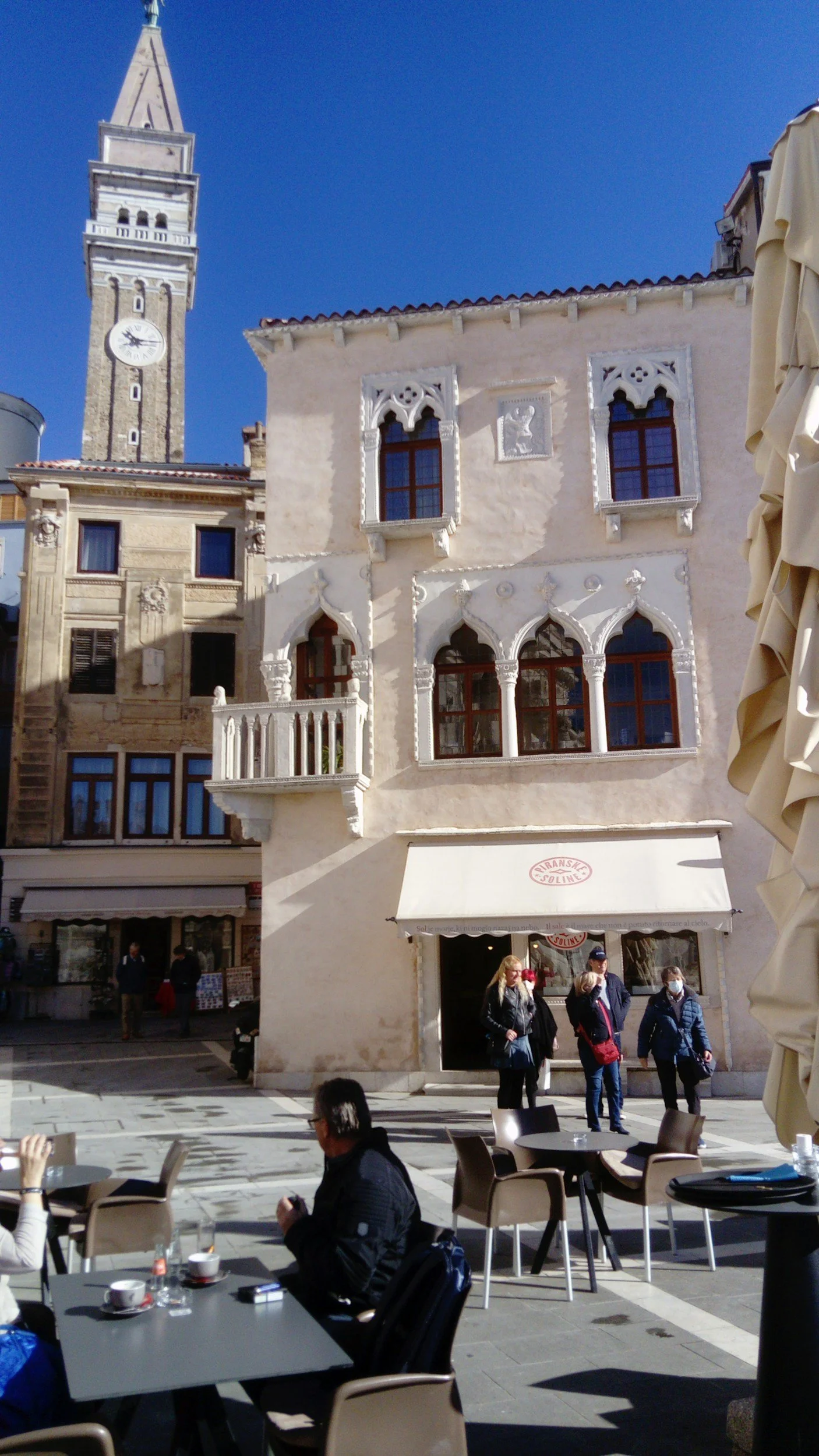
Most people begin around Tito Square because it's impossible not to. The square is beautiful, surrounded by Venetian architecture and dominated by the Praetorian Palace, but some of the nicest parts of Koper are the streets that connect everything together. From Tito Square you can wander through Čevljarska Ulica, pass beneath the old Muda Gate and simply keep walking without much of a plan. Before long you'll come across little wine bars tucked beneath old façades, bakeries with pastries cooling in the window, quiet courtyards hidden behind archways and small cafés that rarely appear in guidebooks but somehow end up being the places people remember.
The mornings are particularly nice. Around Tržnica Koper, the town market, people are picking up tomatoes, peaches, figs, seasonal vegetables and fresh bread before work, while nearby stalls sell olive oil from Slovenian Istria, local honey, homemade jams and bottles of Refošk and Malvazija from vineyards in the hills above the coast. It's not a huge market and that's part of the appeal. Nobody is performing local life for visitors. People are simply doing their shopping.
A few streets away you'll usually find older locals sitting outside bakeries with a newspaper and a coffee. Pekarna Triglav is worth stopping at if you're looking for breakfast, especially when a fresh batch of burek comes out of the oven. The smell tends to drift halfway down the street before you even see it. Coffee happens slowly here too. Loggia Café on Tito Square is the obvious choice and the terrace is excellent for watching the square come to life, but I often end up around Trg Brolo instead, where students sit working on laptops beneath the trees, neighbours stop to chat while crossing the square, and nobody seems particularly interested in rushing through their morning.
The longer you spend wandering through Koper, the more you realise how compact everything is. You can leave the market, stop for coffee, get distracted by a side street, browse a wine shop and somehow end up back by the marina without really trying. Some mornings the smell of fresh pastries drifts out from a bakery before you've even decided where you're heading next, and it's very easy to lose half an hour sitting in the shade watching people come and go.
When the weather warms up, a lot of life shifts towards the water. Locals head for Žusterna rather than spending all day in the old town, and the walk between the centre and Žusterna is one of the simplest pleasures in Koper. There isn't much to it. The sea sits on one side, cafés and apartment buildings on the other, and every now and then you'll pass somebody climbing out of the water after a swim or settling onto the rocks for the afternoon. If you're staying for more than a day, you'll probably end up doing the walk more than once.
Cyclists often follow the old Parenzana railway route towards Izola. The trail passes through olive groves, vineyards and short tunnels carved into the landscape before continuing along the coast, and it's the sort of route where plans tend to change halfway through. You might leave intending to cycle for an hour and suddenly find yourself deciding whether lunch should happen in Izola or whether it's worth continuing all the way towards Piran.
Food feels noticeably different here than in much of inland Slovenia. Italy is close enough that you notice it immediately, but there's also a strong Istrian influence running through almost every menu. Fresh seafood, homemade pasta, excellent olive oil, seasonal truffles and wines from the hills above Koper all make regular appearances. Refošk is the local red you'll see everywhere, a wine that has been grown in Slovenian Istria for centuries and pairs surprisingly well with grilled meat and richer dishes, while Malvazija tends to appear alongside seafood and lighter meals. Many restaurants pour wines from producers in Marezige, Šmarje and the surrounding countryside, so it's always worth asking what's local rather than automatically ordering from the main wine list.
The seafood itself is usually straightforward rather than elaborate. Depending on the season you might find grilled sea bass, mussels from the northern Adriatic, cuttlefish risotto or simple plates of anchovies dressed with local olive oil. If truffles are in season, they'll suddenly appear everywhere, shaved over pasta, eggs and whatever else happens to be leaving the kitchen that day.
For dinner, Capra remains popular for good reason, particularly if you can get a table overlooking the marina around sunset when the light starts reflecting off the boats. If you'd rather avoid the busiest waterfront spots, the old town has plenty of alternatives. Gostilna Pri Tinetu is a favourite for traditional Slovenian and Istrian cooking, while Dvor feels quieter and more tucked away. Around Čevljarska Ulica and the streets branching off Tito Square you'll also find small wine bars where people stop for a glass of Refošk and a plate of pršut before heading home.
One thing that stands out in Koper is how little urgency there seems to be around dinner. Tables fill gradually rather than all at once, conversations stretch on long after plates have been cleared away, and nobody appears particularly eager to leave after the final course. A quick dinner often turns into a much longer evening without anyone really noticing.
If you have a car, it's worth heading inland for a few hours. Villages like Marezige and Šmarje sit among vineyards and rolling hills only a short drive from the coast, but they feel like a completely different region. The views stretch all the way back towards the Adriatic, wineries sit among the hillsides, and the pace slows down even further.
By late afternoon, Koper seems to settle into itself. The worst of the heat starts fading, people reappear along the waterfront, and the marina begins catching the softer evening light. Walk towards Žusterna and look back towards the old town, with the bell tower rising above the rooftops and the sea stretching out beside it, and it's hard not to wonder why so many people treat Koper as somewhere to pass through rather than somewhere to stay.
The same kind of slower coastal vibe shows up in Portugal as well, especially outside peak months, like along the Algarve when it’s quieter.
Agios Nikolaos, Crete: a Greek coastal town that's easy to enjoy on your own
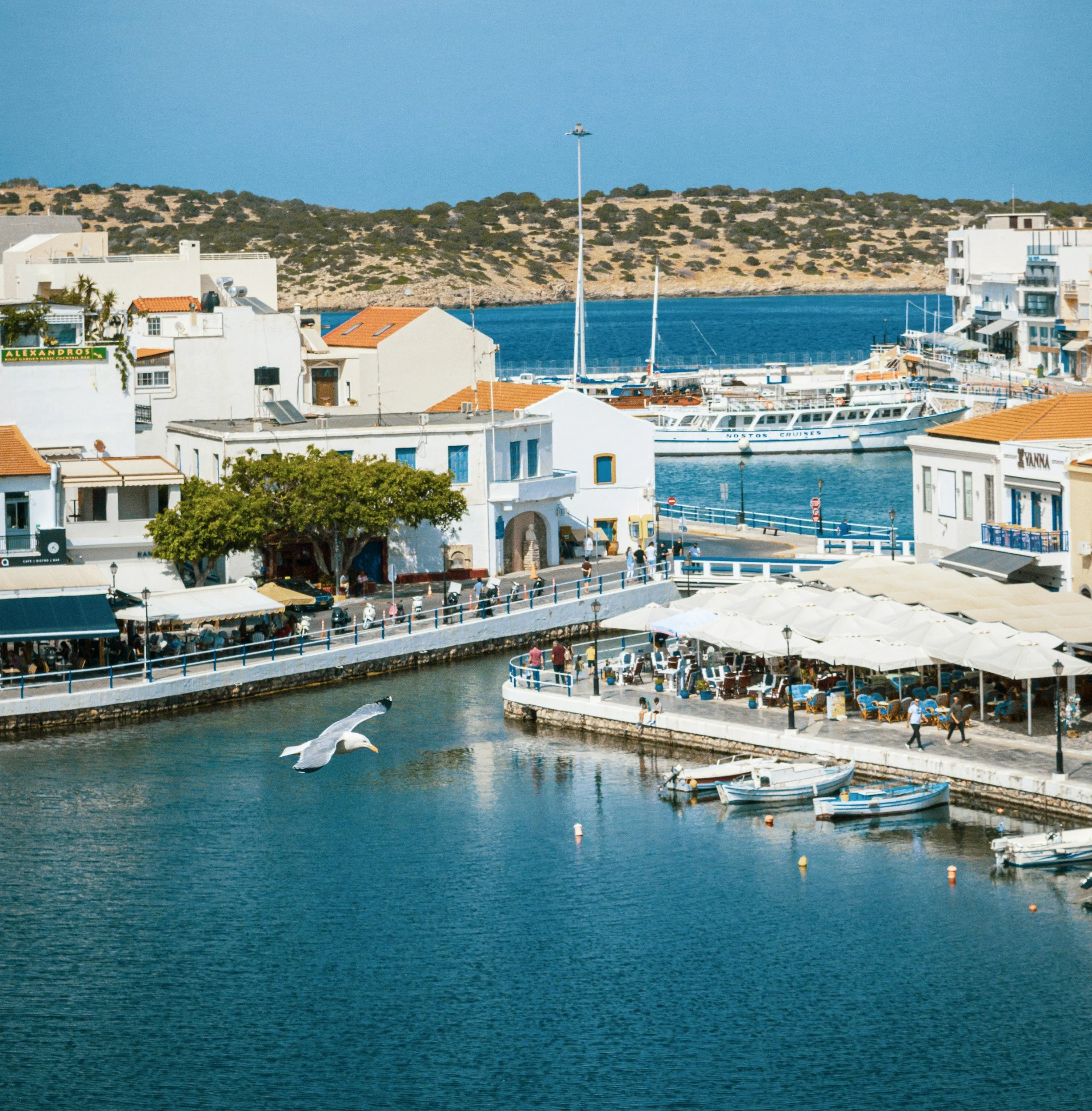
Agios Nikolaos sits on Crete's northeastern coast, about an hour east of Heraklion, wrapped around the small harbour and the deep blue waters of Lake Voulismeni.
It's one of those places that seems to suit solo travellers without really trying. Big enough that you never feel like the only visitor in town, but small enough that after a couple of days you'll start recognising the same café owners, the same morning swimmers, and the same people doing a slow lap around the lake before dinner.
Everything centres around the lake. It's impossible to miss. Cafés and restaurants wrap around the water, fishing boats sit nearby in the harbour, and almost every walk through town seems to bring you back here sooner or later. Early mornings are particularly nice. Before the day heats up, locals stop for coffee, delivery vans make their rounds, and the water is often so still that the buildings around the lake reflect perfectly onto the surface.
One of the nicest ways to start the day is with a coffee and a bougatsa overlooking the water. Around Akti Koundourou, the cafés begin filling gradually from around eight o'clock. Fishermen are already moving around the harbour, locals stop for a quick coffee before work, and the tables closest to the lake tend to fill first. Migomis is a popular breakfast spot right on the water, but don't get too hung up on finding the "best" café. Some of the nicest mornings happen at the smaller places tucked between the lake and the marina where you order a coffee, sit down for ten minutes, and somehow end up staying an hour.
The town itself is easy to wander without much of a plan. Walk up from Lake Voulismeni towards 28is Oktovriou, then drift into the smaller streets climbing above the harbour. You'll pass bakeries pulling fresh spanakopita and cheese pies from the oven, tiny grocery stores stacked with local olive oil, thyme honey, mountain herbs, and neighbourhood cafés where the same people seem to meet every morning.
Around Sofokli Venizelou and the quieter streets behind the Archaeological Museum, the atmosphere changes completely. The souvenir shops disappear, bougainvillea spills over garden walls, and you'll come across little places like Aroma Coffee House, family-run tavernas, and old-fashioned kafeneia where local men sit over coffee and conversation long after breakfast should have finished. If you're the sort of traveller who likes poking around bakeries, local food shops, and neighbourhood streets more than ticking off attractions, this part of town is far more interesting than following a sightseeing route.
One thing I always end up doing in Agios Nikolaos is wandering towards the marina without really meaning to. Around Kitroplatia and the small fishing harbour nearby, you'll often find local fishermen sorting nets, cats waiting hopefully beside the boats, and people sitting on benches watching the water. Just beyond the marina, the coastal path towards Ammoudi opens up views across Mirabello Bay and usually feels surprisingly peaceful, even in summer.
Some of the nicest parts of Agios Nikolaos aren't attractions at all. They're the residential corners where laundry hangs from balconies, old lemon trees grow in tiny courtyards, and someone is watering plants before the heat of the day arrives. A few streets away from the lake, the town feels less like a holiday destination and more like somewhere people genuinely live year-round.
When it comes to swimming, most visitors head straight for Ammoudi Beach. It's only a short walk from town and the water is usually calm enough for an easy morning swim. If you keep exploring, Kitroplatia Beach sits right beside the centre and is perfect if you want to jump in the sea and be back at a café ten minutes later.
For something quieter, head out towards Almyros Beach. The freshwater river flowing into the sea keeps the water noticeably cooler, even in the middle of summer. Locals often bring families here on hot afternoons, and it's one of the few beaches in the area where the landscape feels a little greener. If you're willing to drive a little further, Voulisma Beach near Istro is worth knowing about too. The water is ridiculously clear, and if you arrive early enough you'll understand why so many people stop here on the way along the coast.
One thing I like about Agios Nikolaos is how connected it still feels to the surrounding region. The hills behind town are covered with olive groves, small villages, and family-run tavernas. Drive twenty minutes inland and you'll reach places like Kritsa, where older women still sit outside weaving lace and narrow stone lanes wind between whitewashed houses. It feels like a completely different side of Crete compared to the coast.
Most people visit Spinalonga while they're here, and it's worth doing. The easiest route is usually through nearby Plaka, where small boats make the crossing throughout the day. The island is famous for its leper colony history, but the Venetian fortifications and views across Mirabello Bay are just as memorable.
Food is one of the reasons people end up staying longer than planned. Around the harbour you'll find plenty of seafood restaurants, but it's worth wandering away from the busiest waterfront tables. Piato is a good choice for modern Cretan cooking, while Karnagio sits right beside the sea and is the sort of place where lunch quietly turns into the afternoon. Look out for dakos topped with tomatoes and local mizithra cheese, grilled octopus, slow-cooked lamb, and olive oil produced in the surrounding hills.
Evenings are probably my favourite time in Agios Nikolaos. As the heat starts to ease off, people gradually make their way back towards the lake and the waterfront. Nobody seems to be in much of a rush. Families stroll along the marina, friends meet for a drink before dinner, and you'll see plenty of people simply sitting by the water watching the light change across Mirabello Bay.
Around Lake Voulismeni, the cafés and tavernas begin filling up, but it rarely feels hectic. The tables closest to the water are usually the first to go, especially around sunset when the reflections on the lake are at their best. Along Akti Koundourou, waiters weave between tables carrying seafood, wine, and huge Greek salads while people settle in for what will often become a very long dinner.
If you feel like walking, follow the harbour promenade past the marina towards Kitroplatia. Fishing boats bob gently beside the waterfront, the lights from the cafés start reflecting on the water, and the whole town takes on a softer feel. Stop for an ice cream from Pagotomania or grab a drink somewhere along the waterfront and keep walking.
One thing I like about evenings here is that there isn't really a "must-do" spot. Some people sit around the lake for hours. Others end up at a small taverna near the harbour. Some wander down to Ammoudi and watch the last swimmers heading home. It's lively enough that you never feel alone, but relaxed enough that you can spend an entire evening doing very little and feel like you've had a great night.
Minos Beach Art Hotel remains one of the nicest places in the area, with sculptures scattered through the gardens and bungalows sitting right beside the sea. If you'd rather stay somewhere smaller and quieter, look around Ammoudara Beach or the residential streets just outside the centre where mornings tend to begin with birdsong rather than traffic.
Getting here is straightforward. Heraklion Airport is about an hour away by car, and the drive east gives you a first glimpse of olive groves, mountain villages, and stretches of coastline that make this part of Crete so appealing. By the time you reach Agios Nikolaos, you're already moving at a different pace.
If you're extending your trip through Greece, this Athens guide focuses on quieter neighbourhoods, local cafés, and cultural stops beyond the busiest sights.
Before you book anything
The places in this guide are all quite different from one another, but they tend to create the same kind of trip.
You arrive with a rough plan, then somewhere along the way you stop looking at it. Maybe you find a café where you end up starting every morning, a waterfront bench that somehow becomes part of your daily route, or a restaurant you return to simply because nothing else sounds as good. A few days later, you're no longer trying to see the town. You're just spending time there.
That's probably why places like Koper, Ericeira, Cadaqués, Agios Nikolaos, Cefalù and Talmont-sur-Gironde tend to linger in people's memories. Not because every hour is packed with things to do, but because they're enjoyable places to be even when nothing much is happening.
If you're trying to decide between them, I'd think less about attractions and more about the sort of days you'd like to have. Would you rather start the morning with a swim before breakfast, wander through a market picking up fruit and bread for lunch, spend an afternoon walking along the coast, or sit outside a small wine bar and watch the evening unfold around you? The answer usually tells you more than any list of sights ever will.
And if you're still deciding where to go next, you'll find plenty more coastal towns, train-friendly escapes and regional guides across Trippers Terminal. You can also join our Cozy Travel Club below if you'd like new ideas delivered straight to your inbox.
FAQ: Quiet coastal towns in Europe
Which coastal towns in Europe are still quiet in summer?
Completely empty coastal towns are becoming harder to find, especially during July and August. However, places like Koper in Slovenia, Talmont-sur-Gironde in France, Agios Nikolaos in Crete, and Ericeira in Portugal tend to feel far more manageable than many of Europe's better-known seaside destinations. They still receive visitors, but everyday local life hasn't been completely replaced by tourism.
Where can I find coastal towns in Europe that aren't overcrowded?
Smaller coastal towns often offer a better experience than famous resort destinations. Cadaqués, Cefalù, Koper, Ericeira, Talmont-sur-Gironde, and Agios Nikolaos all combine beautiful waterfront settings with a slower pace and fewer crowds than destinations such as Santorini, Dubrovnik, or the Amalfi Coast.
What are the best alternatives to the Amalfi Coast, Santorini, and Dubrovnik?
If you're looking for coastal scenery without the same level of tourism, several towns in this guide work well as alternatives. Cefalù offers historic streets and Sicilian beaches, Cadaqués combines Mediterranean charm with a more relaxed atmosphere, and Agios Nikolaos delivers beautiful sea views and easy swimming without feeling overwhelming. Koper is also a strong Adriatic alternative if you enjoy historic centres and local food.
Which European coastal towns are best for solo travellers?
Agios Nikolaos, Koper, Ericeira, and Cefalù are particularly good choices for solo travellers. They're easy to navigate, have walkable centres, plenty of cafés and waterfront areas, and enough activity that you'll never feel isolated. At the same time, they're relaxed enough that spending time alone feels completely natural.
Which coastal towns in Europe can you visit without a car?
Several destinations in this guide are easy to enjoy without driving. Cefalù sits directly on Sicily's rail network, Koper is well connected by bus and train, and Agios Nikolaos can be reached easily from Heraklion Airport by bus or car transfer. Ericeira also works well without a car if you're staying in town and using local buses from Lisbon.
Which European coastal towns have walkable historic centres?
Cadaqués, Cefalù, Koper, and Talmont-sur-Gironde all have compact historic centres that are best explored on foot. Narrow streets, waterfront promenades, local cafés, and small squares are all within walking distance, making them ideal for travellers who enjoy wandering without a strict itinerary.
What is the best time to visit smaller coastal towns in Europe?
May, June, September, and early October are often the best months. The weather is generally warm enough for outdoor dining, swimming, and coastal walks, while visitor numbers are lower than during the peak summer season. September is particularly appealing because the sea remains warm but the atmosphere feels much calmer.
Are there any coastal towns in Europe that combine beaches and historic old towns?
Yes. Cefalù is one of the best examples, with its sandy beach sitting directly beside the medieval centre. Agios Nikolaos combines beaches, a harbour, and a walkable old town, while Cadaqués offers rocky coves and swimming spots alongside its whitewashed historic streets.
Which coastal towns in Europe are easiest to reach from a major airport?
Agios Nikolaos is about an hour from Heraklion Airport, Ericeira is roughly an hour from Lisbon, Koper can be reached from either Trieste or Ljubljana, and Cefalù is connected directly to Palermo by train. All four destinations are relatively straightforward to reach without complicated travel arrangements.
How many days should you spend in a small European coastal town?
Three to five days is usually ideal. That gives you enough time to settle into the town, discover favourite cafés and swimming spots, take a few walks, and enjoy the destination without rushing. Many of these places become more enjoyable after the first day, once you've stopped trying to see everything.
Which coastal towns in Europe are good alternatives to crowded beach resorts?
If your goal is a more relaxed coastal holiday, towns like Ericeira, Koper, Talmont-sur-Gironde, and Agios Nikolaos are often better choices than large beach resorts. They offer access to the sea, good food, walkable centres, and local character without requiring you to compete for space on every beach or restaurant terrace.
What are the most underrated coastal towns in Southern Europe?
Koper, Agios Nikolaos, and Cefalù are among the most underrated coastal towns in Southern Europe. All three offer a combination of local culture, excellent food, historic centres, and easy access to the sea, yet they receive only a fraction of the attention given to some of the continent's more famous coastal destinations.
Is Ericeira only for surfers?
Not at all. Surfing is a big part of Ericeira's identity, but many visitors come for the coastal walks, seafood restaurants, ocean views, and relaxed atmosphere. Even if you've never stepped on a surfboard, it's an easy place to enjoy for a few days.
Can you swim in the sea in Cefalù?
Yes. Cefalù has one of the best town beaches in Sicily. Spiaggia di Cefalù sits directly beside the historic centre, making it easy to combine beach time with cafés, restaurants, and sightseeing. The water is generally calm during summer and ideal for swimming.
Do you need a car in Cadaqués?
Not necessarily. Buses connect Cadaqués with Figueres and Barcelona, and the town itself is very walkable. That said, having a car makes it easier to explore Cap de Creus, Portlligat, and some of the quieter coves along this stretch of the Costa Brava.
Is Talmont-sur-Gironde worth visiting?
Yes, especially if you enjoy small villages, coastal views, and places with a slower pace. Talmont-sur-Gironde is one of the prettiest villages in western France, known for its cliffside church, flower-lined streets, and views across the Gironde estuary.
What is the best beach near Agios Nikolaos?
Ammoudi Beach is the easiest option from town and a favourite with both visitors and locals. For more space, head to Almyros Beach, where a freshwater river meets the sea. Voulisma Beach, about fifteen minutes away by car, is another excellent option if you're looking for clear turquoise water.