
Valencia is one of Europe's easiest cities to enjoy on your own
Valencia isn't the most obvious choice for a solo trip in Spain, which is probably part of the reason it works so well.
You can spend the morning wandering around Ruzafa, stop for a horchata in Alboraya after lunch, walk through the Turia Gardens in the afternoon, and still make it to the beach before sunset. Very few Spanish cities fit together quite as easily.
What I like about Valencia is that there always seems to be somewhere to go without needing a plan. A table outside Mercado de Colón. A quiet corner of Jardín de Monforte. A bookshop in Ruzafa. A walk through El Cabanyal. You don't spend much time wondering what to do next because the city naturally pulls you from one place to another.
That makes a difference when you're travelling on your own.
Some cities feel built around sightseeing. Valencia feels more built around everyday life. People meet for coffee, sit in the parks, cycle through the gardens, spend time at the market, and head to the beach after work. As a visitor, it's easy to slip into that pattern for a few days.
This guide focuses on the parts of Valencia that are particularly enjoyable when you're exploring alone, from neighbourhood cafés and local markets to gardens, galleries, and places where it's perfectly normal to spend an hour or two by yourself.
If this kind of trip works for you, these smaller towns across Spain tend to feel much easier than the bigger cities.
And if you’re already thinking “next trip,” these quieter Spanish towns are the kind of places you can settle into straight away.

City of Arts and Sciences: the place in Valencia that makes you look up
Most people come here, take a few photos, walk around for twenty minutes, and leave.
It's a shame, because this is one of the few places in Valencia that genuinely feels different from the rest of the city.
The best way to get here is through the Turia Gardens. Start somewhere around Puente de las Flores and walk south. The buildings don't appear all at once. First you catch glimpses of white curves through the trees, then suddenly the whole complex opens up in front of you.
Most visitors gather around L'Hemisfèric, which is the giant eye-shaped building reflected in the water. If it feels busy, keep walking. The stretch between the Museu de les Ciències and Pont de l'Assut de l'Or is usually much quieter and gives you a better sense of the scale of the place.
One thing I like doing here is slowing down and paying attention to the details. The reflections change throughout the day. Shadows move across the white surfaces. People look tiny against the buildings. It feels more like walking through a giant outdoor sculpture than a typical attraction.
The area around the complex is bigger than many people realise. Locals jog along the paths leading back into the Turia Gardens, cyclists pass through on their way across the city, and you'll often see students sitting on the edges of the pools sketching the buildings or working on university projects. It's one of the few places in Valencia where people regularly stop just to look around.
If you need a break, walk back towards the Palau de la Música side of the Turia rather than staying directly around the main entrance. The gardens become greener, quieter, and noticeably less crowded. You'll find benches under palm trees, people reading on the grass, and plenty of shaded spots to sit for a while.
For photography, early morning and the last two hours before sunset are easily the most interesting times to be here. The white structures take on completely different colours depending on the light. Around golden hour you'll often find local photographers setting up near L'Àgora or the long reflecting pools between the buildings.
If you're hungry afterwards, don't immediately head back towards the old town. The streets around Avenida de França and Penya-Roja have a handful of local cafés and bakeries where office workers and residents stop for lunch. It's not the most famous part of Valencia, but it gives you a glimpse of everyday life beyond the main sights.
Later in the afternoon, when the light starts dropping and the crowds thin out a little, the whole area changes again. The pools become almost mirror-like, the bridges cast long shadows across the water, and the buildings feel softer than they do in the middle of the day.
For solo travellers, it's one of the easiest places in Valencia to spend an hour or two without needing a plan. Walk, sit down somewhere, watch what's happening around you, and keep going when you feel like it.
If you ever want the same pace but in a completely different setting in France, Champagne is surprisingly good for solo travel - slower, quieter, and very easy to move around.
Street art in El Carmen: where Valencia gets a little messy
One minute you're looking at a medieval stone wall, the next you're standing in front of a mural that covers an entire building.
That's pretty normal in El Carmen.
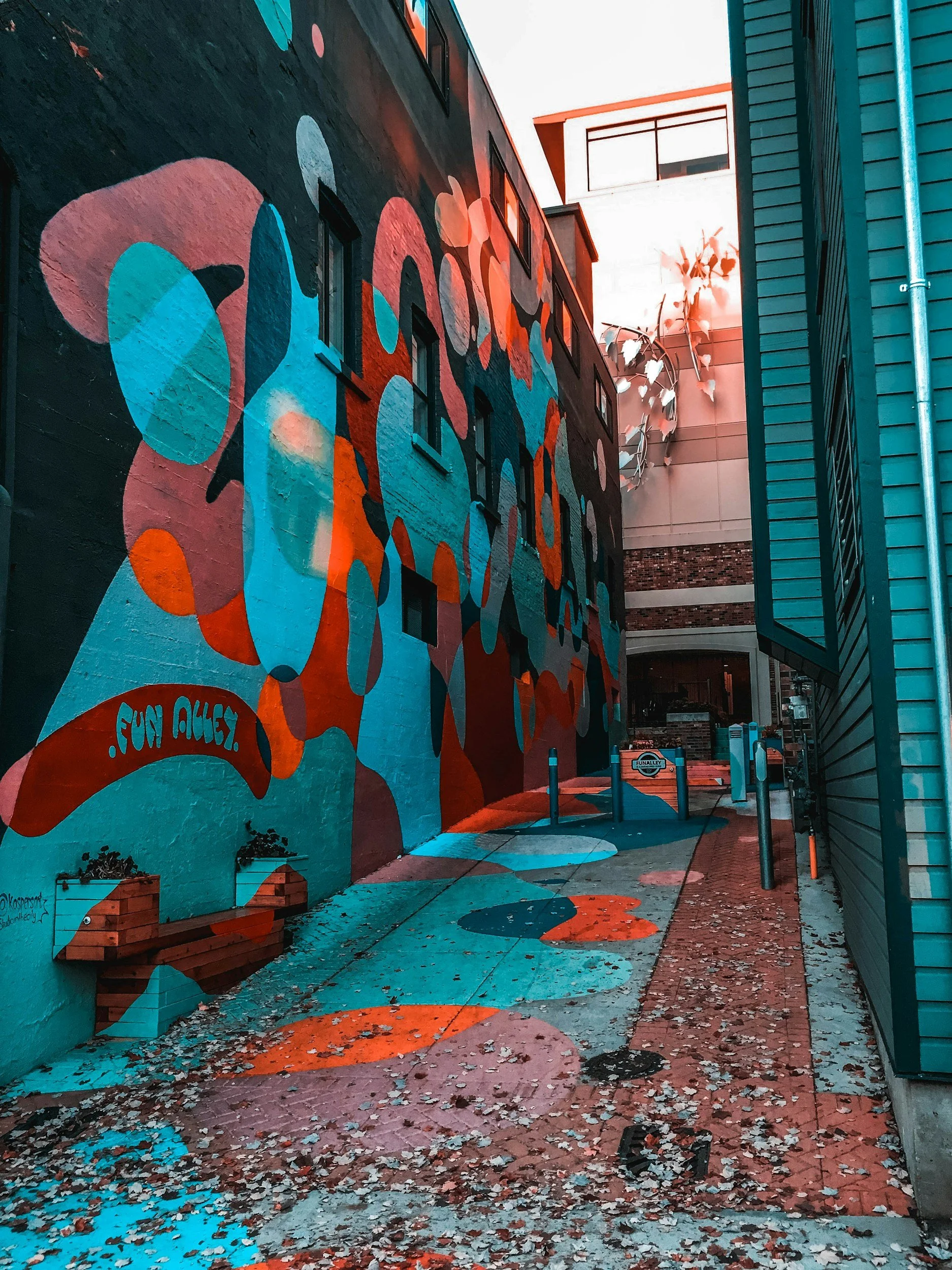
A lot of people come here for the old town atmosphere, but I usually end up paying more attention to what's been painted on the walls. Street art seems to appear everywhere. Around Torres de Quart. Down Carrer de Dalt. On shutters that were blank the last time you walked past. Sometimes it's a huge mural. Sometimes it's a tiny drawing hidden beside a doorway that most people never notice.
The best approach is probably to start around Plaça del Tossal and just wander. Take the street that looks interesting rather than the one Google Maps wants you to take. Turn down Carrer de Moret when you come across it. The whole street is covered in layers of artwork, stickers, posters, and murals that change constantly. What you see today might be gone next year.
You'll probably spot work by Escif at some point. His pieces are often quieter than the giant murals people photograph. The kind of artwork you almost walk past before doing a double take and turning around. David de Limón's little red figures appear in surprising places too. After a while you start looking for them automatically.
One thing I like about El Carmen is that the neighbourhood never feels staged. A wall covered in contemporary artwork might sit next to a tiny grocery store that's been there for decades. Someone is carrying shopping home. Someone else is setting up tables outside a bar. A cat is sleeping in the shade. The art feels like part of everyday life rather than something separated from it.
At some point you'll probably end up back around Plaça del Tossal without meaning to. Grab a coffee, sit outside for a while, and watch people drift through the square. Then head off again. There's a good chance you'll find a street you missed the first time around.
That's part of why El Carmen works so well when you're travelling alone. You're never really trying to get from A to B. The wandering is the whole point.
Speaking of getting around… if you also think the Spanish rail system can be a bit tricky - read this guide and see how travelling y rail actually can be easy.
Small museums and galleries that are actually enjoyable on your own
Valencia isn't really a city of blockbuster museums.
What it does well are the places you wander into for an hour and somehow end up staying longer.
That happens a lot around El Carmen. You might be looking for a coffee on Carrer de Cavallers and notice a doorway you hadn't paid attention to before. A few minutes later you're walking around a gallery you hadn't planned on visiting at all.
Centre del Carme (CCCC) is probably the best example. From the outside it's easy to miss, but once you're inside it opens up into a series of courtyards, old cloisters, exhibition rooms, and shaded corners where people sit reading, scrolling on their phones, or simply taking a break from the city. Even if the exhibition isn't particularly interesting to you, it's worth stepping inside for the building itself.
A ten-minute walk away, IVAM feels completely different. The galleries are bigger, quieter, and more contemporary. Some afternoons you'll find yourself completely alone in a room with a large installation or exhibition. The café downstairs is also one of those useful places to know about when you need somewhere calm to sit for a while before heading back into the city.
One thing I like about Valencia's gallery scene is that it doesn't feel separate from everyday life. You leave IVAM and within a few minutes you're back in El Carmen, passing bakeries, tiny grocery stores, old men arguing about football, and people setting up tables outside bars for the evening.
If you have time for one place slightly outside the centre, I'd make it Bombas Gens. The old factory building alone is worth seeing. High ceilings, exposed brickwork, industrial details, courtyards filled with plants, and exhibition spaces that feel far bigger than you'd expect. It sits in Marxalenes, a residential part of Valencia that most visitors never reach, which is partly why it feels so different from the old town.
Back in the centre, keep an eye out for smaller independent spaces too. Around Carrer de Dalt, Carrer de Baix, and the streets behind Plaça del Tossal you'll occasionally find temporary exhibitions, artist studios, and gallery spaces tucked between cafés and apartment buildings. Some are only open a few afternoons a week.
The nice thing is that none of these places require much commitment. You can spend twenty minutes or two hours depending on how you're feeling. When you're travelling alone, that's often a lot more enjoyable than spending half a day trying to get through a huge museum just because it's on a list somewhere.
If you’re thinking of adding somewhere smaller after Valencia, Cadaqués in Spain, is one of those places that feels completely different in the best way - slower, coastal, and easy to spend a couple of days in.
Find inspiration in Valencia's cafés (where nobody seems in a hurry)
One thing I kept noticing in Valencia was how many people were sitting alone without looking like they were waiting for someone.
A coffee, a book, a laptop, sometimes nothing at all.
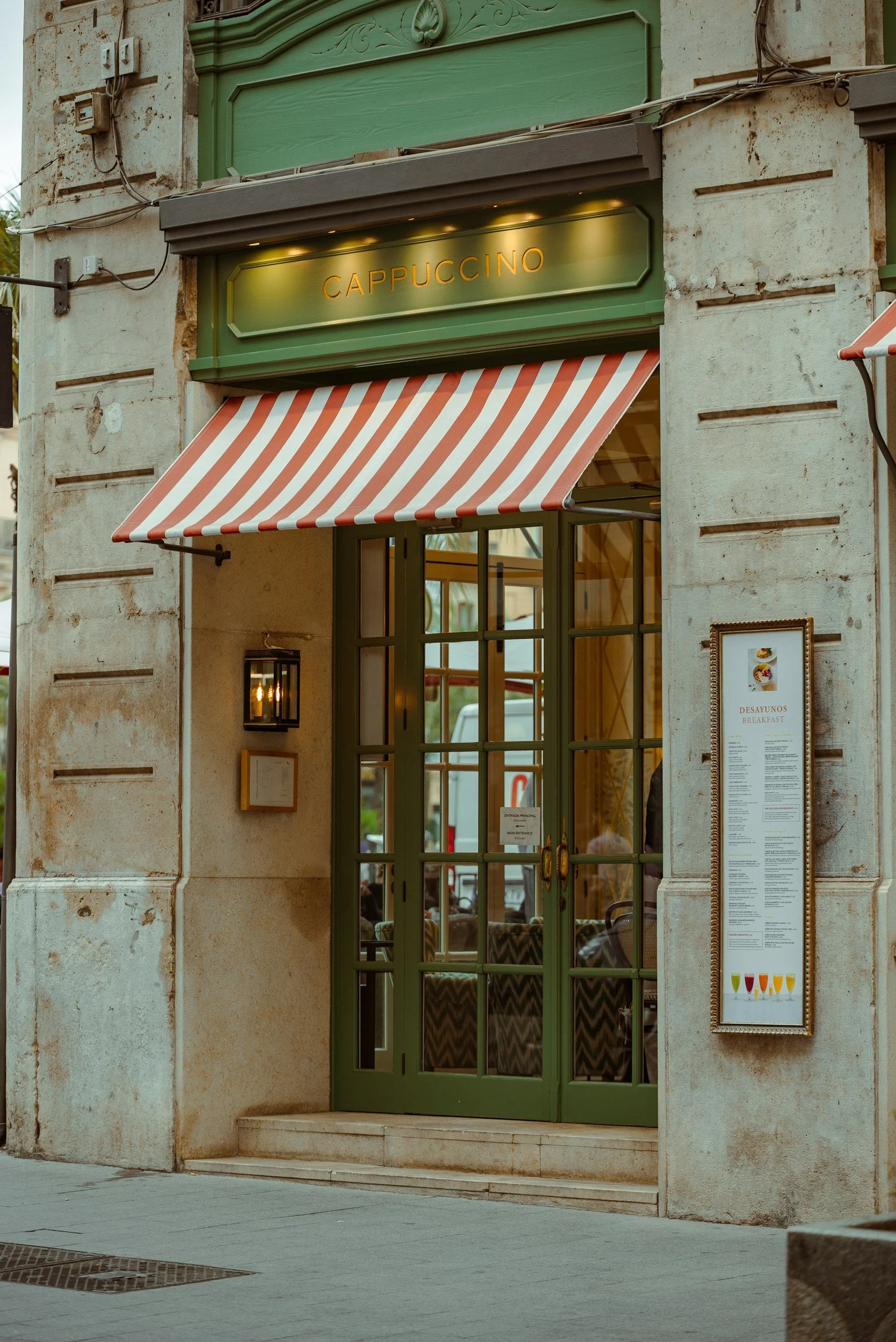
Around Ruzafa, that feels completely normal. You see it everywhere around Carrer de Cadis and the streets behind the market. Someone reading outside Bluebell. Somebody else working from a corner table at Ubik. A group of retirees arguing about football outside a bar while market traders wheel boxes of fruit across the street.
Ubik is probably the place I ended up staying longest. Part bookshop, part café, part neighbourhood living room. The bookshelves take up most of the walls, people drift in and out throughout the day, and nobody seems particularly interested in how long you've been sitting there. Even if you're not buying a book, it's worth wandering through the shelves before ordering a coffee.
Over in El Carmen, cafés feel completely different. Smaller spaces, older buildings, tables squeezed into corners that probably weren't designed for tables in the first place. At Café de las Horas, the room is so dark compared to the street outside that it takes a moment for your eyes to adjust. Heavy curtains, chandeliers, old paintings, people speaking quietly. It feels slightly odd in the best possible way.
One afternoon I sat near Mercado de Colón and realised I'd been there for almost two hours without noticing. Not because anything exciting was happening. Just people coming and going. Someone stopping for horchata. Friends meeting after work. A woman reading a newspaper from beginning to end. The sort of everyday things that become surprisingly interesting when you're travelling alone.
That's probably what I like most about Valencia. It doesn't constantly demand your attention.
You can spend an hour wandering around the city, find a café that looks inviting, sit down for a while, and feel like you're exactly where you're supposed to be.
If the café part of Valencia ends up being your favourite, Seville has a similar thing going on - just a bit slower and more local once you get off the main streets.
Places to slow down when you've had enough of walking
I don't think I've ever spent a day in Valencia without ending up in the Turia Gardens at some point.
Sometimes on purpose. Sometimes because I was trying to get somewhere else and got distracted halfway there.
The funny thing is that it never really feels like a park you're visiting. It feels more like a giant green shortcut that everyone in Valencia happens to use. People cycle through it on their way to work. Someone is walking three dogs at once. Teenagers are lying in the grass doing absolutely nothing. Runners appear out of nowhere and disappear again.
If you want a quieter stretch, keep moving once you reach Gulliver. Most people stop there, especially families. A little further along, around Palau de la Música and Pont de la Mar, things start calming down. There are orange trees, long stretches of grass, shaded benches, and enough space that nobody notices if you sit there for an hour.
One afternoon I bought a pastry in Ruzafa, walked into the gardens planning to sit down for ten minutes, and somehow ended up staying most of the afternoon. That's Valencia in general, to be honest.
Parc de Capçalera has a completely different feel. It's at the far end of the old riverbed and most visitors never make it out there. The lake is the first thing you notice. Then the quiet. People fishing. Someone reading under a tree. A couple sharing a takeaway coffee overlooking the water. It feels less like a city park and more like somewhere people from Valencia actually come when they want a break from Valencia.
And then there's Albufera…. The first time I went, I couldn't believe it was so close to the city!
Half an hour earlier you're surrounded by cafés, scooters, apartment blocks and traffic lights. Then suddenly you're standing beside a lagoon watching herons pick their way through the reeds.
Most people go at sunset, which is beautiful, but I actually like late morning. Around El Palmar you'll see locals sitting outside bars with coffee, cyclists passing through the village, fishermen working near the canals, and hardly any rush to do anything. The rice fields stretch out in every direction and the whole place feels much bigger than you'd expect from looking at a map.
If you're travelling alone, these are the places I'd keep coming back to. Not because there's a lot to do. Mostly because there isn't.
Not sure whether Valencia or Madrid is the better fit for a solo trip? Madrid in autumn breaks down what the city feels like once the summer heat and crowds begin to fade.
If you're torn between spring, summer, and autumn, this guide makes the decision much easier.
Wander through the old town without worrying about where you're going
The funny thing about Valencia's old town is that some of the nicest parts are usually the places you weren't actually trying to find.
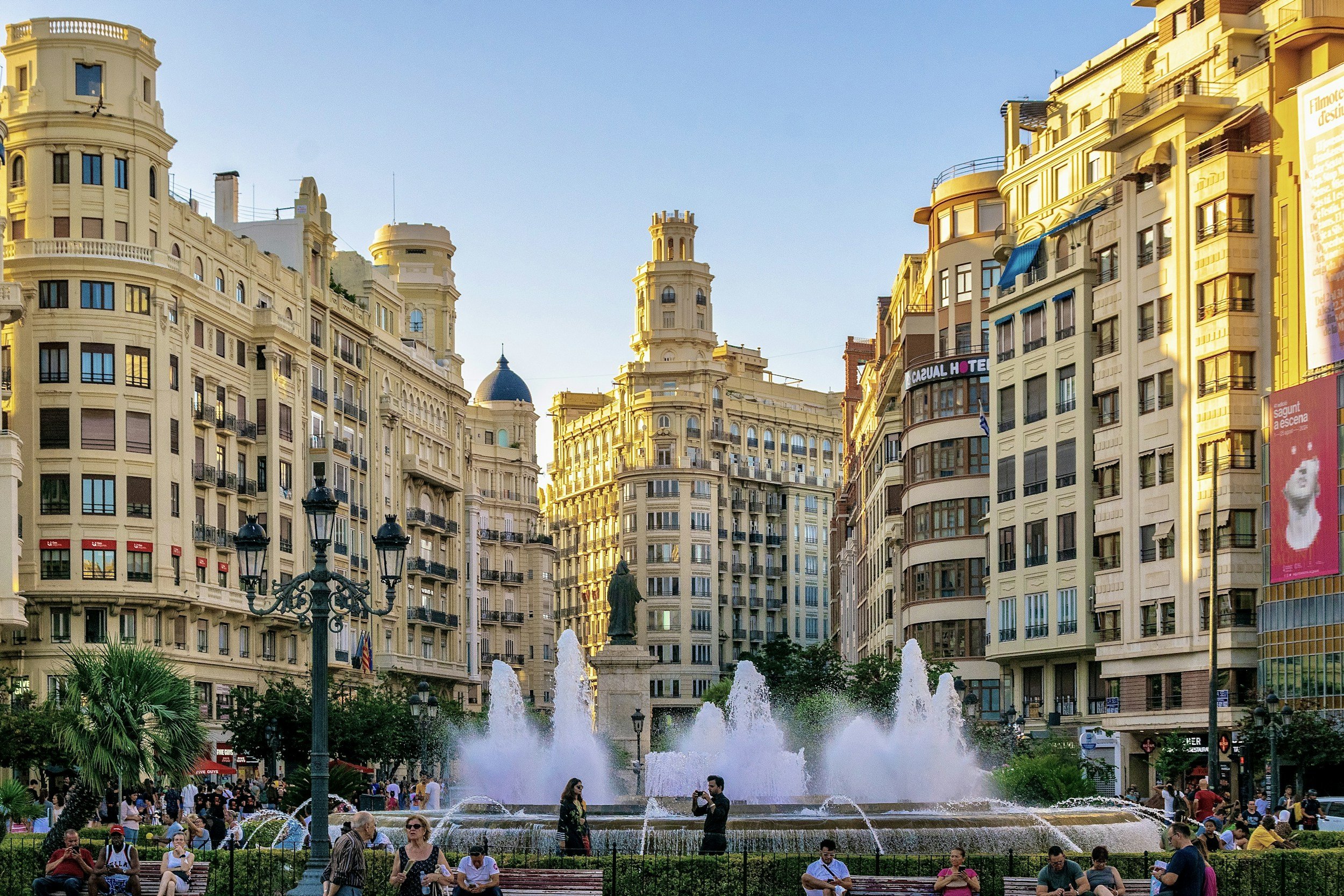
Most people arrive at Plaça de la Verge first, and for a few minutes it's easy to see why. The cathedral dominates one side of the square, people gather around the fountain in the middle, and cafés spill out across the paving stones. It's worth seeing, but I always find myself moving on fairly quickly because the streets become much more interesting once you leave the obvious landmarks behind.
Usually that happens without much effort. You start walking along Carrer dels Cavallers, notice a side street that looks quieter, turn down it out of curiosity, and suddenly everything changes. The crowds thin out, balconies lean over narrow lanes, laundry hangs above your head, and the pace feels completely different from the squares everyone else is photographing.
I always end up spending most of my time around Carrer de Baix, Carrer de Dalt, and the streets near Portal de la Valldigna because they still feel like places where everyday life is happening alongside everything visitors come to see. One doorway might open into a small artist's studio, the next into a workshop that's been there for years, and a few steps later you'll find a wall covered in layers of street art that looks different every time you walk past it.
What I like about El Carmen is that it rewards curiosity more than planning. Some of the nicest corners aren't famous at all. They're the little squares where neighbours are chatting outside their front doors, the tiny grocery stores with fruit stacked outside, the old tiled entrances that make you stop for a second even though you have no idea what's behind them.
After a while I usually stop checking the map altogether because getting slightly lost tends to improve the experience rather than ruin it. The old town isn't particularly large, and even when you have no idea exactly where you are, you never stay lost for very long.
At some point you'll probably find yourself back around Plaça del Tossal. That seems to happen to everyone eventually. It's one of those squares where people actually stay rather than passing through. Friends meet for a drink, someone sits reading outside a café, waiters move between tables carrying plates of tapas, and the whole place feels relaxed in a way that's becoming harder to find in many European city centres.
Late afternoon is when I like this part of Valencia most. The heat starts easing off, people reappear after spending the middle of the day indoors, and the light catches the old stone buildings in a completely different way. Nothing dramatic happens, but the neighbourhood feels more comfortable somehow, and it's the time when wandering without a plan makes the most sense.


Keep thinking of Spain? If you usually like wandering Spanish markets but don’t want the obvious ones, these are the ones that are actually enjoyable to spend time in.
Where to stay in Valencia if you're travelling on your own
Where you stay in Valencia matters more than you might expect, not because the city is difficult to get around, but because some neighbourhoods simply make everyday things easier.
A lot of first-time visitors automatically look at the old town. It's where many of the main sights are, and on a map it seems like the obvious choice. The problem is that Ciutat Vella can vary a lot from one street to the next. One apartment might be tucked away beside a quiet square, while another sits above a busy street with restaurants and bars that stay active well into the evening.
If you're travelling on your own, I usually think Ruzafa works better. You walk outside in the morning and everything you need is already there. Bakeries opening for the day, people picking up coffee on their way to work, Mercado de Ruzafa filling up, and plenty of places where it's completely normal to sit by yourself for a while.
The streets around Carrer de Sueca, Carrer de Cadis and Literat Azorín are particularly easy to base yourself in because you don't need to organise your day around getting somewhere. You can grab breakfast, browse a bookshop, stop at the market, and head into the rest of the city whenever you feel like it.
One Shot Ruzafa is a good option if you want to stay right in the neighbourhood. Soho Boutique Turia is another one worth looking at, especially if you like the idea of being able to walk equally easily to Ruzafa, Mercado de Colón, the Turia Gardens, and the old town.
If you prefer somewhere quieter, Pla del Remei is probably the area I'd look at next. The streets are wider, there are fewer visitors around, and in the evenings it feels noticeably calmer than both Ruzafa and parts of the old town.
Honestly, I wouldn't choose accommodation based on being closest to a particular attraction. Valencia is compact enough that you'll end up walking between neighbourhoods anyway. I'd choose somewhere that has a café you'll actually want to return to in the morning and a few local places nearby for the evenings. That's usually what makes a stay feel easy.
A few things that make Valencia easier to enjoy on your own
One mistake I see people make in Valencia is trying to fit too much into each day.
The city isn't particularly big, but it works better when you give yourself time to stay somewhere a little longer than planned. You stop for a coffee in Ruzafa, spend longer there than expected, wander through the Turia Gardens afterwards, and suddenly half the day has gone. That's usually when Valencia feels at its best.
I also wouldn't treat places like the City of Arts and Sciences as separate outings. It's much nicer when it becomes part of a longer walk. Start somewhere around Mercado de Colón, wander through the Turia Gardens, stop when something catches your attention, and eventually make your way down to the futuristic white buildings at the far end. The city flows together surprisingly well when you stop trying to jump between attractions.
The same goes for El Carmen. A lot of visitors pop in, look around for half an hour, then leave again. I think it works better when you let yourself get slightly distracted. Turn down the street that looks interesting. Stop at the little gallery. Sit down in Plaça del Tossal for a drink. Some of the nicest parts of the neighbourhood are the ones you weren't looking for.
One practical thing worth knowing is that Valencia runs later than many people expect. Lunch often doesn't really get going until around two o'clock, and restaurants that seem empty at 13:00 can be completely full an hour later. I actually like eating a little earlier because you get the place almost to yourself before the local lunchtime rush begins.
If you're staying in Ruzafa, don't be surprised if you spend more time in cafés than planned. People linger here. You'll see someone working on a laptop for most of the morning, another person reading a book over a second coffee, and nobody seems particularly concerned about how long anyone stays.
And if you have an extra morning free, head to the beach early. Most people arrive later in the day, but around Playa de la Malvarrosa the atmosphere is completely different before lunchtime. Locals are out walking, a few swimmers are already in the water, beach bars are setting up for the day, and it feels much more like part of the city rather than a tourist attraction.
Honestly, Valencia is one of the easiest places I've found for solo travel because you don't need to constantly organise yourself. Most days seem to work out perfectly well with a rough idea and a comfortable pair of shoes.

If you like Valencia but wish parts of it felt a bit quieter, this piece about the city is worth reading - it shows you where people don’t usually go in the city.
And if you’re leaning toward wine regions but don’t want anything too intense, Bordeaux is a good next step, especially if you liked the slower parts of Valencia.
FAQ: Valencia solo travel
Is Valencia worth visiting alone?
Absolutely. Valencia is one of the easiest cities in Spain to enjoy on your own because there isn't much pressure to constantly be sightseeing. You can spend the morning wandering around Ruzafa, stop at Mercado Central for lunch, walk through the Turia Gardens, and finish the day by the sea without feeling like you need a detailed itinerary. It's a city that suits slower travel surprisingly well.
Is Valencia or Barcelona better for solo travellers?
It depends on what you're looking for. Barcelona has more famous sights and a bigger international scene, but it can also feel busier and more overwhelming. Valencia is easier to navigate, generally less crowded, and often feels more relaxed, especially if you enjoy spending time in cafés, markets, parks, and neighbourhoods rather than rushing between attractions.
Where should a solo traveller stay in Valencia?
Ruzafa is usually the easiest neighbourhood to settle into. You'll find cafés, bakeries, wine bars, bookshops, and Mercado de Ruzafa all within walking distance. Pla del Remei is a good alternative if you'd prefer somewhere quieter, while the old town works best if being close to historic sights is your main priority.
Is Valencia safe for solo female travellers?
Valencia is generally considered one of Spain's safer cities for solo travel. Areas such as Ruzafa, Pla del Remei, El Carmen, and the city centre are busy and well-lit, although it's always sensible to stay aware of your surroundings at night, just as you would in any large city.
How many days do you need in Valencia?
Three to four days is usually enough to experience the city without rushing. That gives you time for the old town, Ruzafa, the City of Arts and Sciences, the Turia Gardens, the beach, and perhaps a half-day trip to Albufera.
What are the best things to do alone in Valencia?
Some of the easiest activities to enjoy alone include wandering through El Carmen, visiting IVAM or Centre del Carme, cycling through the Turia Gardens, spending time in Mercado Central, browsing the bookshops and cafés of Ruzafa, or taking the bus out to Albufera for a few hours by the lagoon.
Is Valencia expensive for solo travellers?
Compared with Barcelona, Madrid, Amsterdam, or Paris, Valencia is usually a more affordable city. Accommodation, public transport, and eating out tend to be more reasonably priced, although costs rise during major events and festivals such as Las Fallas.
When is the best time to visit Valencia?
Spring and autumn are usually the most comfortable seasons. March, April, May, October, and November offer warm weather, plenty of sunshine, and fewer visitors than the peak summer months. If you're hoping to spend a lot of time walking, these months are generally easier than July and August.
Can you visit Valencia without a car?
Yes. Most visitors don't need one. The city is easy to explore on foot, the metro connects the airport with the centre, and buses make it simple to reach places like Albufera and the beaches. In fact, having a car in the city centre is often more inconvenient than helpful.
Is Valencia good for creative travellers?
One reason many creative travellers enjoy Valencia is the variety. On the same day you can visit a contemporary gallery, spend an hour sketching or photographing the City of Arts and Sciences, browse independent bookshops in Ruzafa, and end the afternoon sitting beside the sea. The city offers plenty of stimulation without feeling overwhelming.