
These are the places I'd choose for a solo summer trip
You arrive just before lunch, drop your bag, and walk out into the main street expecting the usual summer setup. Instead, you pass two cafés with empty tables, choose one without checking reviews, and sit down straight away. Lunch is served until around 14:00, not rushed, not fully booked, and no one is waiting for your table. After that, most places close for a few hours, and the streets quiet down instead of filling up.
That’s the kind of place this guide focuses on.
Traveling solo in Europe in summer usually means working around timing, booking ahead, and adjusting your day to avoid the busiest hours. In these towns, you don’t need to do that in the same way. You can walk through the center at midday without slowing down for crowds, find a place to eat without planning it in advance, and move between a few stops without everything feeling connected to a schedule.
What makes the difference isn’t that they’re hard to reach. Most are accessible by regional train or a short drive from larger cities. It’s that they sit just outside the main routes, which keeps the pace manageable even in July and August.
The destinations below are places where you can base yourself for a few days, walk out in the morning without a fixed plan, and let the day build around a few simple things, coffee, a short walk, a long lunch, rather than trying to fit everything in.
Not every village works when you’re on your own, and once you notice the difference, this small villages for solo travel list suddenly becomes very useful.
Tarragona, Spain – ancient ruins and quiet Mediterranean vibes
Tucked away on the Catalonian coast, Tarragona offers an ideal blend of history, culture, and relaxation that makes it a perfect destination for solo travelers seeking something a bit quieter than Barcelona. While the latter can be filled with tourists and crowds, Tarragona offers a slower pace, with far fewer people, giving you the chance to truly soak in its rich heritage and enjoy the beautiful Mediterranean coast without feeling rushed.
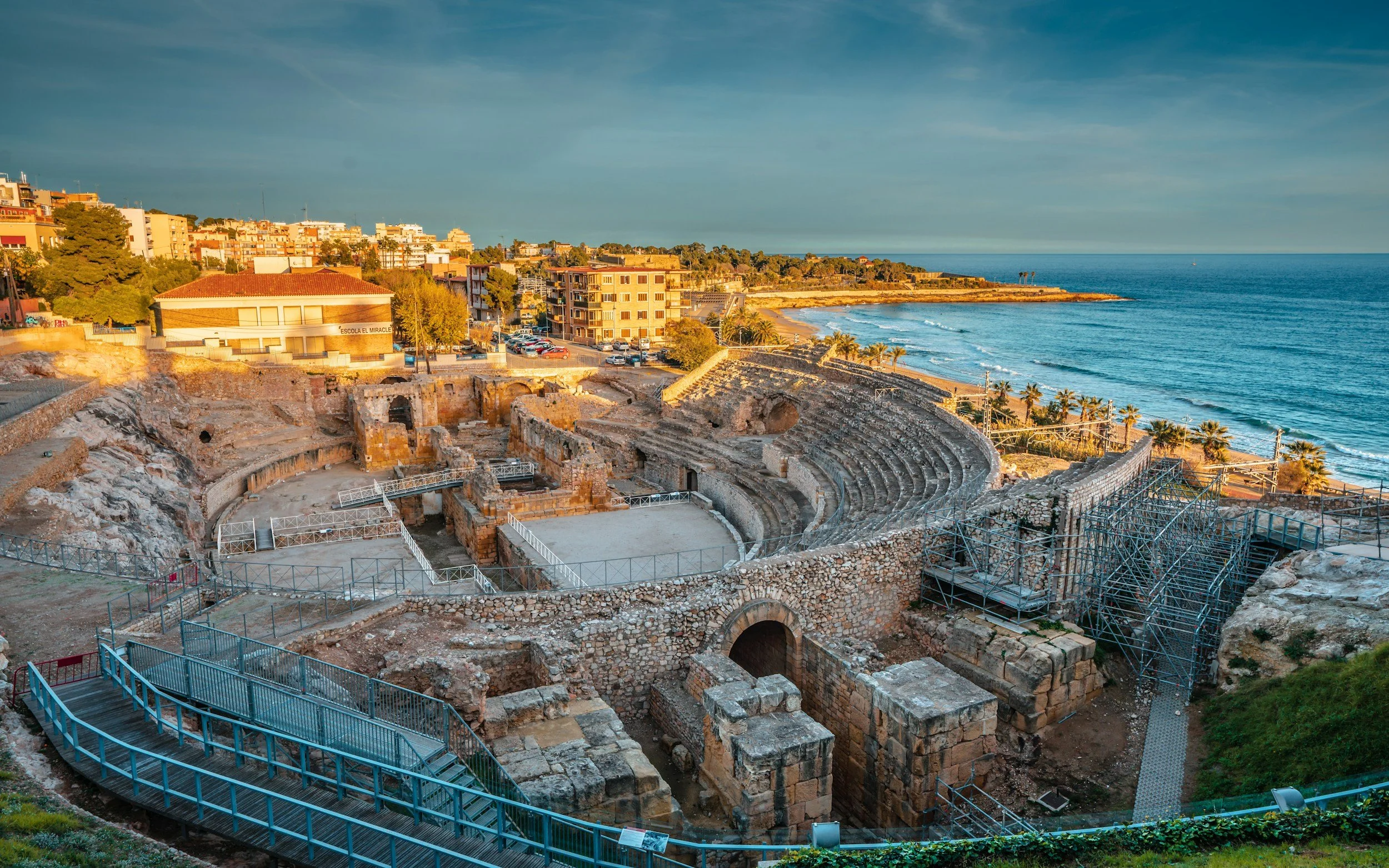
Did you know? Tarragona was once the capital of Roman Hispania and is home to some of the most impressive ancient ruins in Europe. The Roman Amphitheatre, located right by the sea, offers a peaceful spot to reflect and enjoy the surroundings without the large crowds typically found in more famous Roman sites. The amphitheater, with its sweeping views of the Mediterranean, feels like a place to step back in time, and the sense of tranquility here is perfect for solo exploration.
The medieval old town of Tarragona is a maze of narrow streets, charming plazas, and colorful buildings. The Tarragona Cathedral, with its stunning Romanesque and Gothic architecture, is a peaceful place for reflection. If you love history, the National Archaeological Museum is another gem to visit, offering a deep dive into Tarragona’s ancient past with a quieter, less commercialized vibe than other museums in Spain.
We love Tarragona so much we’ve written a full guide. Read the full article here.
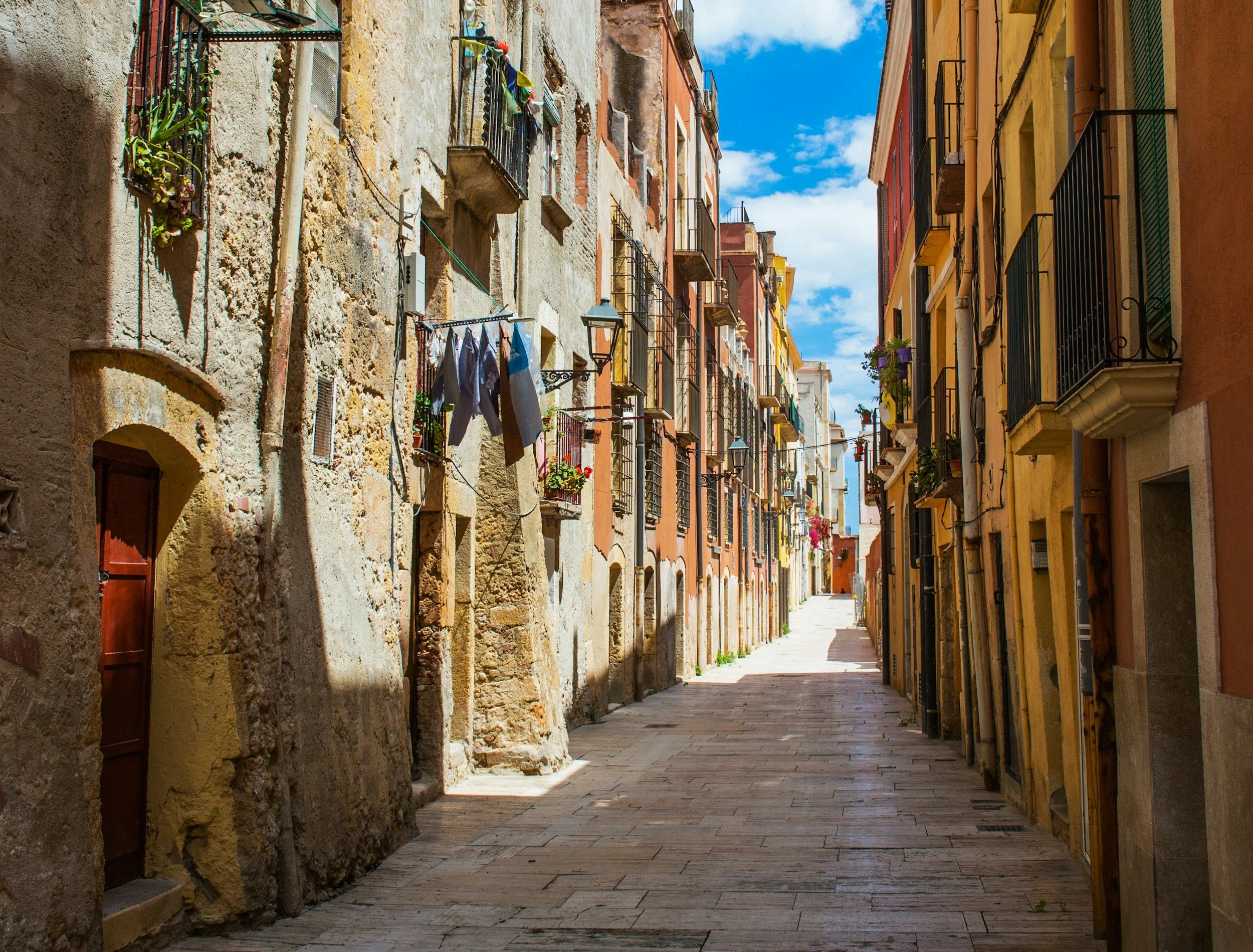
Tarragona is perfect for those who want to explore at their own pace. Wander through the cobbled streets of the Old Quarter, take a stroll along the Mediterranean Balcony for panoramic views of the coastline, or simply sit on a bench in Plaza del Rei and people-watch while enjoying a cold drink. It’s the kind of destination where you can truly slow down and find hidden moments of joy in the details. The city is so small that everything is within walking distance, making it ideal for those traveling solo. You’ll never feel overwhelmed by the crowds, but you’ll always find something new around every corner.
A must-do while in Tarragona is to visit the Mercat Central de Tarragona (Central Market), a vibrant and authentic local market filled with fresh produce, artisanal cheeses, meats, and spices. The market is an excellent spot for solo travelers to chat with local vendors and pick up some Spanish treats, like turrón (a traditional nougat) or jamón ibérico (cured ham). You’ll also find wonderful street food vendors here offering everything from bocadillos (sandwiches) to empanadas. The market's lively atmosphere is a perfect way to immerse yourself in the local culture while savoring traditional flavors.
If you’re someone who enjoys a good cup of coffee, make sure to stop by CReeA Café, a cozy little spot in the heart of Tarragona. This artisan café serves up delicious, locally roasted coffee in a relaxed, creative atmosphere. Whether you're in the mood for a perfectly brewed espresso or a smooth matcha latte, CReeA has you covered. It's the kind of place where you can settle into a comfy chair, sip your drink, and enjoy a quiet moment, away from the crowds. It’s perfect for solo travelers looking to slow down, take a break, and people watch.
Tarragona is home to several beautiful beaches that are much quieter than the ones you'll find in Barcelona. Platja del Miracle is located right next to the Roman amphitheater and is another nice spot. Or, head to Platja de la Arrabassada, a slightly more secluded beach just outside the city center.
Where to stay in Tarragona
If you stay at H10 Imperial Tarraco, what you notice first isn’t the design, it’s the position. You’re right by the Passeig de les Palmeres, with a direct view over the sea, but also a short walk into the old town without needing to think about transport or timing.
From the hotel, it takes about 5–10 minutes to walk into the historic center, depending on which route you take. You can head straight up toward the cathedral area or stay closer to the edge near the Roman walls and viewpoints. That makes it easy to go out for a couple of hours, come back, and head out again later without committing to a full day.
The rooftop terrace is where most people end up in the evening, not because it’s a “must-do,” but because it’s simply there and easy. You don’t need to plan anything, you just go up, find a spot, and stay for a while. It’s one of the few places where you get a clear view over both the coastline and the lower part of the city without moving around.
The pool area is more of a midday break than a destination. If you’ve been walking through the old town, especially around the Roman amphitheatre and the streets leading up toward Plaça del Fòrum, coming back for an hour in the afternoon makes more sense than trying to stay out all day in the heat.
What works well here is that you’re not fully inside the busiest part of Tarragona, but you’re close enough that it doesn’t feel separate. In the evening, you can walk back from dinner rather than arranging anything, which makes a bigger difference than expected when you’re traveling alone.
It’s not the only place to stay, but if you want something that keeps the day simple, walkable, and easy to reset between outings, this location does that without needing much planning.
Cities can still work surprisingly well on your own, especially once you see how something like Madrid in autumn actually plays out day to day.
For an unforgettable view, take a short walk up to the Cascada Monumental (Monumental Waterfall) in Parc de la Ciutat, a beautifully landscaped park.
There’s a moment on solo trips where it stops feeling like “travel” and starts feeling more personal, which is exactly what this solo moons guide taps into.
Zadar, Croatia – sunsets, seaside strolls, and quiet corners
Zadar doesn’t try to compete with Dubrovnik, and that’s exactly what makes it so special. It’s a quiet gem on Croatia’s Dalmatian coast, where the history is rich, the sea is always close by, and there’s plenty of space to just be. This is the kind of place where you can slow down, get lost in the quiet streets, and feel the pulse of the city without the overwhelming rush of tourists.
Zadar has this way of making you feel like you have the city to yourself. The mix of ancient Roman ruins, medieval charm, and a laid-back seaside vibe makes it the perfect solo destination. You can spend the day wandering through the narrow streets of the old town, exploring the Roman Forum without anyone rushing you along, or sitting by St. Donatus Church, where the calm of the ancient stones feels like it’s pulling you into the moment.
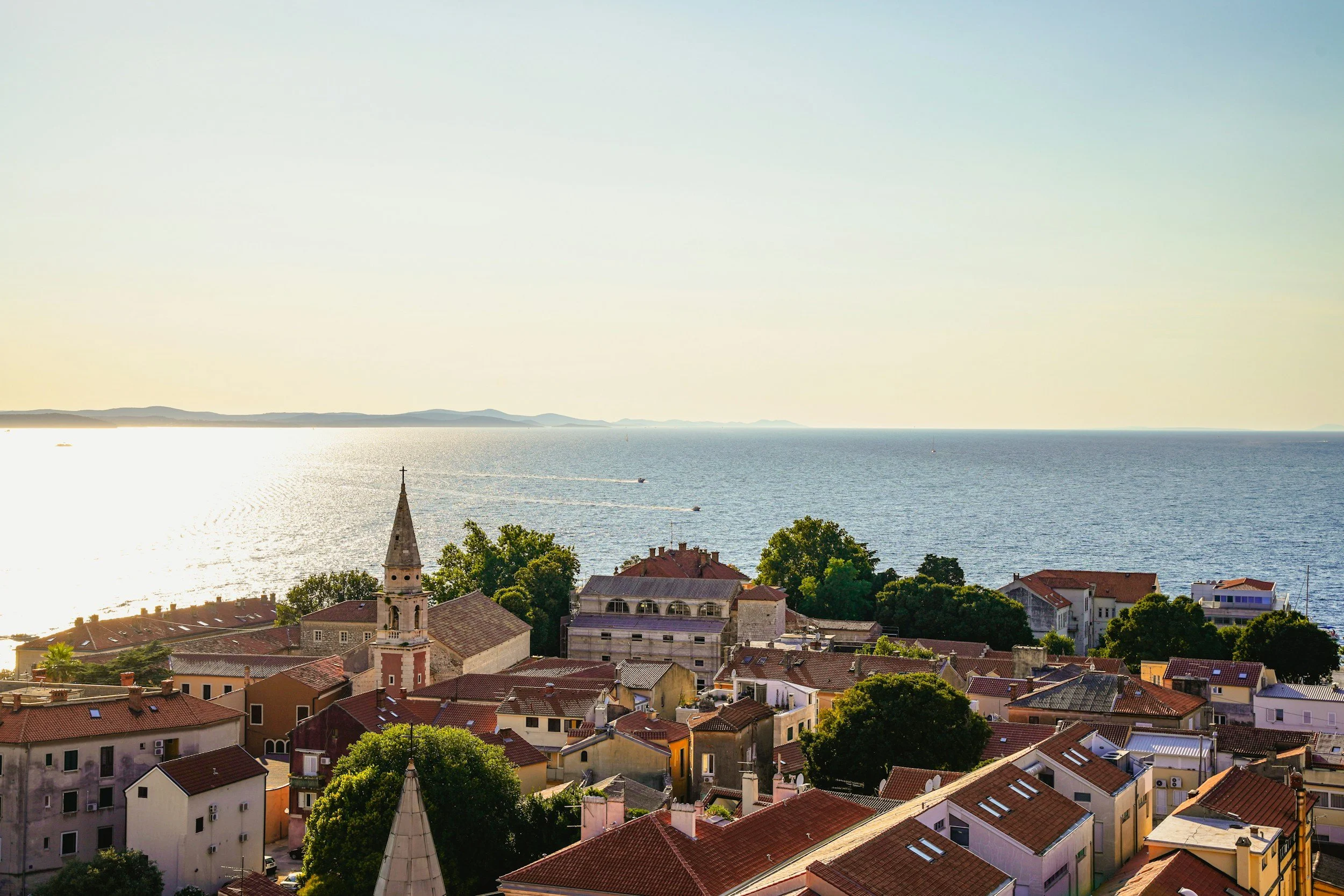
St Donatus Church
The best part? You can take your time. A solo wander along the Riva Promenade is the kind of thing that turns into an hour without you realizing it. And then, of course, there’s the Sea Organ - a quirky yet peaceful art installation that plays music from the waves!
If you want to get away from it all and truly connect with nature, take a boat trip to Kornati Islands National Park. It’s one of those places that feels completely untouched, where you can drop anchor on a quiet beach, swim in crystal-clear waters, or simply enjoy the silence. The islands are uninhabited, making it the perfect escape for solo travelers who want to recharge and truly disconnect.
If you’re based in Zadar, Veli Iž works well as a slower day trip, but it takes a bit of intention to get there. Ferries leave from Zadar’s main port and take around 1 hour and 15 minutes, usually once or twice a day depending on the season, so you need to plan around the schedule rather than treating it as a spontaneous trip.
When you arrive, you step straight into a small harbour with a handful of boats, a few houses, and very little else. The village itself is compact, with narrow lanes that lead away from the water, and within a few minutes you’re either walking along the shoreline or heading slightly uphill toward quieter paths. There aren’t marked routes or “things to see” in the usual sense, so you end up walking until you find a place that feels right to stop.
Swimming spots are scattered rather than organised. You’ll find flat rocks along the edge of the island or small clearings where people leave their towels, but nothing set up with facilities or beach bars. Bringing water and something to eat makes a difference, especially outside peak summer when options are limited.
Back in Zadar, if you want somewhere quieter than the main streets of the old town, Art Kavana sits just outside the busier part near the edge of the historic walls. It’s the kind of place you end up staying longer than planned because there’s no pressure to move on. You can sit with a coffee or something simple to eat and watch people passing through rather than feeling like you’re in the middle of it.
It works best as a pause rather than a destination. After walking through the old town, especially around the Roman Forum and the waterfront, stepping slightly away from that and sitting here for a while changes the pace of the day without needing to go far.
Food becomes a bigger part of the experience when you slow down like this, which is exactly what comes through in this Istria food journey.
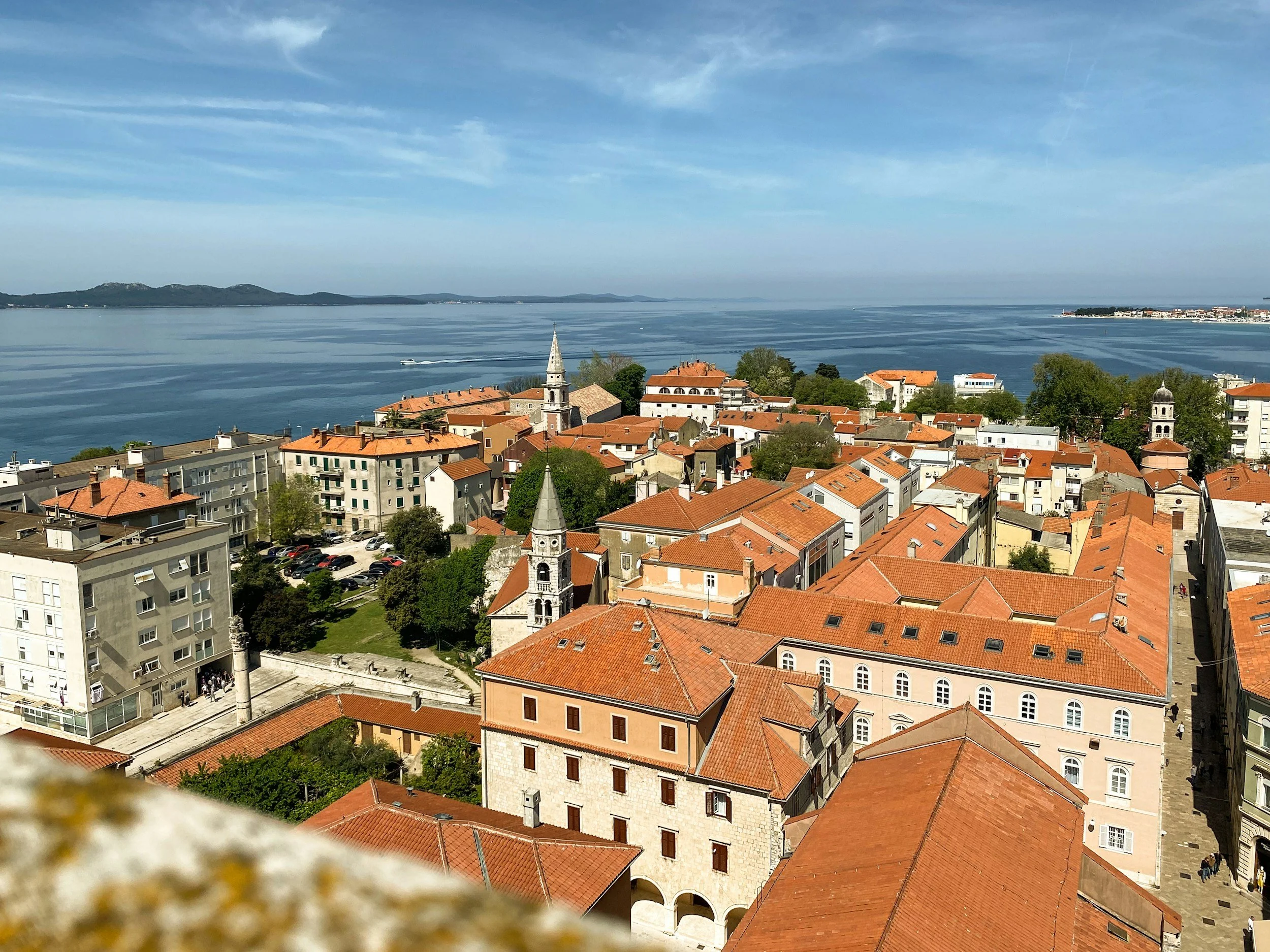
Art Kavana
Kotor, Montenegro – peaceful fjords, hidden streets, and endless views
Kotor makes more sense once you’re inside the old town rather than when you first arrive. From the road along the bay, it looks compact and easy to understand, but once you walk through one of the stone gates, usually near the Sea Gate, it becomes a network of narrow passages where you lose any sense of direction within a few minutes.
The layout is tighter than most places. Streets are narrow, uneven, and don’t follow a clear pattern, so instead of moving from one landmark to another, you end up circling back to the same squares without meaning to. Areas around St. Tryphon’s Cathedral and the smaller courtyards nearby tend to be quieter than the main entry points, especially if you move just a few streets away from the gate where most people come in.
What changes the experience most is timing. Between late morning and mid-afternoon, especially when cruise ships are in, the main streets fill quickly and movement slows down. Early morning, before around 09:00, or later in the evening after 17:00, the town feels completely different. You can walk through without stopping, find a table without waiting, and spend time in one place without needing to move on.
Kotor works well on your own because you don’t need to structure the day much. You go out, walk for a while, stop somewhere when it makes sense, and then continue. There isn’t a long list of things to “do,” and trying to create one usually makes it feel more crowded than it actually is.
If you want a clearer view over the town, the path up toward San Giovanni Fortress starts just behind the old town walls. It’s a steep climb with uneven steps, and in summer it gets hot quickly, so going early or later in the day makes a noticeable difference. Most people turn back partway up, which is enough to get a view over the rooftops and the bay without committing to the full climb.
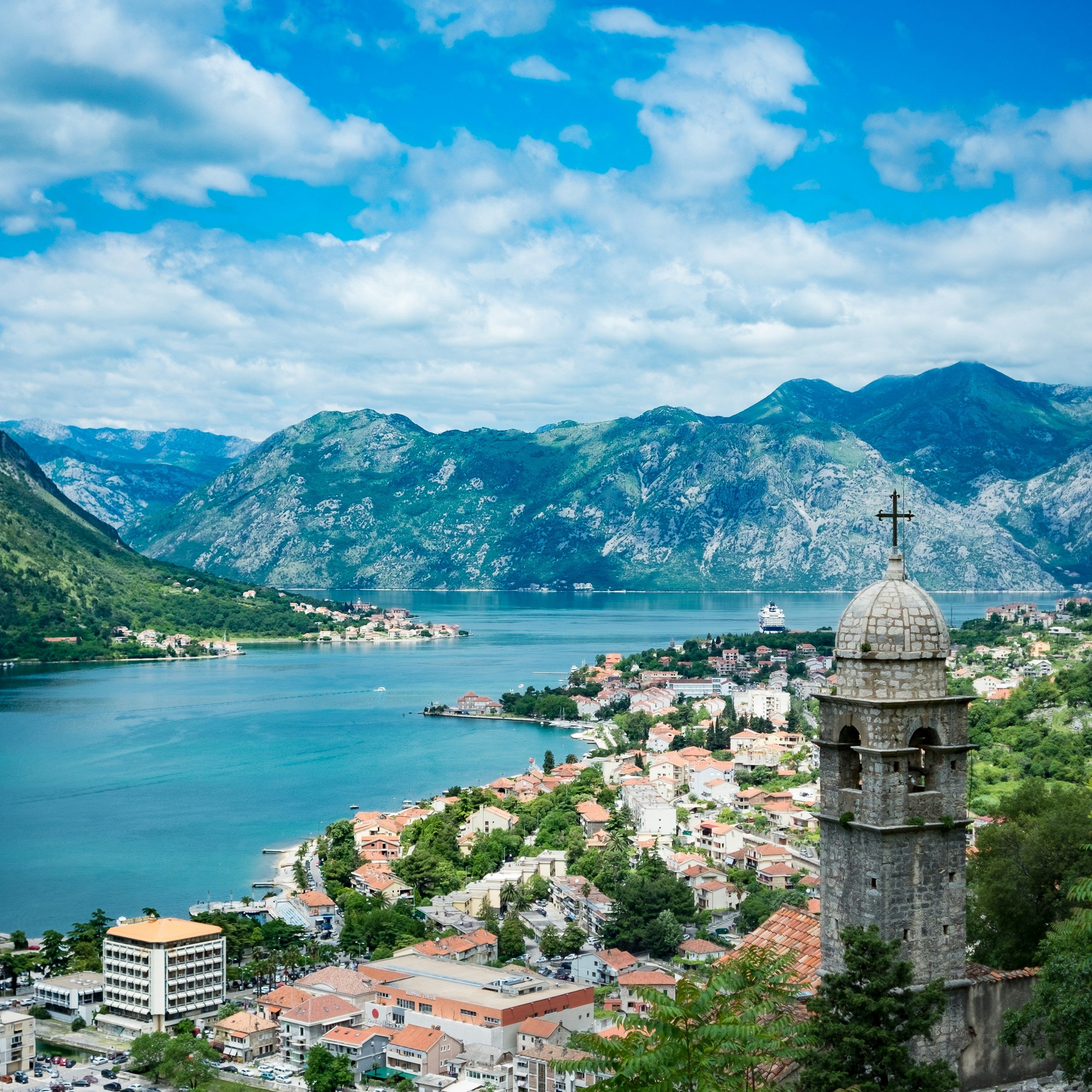
The climb up to San Giovanni Fortress is the main thing people come for, but it’s more demanding than it looks from below. The entrance is just behind the old town walls, and once you start, it’s a long series of uneven stone steps that keep going without much variation. In summer, it heats up quickly, especially after 09:00, so going early in the morning or later in the evening makes a big difference.
Most people don’t go all the way to the top, and you don’t need to. About halfway up, you already get a clear view over the rooftops of the old town and out across the bay, which is usually enough. Higher up, it opens out more, but the climb becomes steeper and more exposed. There are small sections of wall and old structures along the way, but you don’t stop for those, you stop because you need a break.
If you’d rather not do the climb, seeing Kotor from the water gives you a better sense of the setting than walking through the town itself. Boats leave from the harbour just outside the old town, near the Sea Gate, and even a short ride out into the bay changes the perspective completely. You see how the town sits right at the base of the mountains, with very little space between the water and the rock behind it.
The water is usually calm in the morning, and that’s when the views are clearest. Later in the day, it gets busier and less still, especially in peak season. It’s not a long activity, but it works well as a break from walking, especially if you’ve already spent a few hours inside the old town.
For a truly unique experience, take a boat out to Our Lady of the Rocks, a tiny island in the bay that is home to a beautiful church and an incredible sense of quiet…
If you want to leave the old town for dinner, Ćatovića Mlini sits about 20–25 minutes from Kotor, closer to Morinj, and it’s the kind of place you plan rather than stumble into. You drive along the bay, pass through a few smaller villages, and then turn off toward a quiet inlet where the restaurant is set back from the road.
The setting is more structured than most places nearby. Tables are spread out across a large garden area with water running through it, and you’re usually seated under trees rather than inside. It’s not somewhere you go for a quick meal. Dinner takes time, and that’s expected.
The menu leans heavily toward seafood, depending on what’s available that day, and it’s worth asking rather than just reading through it. Service is steady but not rushed, so you’re better off arriving earlier in the evening rather than late when everything has already slowed down.
Getting back requires a bit of planning. There’s no easy way to walk it, so you’ll either need a car or arrange a taxi in advance, especially later in the evening when fewer cars are moving along that stretch.
Where to Stay in Kotor:
If you stay at Hotel Astoria, the main thing is the location. It sits inside the old town, close to St. Tryphon’s Cathedral, which means you’re already within the part of Kotor most people are trying to reach during the day.
That changes how you move around. Early in the morning, you can step outside before the main gates get busy and walk through the streets while they’re still mostly empty. In the evening, once day visitors leave, you’re already there, so you don’t need to time your return or think about getting back in.
The rooms are on the smaller side, which is typical for buildings inside the old town, and you’ll notice the layout isn’t perfectly uniform. It’s part of staying in a converted historic building rather than a modern hotel. Sound can carry slightly at times, especially earlier in the evening, but it settles down later once things quieten.
What works well is how easy it is to break up the day. You can go out for an hour, come back, and head out again without planning it. That matters more in Kotor than having extra space, because the old town fills quickly during the day.
If you’re arriving by car, it’s worth knowing you can’t drive into the old town itself. You’ll park outside the walls and walk in with your luggage, which usually takes around 5–10 minutes depending on where you park.
It’s not the only option, but if you want to be inside the old town without needing to manage timing or transport, staying here makes everything simpler.
Paxos, Greece – a quiet island escape in the Ionian Sea
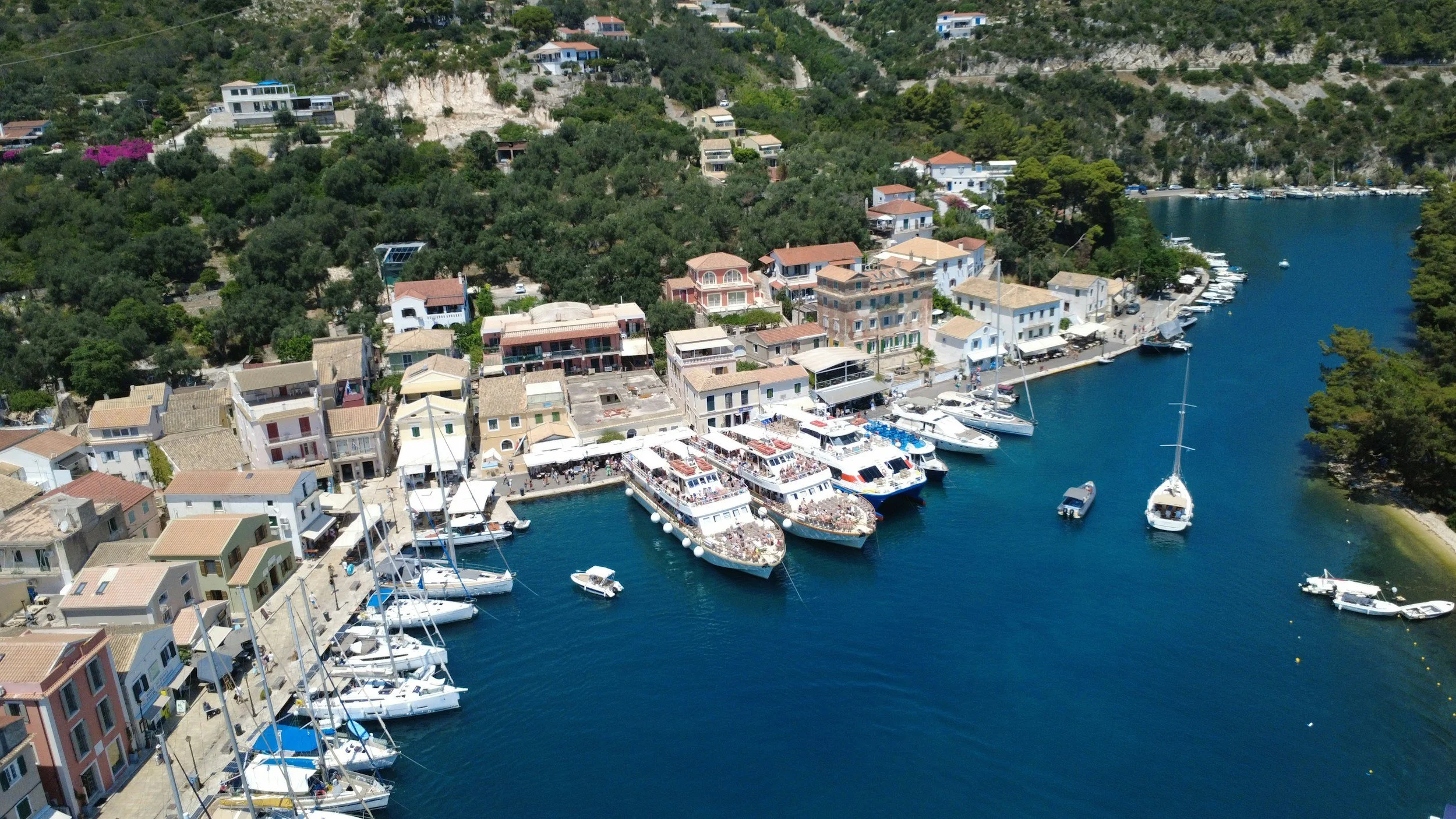
Paxos is the kind of place you only end up on if you’ve already decided to skip the obvious options, because getting there takes an extra step that most people don’t bother with. You fly into Corfu, make your way down to the port, usually Kerkyra or Lefkimmi depending on the route, and then take a ferry that runs just under an hour across to Gaios, which is where everything starts.
When you arrive in Gaios, it doesn’t feel like a typical island arrival. There’s no large port, no clear direction of movement, just a narrow waterfront lined with boats, a few cafés already half full, and people walking slowly along the edge rather than heading anywhere in particular. Within five minutes, you’ve crossed most of the center without meaning to, passing small bakeries, mini-markets, and a couple of side streets that lead slightly uphill away from the harbour.
The island itself is narrow and longer than it first appears, with one main road running roughly north to south, and smaller turns leading down toward coves and beaches that you won’t see until you’re almost there. Moving between places like Gaios, Loggos, and Lakka takes around 10–20 minutes by car, but the roads are tight, often with sharp bends and very little space to pull over, so even short distances feel more deliberate than they look on a map.
Gaios is where most evenings end up, whether you’re staying there or not. The harbour curves inward, with boats moored close to the edge, and restaurants set directly along the water. You’ll notice that people tend to circle the same short stretch more than once before sitting down, checking menus, moving on, then coming back again. It’s not about finding “the best place,” it’s just how the evening unfolds there.
Further north, Loggos is smaller and easier to miss if you’re not paying attention while driving through. There’s a short row of tavernas right by the water, a few fishing boats tied up along the edge, and not much beyond that. It’s the kind of place you stop for a couple of hours rather than a full day, especially earlier in the afternoon when it’s quieter.
Lakka feels slightly more enclosed because of the bay. The water there is clearer and calmer, and you’ll see people anchoring boats closer to shore. The road into Lakka winds down gradually, and once you’re there, everything sits around the curve of the bay, so you don’t move far before turning back.
Beaches on Paxos aren’t always obvious when you’re driving. Many of them, like Kipiadi Beach, sit below the road, and you’ll pass a small sign or a gravel turn-off, park, and then walk down a path for a few minutes before reaching the water. There’s usually no structure once you’re there, no organised setup, so you bring what you need and stay until you decide to leave.
What makes Paxos work for solo travel isn’t that there’s a lot to do, it’s that the island repeats itself in a manageable way. You return to the same harbour, drive the same road, pass the same turn-offs, and after a day or two you stop checking directions and just move between places without thinking about it too much.
The beaches here are small but perfect. Voutoumi Beach, with its soft, golden sand and crystal-clear waters, is a serene spot to spend the day. It’s quiet, so you won’t be fighting for a spot on the sand. Just bring your towel, a good book, and let the calm of the place work its magic. And if you’re craving more solitude, a boat ride to some of the other nearby beaches, which are only accessible by water, offers the kind of peaceful retreat you rarely find on the more touristy islands.
If you really want to experience Paxos in a unique way, rent a small boat for the day. The island’s coastline is dotted with hidden caves and secluded beaches that you can explore on your own.
If you want to get a feel for how Paxos actually works day to day, spend time in Gaios, because everything circles back there at some point. The harbour isn’t large, and you can walk from one end to the other in a few minutes, but you’ll notice quickly that people don’t just pass through once. They walk the same stretch along the water, turn back, stop somewhere briefly, then continue again without any fixed plan.
Most cafés sit directly along the harbour edge, with tables set close to the water rather than tucked away. Places like Café del Mar are less about being a destination and more about being there when you need a pause. You sit down, order something simple, and stay longer than expected because nothing is pushing you to leave. Boats move in and out slowly, locals stop for short conversations, and the whole area shifts without ever becoming busy in a way that feels overwhelming.
If you leave the harbour and head slightly inland, the streets narrow quickly and start to climb. You don’t go far before the shops thin out and you’re walking between houses instead, with small details you only notice when you slow down, like laundry lines across the street or open doors leading into shaded courtyards.
For something more active, walking through the olive groves works better than trying to “hike” in a structured way. Paths branch off from the main road in different directions, often unmarked, and you end up following them without a clear route rather than aiming for a specific viewpoint. The ground is uneven in places, with loose stones and dry earth, and the shade from the trees makes a noticeable difference in the heat. Every now and then the view opens up briefly toward the sea, but it’s not continuous, it comes in small sections, then disappears again as the path turns.
If you’re staying near Gaios, places like Paxos Beach Hotel sit just outside the centre, which makes the day easier to manage. You’re close enough to walk into town in around 10–15 minutes, but far enough that you’re not in the middle of the harbour activity all the time. That means you can go in for a few hours, come back in the afternoon, and head out again later without needing to think about transport.
The hotel itself is simple rather than designed to stand out. The pool area is used more in the middle of the day when the heat peaks, especially after walking or driving between beaches, and the evenings tend to shift back toward Gaios again, following the same pattern as everyone else on the island.
Orvieto, Italy – medieval streets and tranquil wine country
Orvieto makes more sense once you reach the top rather than when you first see it from a distance. You arrive at the base of the hill, usually by train, and then take the funicular up from Orvieto Scalo, which runs every few minutes. At the top, you switch to a small bus or walk the last stretch, and within a short time you’re inside the historic center without a clear transition point where it “begins.”
The streets aren’t laid out in a way that guides you. From Piazza della Repubblica, you move through narrow lanes that shift direction without much logic, and within a few minutes you’re either heading toward Piazza del Duomo without realising it or looping back toward where you started. It’s not a place where you follow a route, you just walk and adjust as you go.
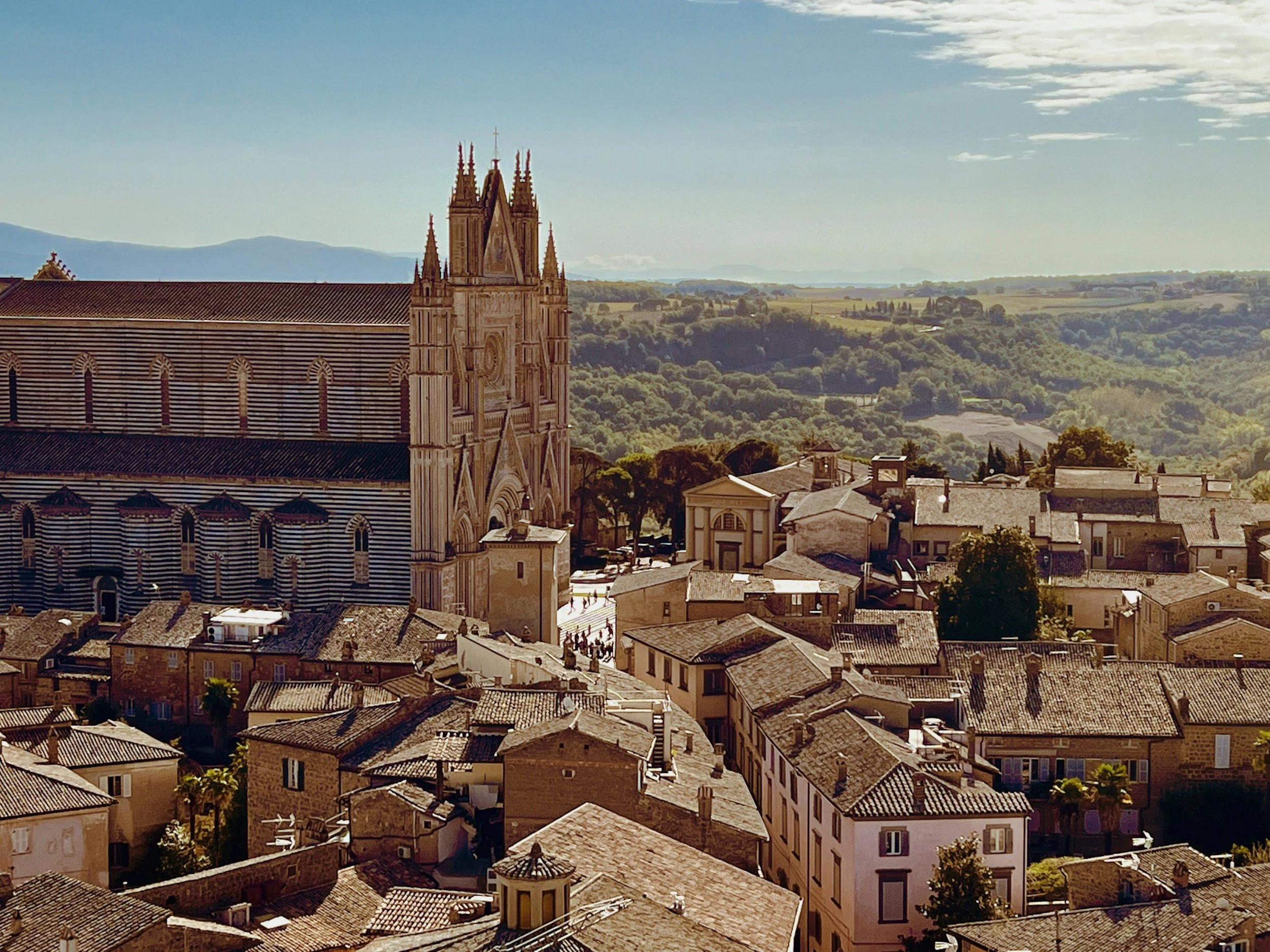
The cathedral is the one place that draws you in from a distance. You turn a corner and it’s suddenly there, set at the edge of Piazza del Duomo, with the façade facing directly into the open space. The square itself isn’t large, and most of the time people stay near the edges rather than crossing it quickly. You end up sitting for a while, not because there’s something specific to do, but because it’s one of the few open areas in a town that’s otherwise quite enclosed.
Away from that square, the streets feel more local than curated. You’ll pass small bakeries, wine shops, and places that look closed until you realise they’re open with the door slightly pulled in. Around areas like Via del Duomo and the smaller side streets leading off it, you find cafés and shops without needing to search for them, but they’re spaced out enough that you don’t move from one to the next automatically.
Orvieto Underground is one of the few things you need to plan slightly in advance, because you can’t just walk in. The entrance is near Piazza del Duomo, and tours run at set times throughout the day, usually in small groups. It’s worth checking the schedule earlier rather than assuming there will be space later, especially in the afternoon.
Once you go down, it’s not a large open space but a series of low, connected rooms carved into the rock beneath the town. You move through them with a guide, stopping in different sections while they explain how the spaces were used, from water storage to shelter and working areas. The ceilings are low in parts, the lighting is minimal, and the temperature stays cool regardless of the time of year.
The visit usually takes around 45 minutes to an hour, and it breaks up the day in a different way than walking above ground. After spending time in the narrow streets, going below the town shifts the pace slightly without taking up too much time.
It’s not something you repeat or spend hours on, but it adds context to how Orvieto is built, especially once you come back up and continue walking through the same streets with a better sense of what sits underneath them.
If you want to get out of the center for a few hours, walking just beyond the walls is easier than it looks on a map. From areas near Rocca Albornoziana or the edges of the town, paths and smaller roads lead down into the countryside fairly quickly, and within 10–15 minutes you’re no longer in the middle of Orvieto but on quieter routes between vineyards and olive groves.
These aren’t marked hiking trails in a strict sense. You’re often walking along narrow roads or gravel paths that connect farms and smaller properties rather than following a single defined route. The ground can be uneven in places, and you’ll notice the change immediately as you move from stone streets to dust and loose gravel. Views open up in sections rather than all at once, especially as you look back toward the rock plateau where the town sits above you.
It works best if you treat it as a short loop or an out-and-back walk rather than trying to cover distance. After an hour or two, you usually head back up the same way, which feels steeper on the return but manageable if you take it slowly.
Back in town, places like Enoteca della Rocca, just below Rocca Albornoziana, are easy to miss if you’re not looking for them. It sits slightly away from the busier streets, and people tend to drop in rather than plan a visit. Inside, it’s small and straightforward, with shelves of local wines and a few tables where you can sit and taste.
If you’re not sure what to order, it’s easier to ask than to decide on your own. Wines from the Orvieto Classico area are the default, and staff will usually suggest something based on how much time you have rather than pushing a full tasting. It’s the kind of stop that works in between other things, not something you need to build your day around, but one that adds context once you’ve spent time walking through the surrounding landscape.
Where to stay in Orvieto
If you stay at Hotel Duomo, the main thing you’re paying for is the position. It sits just off Piazza del Duomo, so you’re already in the part of town most people walk to during the day, without needing to think about how to get there.
That changes how you move around. Early in the morning, you can step outside before the square fills and see the cathedral when it’s still quiet. In the evening, once day visitors leave, you’re already there, so you don’t need to time your return or work around transport back up the hill.
The rooms are simple, which is typical for buildings in this part of Orvieto, and layouts aren’t always consistent from one to the next. It feels more like staying in a converted historic building than a standard hotel, and you notice that in small ways, like staircases, room sizes, and how sound carries slightly at certain times of day.
From the hotel, most places are within a few minutes’ walk. You can head out toward Via del Duomo, loop through smaller side streets, and come back again without planning a route. That makes it easy to break up the day, especially if you want to go out for an hour, return, and then head out again later.
If you’re arriving by train, you’ll come up via the funicular from Orvieto Scalo, then either walk or take the short bus ride into the center. The final stretch to the hotel is on foot, and since cars don’t move freely through the historic core, you’ll usually be pulling luggage through narrow streets for a few minutes.
There are places with more space or quieter surroundings just outside the center, but staying here keeps everything close and removes the need to think about timing, which matters more in Orvieto than having extra room.
Some places just hold that quiet atmosphere without trying too hard, and this Matera escape is a good example of what that feels like.
Moustiers-Sainte-Marie, France – a cliffside village in the Provence Alps
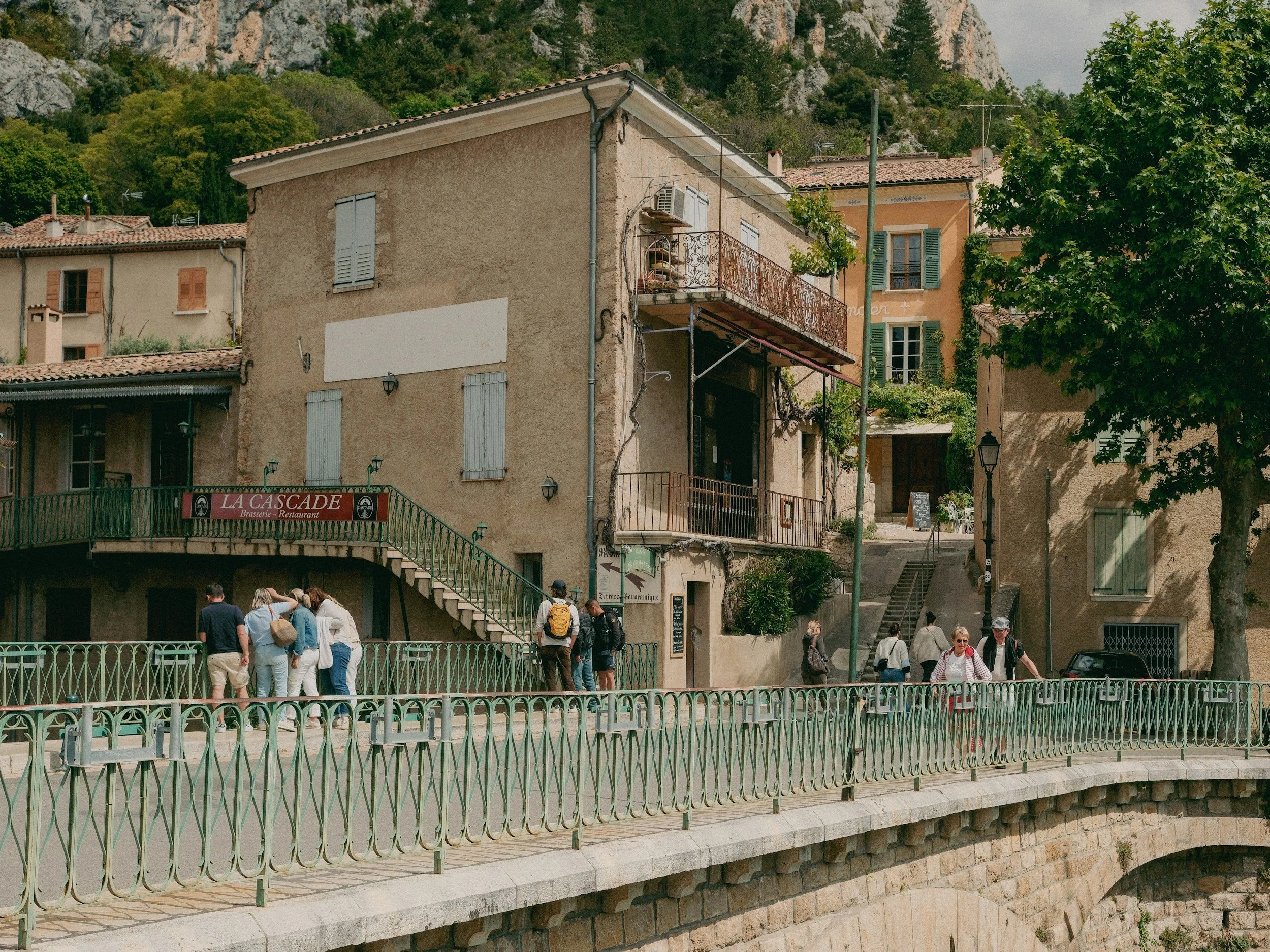
Moustiers-Sainte-Marie starts to make sense once you’ve left the car below the village and walked up past the first row of cafés and shops. You come in along Route de Castellane, cross the small bridge over the stream, and within a few minutes the space tightens, the sound of the water follows you up through the streets, and you’re already moving uphill without really deciding to.
The main path runs past small pottery shops and narrow passages that branch off in different directions, but most of them don’t lead anywhere in particular. You walk a short set of steps, reach a small terrace or a dead end, then turn back and try another one. Around the lower part of the village, near Église Notre-Dame de l’Assomption, it’s slightly more open, but once you go a bit higher, the streets narrow again and you start noticing how close everything is built into the rock.
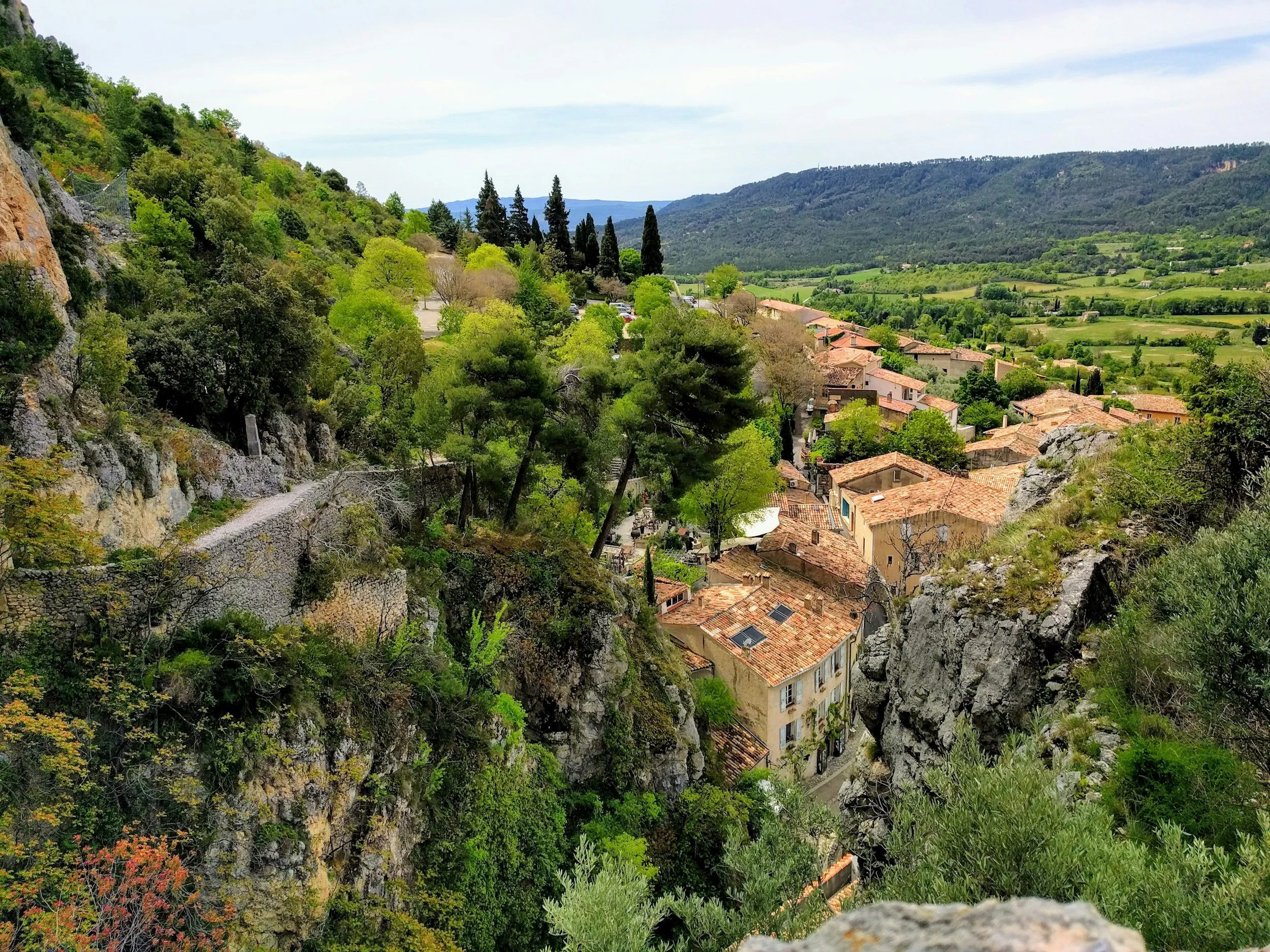
What you don’t really see from below is how the village sits between the cliffs. If you stop and look up, especially from the central stretch near the stream, you’ll see the chain with the star suspended high between the two sides. It’s easy to miss at first, but once you notice it, you start seeing it from different angles as you move through the streets.
Timing changes everything here. Between around 11:00 and 15:00, the lower part of the village fills quickly, especially near the entrance and along the main street where most people arrive. If you come earlier, you can walk straight through without stopping, and the same streets feel completely different once things slow down again later in the afternoon.
The whole village is compact enough that you don’t need to plan anything. You walk up, circle back down, stop somewhere for a while, and then go out again. Within a short time, you recognise the same corners and small details, and the place becomes easier to move through without thinking about where you’re going next.
France is often where people test this kind of travel for the first time, and this solo southern France route shows why it tends to work so well.
There’s also something about quieter regions like Champagne that just fits solo travel naturally, which becomes clearer in this Champagne solo guide.
The path up to Notre-Dame de Beauvoir starts from the upper part of the village, just past the church, and you reach it almost without planning to. What looks like a short climb from below turns into a steady series of uneven stone steps that keep going longer than expected.
There isn’t much variation once you start. You follow the same line upward, with low walls and rock on either side, and only a few flatter sections where you naturally stop rather than anything marked as a viewpoint. In warmer months, the heat builds quickly on the exposed parts, so going earlier in the morning or later in the day makes a noticeable difference.
About halfway up, the view already opens out over the rooftops and the valley below, and that’s where many people turn back. If you continue all the way to the chapel, the space at the top is small and simple, not designed as a lookout, but you get a clearer sense of how the village sits between the cliffs and how quickly it drops away beyond it.
It’s not a long hike in terms of distance, but it feels more physical than expected because of the steps and incline. Most people take their time, stopping a few times on the way up, and then come back down the same route, which feels quicker but requires a bit more attention on the uneven sections.
Pottery in Moustiers-Sainte-Marie isn’t something you need to search for, it’s built into how you move through the village. As you walk up from the entrance along Rue de la Bourgade, you’ll pass one atelier after another, often with doors open and shelves set just inside, so you can see the pieces before even stepping in.
Around the lower part of the village, near the stream and the small bridge, shops tend to be more retail-focused, but as you continue uphill toward Place de l’Église, you start noticing places that still function as working studios. In some, you’ll see half-finished plates stacked on wooden shelves, brushes laid out on tables, or someone sitting slightly off to the side painting fine details rather than interacting directly with customers.
Well-known workshops like Faïencerie Bondil or smaller ateliers tucked into side passages off Rue de la Bourgade all follow the same tradition but with slight differences in style. Most pieces are still made using the classic white base with hand-painted patterns, often in blue, yellow, or green, and once you’ve seen a few, you start recognising the details that distinguish one workshop from another.
It’s worth stepping into more than one place, even briefly. Some feel like galleries, others more like working spaces, and the shift between them is part of the experience. You don’t need to plan which ones to visit. It works better to walk, stop when something catches your eye, and continue again.
Prices vary depending on the level of detail and size, and if you’re carrying everything with you, smaller pieces are easier to manage. Most shops will wrap items carefully, but it’s still something you think about if you’re moving between places afterward.
If you want to leave the village for a few hours, the Gorges du Verdon sits about 15–25 minutes away depending on where you go, but it’s not something you “see” from one viewpoint. You need to choose a section and commit to it.
The easiest access from Moustiers is down toward Lac de Sainte-Croix, where you can park near the water and walk along the edge or rent a kayak to move into the gorge itself. For walking, routes along the Route des Crêtes or sections closer to Point Sublime give you higher views, but those require more driving and planning. Trails aren’t always clearly signposted in the way people expect, and once you’re on them, it’s often a mix of gravel, rock, and uneven ground rather than a defined path.
It works best if you keep it simple, one area, a few hours, then back to the village rather than trying to cover multiple viewpoints in one day.
Back in Moustiers-Sainte-Marie, food is concentrated along the main stretch running up from Rue de la Bourgade toward Place de l’Église. Places fill quickly around lunch (roughly 12:00–14:00), and options narrow outside those hours, so timing matters more than choice.
Le Relais de la Magdeleine sits slightly off the main flow, and you usually reach it by moving a bit away from the busiest street rather than passing it directly. The terrace is set back enough that you’re not in the middle of foot traffic, which makes it feel calmer than the places right along the main path. Meals aren’t rushed, and you’re likely to stay longer than planned simply because there’s nowhere else you need to be immediately after.
If you’re staying overnight, places like La Bastide de Moustiers are just outside the village, within a short drive or a longer walk depending on the route you take. That distance makes a difference. You go into the village for a few hours, then come back out again rather than staying inside it all day.
The setting is more spread out, with gardens and separate buildings rather than a compact layout, and once you’re back there in the evening, you tend to stay rather than heading out again. It’s quieter in a different way, less about the village itself and more about having space around you after spending time in the narrower streets.
The village is stunning and we have actually written a full article about it - read here.
Aosta, Italy – alpine views, ancient streets, and quiet mountain retreats
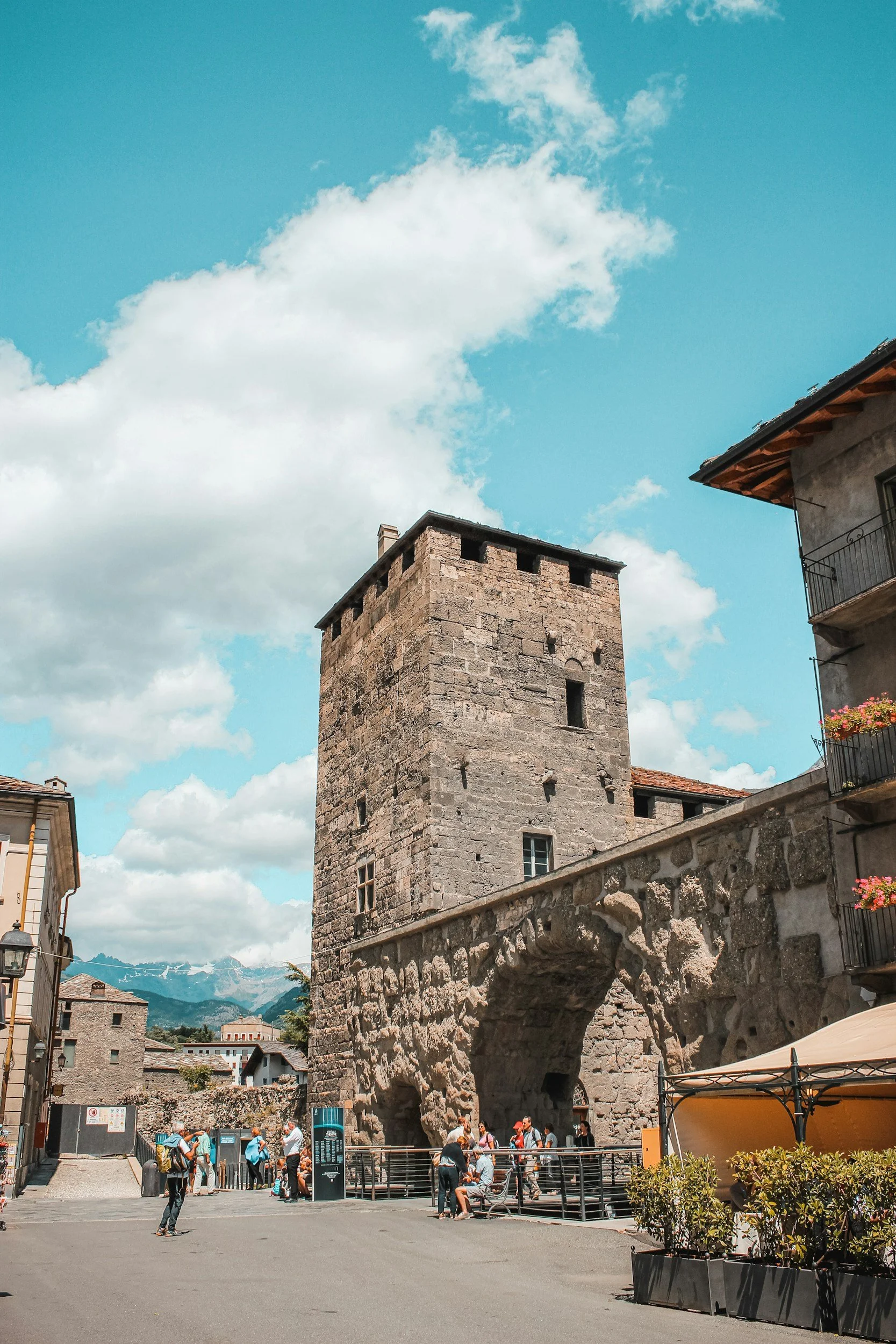
Aosta doesn’t feel hidden once you arrive, but it does feel more straightforward than most places in the Alps. You come in by train or car through the valley, and the town sits flat between the mountains rather than climbing up the sides like many other Alpine villages. From the station, it’s a short walk into the center, and within a few minutes you’re already passing Roman ruins without needing to look for them.
The layout is simple. A few main streets, like Via Porta Praetoria and Via Croix de Ville, run through the town, and most of what you’ll see sits just off these. You don’t move far between places, and you’re never really navigating, you just walk, turn occasionally, and loop back without planning it.
What stands out is how integrated everything is. The Arch of Augustus sits near the edge of the center, and you’ll likely pass it without stopping the first time. The Roman Theatre is set slightly lower, partially below street level, so you come across it almost unexpectedly as you move through the town. It’s not arranged as a sequence of sights, they’re just part of the streets you’re already using.
Cafés and small shops are spaced along the same routes rather than concentrated in one square. You might stop on Piazza Chanoux for a while, then continue along a quieter street where things feel more local, with fewer people and less movement. The shift happens quickly, within a block or two, rather than across different areas.
Aosta works well on your own because you don’t need to organise anything. You go out, walk for an hour or two, stop somewhere when it makes sense, then continue again. The scale keeps everything manageable, and the mountains stay visible from almost every street, so even when you’re in the center, you’re aware of the landscape around you without needing to leave town.
Some trips don’t need much planning at all, especially once you see how simple it can be to move around using something like this Italy by train setup. And Italy has a different vibe when you leave the main routes, and this Tuscan villages piece shows exactly where that shift happens.
If you want to leave Aosta for a few hours, the easiest direction is toward Cogne and the Gran Paradiso National Park, which sits about 40 minutes away by car. The road follows the valley upward, narrowing as you go, and once you pass the last larger turn-offs, it becomes clear you’re heading somewhere more contained rather than moving between multiple stops.
From Cogne, most people continue into Valnontey, which is where walking becomes straightforward without needing a plan. There’s a main road that runs through the valley, with parking areas spaced along it, and from there you follow wide, relatively flat paths that stay close to the river. It’s not a technical hike. You walk for as long as it feels right, then turn back the same way.
The landscape changes gradually rather than dramatically. You move through open sections with views toward the higher peaks, then into quieter stretches with trees and water running alongside the path. In early summer, you’ll pass patches of wildflowers and small wooden bridges crossing the river, but there aren’t fixed “viewpoints” or stops you need to reach.
What stands out is how little structure there is once you start walking. You’re not moving from one marked highlight to another, and you’re not sharing the path with large groups unless you’re near the parking areas. After ten or fifteen minutes, it spreads out, and you’re mostly walking at your own pace.
Back in Cogne, the center is small and easy to move through. A short stretch of streets with a few shops, cafés, and places to sit, then it quiets again as soon as you move away from that main line. It’s not somewhere you plan a full day unless you’re combining it with time in the valley. Most people stop for a while, walk a bit, then head back down toward Aosta.
When you’re in Aosta, local food is easy to find without planning it, but it’s worth knowing what to look for. Fontina shows up on most menus in different forms, often melted into dishes rather than served on its own, especially in cooler months.
Places like Trattoria del Mercante, set along one of the smaller streets just off the main routes through the center, are the kind you walk past rather than seek out directly. It’s not a large space, and tables fill gradually rather than all at once, so arriving earlier in the evening usually works better than turning up late.
Dishes tend to be simple and filling rather than varied. Polenta with melted Fontina is one of the more common options, especially after a day outside or walking around town, and portions are sized with that in mind. Meals aren’t rushed, and once you sit down, you’re likely there for a while.
It’s not about finding a single “best” place. Most of the smaller trattorias around streets like Via Croix de Ville or near Piazza Chanoux serve similar regional dishes, so it works better to choose somewhere that feels right as you pass rather than planning it in advance.
Where to stay in Aosta
If you stay at Hotel Duca d’Aosta, the main advantage is how central it is without being directly in the busiest stretch of the town. It sits close to Piazza Chanoux, so you’re within a few minutes’ walk of most of the streets you’ll end up using anyway, including Via Croix de Ville and the smaller lanes that branch off it.
That makes a difference in how you move around. You can head out in the morning, walk through the center, stop somewhere briefly, and come back again without needing to plan a route or commit to being out all day. In the evening, you’re close enough to walk back from dinner without thinking about transport, which matters more than expected in a place where everything is compact.
The hotel itself is more practical than standout. Rooms are simple, and the layout reflects a building adapted over time rather than something newly built. What you notice more is how quiet it becomes at night once the day traffic through the center drops off.
If you’ve spent part of the day outside the town, for example up toward Cogne or further into the valley, coming back here works well because you’re not navigating narrow residential streets or searching for a place to stop. You’re already positioned where the town reconnects.
Explore more solo travel guides
Looking for more ideas and inspiration for your next solo trip? Check out all our solo travel blog posts - from peaceful countryside escapes to slow city adventures across Europe.
FAQ: What to know about traveling solo in Europe
Is it safe to travel alone in Europe as a woman?
In most parts of Europe, yes, especially in smaller towns and regional areas where daily routines are predictable and streets are quieter at night. Places like Orvieto, Aosta, or Moustiers-Sainte-Marie tend to feel easier to navigate alone than larger cities. The main risk is petty theft in busy transport hubs or crowded city centers, not in the types of destinations covered here.
Where should I go in Europe if I want to travel alone but avoid crowds?
Look for smaller towns just outside major travel routes rather than remote places that are hard to reach. For example, Aosta (Italy) instead of larger Alpine resorts, or Zadar (Croatia) as a base with access to quieter islands. The key is places that are easy to get to but not used as main stops.
Is it easy to travel around Europe alone without a car?
Between cities and larger towns, trains are simple and reliable. But in rural areas or places like Paxos (Greece) or Lahemaa (Estonia), you’ll notice quickly that public transport is limited. In those cases, either rent a small car or choose one base and stay local rather than trying to move around too much.
How do I avoid feeling overwhelmed traveling alone in Europe?
The biggest difference comes from reducing movement. Staying 2–3 nights in one place and limiting how often you change locations makes the trip feel easier immediately. Towns where everything is walkable also remove a lot of small daily decisions.
Is solo travel in Europe lonely or isolating?
It depends more on where you are than being alone. In smaller towns, you’re not constantly surrounded by crowds, which often makes the experience feel calmer rather than lonely. Daily interactions, like cafés, markets, or short conversations, happen naturally without needing to seek them out.
Some trips start to revolve around simple routines, like planning your mornings around places like these quiet summer markets.
Do I need to plan everything in advance when traveling solo?
No, but a few things matter more than others. Accommodation in smaller destinations and transport like ferries (for example to Paxos) are better booked ahead. Daily plans, meals, and short activities are usually easier to decide on the spot.
What are the easiest countries in Europe for solo travel?
Countries with strong infrastructure and clear transport systems tend to feel easiest, such as Italy, France, and Spain. Within those, smaller towns are often more manageable than large cities because distances are shorter and everything is more contained.
How much time should I spend in each place when traveling solo?
Short stays often feel more stressful than expected. Spending at least two nights per place allows you to settle in, understand the layout, and move around without rushing.
What mistakes should I avoid when traveling solo in Europe?
Trying to visit too many places in one trip, relying on public transport in rural areas without checking schedules, and arriving at the busiest times of day. Many destinations feel completely different depending on timing.
What’s the best way to plan a solo trip through Europe?
Start with one region, choose a walkable base, and add one or two nearby day trips rather than moving constantly. For example, staying in Aosta and visiting Cogne, or staying in Zadar and exploring nearby islands.
Join Our Community:
Looking for more quiet, off-the-beaten-path destinations? Download our Summer Market Guide to discover more peaceful places in Europe for your next solo escape.