
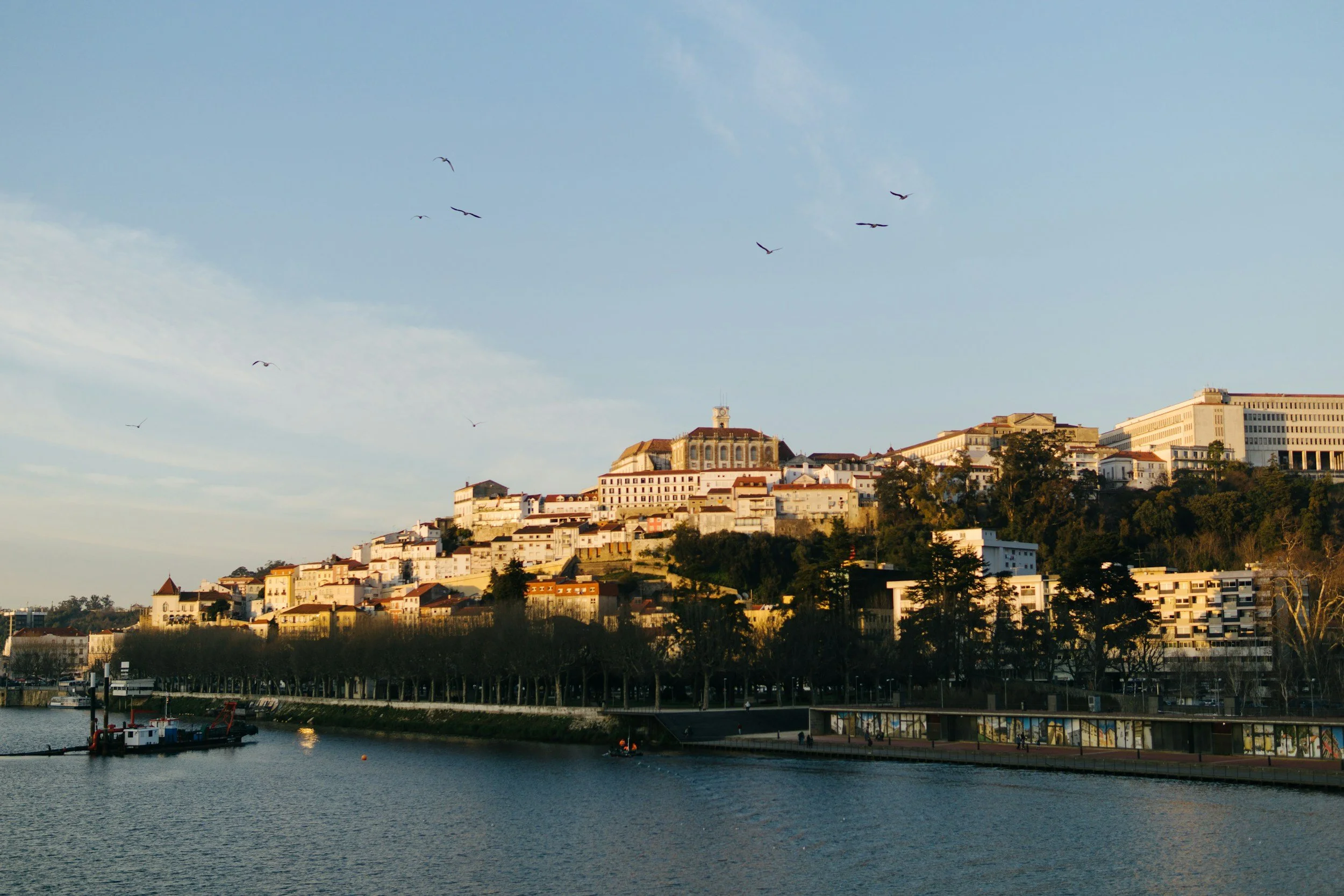
Coimbra is a rather tempting city for anyone who loves books, especially if you're the kind of person who pops into a bookshop for five minutes and comes out an hour later with something you never intended to buy.
The famous Joanina Library is usually what brings book lovers here, and with its painted ceilings, gilded bookshelves and centuries-old collection, it's easy to see why. But there's a whole other side to Coimbra's book culture waiting beyond the university. Follow the steep streets downhill and you'll find bookshops with interesting histories of their own, old cafés and plenty of reasons to spend the afternoon exploring.
A weekday is the best choice if you want to visit the smaller bookshops, although Sunday has its own possibilities. With a morning reservation at the Joanina Library and a few hours to explore the lower town, Coimbra makes a lovely day trip from Porto. And if there's room in your plans for a night here, even better. You might find that the bookshops take up rather more of your afternoon than expected.
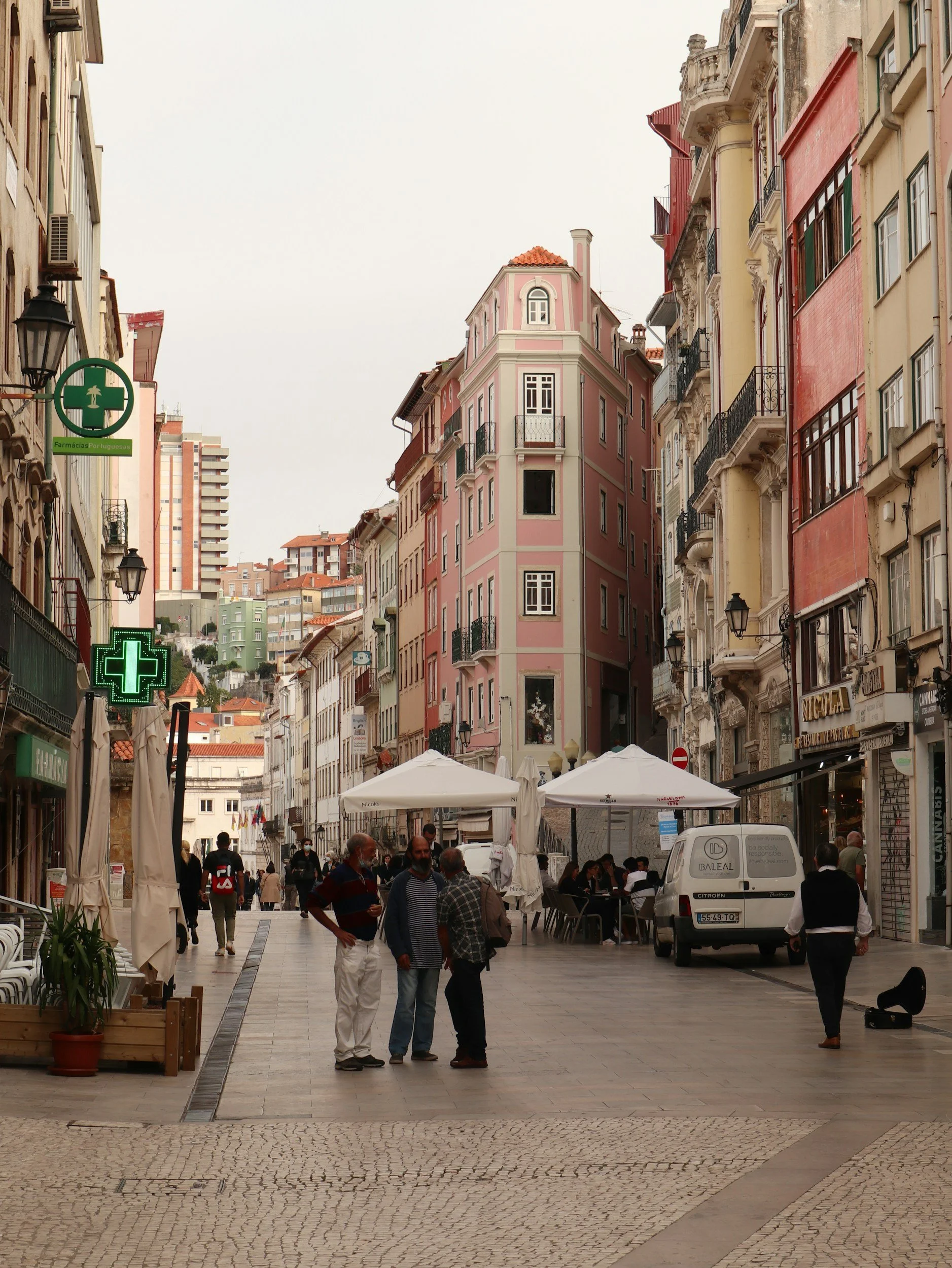
Visiting the Joanina Library in Coimbra
Before you even reach the beautiful bookshelves of the Joanina Library, you'll find yourself walking through an old university prison. It's a rather unexpected way to begin a library visit, especially when you know what's waiting upstairs. But that's part of what makes the Joanina so interesting. The building has several layers of history, and the grand library you see in photographs is only one part of it.
First, though, make sure you book the right ticket. The University of Coimbra has a few different options, and the €16.50 Joanina Library + University + Science Museum ticket is the one that includes the famous library, along with St Michael's Chapel, the Royal Palace and several university museum spaces. There's a cheaper €12.50 ticket, but that doesn't include the Joanina, which would be a disappointing mistake to discover after arriving.
You can book directly through the University of Coimbra's official website. Your selected time is specifically for the library, while the other places included in the ticket can be visited around that reservation, within their opening hours and your ticket's validity. A late-morning slot is particularly convenient because it leaves the afternoon open for lunch, bookshops and coffee down in the old town.
What it's like inside the Joanina Library
The library was completed in 1728, and it's quite something to imagine how much effort went into creating a room that was supposed to hold books. The painted ceilings, gilded wooden shelves and upper galleries are wonderfully elaborate, and it's easy to see why the Joanina has become one of Coimbra's most famous sights.
But there's another side to the library that's just as interesting. Across the building, almost 60,000 volumes are kept in a carefully maintained historic collection. And one of the more unusual ways the university helps protect them is by allowing bats to control insects that might otherwise damage the books. Staff cover the tables after closing, so the bats can do their work without leaving a mess on the furniture. It's such an unexpected arrangement for somewhere this grand, and somehow makes the place even more fascinating.
You won't be able to take a book from the shelves or settle into a corner to read, though. This is a heritage visit, with groups admitted at 20-minute intervals, rather than a working reading room. Photography and filming are also prohibited on the Noble Floor, so the elaborate interior is something you'll have to enjoy without your camera.
One thing to take seriously is your arrival time. Entry is through the Academic Prison, and the university doesn't allow visitors to join a later group if they miss their booked slot. Give yourself an extra 20–30 minutes to reach the entrance and get oriented, particularly if you're arriving in Coimbra that morning.
If you have mobility requirements, it's worth contacting the university before booking. Wheelchair access to the Joanina can be arranged for the Noble Floor, but the full route, including the Royal Palace, isn't accessible. The official visitor information explains this further and how to get in touch.
For another city with a wonderful literary side, Edinburgh has plenty to offer book lovers, from independent bookshops to cosy cafés and streets with stories of their own.
Down through Quebra Costas to the bookshops
One of the nicest things about visiting Coimbra's bookshops is that you can follow the old streets downhill from the university and find several along the way. The walk takes you past Sé Velha, the city's Romanesque cathedral, before continuing down Quebra Costas towards the Arco de Almedina.
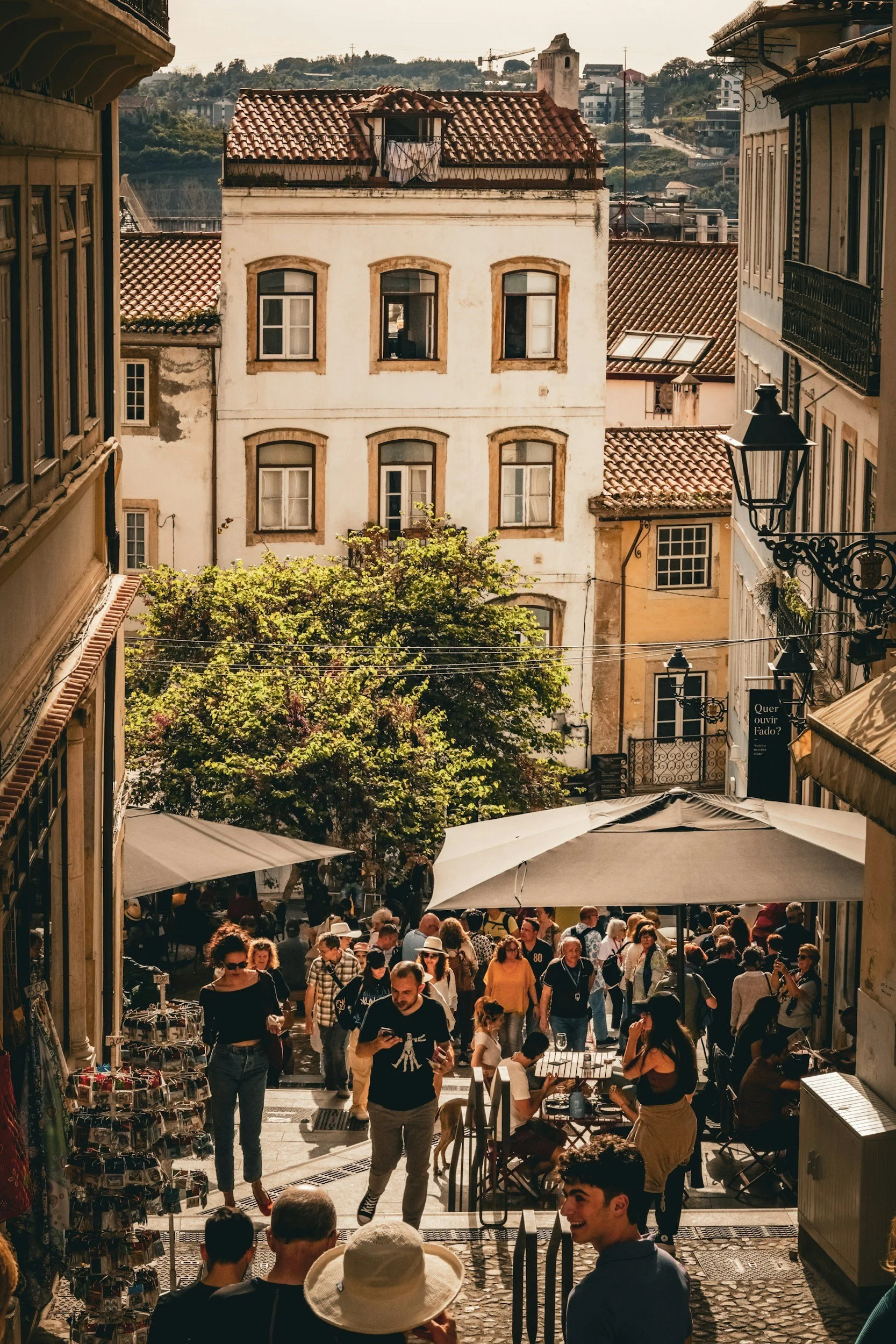
Quebra Costas translates roughly as "backbreaker", and the name makes more sense once you see the steps. It's a steep little stretch of Coimbra, with old stone buildings and narrow passages that have connected the upper and lower parts of the city for centuries. Going downhill is certainly preferable to climbing back up, although the steps are worth bearing in mind if you have any mobility difficulties.
At the bottom, beside the old Arco de Almedina gateway, there's a bookshop with a rather interesting history. Livraria Almedina Arco belongs to the publishing group that began here in 1955, when Joaquim Machado opened a small bookshop opposite the arch. From that modest beginning, Almedina grew into a major Portuguese publisher, particularly known for academic and legal titles.
It's a lovely connection to find in a university city, especially as the original location is still part of Coimbra's bookshop scene. The shop is at Arco de Almedina 15, and its published hours are Monday to Friday, 9:00–13:30 and 14:30–18:30. That afternoon reopening is worth remembering if you're coming down from the university around lunchtime.
From here, Rua Ferreira Borges leads through the lower town towards Praça 8 de Maio, where the streets open out around the Santa Cruz complex. This part of Coimbra feels quite different from the university quarter, with more everyday shops and cafés mixed into the historic buildings.
Continue onto Rua da Sofia and you'll find another bookshop worth knowing about, Livraria Casa do Castelo, at number 49. Its name is a reminder of its earlier home in Coimbra's upper town, although it's now firmly established in the Baixa. The shop has been part of the city's local book trade for years, and it's the sort of place that makes a weekday visit more appealing than simply following the usual university sightseeing route.
Casa do Castelo is open Monday to Friday, 9:30–18:30, and is worth adding to your walk along Rua da Sofia. It's a chance to browse a local Coimbra bookshop with a history of its own, although it's best to check ahead if you're after English-language books or a particular second-hand edition.
Along with Almedina, it gives you a good reason to spend a little more time in the lower town. Both have roots in Coimbra's book trade, but their histories are quite different, and there's something appealing about discovering them along streets that have been part of the university city for centuries.
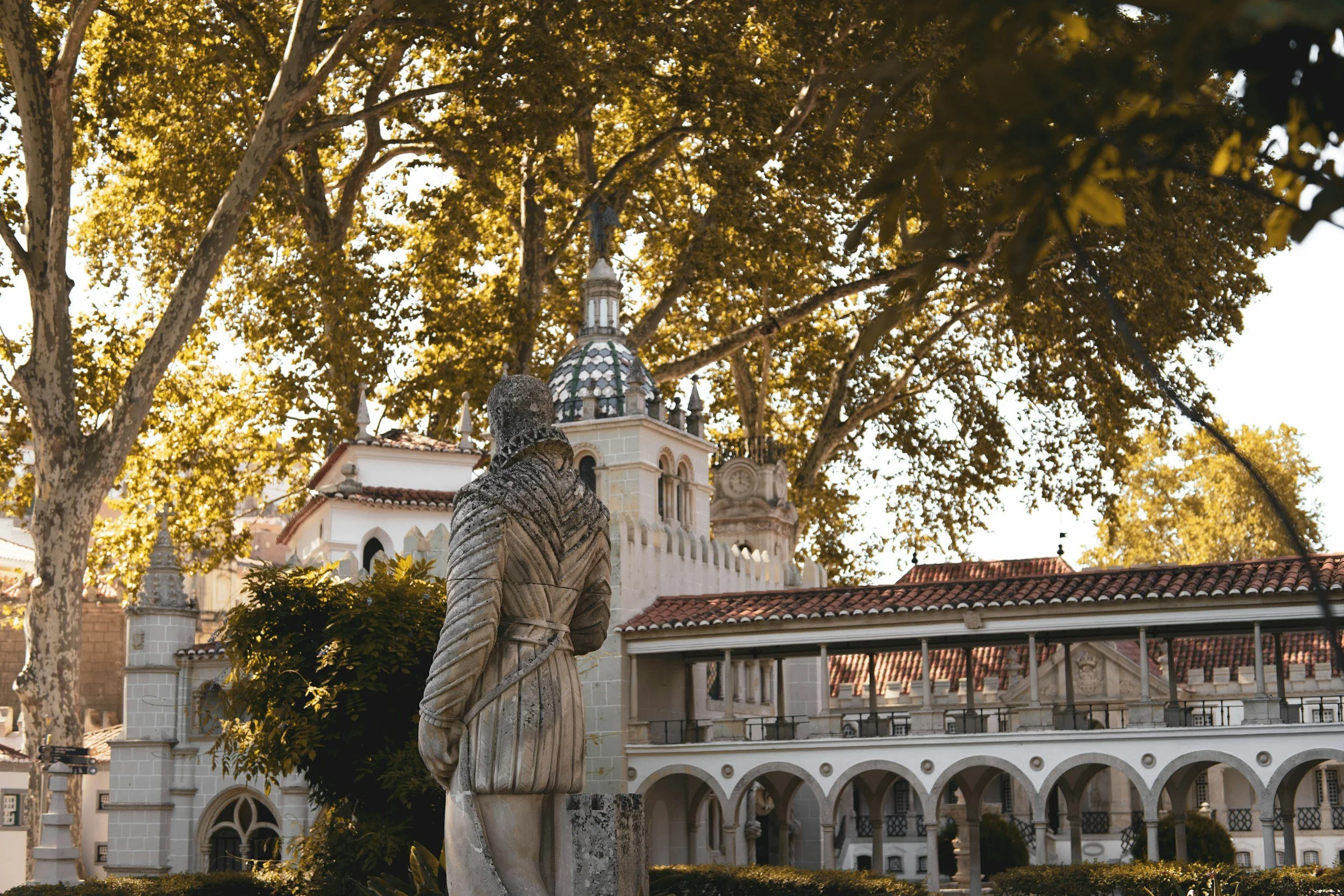
A coffee at Santa Cruz, or something by the river
If there's one café in Coimbra where I'd happily spend longer than planned, it's Café Santa Cruz. You'll find it right on Praça 8 de Maio, inside what was once part of a church, and the setting is quite something. High ceilings, old stone arches and tables where you can sit with a coffee and a book. It feels like exactly the sort of place you'd hope to come across in a city with so much literary history.
And please, don't automatically order a pastel de nata. Café Santa Cruz has its own pastry called a crúzio, filled with sweet egg cream and finished with toasted almonds. It's worth trying if they have it that day, especially with a coffee. The café has also been a meeting place for Coimbra's writers, readers and musicians over the years, and it still hosts traditional Coimbra fado performances. Not a bad place to spend part of an afternoon.
A Brasileira, on Rua Ferreira Borges, is another name worth knowing, especially if you're making your way towards the river. It reopened in 2026, bringing an old Coimbra café back to life, and has literary connections of its own, including Miguel Torga. These days it's a place for coffee, pastries or brunch, so it's a handy alternative if you're feeling hungry rather than just wanting something sweet.
It's also a better bet on a Sunday, when Café Santa Cruz's opening hours are less certain. And with Bertrand bookshop just a little further down towards Largo da Portagem, you can easily combine the two without making another trip across town.
And if the idea of planning a trip around bookshops appeals to you, Montolieu in southern France is worth knowing about. It's a small village near Carcassonne known for its second-hand booksellers and book trade.
The bookshops worth visiting on a Sunday
One of the nice things about Coimbra is that even on a Sunday, when some of the smaller bookshops are closed, there are still places where you can spend a good hour looking at books. And there's a particularly interesting one down by the river, with a connection to one of Portugal's most famous writers.
Livraria Bertrand, at Largo da Portagem 9, is open on Sundays and has a selection of books in English, French and Spanish alongside its Portuguese titles. So if you've been hoping to pick up something to read during the rest of your trip, this is probably your safest bet.
But there's another reason to visit this particular branch. The Portuguese writer Miguel Torga once worked as a doctor in the very same building. He spent much of his life in Coimbra, balancing his medical career with writing, and it's a rather lovely coincidence that you can now walk into his former workplace and browse books.
If you're interested in discovering a Portuguese author, ask about Contos da Montanha, one of Torga's collections of short stories about rural life. You might not find an English translation on the shelves, but it's a good name to keep in mind if you enjoy bringing home books connected to the places you visit.
For something completely different, there's Bruaá, an independent publisher and bookshop inside Convento São Francisco, across the Mondego River.
This one is especially appealing if you love illustrated books. Bruaá publishes its own titles and stocks books from other Portuguese and international publishers, with a particular interest in illustration and design. Even if you don't speak Portuguese, a beautifully illustrated picture book or an unusual edition could make a wonderful souvenir from Coimbra.
From Largo da Portagem, cross Ponte de Santa Clara and continue towards Convento São Francisco on the opposite bank. Bruaá opens at 15:00 on Sundays, so there's no need to head over too early. It's a different kind of browse from Bertrand, particularly if illustrated editions and beautifully designed books are more your thing.
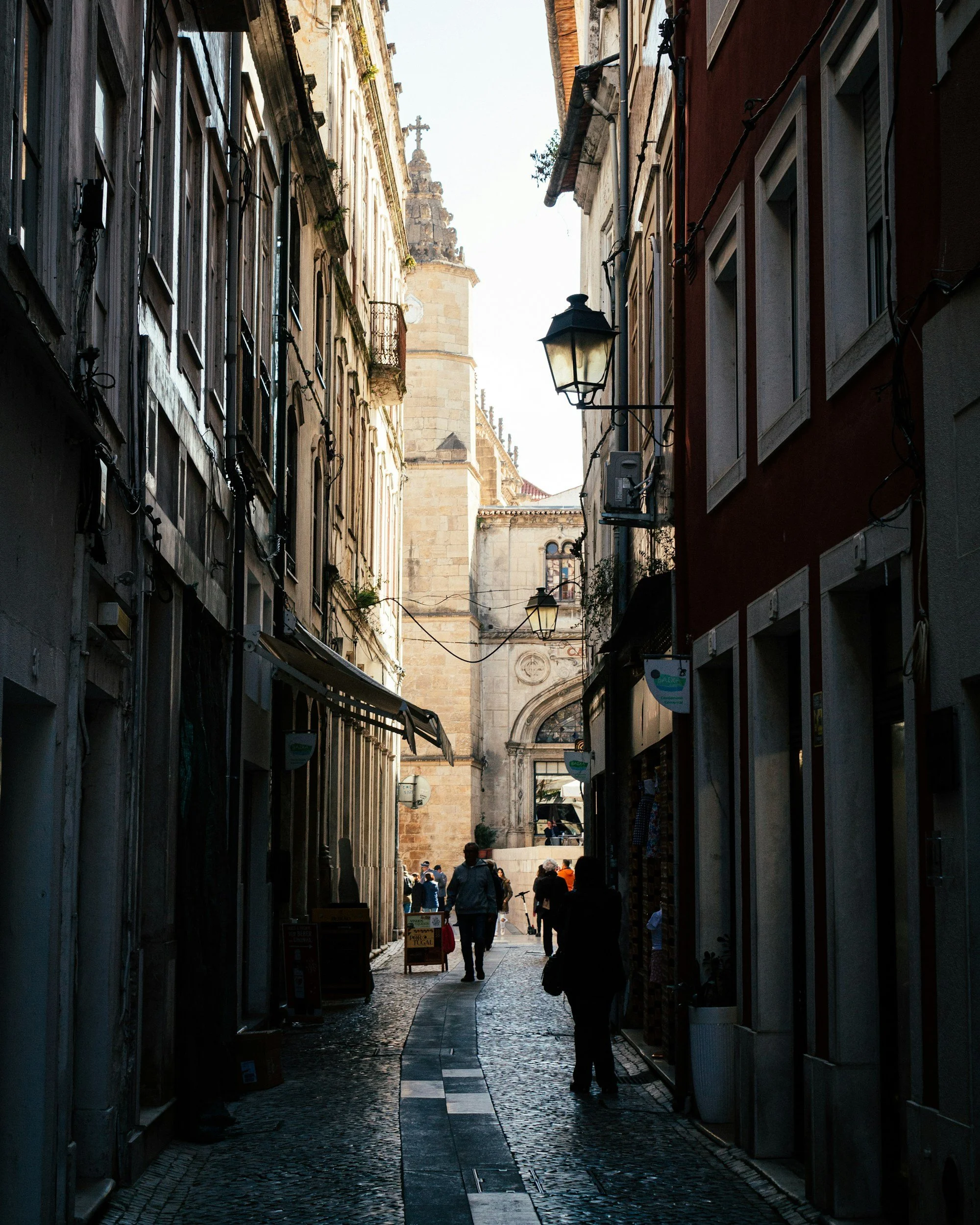
And a library where you can actually sit and read
There's one more place worth mentioning, particularly if you're spending a weekday in Coimbra and would rather sit down with a book than visit another shop.
The Biblioteca Carlos Fiolhais sits beside the Mondego in Parque Manuel Braga, inside a former water pumping station dating from 1922. It now houses part of the enormous personal book collection donated by Portuguese physicist Carlos Fiolhais, with thousands of volumes being made available to the public. It's quite a change of purpose for an old industrial building, and unlike the Joanina, this is somewhere you can actually sit down and consult a book.
It's open Monday to Friday, 10:00–13:00 and 14:00–18:00, making it an easy addition if you've got another hour to spare near the river.
If you enjoy exploring university cities through their bookshops and cafés, Oxford is another lovely place to spend a day beyond the famous university buildings.
Getting from Coimbra-B to the library
One thing that can catch visitors out when travelling to Coimbra is the train station. Coimbra-B is where you'll arrive on the long-distance trains from Porto and Lisbon, but it isn't right in the historic centre. And if you've come across older advice about changing onto a local train to Coimbra-A, you can ignore it. That connection closed in January 2025.
The train journey itself is fairly straightforward. From Porto Campanhã, the faster services take around an hour to an hour and 15 minutes, while trains from Lisboa Oriente generally take between an hour and a half and two hours. The part worth planning is what happens after you arrive, particularly if you've booked a morning visit to the Joanina Library.
Coimbra's university sits high above the lower town, and the climb is something you'll notice. The Metrobus now connects Coimbra-B with the city, and one useful option is to travel towards Mercado, where you can take the Elevador do Mercado partway up the hill. It's a combination of a lift and funicular, although you'll still have some walking to do before reaching the university. You can check the current connections using the official Metrobus journey planner.
If you're arriving with luggage or have a library reservation you really don't want to miss, a taxi from Coimbra-B is probably the simpler option. Just allow a little time to find the correct entrance once you're on campus.
Is Coimbra worth staying overnight?
A day trip from Porto is perfectly manageable, especially with an early train and a library reservation that leaves you enough time for the bookshops afterwards.
But spending the night gives you a little more freedom, particularly if you want to explore the university buildings as well. You could spend your first afternoon around Rua da Sofia and the lower town, have dinner near the river and visit the Joanina the following morning. There's also less need to organise your afternoon around Almedina's lunch closure or rush back for a train.
For an overnight stay, the Baixa makes a lovely base, especially if bookshops and cafés are your main interest. Rua Ferreira Borges, Praça 8 de Maio and Largo da Portagem are all nearby, with the Mondego just a short walk away. Staying up near the university has its advantages too, but the lower town makes more sense for the kind of visit we've been planning.
And if you're travelling further through central Portugal, Figueira da Foz is worth considering for a few days by the coast, especially if you enjoy seaside cafés, markets and a change of scenery after Coimbra.