

The European towns I'd recommend if you love vintage shopping
Secondhand shopping in Europe doesn’t usually sit in one place. In smaller towns, it’s spread across a few streets, often mixed in with regular shops, cafés, and residential buildings. You’re not going from one marked spot to another. You’re walking, noticing what’s open, and deciding as you go.
That’s why some towns work better than others. It’s not about how many vintage shops there are, but how easy it is to move between them without thinking too much. In Ghent, you can walk from Graslei toward Nederkouter and continue to Brabantdam without checking directions. In Haarlem, the loop between Kleine Houtstraat, Gierstraat, and Schagchelstraat takes a couple of hours without needing to plan anything. In Bath, once you leave the centre and head toward Walcot Street, the shops become less predictable but more worth your time.
Leipzig and Lecce are slightly different, but the same idea applies once you’re in the right area. In Leipzig, starting near Südplatz and walking along Karl-Liebknecht-Straße gives you enough to work with for most of the day, and you can switch to Karl-Heine-Straße in Plagwitz if you want a different pace. In Lecce, it’s more about moving between Via Libertini, Via Palmieri, and the smaller streets between Piazza del Duomo and Piazza Sant’Oronzo, going into places as you pass them rather than trying to map it out.
All of these towns are easy to walk, usually within 5–15 minutes between streets, and you don’t need transport once you’ve arrived. That makes it easier to stop, go back to something you saw earlier, or leave an area and return later in the day.
This guide is built around places where that kind of day actually works.
If you’re curious about french markets where locals still shop regularly, this guide to French brocantes and vide-greniers helps you understand what to expect.
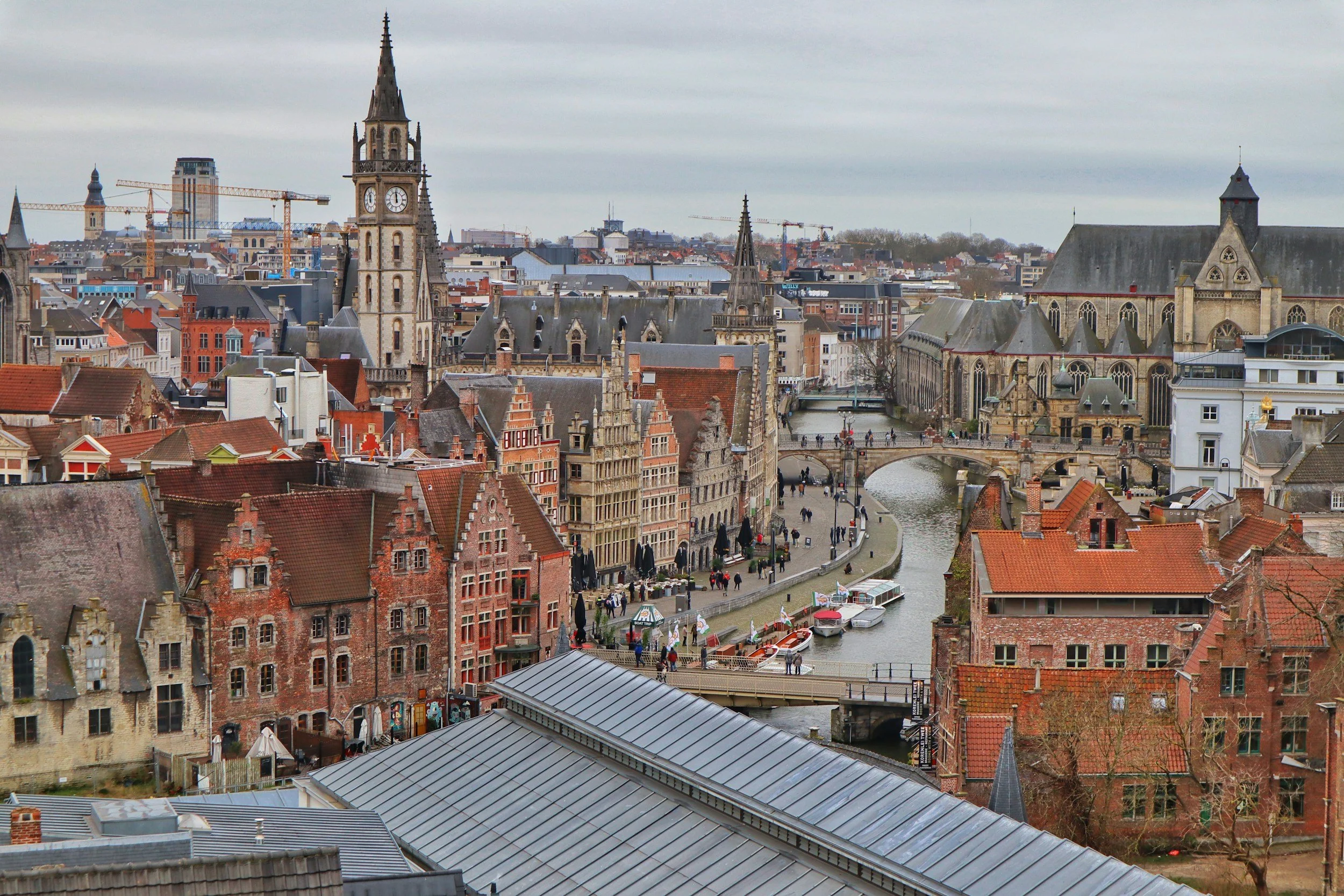
Ghent, Belgium – canals, cafés, and vintage shopping
Ghent is one of those places that’s very easy to slot into a few days without overthinking anything. Trains from Brussels take around 30 minutes, and from Antwerp just under an hour. You arrive at Gent-Sint-Pieters, and from there tram 1 takes you straight into the centre in about 10 minutes. It stops close to Gravensteen Castle, which is a useful point to get your bearings before you start walking.
Most people naturally end up around Graslei and Korenlei first. It’s worth going there early, before it fills up, just to see the area properly. From there, you can move straight into the secondhand part of the day without needing to think too much about direction. The easiest route is to walk south toward Nederkouter, passing through Veldstraat and then cutting across via Zonnestraat. It takes about 15 minutes, and you’ll notice the shift pretty clearly once you leave the busiest streets.
Nederkouter is where things start to feel more consistent. Shops are close enough together that you can just move between them naturally. Think Twice is one of the easier places to start because everything is sorted in a way that makes sense, especially earlier in the day before it’s been picked through. A few minutes away, around Sint-Niklaasstraat and Ajuinlei, Episode has more volume, but you’ll need a bit more patience to find something good.
From Nederkouter, it’s an easy 5–10 minute walk over to Brabantdam. This area feels a bit less organised, in a good way. There are smaller shops, some that don’t even show up clearly online, and the selection changes depending on the day. It’s the kind of place where you might walk into something unexpectedly good, or nothing at all, depending on timing.
If you feel like continuing, walking toward Vrijdagmarkt makes sense without turning it into a big plan. It’s about 10 minutes from Brabantdam. On Fridays and weekends there’s usually a market here, and it’s less about curated vintage and more mixed secondhand - books, objects, random pieces that locals are selling rather than shops. It works well as a last stop before heading back toward the centre.
Cafés fit in easily along this route without needing to plan for them. Around Nederkouter, De Superette is worth the short walk if you want something more substantial earlier in the day. Closer to the canals, streets like Burgstraat and Jan Breydelstraat have smaller places where you can sit for a while without it feeling rushed. Mid-morning or mid-afternoon tends to be the easiest time to find somewhere calm.
It helps to keep the timing in mind. Most shops open around 11:00, so it’s better to start with a walk or coffee rather than trying to shop straight away. Weekdays are easier if you want space to actually look through things properly. Saturdays are more active, especially around the market, but also more unpredictable in terms of what’s still available.
Everything stays close together, which makes the day feel easy. You’re rarely walking more than 10–15 minutes between areas, and it’s simple to go back to something you saw earlier if you keep thinking about it.
Some of the easiest solo trips happen in places that feel small and welcoming, and these cozy towns in Belgium are a good example of that.
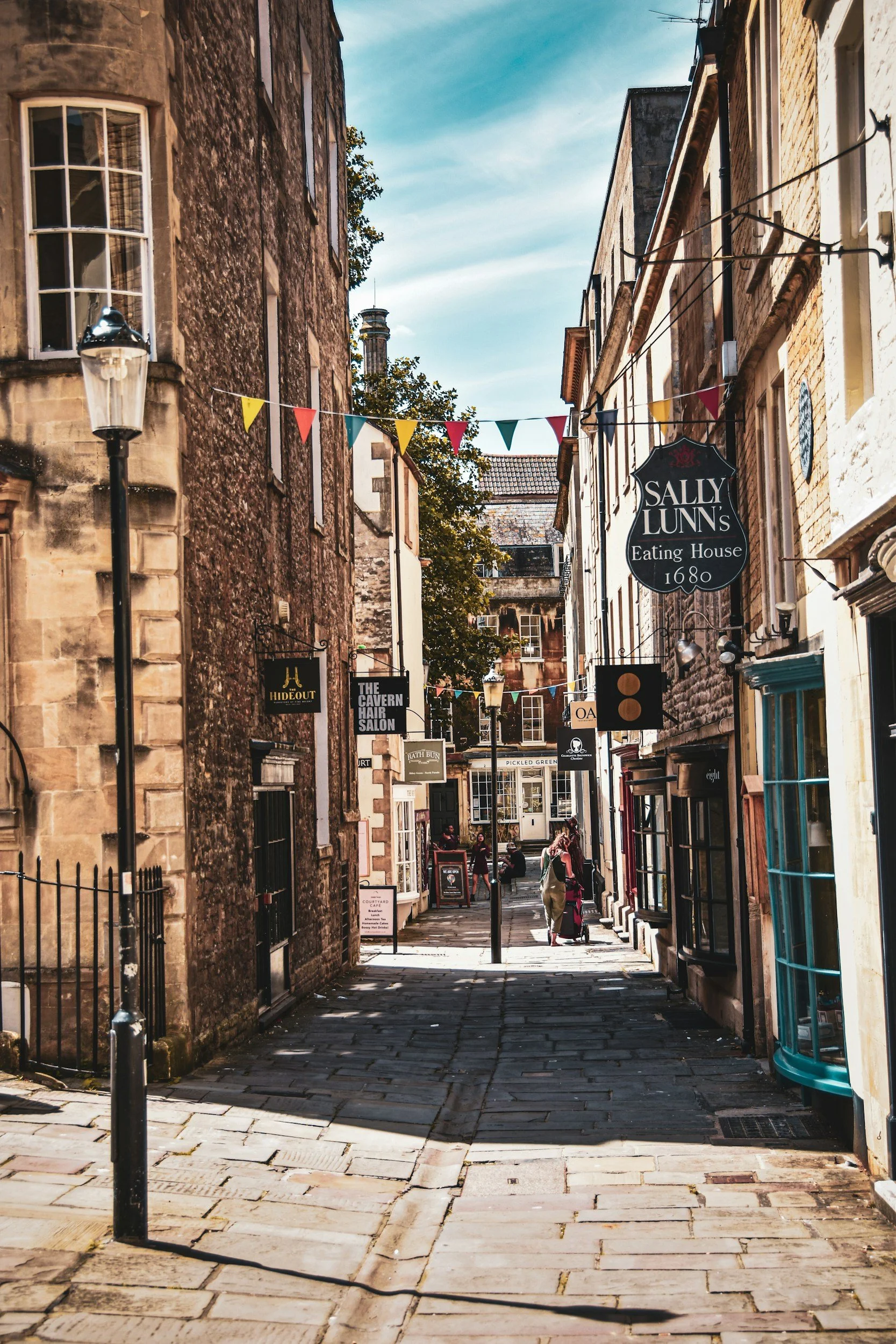
Bath, England – Georgian streets and secondhand shops
Bath is one of the easier places to arrive and start walking without needing to figure anything out first. Trains from London Paddington take about 1 hour 20 minutes, and when you step out of Bath Spa station you’re already close to everything. Walking straight ahead along Dorchester Street and over Pulteney Bridge takes less than 10 minutes and puts you into the part of the city where most people spend their time.
Instead of staying around the bridge and Abbey area, it makes more sense to move slightly north fairly quickly. The secondhand and vintage shops in Bath aren’t grouped in one place, but there’s a clear route where they start to appear more consistently if you follow it. From the centre, walking up Milsom Street and then continuing toward Broad Street is a good way to begin. This stretch is more polished, but it helps you ease into the layout before things get more interesting.
Broad Street is where it starts to shift. You’ll notice more independent shops, and it feels less like standard retail. From there, continuing onto Walcot Street takes about 3–5 minutes, and this is where it becomes worth slowing down. Walcot Street has a mix of vintage clothing, antique shops, and small secondhand stores that change depending on what’s come in. Some places are tightly packed, others more spaced out, and it’s not always obvious from the outside what you’ll find inside.
Walking the full length of Walcot Street and then looping slightly upward toward The Circus works well without needing to check directions. It’s about 10 minutes uphill, and you move away from the busier centre without losing the feeling of being in town. Around here, the focus shifts more toward antiques and interiors rather than clothing, with smaller shops that are easy to miss if you’re moving too quickly.
If you continue a few minutes further, you reach Royal Crescent. It’s not about shopping at that point, but it’s a natural place to pause before heading back down. The walk back can be slightly different by taking Gay Street and reconnecting with Milsom Street, which makes the route feel more like a loop than a straight line.
Cafés fit in naturally along this walk without needing to plan for them. On Walcot Street, The Fine Cheese Co. is an easy stop for something simple, especially earlier in the day before it gets busy. Around Broad Street, Colonna & Small’s is a good place to sit for a while without feeling rushed, especially mid-morning or mid-afternoon when there’s a bit more space.
Timing matters slightly more in Bath than in some other places. Most shops open around 10:00 or 10:30, so arriving too early doesn’t really add much unless you want a quiet walk first. Weekdays are noticeably easier if you want to browse properly, especially on Walcot Street where shops are smaller and fill up quickly. Saturdays bring more movement through the centre, but also more pressure to keep moving.
Everything stays within a 10–15 minute walking range, even with the uphill sections.
Not every trip needs a car, and these quiet towns near London by train are easy to reach on your own.
And browsing bookshops and tiny cafés between vintage stops is one of the best parts of travelling alone, and this Oxford guide is full of those slower spots.
If you like combining long walks, secondhand browsing and quiet streets, this slow travel guide to Cambridge makes it easy to plan a gentle solo trip.
A slower town with antiques, small galleries and low-key cafés makes solo travel easier, and this guide to Windsor’s quiet corners is a good place to start.
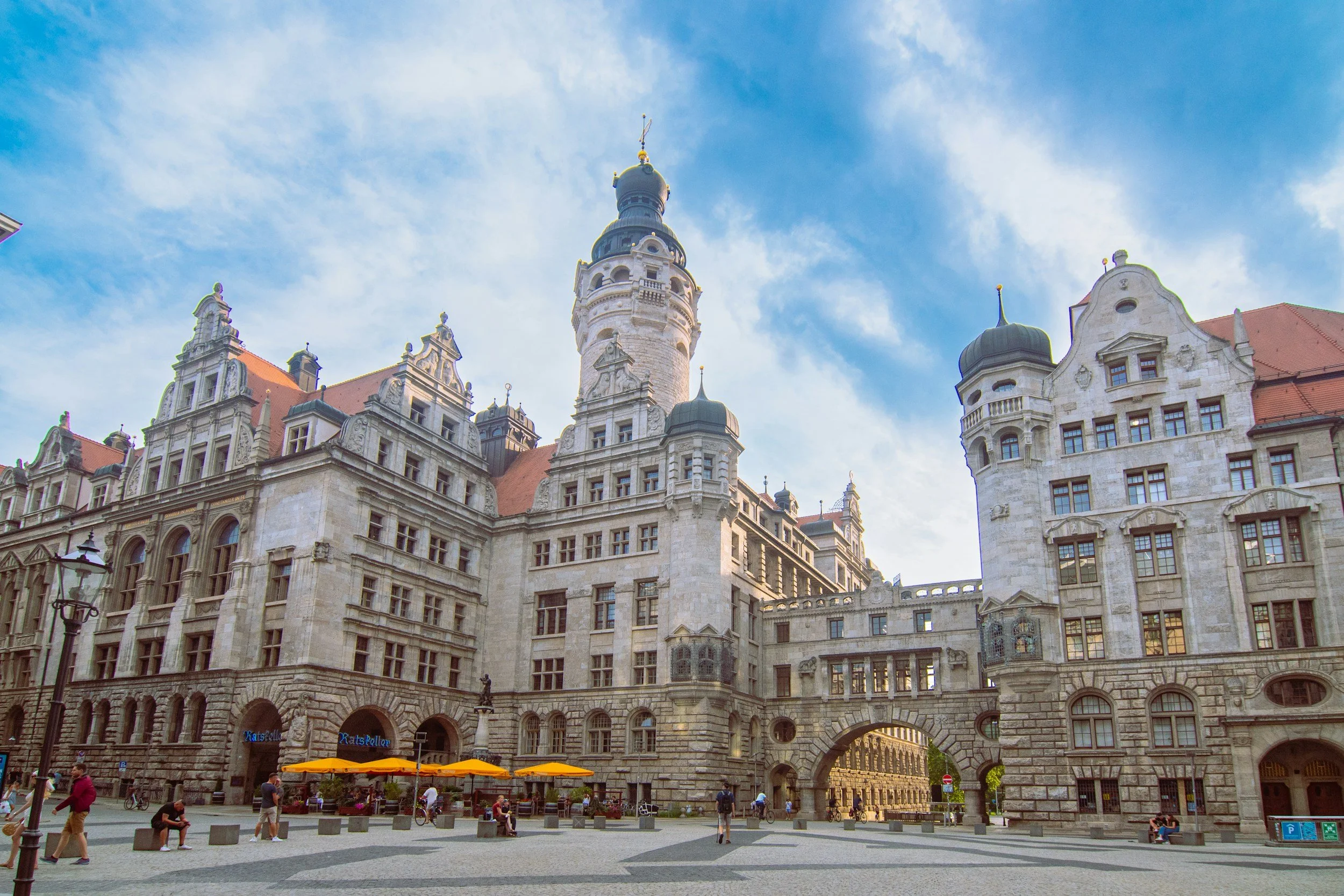
Leipzig, Germany – secondhand shops, flea markets, and creative districts
Leipzig takes a bit more intention than places like Ghent or Bath, but once you know where to go, the day comes together quite easily. Trains from Berlin take just over an hour, and you arrive at Leipzig Hauptbahnhof. The station is right next to the centre, but it’s not where you want to spend time if secondhand shopping is the focus.
From the station, it’s easiest to move through the centre fairly quickly. Walking past Markt and down Petersstraße gets you out of the standard shopping area in about 10 minutes. From there, you can either keep walking south for another 15–20 minutes or take tram 10 or 11 from the station and get off at Südplatz. That’s usually a better starting point.
Karl-Liebknecht-Straße starts here, and this is where the day actually works. It’s a long street, so you don’t need to plan anything in advance. You just walk and stop when something looks worth going into. The stretch between Südplatz and Kurt-Eisner-Straße tends to have the most going on, with secondhand shops mixed in between cafés, small bookstores, and bars.
Humana is one of the more reliable stops if you want a lot to look through without thinking too much. A bit further along, side streets like Körnerstraße and Fichtestraße have smaller places that aren’t always obvious from the outside, and the selection changes depending on the week. Some days it’s worth going in, other days you just keep walking.
If you feel like changing the pace, it’s easy to move over to Plagwitz. From Südplatz, tram 14 takes about 10–12 minutes, or you can cycle if you prefer. Around Karl-Heine-Straße, the layout opens up a bit. Old industrial buildings have been turned into studios, galleries, and shops, and there are a few vintage stores mixed in without it feeling like a shopping area.
Near Feinkost Gelände, just off Karl-Liebknecht-Straße, there’s often a flea market on Saturdays. It’s not something to plan the whole day around, but if you’re already in the area, it fits naturally. You’ll find a mix of clothing, records, and smaller objects rather than curated vintage, and it depends a lot on who’s selling that day.
Cafés are part of how you move through Leipzig rather than something you need to plan. Around Südplatz, Café Grundmann is one of the older spots where people tend to sit for longer. Along Karl-Heine-Straße, there are more modern places, but still relaxed enough that sitting alone doesn’t stand out.
It helps to keep the timing in mind. Most secondhand shops open around 11:00, sometimes closer to 12:00, so starting earlier usually means just walking or getting coffee first. Weekdays are easier if you want space to look properly, especially on Karl-Liebknecht-Straße where some shops are narrow. Saturdays are more active, particularly around the flea market, but also less predictable.
Distances are slightly longer here, but the city is easy to move through. You can spend a full day just along Karl-Liebknecht-Straße and not feel like you’ve missed anything, or switch to Plagwitz for a different pace without needing to plan much in advance.
Solo trips are often easier when the town feels compact, and this list of European market towns without a car helps you plan around trains and walking.
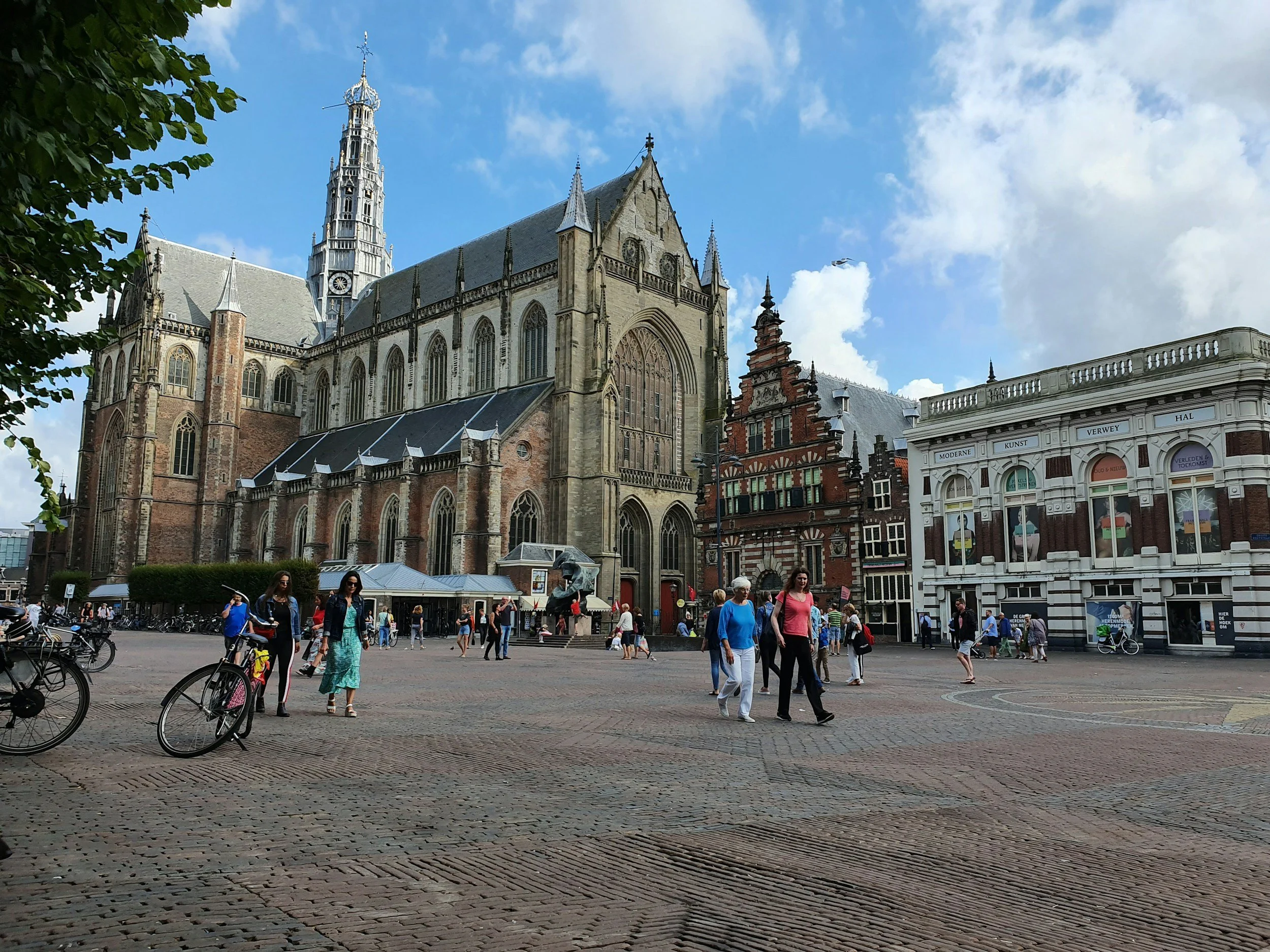
Haarlem, Netherlands – secondhand shops and an easy walking route
Haarlem is one of the easiest day trips to get right without planning anything in advance. Trains from Amsterdam take around 15 minutes, and they run several times an hour. You arrive at Haarlem station, and from there it’s a straightforward 10-minute walk into the centre. Leaving the station, you follow Stationsplein and continue onto Kruisweg, which leads directly toward the older part of town.
You’ll naturally arrive near Grote Markt, but it’s better not to stay there too long. The secondhand shops are not around the square itself, and the streets become more useful once you move a few minutes away. From Grote Markt, walking south toward Kleine Houtstraat takes about 3–4 minutes and is a good place to start.
Kleine Houtstraat is one of the main shopping streets, but it doesn’t feel overly commercial the further down you go. The stretch between Grote Markt and the junction with Gedempte Oude Gracht is usually the easiest to walk slowly, with a mix of clothing shops and smaller stores where secondhand pieces appear in between. It’s not concentrated, but you don’t need to search for anything either.
From here, it works well to turn left toward Koningstraat and then continue toward Gierstraat. These streets are only a few minutes apart, but the atmosphere shifts slightly. Shops are smaller, a bit less predictable, and more dependent on what’s come in recently. Episode sits within this area and is one of the more consistent places if you want a broader selection without spending too much time.
Gierstraat and Schagchelstraat, which runs parallel, are easy to combine into the same loop. Schagchelstraat is quieter and easy to miss if you stay on the main routes, but that’s where a few of the more independent stores are mixed in between galleries and small cafés. It’s a good place to slow down slightly, especially around midday when the busier streets fill up.
If you keep walking west for a few minutes, you reach the Spaarne river. The streets along the water, especially around Kleine Houtbrug and the edges of the canal, have a different pace. There are a few antique shops and smaller stores here that don’t feel part of the main shopping flow, and it works well as a natural extension without adding distance.
Cafés fit in easily without needing to plan stops. Along Kleine Houtstraat, By Lima is a good option if you want something simple earlier in the day. Around Koningstraat and the smaller side streets, there are quieter places where sitting alone for a while doesn’t feel noticeable. Closer to the centre, Native Haarlem works well mid-morning or mid-afternoon when things slow down slightly.
Most shops open around 10:00, so starting earlier usually means just walking through the streets while everything is still quiet. Weekdays are noticeably easier if you want space to actually look through things, especially in the smaller shops around Gierstraat. Saturdays bring more people into the centre, but the distances are short enough that it still feels manageable.
Everything sits within a 5–10 minute walking range, and the layout makes it easy to move in a loop rather than backtracking. If you pass something and keep thinking about it, it takes a few minutes to return without needing to plan anything.
If you like pairing vintage shopping with cafés and slow afternoons, this exclusive guide to Haarlem is especially good in spring.
Lecce, Italy – secondhand shops, antiques, and slow browsing through the old town
Lecce takes a bit more effort to get to, but once you’re there, everything is close together and easy to manage on foot. The nearest airport is in Brindisi, about 40 minutes away. From the airport, you can take a direct bus to Lecce in around 45 minutes, or go via Brindisi station and take the train, which runs regularly and takes about 25–30 minutes. You arrive at Lecce Centrale, and from there it’s a 10–15 minute walk into the historic centre, following Viale Oronzo Quarta and then entering through Porta Rudiae.
Once you’re inside the old town, it’s better not to think in terms of “where to go” too much. The streets are narrow, slightly uneven, and not always direct, so the day works better if you move through a few key streets and adjust depending on what’s open.
A natural starting point is Via Giuseppe Libertini, which runs inward from Porta Rudiae. It’s one of the wider streets in the centre, so it’s easy to get your bearings, and there are a few antique shops along here where you’ll see ceramics, small furniture, and older pieces rather than clothing. From there, it’s a short walk toward Via Palmieri, which is quieter and feels more residential, with a few smaller shops mixed in between homes and cafés.
If you continue toward Piazza del Duomo, you’ll pass through streets where shops open and close at slightly irregular times. Some places are open in the morning, close completely in the early afternoon, and then reopen later in the day. It’s worth going in when something is open rather than planning to return, because hours aren’t always consistent.
From Piazza del Duomo, walking toward Piazza Sant'Oronzo via Via Vittorio Emanuele II is the most direct way to move across the centre, but it’s also one of the busier stretches. It helps to step off into smaller streets like Via Federico D’Aragona or Corte dei Pandolfi, where you’ll occasionally find small resale-style shops or antique stores that aren’t obvious unless you’re already passing them.
The secondhand side of Lecce is less about clothing and more about objects. You’ll see ceramics, old frames, religious pieces, small tables, and items that feel connected to the region rather than curated vintage. Some shops are quite compact, sometimes just one or two rooms, and you can usually tell within a minute if it’s worth staying or moving on.
Cafés fit in naturally between these streets. Around Piazza Sant’Oronzo, Caffè Alvino is one of the more known spots, especially earlier in the day. If you move back toward Via Palmieri or the smaller side streets, there are quieter places where sitting alone for a while feels more comfortable, especially mid-morning or later in the afternoon.
Many shops close between roughly 13:00 and 16:30, especially outside peak summer season. Mornings tend to be the most reliable if you want to browse properly, and then things pick up again in the early evening. Midday is better used for a long lunch or a café stop rather than trying to shop.
Everything in the historic centre is within a 5–10 minute walk, but it doesn’t feel like a straight route. It’s easier to move slowly, go into places as you pass them, and adjust depending on what’s open rather than trying to follow a plan.
Market browsing is easier when the towns are walkable and calm, and these small-town markets in Italy are ideal if you prefer quieter places.
What to keep in mind before you go
One thing that becomes obvious quite quickly is that secondhand shopping in smaller towns doesn’t really work if you try to “cover everything.” The better approach is to pick one area and stay there longer than you think you should. In places like Walcot Street in Bath or Karl-Liebknecht-Straße in Leipzig, it’s easy to walk past something the first time and only notice it on the way back.
Timing changes things more than people expect. In Ghent, going through Nederkouter closer to opening time usually means the racks are still full and easier to look through. In Lecce, if you arrive around 14:30, most places will be closed completely and the streets feel empty in a different way. In Haarlem, the difference between a Tuesday morning on Gierstraat and a Saturday afternoon is noticeable enough that it can change how much you actually find.
It’s also worth paying attention to how the shops are set up. Places like Think Twice or Episode are easy to move through quickly, but the smaller independent shops (especially on streets like Schagchelstraat in Haarlem or the side streets off Via Palmieri in Lecce) take a bit more time. Some don’t look like much from the outside, and some will be closed without warning. If something is open, it’s usually better to go in straight away rather than assume you’ll come back.
Another small thing that makes the day easier is how you carry what you buy. Most of these towns are walkable, but streets aren’t always flat, and you’ll end up moving between cobbled areas, narrow pavements, and short uphill sections. A tote or something you can fold away helps more than carrying multiple smaller bags.
If you’re deciding where to base yourself, staying within a 10–15 minute walk of the main streets mentioned in each town makes a noticeable difference. Being able to go out in the morning, return for a short break, and then head back out again in the evening is often when you find something you missed earlier.
If you want more places like this, join the newsletter for new town guides, updated secondhand routes, and markets that are actually worth planning a trip around.
FAQs about secondhand shopping in Europe
Where can you go secondhand shopping in Europe without crowds?
Smaller cities like Ghent, Haarlem, Bath, Leipzig, and Lecce tend to work better than larger destinations because the shops are spread across normal streets rather than grouped into one busy area. For example, in Ghent the most consistent stretch is between Nederkouter and Brabantdam, while in Haarlem it’s the loop between Kleine Houtstraat, Gierstraat, and Schagchelstraat. You’re walking through everyday parts of town, not a designated shopping zone.
What are the best streets for vintage shopping in Ghent, Haarlem, Bath, Leipzig, and Lecce?
In Ghent, focus on Nederkouter, Ajuinlei, and Brabantdam. In Haarlem, stay around Kleine Houtstraat, Gierstraat, and Schagchelstraat. In Bath, walk from Milsom Street up to Walcot Street and continue toward Broad Street. In Leipzig, Karl-Liebknecht-Straße (near Südplatz) is the most reliable, with Karl-Heine-Straße in Plagwitz as a second area. In Lecce, it’s less about one street and more about moving between Via Libertini, Via Palmieri, and the smaller streets between Piazza del Duomo and Piazza Sant’Oronzo.
What time do vintage and secondhand shops open in Europe?
Opening times vary more than people expect. In places like Haarlem and Bath, most shops open around 10:00. In Ghent and Leipzig, it’s usually closer to 11:00. In Lecce, shops often open in the morning, close between roughly 13:00 and 16:30, and then reopen in the evening. Starting too early usually means you’re just walking past closed doors.
Is it better to go vintage shopping in Europe in the morning or afternoon?
Late morning tends to be the best balance. Shops are open, and the selection hasn’t been picked through yet. In Ghent, arriving around 11:00 on Nederkouter makes a noticeable difference compared to mid-afternoon. In smaller streets like Schagchelstraat in Haarlem or the side streets in Lecce, earlier visits often mean more choice.
Are flea markets in cities like Ghent and Leipzig actually worth visiting?
They can be, but they’re inconsistent. Markets like Vrijdagmarkt in Ghent or the one at Feinkost Gelände in Leipzig depend entirely on who is selling that day. Some days you’ll find clothing and smaller items worth buying, other days it’s mostly objects or nothing at all. They work best as part of a route, not as the main reason to go.
How walkable are these towns for a secondhand shopping day?
All of them are easy to manage on foot. In Haarlem and Ghent, most streets are within 5–10 minutes of each other. Bath adds a bit of uphill walking, especially between Walcot Street and The Circus, but distances stay short. Leipzig is more spread out, but you can focus on one area like Karl-Liebknecht-Straße and not feel like you’re missing anything.
Do you need cash for secondhand shops in Europe?
In the Netherlands, Belgium, and the UK, card payments are standard, though smaller shops may have minimum spend limits. In places like Lecce, smaller antique shops and market stalls still often prefer cash. Having both options makes things easier.
Why are secondhand shops in smaller European towns better than in big cities?
Stock tends to move differently. In smaller towns, shops are less picked through and depend more on local supply rather than high turnover from visitors. That’s noticeable on streets like Walcot Street in Bath or Brabantdam in Ghent, where the selection changes but doesn’t disappear as quickly as in larger cities.
Some of the best finds aren’t at the big markets but in smaller vintage shops, and these thrift stores and flea markets to visit this spring give you a good starting point.
How much time do you need for secondhand shopping in one town?
Half a day is enough if you stay focused on one area. A full day works better if you want to combine a few streets, stop for cafés, and revisit shops. Since most places are within a short walking distance, it’s easy to adjust without needing extra time.
What should you look for when secondhand shopping in Europe?
It helps to focus on condition and material rather than searching for something specific. Shops like Think Twice or Humana are easier for browsing larger volumes, while smaller stores (especially on streets like Gierstraat in Haarlem or Via Palmieri in Lecce) tend to have fewer pieces but more variation depending on the day.