The Asturias towns I’d actually stay in (if I didn’t feel like driving)
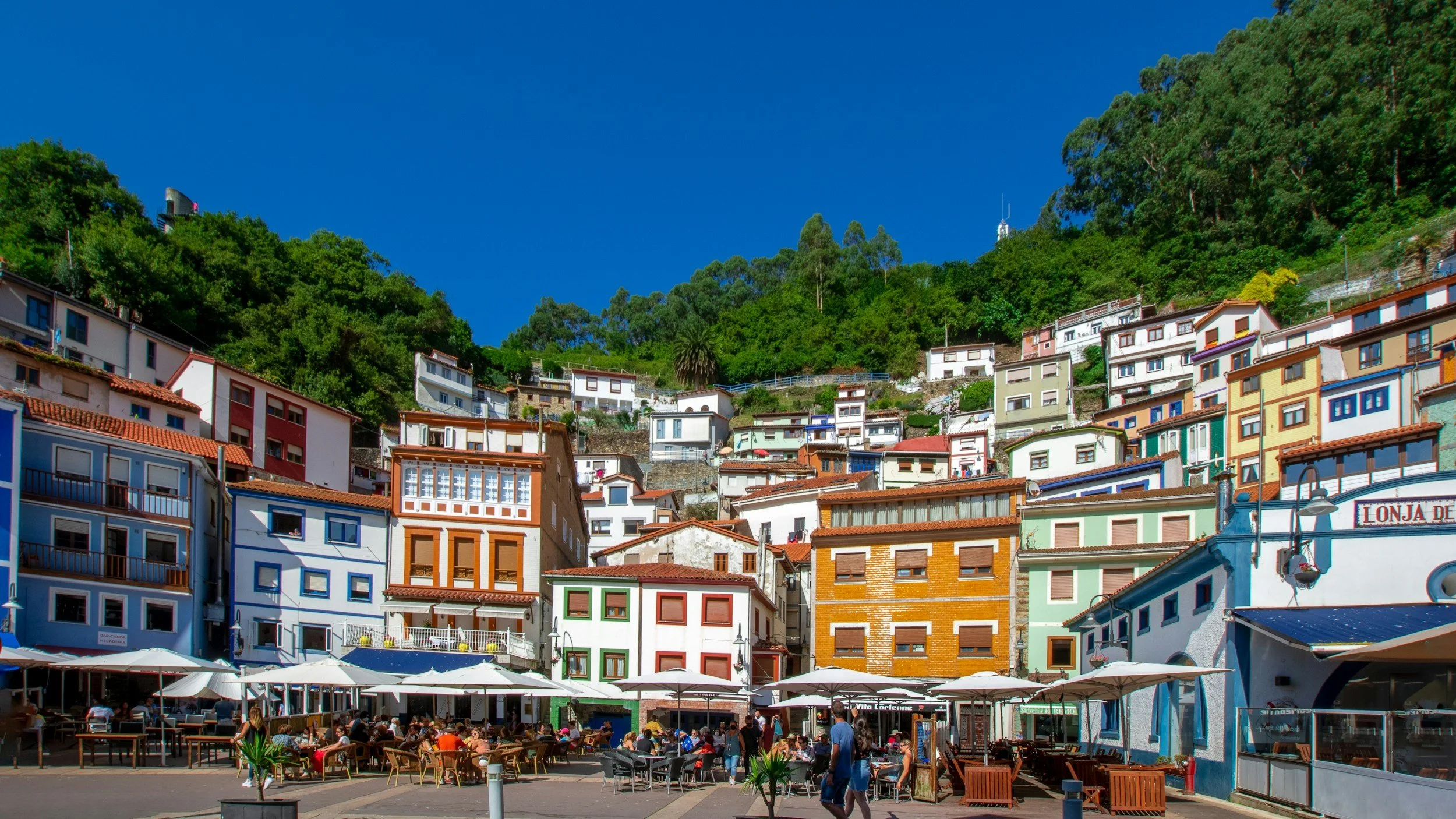
Cudillero is probably the town your heart tries to book before your brain has opened the timetable. It has the colourful harbour, the little seafood restaurants and exactly the sort of view that makes staying in a larger city feel like the boring option. Then you realise the railway station is uphill outside the village, many of the places you’ll want to see are spread along the coast, and getting anywhere else starts requiring far more thought than the photos suggested.
That’s the slightly frustrating thing about choosing where to stay in Asturias without a car. Oviedo looks like the sensible option, Gijón feels more like a holiday because the sea is right there, and the smaller towns are naturally the most tempting. But once I started checking the routes properly, I realised that some of the places that appear well connected on a map would leave you spending a surprising amount of time waiting for slow trains or arranging your day around one useful bus.
I’d still choose Oviedo for most first trips. It isn’t the exciting answer, perhaps, but having the bus and railway stations together near Calle Uría makes a much bigger difference than you might expect. You can visit Gijón and Avilés easily, get buses towards Cangas de Onís and Llanes, then come back to a city where finding dinner at 8pm doesn’t require any advance thought.
That doesn’t mean everyone should stay there. If waking up near the sea matters more than squeezing in as many day trips as possible, I’d choose Gijón. If you have enough time to slow the trip down and only want to explore eastern Asturias, Llanes is the smaller town that makes the most sense. And if Covadonga and the Picos are the main reason you’re coming, there’s a completely different argument for staying in Cangas de Onís.
So this guide isn’t going to pretend there’s one perfect base for every version of Asturias. It’s about working out which place will give you the trip you actually pictured… and which beautiful towns are much easier to enjoy once you stop trying to use them as a base.
Why Asturias looks easier on the map than it feels without a car
Asturias can be a little deceptive when you first open the map, because Oviedo, Gijón and Avilés are all sitting quite close together in the middle, Llanes and Ribadesella do not look that far away to the east, Cudillero seems perfectly manageable to the west, and the Picos de Europa rise behind all of it in a way that makes the whole region feel much more compact than it really is once you start relying on buses and trains.
That is where people tend to get caught out. You see that two places are only 60 or 70 kilometres apart and assume they will make an easy day trip, but in Asturias the useful question is rarely how far apart two places are. It is whether there is a direct bus, whether the train is actually a fast Cercanías service or one of the much slower narrow-gauge routes, where you are dropped when you arrive, and whether there is still a sensible way home once you have had lunch, gone for a walk and decided you would quite like to stay another hour.
The easiest way I have found to make sense of the region is to stop thinking of Asturias as one big transport network and instead picture a very well-connected central triangle, with the eastern coast, western coast and mountain valleys becoming progressively more separate once you move away from it.
The central triangle is where everything feels easy
The stretch between Oviedo, Gijón and Avilés is the part of Asturias where travelling without a car feels wonderfully straightforward. Renfe’s Cercanías network connects the main urban area, ALSA runs frequent buses between the three cities, and current direct journeys between Oviedo and Gijón or Oviedo and Avilés can be around half an hour, depending on the service you choose.
What matters here is not simply that public transport exists, but that you have enough useful options that the day does not have to revolve around them.
If you are staying in Oviedo, for example, you can have breakfast, go to Gijón, walk the curve of San Lorenzo, continue through Cimavilla and up to Cerro de Santa Catalina for the view beside Eduardo Chillida’s Elogio del Horizonte, and still head back to Oviedo without feeling as though you have spent the whole afternoon counting down to one specific bus.
Avilés works in much the same way. Once you arrive at the combined transport area, you are close enough to walk towards Sabugo and Plaza de España, follow the arcades of Calle Galiana, cut through Ferrera Park and cross towards the white curves of the Centro Niemeyer without needing another complicated transfer. It feels like a proper day out rather than an expedition, which is why I would have no hesitation staying in one of the central cities and visiting the other two from there.
It is also why I would not split a short trip between Oviedo and Gijón just because you want to experience both. On a four- or five-night stay, you are packing your suitcase, checking out and checking in again to solve a geographical problem that barely exists.
Once you start travelling farther east or west, the map becomes much less helpful.
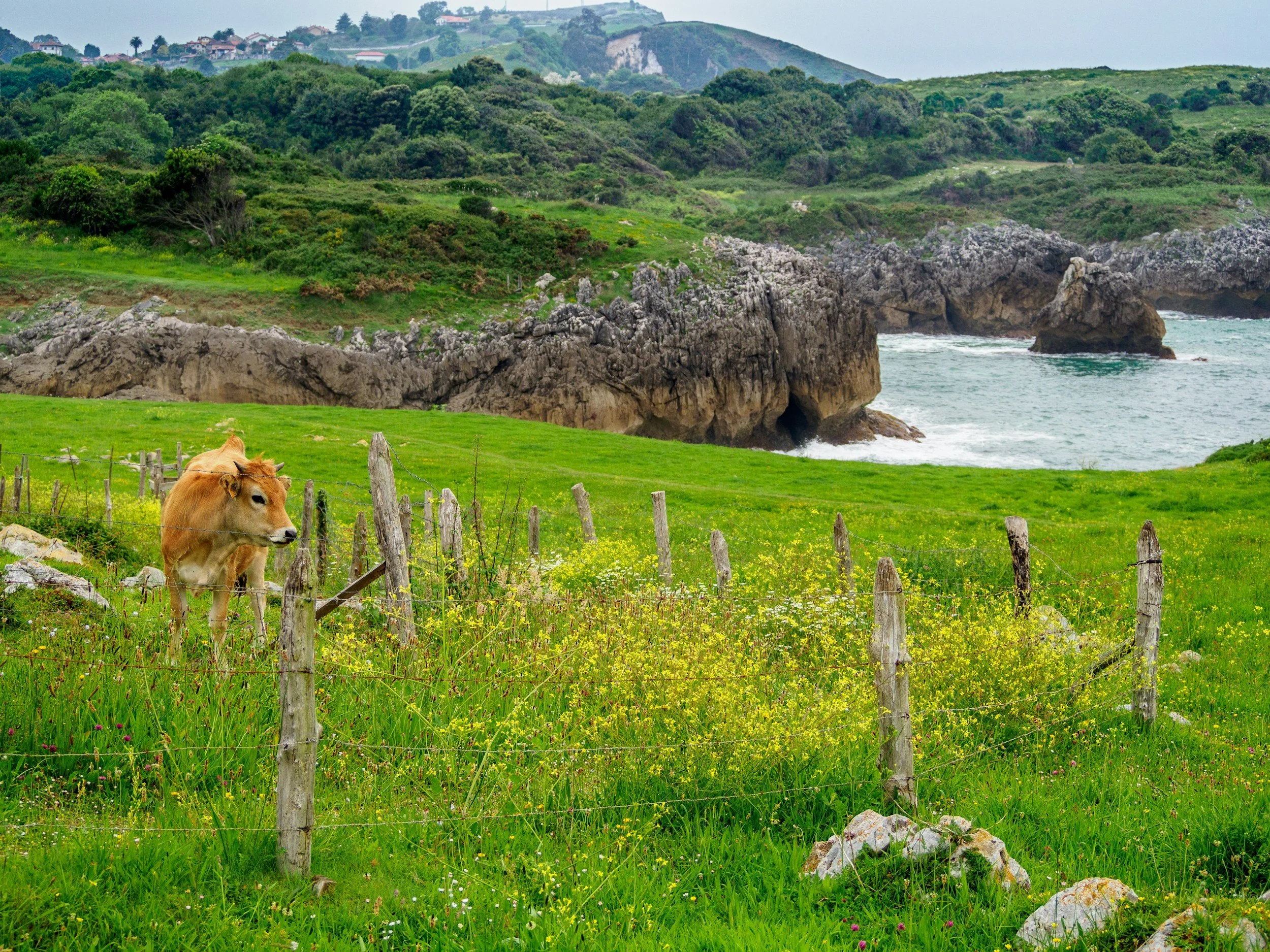
The train can be the slow option, which is slightly counter-intuitive
Asturias has an extensive narrow-gauge railway network, and on paper it looks fantastic. You will still hear people refer to these trains as FEVE, although the old FEVE services are now part of Renfe and increasingly appear under names such as Cercanías AM or Ancho Métrico.
The lines reach along large parts of the coast and connect places that otherwise look quite remote, which can make it tempting to assume that a town with a railway station must be an easy train day.
That is very much not always the case.
Oviedo to Llanes is probably the example I would remember. Current direct ALSA buses can make the journey in roughly 1 hour 15 minutes, while a narrow-gauge rail journey can take a little over three hours. The train is not a bad journey, and if you have plenty of time and actually want the slower route it can be a lovely way to see a different side of Asturias, but it is a completely different proposition from taking an express bus east for the day.
If my plan was to arrive in Llanes in time for lunch, walk the Paseo de San Pedro, go down to Sablón beach, wander around the old town and harbour and perhaps squeeze in Toró beach before heading back, I would be checking ALSA first rather than assuming the railway must be the obvious choice.
That is one of the biggest differences between planning Asturias and planning somewhere with a simple high-frequency rail network. Here, the bus is often the transport I would look at first for longer regional trips, especially towards Llanes, Ribadesella and Cangas de Onís, while the train can be excellent for particular corridors but should not automatically be treated as the quicker option.
There are journeys where rail still makes perfect sense, of course. Renfe’s C4 reaches Cudillero from Gijón, for example. The point is not that the trains are bad, but that all the lines on the map are not giving you the same kind of service. A half-hour central Cercanías journey, a direct 75-minute coach and a three-hour narrow-gauge train can look surprisingly similar when you are planning from a map, yet they create completely different days.
If the train side of this trip is still the part making you hesitate, I’ve also written a much more practical guide to using Renfe trains in Spain without getting confused, which is worth reading before you start comparing Spanish rail journeys.
Once you head east or west, it starts making sense to stay there
The eastern side of Asturias begins to form its own little travel area around Llanes, Ribadesella, Arriondas, Cangas de Onís and the approaches to the Picos, and once you are already based there, the geography suddenly becomes much kinder.
Llanes and Ribadesella are linked by direct buses, and Llanes itself gives you enough to do on foot that you are not constantly looking for another connection. The harbour, the old centre, Sablón, Toró and the cliff-top Paseo de San Pedro are all part of the town, and if you happen to be there on a Tuesday there is also the local market, which makes staying overnight feel quite different from arriving in the middle of the day with everyone else and leaving again before dinner.
This is exactly why I think Llanes works so much better as a genuine smaller-town base than some of the more photogenic places people automatically save.
The western side has its own logic around Avilés, Salinas, Muros de Nalón, Cudillero, Luarca and the western coast, and Cudillero is probably the best example of why “reachable” and “easy base” are not the same thing.
Yes, there is a railway station. Yes, there are buses. But the famous harbour sits steeply below the surrounding terrain, and many of the places people associate with Cudillero municipality, including beaches and Cabo Vidio, are spread well beyond the little amphitheatre of houses around the port.
The accommodation trap matters here too. A booking site can quite legitimately describe a property as being in Cudillero or Llanes because it lies within that municipality, while the hotel itself may be several kilometres from the harbour, old town, restaurants or station.
That is one detail I would always check before booking. Open the actual property pin, look at the walking route rather than the straight-line distance, check whether there is a pavement, look at the gradient, and then work out where you would eat at 20:30 if you did not have a car.
A lovely rural terrace stops being quite as charming when you discover every evening ends with trying to find a taxi.
The Picos are where vague transport advice becomes especially unhelpful
The mountains need even more care because “the Picos de Europa” is not one place you can simply add to the itinerary.
You can absolutely reach Cangas de Onís without a car. ALSA runs direct services from Oviedo, with quicker journeys around the 1 hour 20 minute mark, and Cangas is one of the obvious gateways for Covadonga.
During the regulated access periods, the official transport system then connects Cangas de Onís with Covadonga and the Lagos de Covadonga, which makes that particular mountain day very realistic without driving.
But that does not mean that staying in Oviedo has suddenly given you easy public-transport access to the entire national park.
Poncebos, the Bulnes funicular, the start of the Ruta del Cares, Sotres and the trailheads around Cabrales sit in a different part of the mountains and use a different transport setup. Seasonal services around Arenas de Cabrales can help with access towards Poncebos and surrounding mountain villages, but this is something I would plan as a specific journey rather than treating it as interchangeable with Covadonga.
That sounds like a small distinction when you are still planning at home, but it becomes quite an important one once you realise that the hike you saved starts in a completely different valley from the bus you thought you were taking.
Whenever I see “day trip to the Picos” in an itinerary, I would immediately ask which part of the Picos? That one question can save you a lot of frustration.
I would always check the journey home before deciding somewhere is an easy day trip
This is probably the part of car-free planning that gets overlooked most often.
A destination can be beautifully connected at 09:00 and still feel strangely restrictive by late afternoon if the return services thin out. I do not only want to know that I can reach Llanes or Ribadesella in the morning; I want to know whether I can have lunch without rushing, whether I can take another walk if the clouds finally clear, and whether deciding to stay for dinner has just turned the journey home into a problem.
Bus frequencies can vary between weekdays, weekends, holidays and seasons, so I would always look at the last useful return, not simply the first convenient departure.
Llanes is a good example of why this matters. When you are staying in town, there is no countdown running in the background. You can finish the Paseo de San Pedro, wander down towards the harbour, take your time over dinner and walk back to your hotel afterwards, and the local tourism office specifically notes that there are restaurants and sidrerías operating through the year rather than the whole town existing only for July and August.
That is a very different feeling from having a lovely afternoon and then spending the final hour checking your phone because the sensible bus back to Oviedo is becoming increasingly important.
And this is also why I would not dismiss the cities just because Llanes or Cudillero looks prettier in photographs. Your holiday does not finish when the bus gets back.
In Oviedo, you can return from a day out and still be within an easy walk of Calle Uría, Campo de San Francisco, El Fontán and Gascona. On the station side of the centre, Pionero Coffee Roasters on Calle Marqués de Pidal gives you a proper independent specialty-coffee stop rather than another generic café, while Kafka & Co is the sort of independent bookshop I would happily lose an hour in, with new and second-hand books, stationery and drinks rather than a souvenir-heavy setup aimed mainly at visitors.
Gijón gives you a completely different evening. You can come back and head towards San Lorenzo, the marina or Cimavilla, or end up at La Revoltosa on Calle Juan Alonso, an independent bookshop-café and cultural space that has been part of the city for years and stocks smaller publishers as well as hosting events.
Those places are not little extras I am throwing in because every travel article apparently needs a café recommendation. They are part of what makes a good base work. You are going to spend several mornings and evenings there, so I care about whether there are places I would actually enjoy returning to once the sightseeing part of the day is over.
One base can cover a lot of Asturias, but I would not force it to cover everything
You can absolutely stay in Oviedo for a week and take trips in several directions, and for some people that will still be the easiest option because unpacking once has real value.
But if the plan starts becoming Llanes one day, Cudillero the next, Covadonga after that, Ribadesella later in the week and another mountain day squeezed in somewhere, I would start questioning whether avoiding one hotel move is really making the trip easier.
For three or four nights, I would happily stay central and accept that one or two outings will be longer.
For a longer trip, I would rather make the second base actually change the geography. Stay in Oviedo or Gijón first, then move east to Llanes or Ribadesella if the coast is becoming the main event, or to Cangas de Onís if the mountains are the reason you came.
What I would not do is move from Oviedo to Gijón simply to feel that I had seen another part of Asturias. They are much too close for that to buy you very much.
And if you are thinking about continuing east into Cantabria after Asturias, I would seriously consider staying overnight in Santillana del Mar rather than seeing it as another quick afternoon stop.
If I wanted one base for Asturias, I’d choose Oviedo
If I were coming to Asturias for the first time, knew I was not going to rent a car and wanted to unpack once for four or five nights, Oviedo is the place I would book.
Not because it somehow puts the whole region within an effortless hour, because we have already established that Asturias does not work like that, but because Oviedo removes a surprising number of small annoyances at once. You can arrive from the airport without arranging a transfer, the bus and railway stations sit together rather than on opposite sides of the city, the centre starts almost as soon as you leave them, and when you come home from a day trip you are coming back to somewhere with enough restaurants, markets, museums, shops and ordinary city life that the evening does not feel like the bit of the day you forgot to plan.
That combination is what makes Oviedo stronger than simply calling it “central”.
Why Oviedo makes the practical side unusually easy
The arrival is about as straightforward as I could ask for.
Asturias Airport does not have a railway station, but Aena currently lists direct ALSA buses from the terminal to Oviedo throughout the day, alongside services to Gijón and Avilés. In Oviedo, you arrive at the bus station on Pepe Cosmen, immediately beside the railway area, and from there Calle Uría runs straight into the centre.
That sounds like the least exciting possible reason to choose a holiday base until you picture arriving in Asturian rain with a suitcase.
If I booked somewhere along the first part of Uría or around the streets leading towards Campo de San Francisco, I could get off the airport bus, walk to my hotel, leave my bag and be having coffee in the centre without first working out another local bus. If I arrived from Madrid by train, the same logic applies.
And unlike some station areas that are useful but not particularly somewhere you would choose to spend time, this one blends into the city very quickly. Walk down Uría and you reach Campo de San Francisco, then Plaza de la Escandalera, Teatro Campoamor and the older streets beyond, while a few more minutes takes you towards the Cathedral, Rúa, Cimadevilla, Plaza Trascorrales and El Fontán. Oviedo’s own tourism material describes Escandalera as the centre of the city, and that is a pretty accurate way to think about this whole corridor when you are choosing accommodation.
This is probably the part of Oviedo I would appreciate more on day four than day one. You start developing a little route without thinking about it: down Uría in the morning, through Campo de San Francisco, perhaps across El Fontán later, then back towards the station side of town in the evening. Nothing is particularly far away and you are not constantly choosing between “nice area” and “useful transport area”.
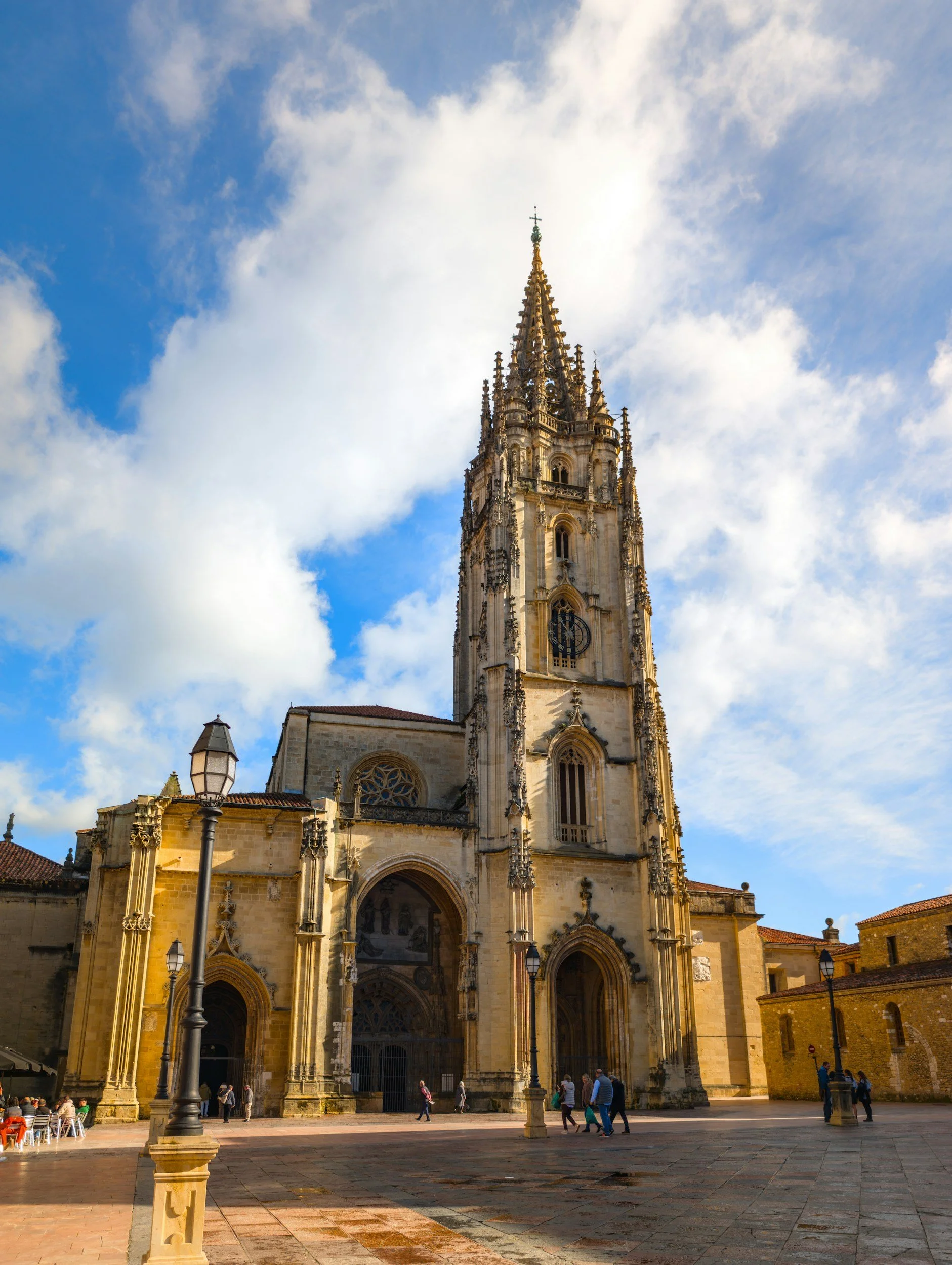
Oviedo also works when the weather is awful, which is more important here than it sounds
I would genuinely factor this into the decision.
Asturias is not somewhere I would plan on the assumption that every day will be made for beaches and mountain walks, and Oviedo is probably the base I would least mind waking up in if I opened the curtains and thought, absolutely not today.
The Museo de Bellas Artes de Asturias alone can take up a proper chunk of a wet afternoon. It sits beside the Cathedral and has more than 15,000 works in its collection, with Spanish and Asturian art ranging from El Greco, Zurbarán and Goya through Sorolla, Picasso, Miró, Dalí, Tàpies and Barceló, plus artists such as Evaristo Valle and Nicanor Piñole who give you more of a sense of Asturias itself rather than another greatest-hits tour of Spanish art.
A few minutes away, the Museo Arqueológico de Asturias is inside the former monastery of San Vicente, with galleries moving from prehistory and the castro settlements through Roman and medieval Asturias. I would actually give it time rather than treating it as the emergency museum you run into because it is raining.
Then you have the Cathedral and Cámara Santa, and one very small detail I like knowing about in advance: La Foncalada, the little Pre-Romanesque fountain near the lower end of Gascona, is just sitting there in the city rather than requiring a formal museum visit. You can pass it on the way between the old centre and the cider streets rather than putting “see medieval fountain” into Google Calendar.
And because this is still a working city rather than a place living mainly from summer visitors, I would mix those bigger cultural stops with somewhere I might actually spend an ordinary hour.
Librería Cervantes, on the Uría side of the centre, has been selling books in Oviedo since 1921 and still describes itself as an independent bookshop. It is exactly the kind of shop I would save for a rainy afternoon when I did not want another attraction.
For contemporary art, Galería Guillermina Caicoya on Calle Principado is a proper commercial gallery with a changing contemporary programme rather than another municipal exhibition room, and its current published opening hours are weekday daytime and evening sessions, so it is somewhere you can realistically drop into while walking around the centre.
And close to the Cathedral, Coffee Stories on Calle del Águila is currently serving specialty coffee and matcha alongside breakfast and plant-based options, which is useful to know if you have reached the point in the trip where another traditional café con leche is not quite what you want.
None of these places is a reason to fly to Asturias on its own, obviously. Together, though, they are why I would be quite relaxed about giving Oviedo a day with no excursion attached to it.
I would save at least one morning for El Fontán rather than treating Oviedo purely as a transport hub
El Fontán is one of those areas that makes more sense when you are sleeping in the city and can wander over without turning it into a sightseeing stop.
The covered market itself is still a working food market, currently open through the week and on Saturday mornings, with stalls selling meat, fish, cheese, vegetables and Asturian ingredients rather than existing purely as a visitor attraction. Around it, the trading spills into Plaza del Fontán and Daoíz y Velarde, where outdoor market activity traditionally takes place on Thursday, Saturday and Sunday mornings.
This is where I would buy something edible to take home rather than another souvenir, or simply have a look at what people are actually buying for dinner.
The whole little cluster around Plaza del Fontán, Daoíz y Velarde and Plaza Trascorrales is also one of the nicest places in central Oviedo to walk without needing a route. You get porticoes, coloured façades, little side streets and the market within a few minutes of each other, and because the old town is compact you can quite easily end up here several times during a stay rather than seeing it once and considering it completed.
For lunch or dinner, El Fondín de Trascorrales is especially well placed because it sits right on Plaza Trascorrales and works with seasonal produce, with the restaurant itself pointing out that El Fontán market is only around 100 metres away. It is a more useful recommendation here than sending someone across town for a destination restaurant when they are already spending the morning in this part of Oviedo.
If I wanted something to take home, I would also stop at Casa Veneranda on Melquíades Álvarez, a fourth-generation family food shop that began in 1927 and still sells Asturian cheeses, fabes, preserves, cider and other regional products. Their current shop includes Cabrales, Afuega'l Pitu and prepared fabada ingredients, so this is where I would be looking if I wanted something more useful than a generic airport gift box.
Then there is Gascona, which I would absolutely go to but would not try to sell as some undiscovered local secret. It is Oviedo’s famous cider street, people know about it, and it can be busy, but that does not make it irrelevant. The useful thing for this particular article is that the sidrerías here are part of a year-round city food culture rather than a strip of restaurants waiting for July to arrive. Oviedo’s own tourism material still treats Gascona as the city’s established Bulevar de la Sidra.
If you want somewhere specific rather than walking up and down reading menus, Las Güelas at Gascona 15 is still operating and bases its concept around dishes inspired by the owners’ grandmothers, alongside the usual cider-house experience.
I like that Oviedo gives you both versions of the evening. You can go full sidrería on Gascona one night and then have something much quieter around Trascorrales the next without travelling anywhere.
Monte Naranco is much easier to add than it looks on the map
Another detail I would know before arriving is that you do not need to organise a taxi just to see the Pre-Romanesque churches on Monte Naranco.
Oviedo’s current TUA line A stops at Prerrománico and Avenida de los Monumentos, which puts Santa María del Naranco and San Miguel de Lillo within reach of the normal urban bus network rather than turning them into a half-day transport exercise.
I would keep this for a clearer morning if I had the choice, partly because the setting makes much more sense when you can actually see out across Oviedo and the surrounding hills. It is also a nice way of getting beyond the old centre without sacrificing half the day to a regional excursion.
If I had four nights in Oviedo, I could very easily imagine doing this on the morning of a slower day, coming back into the centre for lunch and then spending the afternoon around El Fontán or the museums rather than feeling that every day needed a bus out of the city.
Where I would actually stay in Oviedo
If I was choosing a hotel purely for this kind of trip, I would not overcomplicate the search.
The area I would look at first is the corridor from the station end of Calle Uría down towards Campo de San Francisco and Plaza de la Escandalera. It gives you the part of Oviedo I think matters most without a car: you can walk to both the bus and railway stations, but you are also already in the commercial centre and only a few minutes from the old town. Oviedo’s official tourism material identifies Escandalera and the Uría/Fruela area as the central shopping and city core, which matches the geography surprisingly well for a visitor.
If I knew I was going to take several early buses, I would lean slightly towards the station end, around upper Uría, Independencia, Marqués de Pidal or Doctor Casal. It is not the part of Oviedo that would necessarily win if you were choosing a hotel from photographs alone, but at 07:15 on the morning you are going to Cangas de Onís you will probably feel very pleased with yourself.
If I wanted the nicest compromise, around Campo de San Francisco or Plaza de la Escandalera would probably be my choice. You are still walking back towards the stations rather than depending on a local bus, but the park is right there, Teatro Campoamor is nearby and the old centre begins a few streets away.
Then there is the northern edge of the historic centre around Foncalada, Gascona and Jovellanos, which I would choose if being able to walk straight out into the older streets mattered more than shaving a few minutes off the journey to the bus station. This is where I would just look at the exact street before booking rather than trusting the phrase “historic centre”.
Oviedo is very walkable once you are there, but old paving and slightly uneven streets feel different when you have a rolling suitcase behind you, and I would rather know that before arriving.
I would also be quite ruthless with cheap apartments farther out.
There is nothing wrong with residential parts of Oviedo such as Montecerrao, La Corredoria or the area around HUCA, and the city has a proper urban bus system linking outer neighbourhoods into the centre. But if I am specifically choosing Oviedo because I want regional buses and trains on my doorstep, I do not want to begin every day trip with another local bus just to reach Pepe Cosmen. TUA’s current network covers those outer areas, but that extra connection chips away at the exact advantage you chose Oviedo for.
For this trip, I would happily pay a little more to be able to walk to the station without thinking about it.
The day trips I would actually plan from Oviedo
We have already gone through why the central transport triangle works, so I would not sit in Oviedo trying to collect as many possible destinations as I could. I would use the city for a few trips that are genuinely worth the effort and leave the rest for another base if the itinerary starts pulling too far east or west.
Gijón is the easiest one to keep loose. There are frequent direct public-transport links, so I would not necessarily decide six months in advance which exact day was “Gijón day”; I would wait for decent coastal weather and go when San Lorenzo and Cimavilla sounded more appealing than a museum afternoon in Oviedo.
Avilés works in much the same way, and because its transport interchange is close to Sabugo, the historic centre, Ferrera Park and the Niemeyer Centre, it is one of those trips where you arrive and can forget about transport again until it is time to go home.
Cangas de Onís is the trip I would plan more deliberately. Current ALSA information shows more than twenty daily services in the reverse direction and no night service, which is exactly why I would look at both the outward and return options rather than treating “lots of buses” as permission to stop thinking about the timetable.
And I would happily do Llanes once from Oviedo if I was only in Asturias for four or five nights. I would just choose a fast direct bus rather than improvising on the day, give Llanes the whole outing and accept that if I discovered I wanted three more eastern-coast days, that was probably a sign I should have been staying there for part of the trip.
Cudillero is possible too, but I would not put it in the same “easy” category as Gijón or Avilés. The transport exists, but once you add the journey length and the steep geography at the other end, it becomes the sort of day I would plan because I specifically wanted Cudillero, not because I happened to have a spare afternoon.
That is the distinction I would keep making from Oviedo: there are places you can casually decide to visit and places that deserve their own properly planned day.
When I would choose somewhere else
The big weakness in Oviedo is not hidden at all: you cannot walk out in the morning and see the sea.
If that is the image you have in your head when you think about Asturias, I would not let me talk you into Oviedo simply because the transport is convenient.
If I wanted to have coffee and then walk straight onto San Lorenzo, or I knew that I would end most evenings somewhere by the Cantabrian Sea, I would stay in Gijón and happily accept that a few regional journeys might be slightly less tidy.
I would also think twice about Oviedo if almost everything I had saved was east of the city. If your trip is becoming Llanes, Ribadesella, eastern beaches, Cangas de Onís and the Cabrales side of the Picos, staying centrally and commuting east again and again eventually stops being clever.
And if what you want is a seaside-resort feeling, Oviedo simply is not going to turn into one because Asturias happens to have a coast.
What it gives you instead is something I think is more useful for a mixed trip: you can come home to El Fontán, Gascona, the Cathedral streets, a really good art museum, an independent bookshop, a proper food shop and a city that has somewhere to go even on a wet November evening, while the bus and railway stations are waiting at the other end of Uría when you want to leave again the following morning.
I’d choose Gijón if I wanted the sea to be part of every day
If the idea of going to the coast sounds slightly ridiculous because you would rather already be there when you wake up, Gijón starts making much more sense. San Lorenzo is not a beach you travel out to after breakfast; it curves around the edge of the city centre, with the long promenade everyone calls El Muro running beside it, people walking it in every season, surfers farther east and the distinctive white tower of La Escalerona dropping straight down onto the sand near the central part of the bay. Official tourism information describes the Muro as more than a kilometre and a half long and very much part of everyday city life rather than a summer-only promenade.
That changes the whole feel of a car-free stay.
In Oviedo, the big advantage is that you can leave easily. In Gijón, one of the advantages is that there are days when you really do not need to.
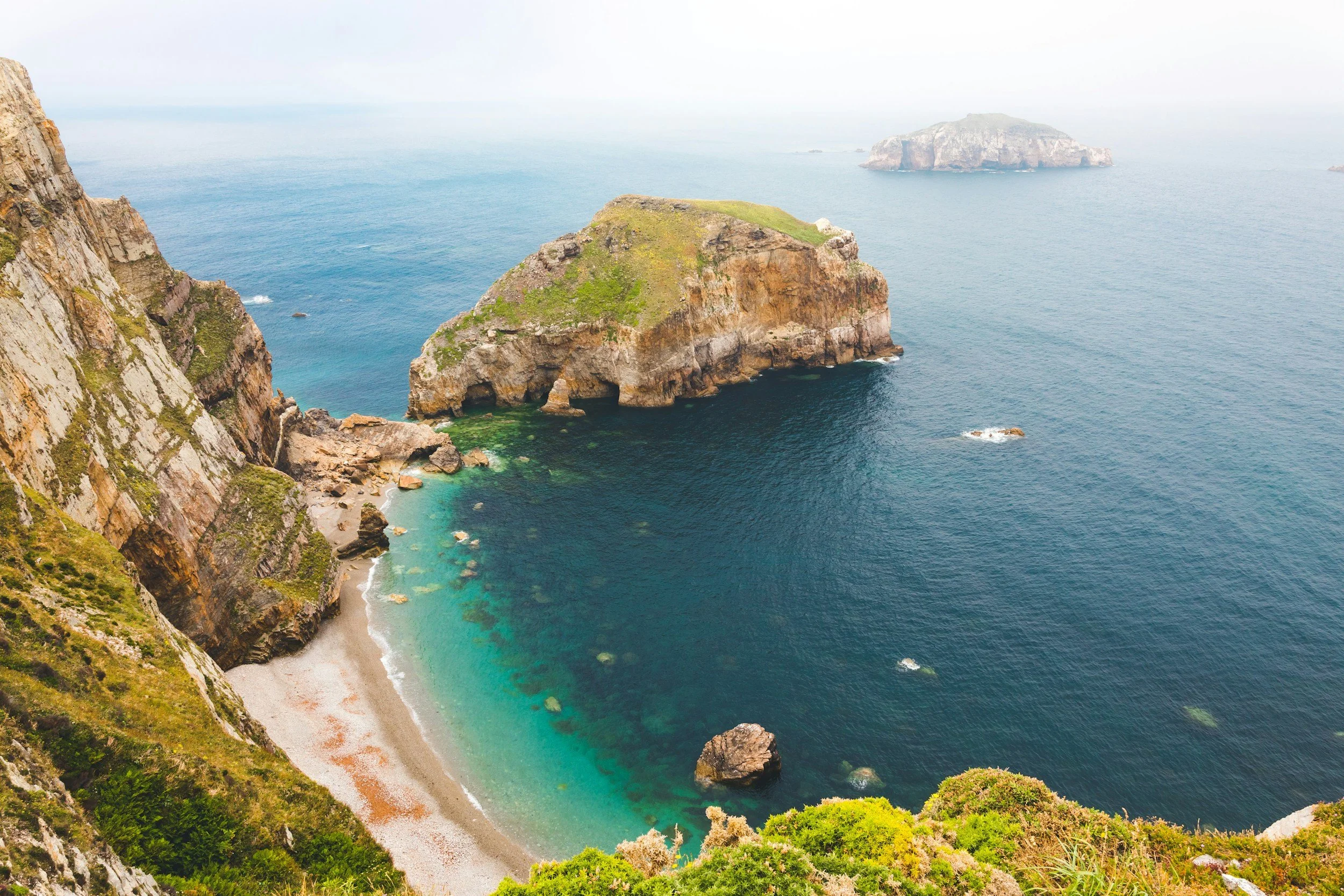
Why Gijón works when the coast is what you came for
I think the best argument for Gijón is what happens on the days when you have absolutely nothing planned.
You can walk down to San Lorenzo before breakfast, follow the Muro towards San Pedro, disappear into the streets of Cimavilla, come back down beside the marina and realise you have already had a very good morning without opening ALSA once.
Cimavilla is the obvious old part of the city, but it is worth knowing a little more than simply “former fishing quarter”. The neighbourhood occupies the headland between San Lorenzo and the marina, so streets rise towards Cerro de Santa Catalina, where Eduardo Chillida’s Elogio del Horizonte looks out over the Cantabrian Sea, while down below you have the Roman Baths of Campo Valdés tucked underneath San Pedro and the older harbour side around Cuesta del Cholo. The latter is still one of Gijón’s habitual meeting places, particularly when the weather behaves, with people sitting on the slope by the old port with cider rather than treating it as somewhere you photograph and immediately leave.
That is one of the reasons I would rather stay in Gijón than visit it for six hours if the coast mattered to me. You get the version after the sightseeing part is over.
You can walk back through Plaza Mayor, follow the marina past the old fishing-port side of the city, or head into the flatter commercial streets around La Merced, Cabrales, Los Moros and Corrida. Gijón is actually slightly awkward to describe as having one centre because it does not really work that way. Asturias Tourism makes the same point, describing the Muro, Cimavilla, the marina, the bourgeois Ensanche, El Humedal, Begoña and La Arena as overlapping parts of the central city rather than one tiny historic core.
I think that is a positive once you stay for several nights, because you stop walking the same three streets every evening.
If I was around the marina, I would also go into the Museo Barjola on Calle Trinidad rather than assuming all of Gijón’s culture is sitting out at Laboral. It occupies the historic Trinidad complex and combines Juan Barjola’s permanent collection with temporary contemporary exhibitions, so it is an easy little cultural stop between the marina and the central streets rather than something requiring half a day.
For books, I would save Librería Paradiso on Calle de la Merced. It opened in 1976 and still sells both new and second-hand books and records, with particularly strong sections in literature, art, theatre, cinema, music and comics. This is exactly the kind of independent place I want to know exists before choosing a base, because it gives you somewhere interesting to wander into when the weather turns rather than another generic shopping street.
A little farther east, Toma 3 on Marqués de Casa Valdés is another good example of how Gijón feels once you stop treating it as a beach destination. It describes itself as a cultural bar and bookshop-café and has been around in different forms since 2000, with book events, music and other programming alongside coffee and drinks.
And if I wanted something more everyday in the morning, I would go through Mercado del Sur at Plaza Seis de Agosto, the iron market hall that still functions as a proper food market rather than a converted gourmet hall. Fish, meat, cheese and produce are still the point, and its location between the bus-station side of town and the main centre makes it particularly easy to work into an ordinary morning rather than scheduling it as an attraction.
That is really the version of Gijón I think makes a convincing base: beach walk before coffee, a market that people actually shop in, an old bookshop with records in the window, contemporary art near the harbour and somewhere to have cider when you come home.
You can also keep walking long after San Lorenzo ends
One thing I think gets underplayed in generic Gijón guides is how useful the coast is when you are staying for several days and like walking.
If I had already walked San Lorenzo twice, I would not think I had “done” the seafront. At the eastern end, around El Rinconín, you can continue onto the Senda del Cervigón, which follows the coast past cliffs and small coves towards La Ñora. Asturias Tourism describes the route as roughly ten kilometres, with Parque de la Providencia around half an hour farther along and a viewpoint over the Bay of Biscay.
That gives you a very different kind of no-day-trip day. You can start walking from your hotel rather than travelling somewhere to start walking, go as far as you feel like, and turn around when Asturias inevitably produces a cloud you do not entirely trust.
This is also why La Arena deserves to be treated as more than “the neighbourhood beside the beach”. If I knew I wanted to run or walk San Lorenzo most mornings, swim when the weather allowed it and use the seafront almost every day, I would seriously consider staying there even though it is not my first choice for a train-and-bus-heavy itinerary.
Where I would actually stay in Gijón
This is where Gijón requires a little more thought than Oviedo, because the railway station, regional bus station and nicest stretch of beach are not all sitting together.
The ALSA station is on Calle Magnus Blikstad, beside the El Humedal side of the centre, while Renfe’s Gijón-Sanz Crespo station is farther west on Calle Sanz Crespo. Renfe itself notes that Sanz Crespo has easy pedestrian access towards the Railway Museum and Poniente, which gives you a good sense of the geography: the railway station is much more naturally attached to the western waterfront than to San Lorenzo.
So I would choose the neighbourhood according to how I expected to spend the week rather than searching for the universally “best area”.
For most car-free trips, I would stay around Centro or El Humedal.
The streets around Plaza del Humedal, Plaza de Europa, Begoña and the western side of the commercial centre give you a very good compromise. You are near the regional bus station, which matters if you are planning Llanes, Ribadesella or Villaviciosa, but you can still walk through the centre towards the marina and San Lorenzo without needing an urban bus every time you want to see the sea.
This area is also much less of a transport-only choice than it may look on a map.
The Museo Nicanor Piñole is on Plaza de Europa, with thousands of works on paper and paintings connected to the Gijón-born artist, while Mercado del Sur is nearby and El Requexu on Avenida de la Costa is one current sidrería option only a couple of minutes from Begoña and the market. The restaurant itself describes its location as central and close to both places, which is exactly the sort of practical evening option I would want if I was staying around El Humedal rather than down by the harbour every night.
If the beach is genuinely the priority, I would move east into La Arena.
Here you are much closer to the everyday stretch of San Lorenzo and can be on the Muro almost immediately, which is worth more than being five minutes nearer the bus station if you only intend to take one or two regional trips.
The compromise is simply that every day-trip morning begins with a longer walk back towards El Humedal, or an urban bus, and the farther east you go towards Isabel la Católica and El Rinconín, the more noticeable that becomes.
I would therefore be slightly cautious with a hotel that advertises itself as “right by San Lorenzo” if its exact address is almost at the eastern end of the bay and I already know I want three ALSA day trips. Beautiful location, yes. Convenient regional base, increasingly less so.
Cimavilla is the one I would book mainly because I loved Cimavilla.
There are some gorgeous corners around the old streets, Plaza Mayor, the marina side and the climb towards Santa Catalina, and being able to wander down Cuesta del Cholo in the evening is a very good reason to stay there.
But this is the part of Gijón where I would pay attention to the exact street, because the headland is hillier than the rest of central Gijón and official tourism material quite openly describes Cimavilla as a lively, partying neighbourhood full of chigres and terraces.
That can be exactly what you want. It can also be less charming at 01:00 if the entire reason you chose Gijón was peaceful morning walks.
So my own compromise would probably be Centro between El Humedal and the San Lorenzo side of town, close enough to walk to the bus station without drama but far enough east that the beach still feels like part of daily life.
The trips I would actually take from Gijón
The good thing about staying here is that the day-trip map naturally follows the coast, so I would work with that rather than trying to recreate an Oviedo itinerary from the wrong base.
Oviedo is barely something I would plan in advance. Current ALSA service between the two cities is extremely frequent and the fastest buses are around half an hour, with rail as another option, so I would simply choose a day when an inland city sounded more appealing than the beach and go.
Avilés is similarly easy to justify, especially because you can arrive, walk around the historic centre and Niemeyer area and come back without turning the day into a sequence of connections. Gijón’s main bus station currently lists Avilés among its direct regional destinations.
Then you get to the trips where I think Gijón starts becoming more interesting than Oviedo.
Villaviciosa is very easy to overlook, partly because it is not the coastal village people have already saved fifty photographs of, but I actually think it makes a lot of sense from Gijón. Current CTA information shows direct weekday services from Gijón bus station, including direct journeys of around half an hour on some departures.
Once there, I would treat it as a proper little food-and-cider town rather than a gateway you rush through on the way to Tazones. Villaviciosa sits at the heart of Asturias’s cider-producing area and has a compact centre, shops and local food businesses that make it work nicely when you want a smaller-town day without spending two hours getting there.
Ribadesella is the eastern-coast day I particularly like from Gijón. ALSA currently has numerous direct daily services between the two, although the actual timetable should always be checked for your dates.
Once you arrive, you get a very different coastal day from Gijón: the old-town side of the Sella estuary, the harbour and then the long sweep of Santa Marina across the bridge, with its early 20th-century villas lined along the beach. If Tito Bustillo is part of the reason you are going, I would book that separately rather than assume you can walk in, because cave access is one of the details worth checking well ahead.
Llanes is possible too, and Gijón’s bus station currently lists it among its direct regional destinations. I would still make it a deliberately planned full day rather than somewhere I casually decide to visit at lunchtime, because once you are that far east I want enough time for the old town, harbour and Paseo de San Pedro without immediately thinking about the return bus.
There are also two much less obvious little coastal days on the other side of Gijón.
Candás sits directly on Renfe’s C4 towards Cudillero, and the current service can get you there from Gijón-Sanz Crespo without changing. It is compact enough for a very easy outing, with a fishing harbour, old canning-town character and the coast immediately around you, and I think it is exactly the sort of place that works when you want somewhere smaller without committing an entire day.
Luanco is another possibility, but this is where I would use the bus rather than casually assume the C4 railway serves it because it appears beside Candás on the map. Luanco is on the nearby Gozón coast, while the railway continues through Candás towards Avilés and Cudillero. Regional bus services connect the Gijón side with Luanco, but I would check CTA or ALSA for the day rather than building permanent timings into the itinerary.
That little Candás/Luanco distinction is another good example of why I would always plan Asturias with the actual route in front of me rather than guessing from geography.
And yes, you can use the narrow-gauge coastal railway for some of these journeys. Sometimes I would.
But I would use it because I wanted the train journey, not because I had decided that anything running on rails must be faster. We have already seen how misleading that can be farther east, and Renfe’s C4 itself is vulnerable to occasional engineering changes and replacement services, as happened during works in summer 2026. For an evergreen trip, I would check the live Renfe service before relying on it for a time-sensitive day.
Gijón also has more evening life built into the stay
This is another place where I think comparing Gijón with Oviedo purely on transport misses the point.
Gijón has a noticeably broader evening geography. There are terraces and chigres around Cimavilla, people down at the marina and Cuesta del Cholo, restaurants through Centro, and plenty happening around Begoña and the streets behind San Lorenzo. The official regional guide specifically points to Fomento, the marina and Cimavilla for evening atmosphere and describes the city as active throughout the year rather than a seasonal beach resort.
That does not mean you need to want nightlife to enjoy Gijón. I actually think it works just as well if your idea of an evening is walking San Lorenzo at 20:00, finding somewhere for dinner and going home.
For a central sidrería, El Requexu is useful because you do not need to go all the way into Cimavilla to find somewhere with a proper Asturian menu. If I wanted something less traditional one evening, Zascandil on Calle Cervantes, in the Carmen side of the centre, is currently serving a more contemporary market-led menu and tapas and is particularly handy if you are staying closer to El Humedal and the bus station.
And if your timing happens to match it, I would also check whether the Mercado Artesano y Ecológico is taking place in Plaza Mayor. It runs on selected weekends rather than every week, so I would never promise it in an evergreen itinerary, but the official tourism office continues to list it as one of the city’s recurring markets. There is also a large Sunday street market around El Molinón, which is another local option if markets are something you actively plan trips around.
This is what I mean when I say Gijón is not simply Oviedo with slightly worse transport. The trade is much more interesting than that.
You give up a little of Oviedo’s all-direction convenience, and in return you get a base where the beach, waterfront walks, coastal neighbourhoods and evening life are already part of the trip.
I would still choose Oviedo for some trips
There are definitely itineraries where I would admire Gijón, spend a very nice day here and then happily get on the bus back to Oviedo.
If it was my first short visit to Asturias and I only had three or four nights, Oviedo still gives me the easier all-round setup because I can reach different sides of the region without leaning so heavily towards the coast.
I would also choose Oviedo if my days were going to be heavily about museums, historic architecture and cultural stops, particularly in wetter weather. Gijón has much more culture than the beach-city label suggests, including Museo Barjola, Nicanor Piñole, the Roman baths, Laboral and the Atlantic Botanical Garden, but some of those places are spread farther across the city, while Oviedo packs an extraordinary amount into a very compact centre.
If Cangas de Onís and Covadonga were definitely part of the plan, I would lean towards Oviedo too. Gijón is better placed for several eastern coastal journeys, but Oviedo is the cleaner starting point for the direct Cangas bus network described earlier, so I would not choose Gijón merely because it looks closer to the eastern side on a map.
The same goes for a trip in winter or a particularly wet period. I would still happily stay in Gijón, and walking San Lorenzo with dramatic weather can be half the appeal, but if I knew in advance that outdoor coastal time might be limited, Oviedo’s compact indoor cultural life becomes a bigger advantage.
But if I kept looking at the Asturias trip I was planning and realised that the things I was most excited about were a morning walk beside San Lorenzo, coastal buses east, a long afternoon in Ribadesella, coming home to cider near the marina and having another look at the sea before bed, I would stop trying to convince myself that the technically more efficient base must be the better one.
I would stay in Gijón.
If your Asturias trip is going to be in September or October, I’d also save these northern Spanish villages for an autumn trip, especially if cooler weather is making you rethink how much of the trip needs to revolve around the coast.
Avilés is the practical wildcard I wouldn’t ignore
Avilés is the place I would look at if Oviedo felt a little too obvious, Gijón sounded busier than I wanted, and I still cared quite a lot about making the transport side of the trip easy.
It gets left out of this conversation surprisingly often, or it gets reduced to “the industrial city with the Niemeyer Centre”, which does not really tell you what staying there would be like. In practical terms, Avilés has one of the easiest arrivals in Asturias, its bus and railway stations are together, the historic centre begins within a short walk, and the city naturally points you towards both the central triangle and the western coast rather than constantly pulling you east.
I would not call it the best base for everyone, and I still think Oviedo wins for a first mixed trip, but Avilés is much more useful than its reputation suggests.
Why Avilés works better than you might expect
The airport is the first reason I would take it seriously.
Asturias Airport sits only about 15 kilometres from Avilés, and the direct ALSA journey is currently the shortest of the three main-city transfers, roughly 20 to 25 minutes depending on the service. Aena confirms direct buses between the airport and Avilés, while ALSA describes Avilés as the quickest city connection from the terminal.
That makes Avilés particularly appealing if your flight gets in late enough that you do not fancy another 45 minutes to Oviedo, or if you have one of those irritating early departures where staying somewhere “more central for Asturias” suddenly matters much less than being able to reach the airport without getting up at an absurd hour.
Then you arrive and the city makes life quite easy again.
The bus station and railway station form one intermodal transport complex, so you are not dragging luggage across town every time you switch between ALSA and Renfe. From there, the medieval centre is already close, with Sabugo, the market area and the older streets reached on foot rather than via another urban bus. ALSA specifically describes the station as directly connected with rail and within easy reach of the historic centre.
This is where I think Avilés is nicer in real life than it first looks on Google Maps.
You leave the transport side of town and very quickly reach Sabugo, the former fishing quarter, with the old Church of Sabugo and Plaza del Carbayo, before the streets open towards the rest of the historic centre. Avilés tourism describes Sabugo as one of the parts of the old city locals use most in everyday life rather than simply a preserved historical quarter, which makes it a much better place to stay than somewhere that empties once visitors leave.
From there you can continue towards Plaza de España, which locals call El Parche, and then into Calle Galiana, probably the street I would most want near my hotel. Galiana dates from the city’s Baroque expansion and is lined with long arcades, which are not just pretty in photographs but genuinely useful in Asturias when the weather turns. It leads towards Plaza del Carbayedo and sits right beside Ferrera Park, so you get old streets, cafés and a proper green space within a very small area.
And then Avilés does something quite strange and interesting: you can walk from all of this medieval and Baroque architecture towards the estuary and suddenly be looking at the enormous white curves, yellow dome and bright red details of the Centro Niemeyer.
It is still the only work by Oscar Niemeyer in Spain, with exhibition space, cinema, performances and cultural programming rather than being one of those architectural landmarks you photograph from outside and then discover there is very little happening inside. The open plaza itself sits directly on the estuary, so even if you do not go to an exhibition, I would cross over and walk around it at least once.
That contrast between Galiana and Niemeyer is actually one of the things I find most convincing about Avilés. It does not feel like a tiny historic centre that has been frozen in time for visitors, because the working port, industrial landscape and contemporary architecture are all still sitting around it.
I would give Avilés at least one morning rather than treating it purely as a cheaper place to sleep
The Mercado de Hermanos Orbón is where I would probably start.
The covered market sits in the arcaded Plaza de los Hermanos Orbón, and Avilés still holds its traditional weekly market here on Mondays, a practice that goes back to the market privilege granted after the great fire of 1478. The building itself remains a food market, while the surrounding square and streets fill out further on market day.
I like this part of Avilés because you can do quite a lot without turning the morning into sightseeing. Walk through the market, continue into Sabugo, stop somewhere for coffee, then follow the streets back towards Plaza de España and Galiana.
For coffee or breakfast, Coliseo Café on Plaza de la Merced is one very local option I would save rather than searching for the most photogenic café in Asturias. It sits opposite the Church of Santo Tomás de Canterbury and is known locally for the little churrinos it serves alongside coffee and tea; it also opens from early morning, which makes it genuinely useful if you are staying nearby rather than merely a place with a nice terrace.
If I wanted a bookshop rather than another attraction, Librería Casona on Calle Rivero has been around for more than 70 years and is still independently operating, with everything from literature to specialist books. Calle Rivero itself is also one of the historic arcaded streets radiating out from Plaza de España, so this is an easy detour rather than somewhere you have to cross the city to find.
And Avilés has a very specific food detail I would know about before going: longaniza de Avilés, the local sausage that is particularly associated with the city.
If I wanted to try it somewhere with some history behind it, Casa Tataguyo on Plaza del Carbayedo is a much more interesting recommendation than another generic sidrería. The restaurant traces its origins to 1845 and still serves the longaniza alongside Asturian dishes such as pote de berzas, chickpea stew and fish and seafood sourced through Avilés and Cudillero. It stays open year-round too, which is exactly the sort of thing that matters when we are talking about a base rather than a summer day trip.
Nearer the station and Niemeyer side, Casa Lin on Avenida de los Telares is another properly established option, founded in 1890 and still operating as a traditional sidrería with Cantabrian fish, seafood and cider. Its location is particularly handy if you have come back from somewhere by train and cannot be bothered walking deep into the old centre before dinner.
None of that makes Avilés some secret foodie destination that everyone else has somehow failed to notice. It simply means that if you stay here for three or four nights, you are not sacrificing your evenings in exchange for a convenient railway station.
Avilés makes much more sense if your trip keeps drifting west
Transport-wise, this is where I think Avilés earns its place in the article.
Renfe’s current Asturias network has C3 running between the Oviedo side and San Juan de Nieva via Avilés, while C4 runs between Gijón and Cudillero through Avilés, which naturally puts the city in a useful position for central and western outings. ALSA also has a dense Avilés–Oviedo connection and direct services farther west, including Luarca.
I would still use the same rule we have already established elsewhere in this article and check the actual bus and train for my date rather than assuming the railway is always fastest, but geographically Avilés is pointing the right way if the places you keep saving are west of the central triangle.
Oviedo and Gijón remain easy enough that I would treat them as normal day trips rather than reasons to move hotels. If I stayed in Avilés, I could very happily spend one day in Oviedo and another in Gijón, then use the remaining days for Avilés itself and something farther along the coast.
Cudillero becomes more logical from here too, even though I would still not pretend the village is as effortless as it looks on a regional map. The C4 railway corridor extends west towards Cudillero, and Avilés is simply a much more natural starting point for this side of Asturias than Llanes or another eastern base.
And Luarca is worth knowing about if you are deliberately exploring farther west: current ALSA schedules show direct Avilés–Luarca services, with the quicker journeys under an hour on some departures. I would verify the timetable for the actual day, but this is the kind of westward trip that makes Avilés materially different from simply choosing the quietest hotel you can find around Oviedo.
And yes, you can have a beach day from Avilés
The obvious weakness is that you cannot walk out of the old centre and find a beach in front of you.
But Salinas is close enough that I would not treat Avilés as completely inland either. Current ALSA schedules include direct buses between Avilés and Salinas, so this is an easy enough outing to check for a good-weather day rather than something requiring a car or taxi.
Salinas is quite a different beach day from Gijón. It is known for surfing, and at the western end of the beach you can walk up onto La Peñona to the open-air Philippe Cousteau Anchor Museum, where the sculptures and anchor collection sit on the headland above the Cantabrian Sea. From there, the coast continues towards El Espartal, with its protected dune system.
That means staying in Avilés does not condemn you to four days of arcades and industrial estuary views if the sun comes out.
I would just be clear about the difference: in Gijón, San Lorenzo is part of your morning routine. In Avilés, Salinas is a short outing.
If I needed the sea outside my hotel, I would still choose Gijón.
Where I would stay in Avilés
This is one city where I would keep the accommodation search very compact.
I would look first at Centro and Sabugo, roughly between the station, Plaza de España, Galiana and the Niemeyer side of the estuary, because this is where Avilés’s practical advantage and its nicest streets overlap almost perfectly. The city itself describes the Villa–Sabugo–Las Meanas–Carbayedo area as a pedestrian, year-round central district rather than a seasonal visitor zone.
If I had an early flight or expected to use buses and trains constantly, I would lean slightly towards Sabugo or the station side of Centro. You can reach the interchange quickly, but you are still around the old fishing quarter, cafés and restaurants rather than sleeping beside an anonymous transport depot.
If atmosphere mattered more and I only had one or two trips planned, I would move a little farther towards Plaza de España, Galiana or Carbayedo. This puts the best arcaded streets, Ferrera Park and a lot of the evening restaurant life around you, while the station remains close enough that I would still walk rather than build in an urban bus every morning.
I would probably not go much farther out than that for this particular trip.
Avilés is compact enough that there is very little reason to book an outlying residential apartment purely to save a modest amount unless the price difference is genuinely substantial. The whole appeal here is that you can walk from your room to dinner, the station, the market and the Niemeyer Centre without giving any of them much thought.
As for value, I would compare Avilés prices rather than assume it will always be cheaper. It is less obvious to international visitors than Oviedo or a beach-facing Gijón stay, so there can be good accommodation opportunities, but event weekends and specific dates can change that quickly. I would not build an evergreen recommendation around a promise that Avilés will always cost less.
Who I think Avilés is especially good for
I would look very seriously at Avilés if my flight arrived late on the first day or left early on the last, because that 20-ish-minute airport connection changes from a mildly interesting fact into a genuinely useful one once you are travelling with luggage.
I would also choose it if I wanted somewhere calmer than Gijón but still unmistakably urban, particularly if evenings around arcaded streets, a food market, proper local restaurants and a cultural programme sounded more appealing than staying right beside a beach.
And it becomes much more convincing if my itinerary contains Oviedo, Gijón, Cudillero, Salinas or Luarca rather than Llanes and the Picos. In that version of Asturias, Avilés is no longer an odd alternative. It is actually sitting in a very sensible place.
There is also something I quite like about choosing a city people tend to underestimate. Avilés does not give you the immediate monumental identity of Oviedo or the instant sea-and-beach appeal of Gijón, so you have to walk a little before it makes sense: through Sabugo, underneath the arcades of Galiana, around Hermanos Orbón, through Ferrera Park and then suddenly across the estuary towards Niemeyer.
It feels less obvious, which for some trips is exactly the appeal.
When I would not choose it
I would skip Avilés if most of my planned days were pointing east.
You can travel towards Gijón and continue farther along the eastern coast, but if Llanes, Ribadesella, Cangas de Onís and Covadonga keep appearing in the itinerary, there is no clever reason to begin every one of those journeys from farther west. Oviedo gives you a better compromise, while Gijón or a second eastern base makes even more sense if the coast dominates the trip.
I would also be prepared for the industrial side of Avilés to be visible. The estuary is not a sanitised little waterfront built for restaurants and sunset photographs; the city’s steel, port and industrial history is still physically present around it. Asturias Tourism explicitly describes the post-industrial landscape as part of the city’s modern identity rather than something separate from the historic centre.
Personally, I think the contrast makes Avilés more interesting, especially when you see Niemeyer sitting between the working estuary and the medieval streets, but if your entire idea of Asturias is fishing villages and green cliffs, the arrival may not match the image you had in your head.
And finally, Avilés itself is not a small town. It is a compact small city with roughly 80,000 residents, proper urban services and a substantial industrial history. If the whole reason you are rejecting Oviedo and Gijón is because you want to wake up in somewhere that genuinely feels like a smaller coastal town, I would keep reading until Llanes.
But if what you really want is an easy arrival, calm evenings, a walkable historic centre and good access to both the central cities and western Asturias, I would not dismiss Avilés simply because it is the name nobody told you to consider.
For the right itinerary, that is exactly why I would consider it.
If you want a real smaller-town base, Llanes is the one I’d choose
If you have been reading this thinking, Oviedo sounds practical, Gijón sounds great, but I still don’t really want to stay in a city, this is where I would start looking seriously at Llanes.
It is the smaller-town option I think makes the fewest compromises without a car, because you are not choosing somewhere beautiful and then discovering that the station is two kilometres uphill, dinner requires a taxi or the bus that brought you in is basically your only useful connection for the rest of the day. Llanes gives you a compact historic centre, a proper harbour, beaches you can walk to, restaurants and shops that are part of the town itself, and both bus and rail connections within easy walking distance.
That sounds fairly simple, but along the Asturian coast it is actually quite a rare combination.
I would still not choose Llanes as my only base for a week of trying to cover all of Asturias. It works because it lets you settle properly into the eastern side of the region, and the minute you start treating it like a substitute for Oviedo, you lose a lot of what makes staying here appealing in the first place.
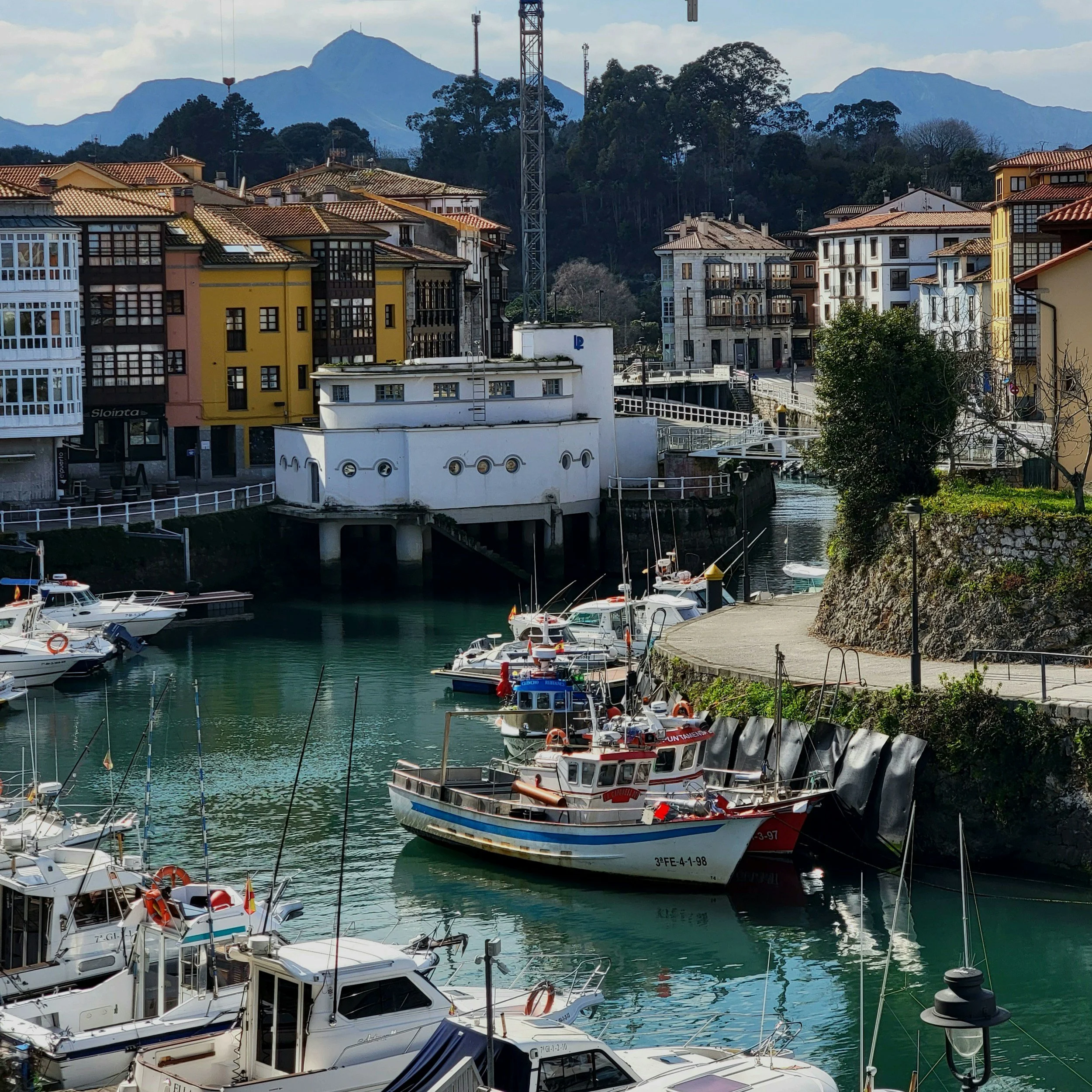
Llanes works because you can arrive, drop your bag and forget about transport for a while
One of the best things about Llanes is that the public transport does not leave you somewhere vaguely associated with the town.
ALSA’s main stop is in Llanes itself, currently listed around Calle Cueto Bajo, and the railway station is also central. To give you a more useful sense of the distances, accommodation inside the old town currently advertises itself as around 350 metres from the railway station, while another central property lists the bus station at roughly 350 metres and the train at 400 metres. That is the sort of arrival I want in a smaller base: get off, walk for a few minutes, put the suitcase down and be done with it.
And once you have checked in, Llanes becomes very easy to understand on foot.
The old centre is small enough that you will keep passing the same places from different directions, but not so small that you have exhausted it after one lap. Calle Mayor runs through the historic core past old houses including the Casa de Juan Pariente, while around Plaza de Santa Ana you have the medieval palace of Gastañaga and one of those little corners that I would probably end up walking through several times simply because it sits naturally between the harbour and the older streets. The historic centre also still retains stretches of its medieval wall, the Torreón and the Gothic Basilica of Santa María del Conceyu, rather than being one single postcard square surrounded by newer development.
Then the sea keeps appearing at the ends of streets.
You can walk down towards the fishing port and the Cubos de la Memoria, Agustín Ibarrola’s painted concrete blocks around the harbour, or go the other way towards Sablón, which is tucked almost directly beneath the old town. From there, the grass-covered Paseo de San Pedro climbs onto the headland above the beach, with the town on one side and the Cantabrian coast and Sierra del Cuera on the other. Toró is walkable in the opposite direction, so having two very different beaches plus the coastal promenade without needing a local bus is a genuine advantage rather than another list of nearby things that turn out not to be nearby at all.
This is one of the big reasons I would stay in Llanes rather than simply come from Oviedo for the day. Once you have seen the obvious things, there is still somewhere to go for a walk at 08:00 or 19:00 without creating another excursion.
There is enough local life here that a day with no plans does not feel wasted
I would not oversell Llanes as a major cultural destination, because it isn’t, but there is more going on in the town than beaches and sidrerías.
The Casa Municipal de Cultura, inside the former Palacio de Posada Herrera, is worth checking while you are there because it runs exhibitions and cultural events throughout the year. Its recent programme has included exhibitions of Asturian painting, photography, traditional clothing, talks and film screenings, so if you get one of those very Asturian afternoons where the coastal walk suddenly looks much less appealing, this is an actual alternative rather than an emergency suggestion invented for a rainy-day list.
The building itself is also right in the centre, close to Parque Posada Herrera and the Casino de Llanes, so you are not travelling out to a cultural complex somewhere on the edge of town. The Casino is one of Llanes’s striking early 20th-century buildings, financed with money linked to returning emigrants to the Americas, and still hosts occasional exhibitions and events. I would check what is actually open during your dates rather than assume you can always walk inside, but the whole Posada Herrera area adds another layer to an afternoon in town.
For books, I would save Clarín on Calle Román Romano, a genuinely small independent bookshop rather than a branch hidden inside a shopping centre. There is also Librería Posada on Plaza Parres Sobrino, another current bookshop right inside the historic centre, so this is one of those small towns where you can actually browse for a book rather than discovering that every shop in the old quarter sells the same ceramic magnet.
And I would definitely stop at Confitería Vega Llanes on Calle Mercaderes at some point. It dates back to 1890 and still makes traditional pastries, chocolates and local sweets in Llanes, which feels much more relevant to a few days here than finding the most Instagrammed brunch place. Their own shop still describes the business as traditional pastry-making using natural ingredients, and I would probably go for coffee and something sweet after a wet walk rather than save it as a formal “food stop”.
That is more or less how I picture a no-plan Llanes day: coffee and something from Vega, a walk through Calle Mayor and around the harbour, perhaps an exhibition at Posada Herrera if the weather turns, a browse in a bookshop, then back out towards San Pedro once the rain has moved on.
It is not packed with attractions. That is rather the point.
I would also want to be here for dinner, not constantly checking the bus back to Oviedo
Food is another reason Llanes works much better as a base than some of the smaller coastal places.
There are enough restaurants and sidrerías concentrated in the town that you can actually choose where to eat rather than organise the evening around the only place still serving food. Asturias Tourism specifically describes Llanes town as having a broad mix of shops and restaurants within the historic centre, and the local tourism site maintains separate restaurant and sidrería listings rather than treating eating as something you need to drive out into the municipality to do.
If you want the classic sidrería evening, Chigre El Antoju Sidrería is right on Calle Mayor, so you can eat in the middle of the old town rather than trekking somewhere outside it. I would not pretend it is some unknown place locals have kept secret, because it is popular and central, but for someone staying without a car the location is genuinely useful.
For a completely different meal, El Bálamu is upstairs in the fishing-port building and focuses heavily on fish and seafood, with views directly across the port and Cantabrian Sea. It is currently listed in the Michelin Guide, but what interests me more for this article is the setting: you are eating above the working harbour rather than travelling out to a destination restaurant somewhere in the countryside.
That ability to finish dinner and simply walk home is a small thing until you compare it with staying in one of the villages scattered around the wider Llanes municipality, where an evening meal can suddenly involve arranging a taxi in both directions.
Llanes makes sense when you let the eastern coast become the trip
You can get here directly by bus from both Oviedo and Gijón, and ALSA currently treats Llanes as a significant regional stop with direct links not only to those two cities but also towards Santander and Bilbao. Current Oviedo services include direct journeys that can be fairly quick by Asturian standards, which is why Llanes is easy enough to add as a second base rather than feeling like a remote detour.
Once I was staying here, though, I would stop thinking about how often I could get back to Oviedo and start looking around the east.
Ribadesella is particularly easy to combine with Llanes. Current direct ALSA services can take roughly 20 to 35 minutes depending on the departure, which puts it in a completely different category from repeatedly crossing back into central Asturias.
That gives you an easy second coastal town with the Sella estuary, old centre and Santa Marina, while Llanes remains somewhere you actually want to return to afterwards.
I would also spend at least one of my Llanes days not going anywhere at all, because otherwise I do not really see the point in moving here. Walk the full San Pedro promenade in the morning, go down to Sablón, follow the port around to the Cubos, have lunch somewhere in the centre and then walk towards Toró later rather than immediately asking which village you can add.
Llanes works best when you give yourself permission to have two or three fairly local days.
What Llanes does not suddenly make easy
The easiest mistake would be to read all of that and conclude that Llanes is therefore the clever smaller base for Asturias.
It isn’t.
It is a clever base for eastern Asturias.
If you want to keep going back to Oviedo and Avilés, you will very quickly notice that you moved away from the useful central triangle. Direct buses make Oviedo possible, and I would have no problem doing it once if the itinerary required it, but I would not stay in Llanes and then commute west every other morning. Current ALSA schedules illustrate the problem nicely: the fastest Llanes–Oviedo services are much better than the train, but even those are substantial regional journeys rather than the casual half-hour hops you have between Asturias’s central cities.
Avilés is even less logical as a repeated outing because you are crossing central Asturias to get there. And if your saved places continue west towards Cudillero or Luarca, Llanes is quite simply the wrong side of the region.
I would also be careful with all those extraordinary beaches you see when searching “Llanes beaches”.
The municipality has around 30 beaches, and that is both wonderful and slightly misleading for somebody without a car. Places such as Torimbia, Barro, Borizu, Cuevas del Mar, Ballota and Andrín are spread through a large coastal municipality containing many separate villages; they are not a string of beaches radiating conveniently from Llanes bus station.
Some can be reached with local buses or by combining walking with public transport, especially when seasonal services are running, but I would never arrive assuming I could spontaneously beach-hop along this coast all day in the way I might with a car.
The same goes for the little villages. Having Llanes as a base puts you much closer to them, but it does not give you a turn-up-and-go local bus every fifteen minutes between Cue, Poo, Celorio, Barro, Niembro and Naves. This is where I would still check CTA or ALSA the evening before, especially on Sundays or outside the busiest months.
And I would use the narrow-gauge railway selectively.
It gives Llanes a railway station, which is great, and there are journeys where I would quite happily use it, particularly if I wanted the slower journey itself. Renfe even promotes Llanes as a rail-accessible beach destination. But for longer trips back towards central Asturias, I would compare the bus before assuming the railway is the sensible option; the metric-gauge service is exactly the sort of train that looks far more efficient on a map than it feels once you see the timetable.
There is also a different sort of constraint later in the day. A weekday in summer and a Sunday outside the main season are not the same transport environment, so if I was planning dinner away from Llanes or relying on an evening connection back from another small town, I would check the last useful bus before leaving in the morning rather than discovering at 18:30 that my relaxed coastal evening has acquired a deadline. ALSA explicitly advises checking the timetable for the specific route and travel day.
The accommodation trap in Llanes is one I would take very seriously
This is probably the most important practical thing I can tell you about booking here:
“Llanes” on an accommodation website does not necessarily mean Llanes town.
Llanes is both the name of the town and the much larger surrounding municipality, and that municipality contains a long stretch of coastline, rural villages, inland valleys and dozens of beaches. Asturias Tourism explicitly describes the villa of Llanes as the capital of the concejo of the same name, which is the distinction worth remembering when you start searching for hotels.
A farmhouse in Poo, Celorio, Barro, Porrúa, Posada or another village in the concejo can therefore quite legitimately appear under “Llanes” in a search result without being anywhere near the town’s station.
That is not necessarily a bad booking. Some of those villages are gorgeous.
It is a bad booking if you chose Llanes specifically because I told you that you could walk from the station to dinner.
So I would ignore the destination label on the search page and immediately open the exact property location.
First, check the walking route to Llanes bus station or railway station if you expect to take regional trips. For comparison, genuinely central accommodation can be only around 350 to 400 metres from those stations, so there is no reason to settle for somewhere requiring a taxi every morning unless that rural setting is actually what you want.
Then check where you would eat in the evening.
I would zoom in and see whether there are two or three restaurants I would genuinely be happy to walk to after dark, rather than trusting a booking-site description that says “restaurants nearby”. If the nearest options are three kilometres away along a country road, that is a completely different stay from being around Calle Mayor.
I would also switch Google Maps to the actual walking route rather than looking at the distance as the crow flies. A kilometre along pavements in Llanes town is nothing. A kilometre along a narrow rural road without a continuous footway is not something I would automatically want to do with a suitcase or after dinner.
And I would do exactly the same thing with beaches.
If the property says “five minutes from the beach”, find out which beach, whether that means by car or on foot, and what the route between the two actually looks like. The Llanes coast has some extraordinary little beaches hidden between cliffs and villages, but proximity on a map does not guarantee a comfortable pedestrian route.
If I absolutely loved a rural property, I would ask the host directly about station pickup and taxis before paying. Llanes Tourism currently lists local radio-taxi services, so taxis exist, but I would rather know how reliable that arrangement is for the specific village and time of day than assume I can summon one whenever I feel like it.
For this article, though, my recommendation is much simpler:
Stay in Llanes town itself.
Somewhere between the stations, Parque Posada Herrera, the old centre and the harbour gives you almost everything that makes Llanes unusually good without a car, while Sablón and San Pedro remain easy on foot.
You can always visit the countryside. You do not need to sleep somewhere that makes leaving it difficult.
Who I think should actually choose Llanes
I would be most tempted by Llanes on a six-, seven- or eight-night Asturias trip, where I could spend the first part centrally and then move east for two or three nights rather than trying to turn every coastal day into a return journey.
Something like Oviedo plus Llanes makes much more sense to me than Oviedo plus Gijón, because the hotel move actually changes what becomes easy. You get the central transport network, museums and city days first, then arrive in Llanes and suddenly the eastern coast becomes the part of Asturias you are living in rather than travelling out to.
I would also choose it if I knew from the beginning that I was a fairly slow traveller.
If two good days for you could consist of San Pedro, the harbour, a long lunch, a bookshop, Sablón, an exhibition, coffee and another walk when the weather clears, Llanes is probably a much better fit than booking the most efficient regional hub and then feeling obliged to use it constantly.
And I think it suits people who enjoy evenings in smaller places in particular. There is a noticeable difference between visiting Llanes at 13:00 and actually being able to walk Calle Mayor after dinner, go down towards the harbour when you feel like it and wake up close enough to the sea to walk there before breakfast.
That is the part you are paying for when you move your luggage east.
What I would not do is choose Llanes because I wanted a picturesque place and then spend five days trying to escape it for attractions spread all over Asturias. At that point Oviedo would have made far more sense.
Llanes is the smaller-town base I would choose precisely because it gives you permission to make the trip smaller too. For a few days, the eastern coast, the harbour, the local streets and whatever you can comfortably reach from them are enough.
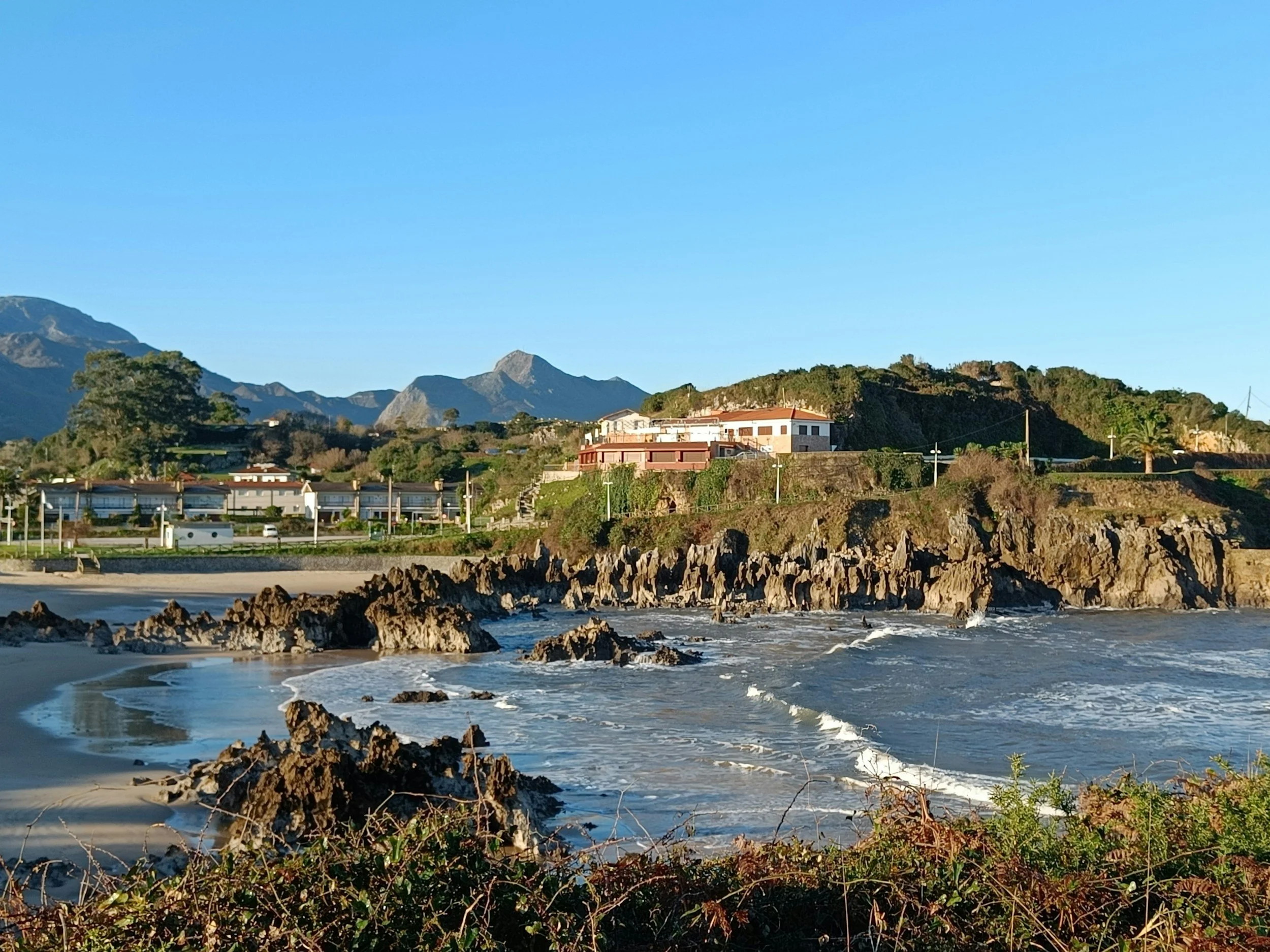
If Llanes and Ribadesella have made you want to find a few more places where travelling alone feels genuinely easy, these Spanish small towns that work really well for solo travel are a good place to keep looking.
What about Ribadesella, Cangas de Onís and Cudillero?
These are probably the three places I would expect to appear next once you start looking beyond Oviedo, Gijón, Avilés and Llanes, and I can see why. Ribadesella gives you beach and estuary, Cangas de Onís looks like the obvious doorway into the Picos, and Cudillero is the sort of place that can make you abandon every sensible transport plan because you have seen one photograph of the harbour.
I would not give them equal weight as bases, though.
Ribadesella is a very good place to move to for two or three nights. Cangas de Onís makes sense when the mountains are becoming the main reason for the trip. Cudillero is the one I would usually visit, enjoy properly and then leave rather than asking it to organise the rest of my week.
Ribadesella works really well for two or three coastal days
If Llanes did not appeal to me, Ribadesella would be the other eastern-coast base I would seriously consider.
It is slightly less useful for moving around the region than Llanes, but I think it is particularly good when the plan is becoming simpler rather than bigger: beach, walks, the Sella estuary, a cave visit, good food and perhaps one short trip somewhere nearby rather than a new bus every morning.
The geography is part of the appeal. Ribadesella is stretched around the mouth of the River Sella, so the old town and fishing-port side sit opposite the long curve of Santa Marina, and walking between them across the river gives the place much more variety than you might expect from a small coastal town. Asturias Tourism highlights the old quarter, historic port route, Santa Marina and the estuary as distinct parts of the town rather than one compact sightseeing centre.
Santa Marina is the part I would probably want outside my door if I was deliberately moving here for a slower couple of nights. The promenade is lined with those grand early 20th-century houses built by returning emigrants from the Americas, so it feels completely different from an ordinary resort seafront, and you can keep walking towards the western end of the bay rather than having to catch transport every time you want some coast. Across the river, the older side gives you the port, smaller streets and the climb towards Ermita de la Guía, with views back over the mouth of the Sella and Santa Marina.
And Ribadesella has one cultural reason to stay that is genuinely specific to the place rather than something I would add to make a rainy-day paragraph longer.
Tito Bustillo Cave is right here.
The cave contains more than 100 painted and engraved representations created over different Palaeolithic periods, and the actual cave visit is controlled, seasonal and bookable rather than somewhere you should assume you can wander into after lunch. The current official visitor information tells people to reserve ahead, particularly in busy periods, and arrive well before their time slot. The neighbouring Tito Bustillo Cave Art Centre gives you much more context on the rock art and is useful even when access to the cave itself is not available.
That is the kind of attraction I would plan around rather than squeeze into the morning I was checking out.
There is also enough normal town life that I would not worry about being bored after the beach. El Maletu is a small local bookshop currently listed by Ribadesella’s own tourism office, and the harbour side around Paseo Princesa Letizia and Calle Manuel Caso de la Villa has plenty of places to stop rather than feeling like a promenade that only exists for visitors.
For somewhere very specific to eat, Casa Basilio on Manuel Caso de la Villa is still operating beside the port and specialises in fish and seafood. I like it here less because I am trying to nominate “the best restaurant in Ribadesella” and more because it makes sense geographically: you can spend the afternoon around the old town and harbour, eat there and walk home rather than arranging another trip somewhere outside town.
Transport is good enough for Ribadesella to work as a genuine second base rather than a place you become trapped in. Current ALSA information shows plenty of direct buses between Gijón and Ribadesella, with the quickest services around an hour, and the Llanes connection can be as short as around 25 minutes. Ribadesella also has narrow-gauge rail, although, as with Llanes, I would compare the actual train and bus rather than automatically choosing the railway.
Where I think Ribadesella loses to Llanes is regional usefulness.
I would happily spend two or three nights here if I wanted Santa Marina, Tito Bustillo and an easy coastal pace. I would be much less tempted to stay for five nights while repeatedly travelling back towards Oviedo, Avilés or the western side of Asturias. The town is also stretched east to west around the estuary, so I would check the accommodation pin quite carefully: sleeping right beside Santa Marina is lovely if the beach is the point, while being closer to the old-town and transport side may suit you better if you still expect to take several buses.
Ribadesella is the one I would choose when I wanted a little coastal chapter in the trip, not another regional headquarters.
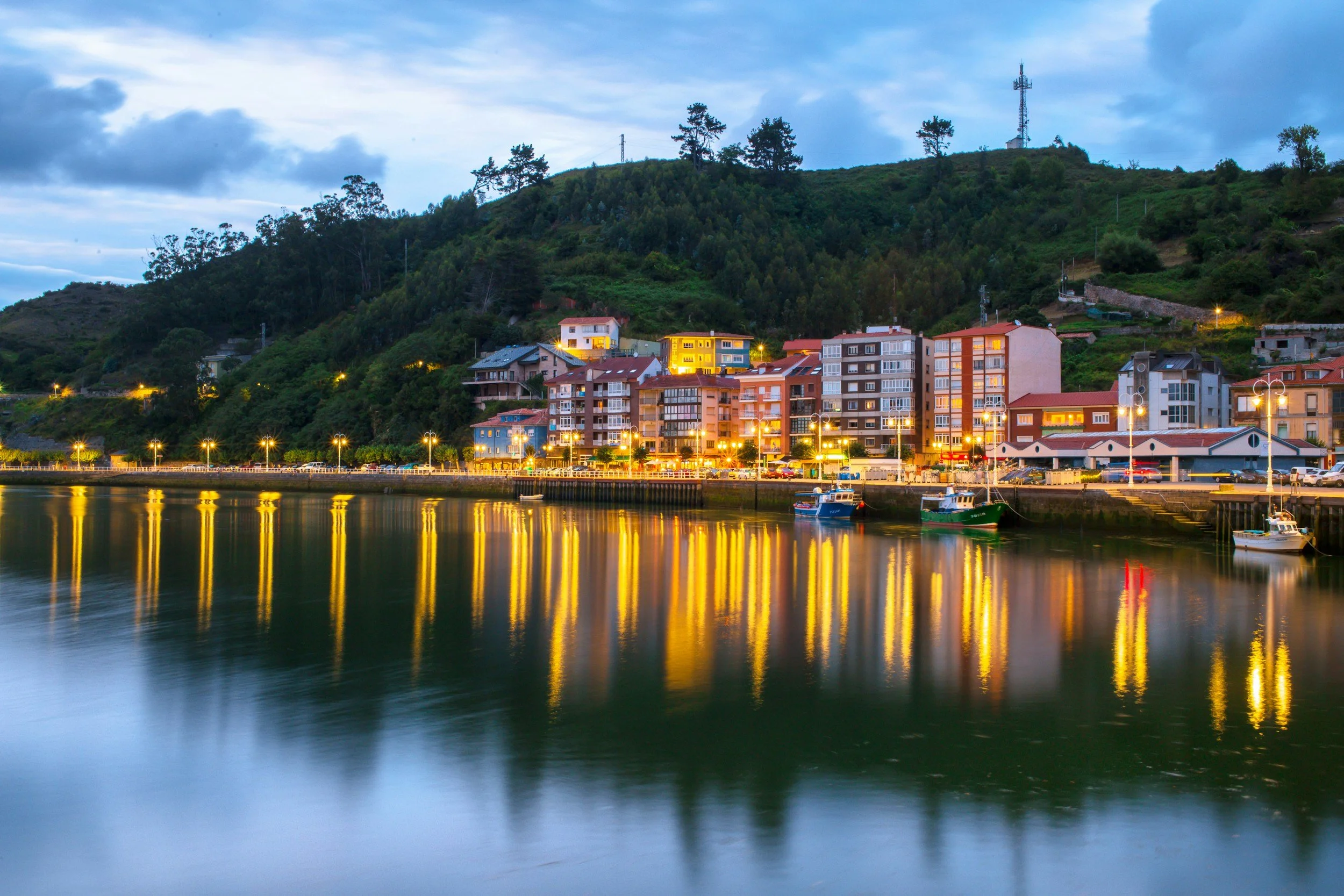
Cangas de Onís makes sense when you are really coming for the mountains
Cangas de Onís is a completely different, and I would not choose it because I wanted a picturesque smaller alternative to Oviedo. I would choose it because I looked at my itinerary and realised that Covadonga and the eastern Picos were starting to dominate it.
There is no railway here, which immediately makes Cangas less flexible as an all-round Asturias base, but the bus connection with Oviedo is much better than you might assume. ALSA currently shows numerous direct daily services, with the quickest journeys at around 1 hour 20 minutes, so getting here for a two- or three-night second stay is perfectly realistic without a car.
Once you arrive, Cangas itself is small enough that you do not need transport to make the town work.
The famous stone bridge over the Sella, often called the Roman Bridge although the structure you see today is medieval, sits right at the edge of the centre, and the streets around San Pelayo, the church and the market area are easy to use on foot. Asturias Tourism particularly points to the food shops and the long-running Sunday market, where local produce and cheeses from the Picos are a big part of what is sold.
If my dates included a Sunday, I would actually count that as a reason to spend the morning in Cangas rather than rushing straight onto a mountain bus. It is the sort of local detail you miss completely if the town is treated only as “where the Covadonga shuttle starts”.
For dinner, El Molín de la Pedrera is one current option I would save. It is a family restaurant operating in Cangas since 1983, with Asturian ingredients and dishes handled in a slightly more contemporary way than the enormous tourist-menu restaurants you will also see around town. Its menu changes with the market and season, which makes it a useful example of the fact that there is more to eating in Cangas than grabbing something beside the coach park before another excursion.
But the real reason to sleep here is Covadonga.
During the periods when access to the Covadonga Lakes is regulated, the official system uses buses between Cangas de Onís, Covadonga and the Lakes, with stops along the route, and Asturias Tourism recommends buying tickets ahead during busy periods. Those dates and operating details change, so this is one part of the trip I would always recheck rather than copying a summer timetable into the itinerary and assuming it applies next spring.
Staying in Cangas removes one layer of travel from that day. You are not starting with the bus from Oviedo, arriving in town and immediately switching into mountain-transport mode; you wake up where the mountain corridor begins.
That can make a huge difference if Covadonga is one of the things you care about most.
What it does not do is give you easy access to every part of the Picos.
This is the distinction I would keep repeating whenever necessary because “stay in Cangas for the Picos” can sound much more comprehensive than it really is. Covadonga and the Lakes sit on the western side of the Picos landscape reached from Cangas, while Poncebos, the Bulnes funicular, Ruta del Cares and places such as Sotres belong to different valleys and transport chains. Official Picos information itself separates routes and access points across Cangas de Onís, Cabrales, Onís and the other mountain municipalities.
For those places, you may still need a seasonal shuttle, a taxi, a tour or another carefully planned bus journey.
So I would think of Cangas as a specialist base. If the trip is mainly Covadonga, a Lakes day, a bit of walking and perhaps some time around the eastern Picos, staying here starts to make much more sense than commuting from Oviedo repeatedly.
If I still wanted Gijón, Avilés, Cudillero and several coastal towns as well, I would not use Cangas for the whole holiday.
And I would expect the atmosphere to change quite dramatically with the season. The Covadonga corridor is one of the biggest visitor draws in Asturias, and the regulated Lakes scheme exists precisely because of the pressure during busy periods, so Cangas can feel very tourism-focused in high summer.
That does not make it a bad base. It just means I would choose it because I wanted access to the mountains, not because I was looking for the quietest little Asturian town I could find.
Cudillero is exactly where I would not choose a base from a photograph
Cudillero is probably the most dangerous place in this article if you have a Pinterest board.
I understand the temptation completely. The harbour sits at the bottom of a natural amphitheatre, colourful houses climb the slopes behind it, fishing boats sit below the terraces and the whole village looks like somewhere you should immediately book three nights.
I would visit it, and I might even stay one night because there is something appealing about being there after the main flow of day visitors has gone. However, I would not choose it as my main regional base.
The first reason becomes obvious once you are actually on foot: Cudillero is steep. Even the municipality’s own viewpoint route sends you upwards through narrow lanes following the blue railings between the fishermen’s houses, and Asturias Tourism describes the village as an amphitheatre built into a natural hollow rather than a flat harbour town.
That is wonderful for views, but it is less wonderful when you are repeatedly dragging luggage, walking back to public transport or choosing accommodation purely because the balcony photo was extraordinary.
The railway is another good example of why I keep separating having a station from having a useful station. Cudillero is on Renfe’s C4 between Gijón and Cudillero, but the rail infrastructure sits above and outside the harbour village rather than beside the famous waterfront. Current descriptions put the station roughly a couple of kilometres from the centre, with a substantial downhill walk towards the harbour and, more importantly, the climb back afterwards.
So if you see the little train symbol on Google Maps and think, perfect, we can base ourselves there and take trains everywhere, I would look again.
The bus does not completely solve it either. ALSA currently lists direct Cudillero–Oviedo services, but there are far fewer of them than on the central city routes, and journey times currently range from around 1 hour 30 minutes to well over two hours depending on the service. That is useful enough for a planned excursion; it is not the sort of frequency I would want to organise an entire regional holiday around.
Then there is the bigger Cudillero problem: many of the places making you want to stay here are not actually in the harbour village.
The municipality covers more than 100 square kilometres. Playa del Silencio, Gueirúa, Concha de Artedo, San Pedro de la Ribera, Cabo Vidio and the Selgas Palace at El Pito are all within the wider Cudillero area, but they are spread through separate villages and sections of coast. Turismo Asturias explicitly lists them as attractions around the municipality rather than things sitting beside the harbour.
This is exactly the sort of place where image-led planning goes wrong.
You find a lovely rural hotel tagged “Cudillero”, see that Playa del Silencio is somewhere nearby, save Cabo Vidio for sunset and assume you will walk down to the harbour for dinner. Then you open the proper route planner and discover those are four separate transport problems.
If I was staying one night, I would keep it simple and stay in or immediately above the harbour village itself, walk the viewpoint route and actually enjoy what Cudillero does brilliantly.
Follow those blue railings up through the houses towards the viewpoints, including the Garita-Atalaya area, come back down towards the amphitheatre and harbour, and notice the curadillos hanging outside, the small fish traditionally air-dried here and still strongly associated with the village’s fishing identity.
I would also eat in the village rather than turn the evening into another journey. Fish and seafood are obviously central to the local food culture, and the harbour still has a cluster of restaurants and cider houses around the amphitheatre. Asturias Tourism specifically points to the fishing tradition and seafood as part of Cudillero’s identity rather than simply visitor marketing.
And then the following morning, I would move on.
That is not me saying Cudillero is overrated. It is almost the opposite.
I think it deserves enough time to walk the steep streets slowly, go up to the viewpoints, have something good to eat and see what the harbour feels like once you are no longer racing through on a day trip. I just would not make it responsible for getting me to the rest of Asturias afterwards.
So if you are choosing between these three alternatives, my decision is quite simple: Ribadesella for two or three easy coastal nights, Cangas de Onís when Covadonga and the mountains have become the trip, and Cudillero when Cudillero itself is the destination.
The prettiest accommodation photo should not get a vote on the transport plan.
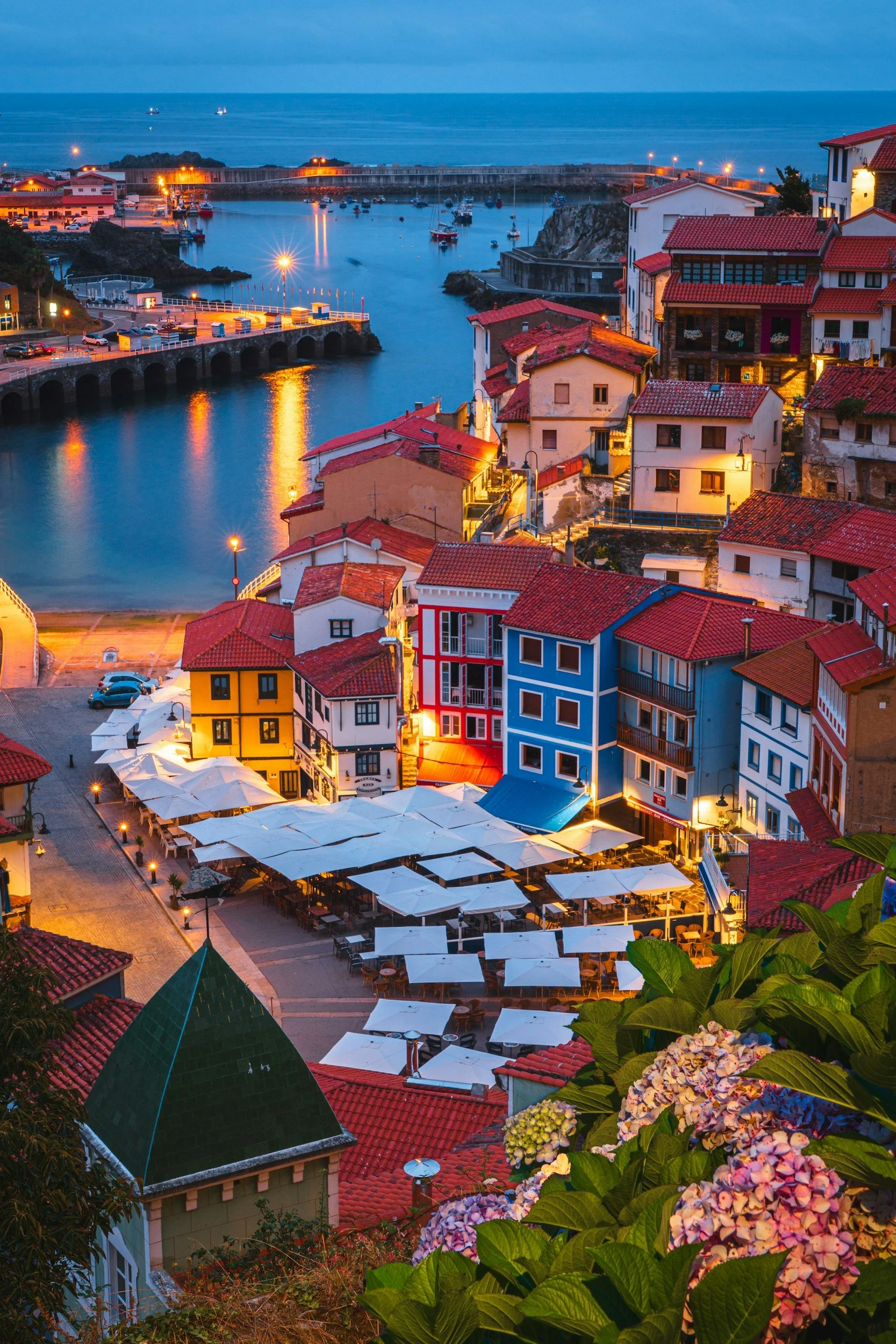
If the combination of a small coastal town, a market morning and a couple of days with very little pressure to go anywhere sounds exactly like your kind of trip, this market weekend in Cadaqués takes that idea to a completely different corner of Spain.
Bus or train in Asturias? I’d check the bus first more often than you might expect
If you normally plan European trips by opening the railway app first, Asturias takes a little getting used to.
There are plenty of trains, and in the centre of the region they can be genuinely useful, but I would not make Renfe my automatic first search for every day trip. Once you start travelling towards Llanes, Ribadesella, Cangas de Onís or the airport, the bus is often the route that makes the day work better, while some of the railway journeys that look wonderfully convenient on a map become much less appealing once you see how long they actually take.
The simplest rule I would use is this: check ALSA first for longer regional journeys and mountain gateways, use Cercanías confidently around central Asturias, and treat the narrow-gauge railway as something you choose deliberately rather than assuming it will be the quickest way along the coast.
That one habit makes planning here considerably easier.
For a lot of the trips you actually want to make, start with ALSA
ALSA is much more important to a car-free Asturias trip than the word “bus” might suggest.
This is not a network I would think of as something you use only once the railway runs out. Direct coaches connect the main cities with places that are much more awkward or dramatically slower by rail, including Llanes and Cangas de Onís, and the same company operates the direct airport links. Current schedules, for example, show fast direct Oviedo–Llanes journeys from around 1 hour 15 minutes, while Oviedo–Cangas de Onís has direct services from roughly 1 hour 20 minutes.
That is why, if I was sitting in an Oviedo hotel deciding how to reach Llanes tomorrow, I would not automatically type the journey into Renfe and stop there. I would compare it with ALSA before booking anything.
The airport is another easy example. Asturias Airport has no railway station, and ALSA operates the public transport connection from the terminal, so if you are staying in Oviedo, Gijón or Avilés, the coach is already part of the trip before you have even started thinking about day trips.
There is one slightly boring detail here that I think is genuinely worth knowing: check the exact stop shown on your ALSA ticket, not only the city name.
An ALSA search for Cangas de Onís to Oviedo, for example, currently lists arrivals not only at the main Oviedo bus station on Avenida Pepe Cosmen, but also at stops such as HUCA, El Cristo and Calle Real, depending on the service. The reverse route can also show several boarding points around Oviedo.
That can actually be useful if one of those stops is close to where you are staying, but I would not assume that selecting “Oviedo” means every coach automatically leaves from the big station beside the railway.
If my hotel was around Calle Uría and I wanted the straightforward option, I would look specifically for the service using Oviedo bus station at Avenida Pepe Cosmen. If another stop happened to suit me better, great, but I would want to know that before I walked to the wrong side of town at 08:00.
The same principle applies elsewhere. ALSA sometimes serves several points within a city, while in smaller places the principal stop may be much easier to identify, so I would always expand the journey details rather than glance at the city names and assume the rest will sort itself out.
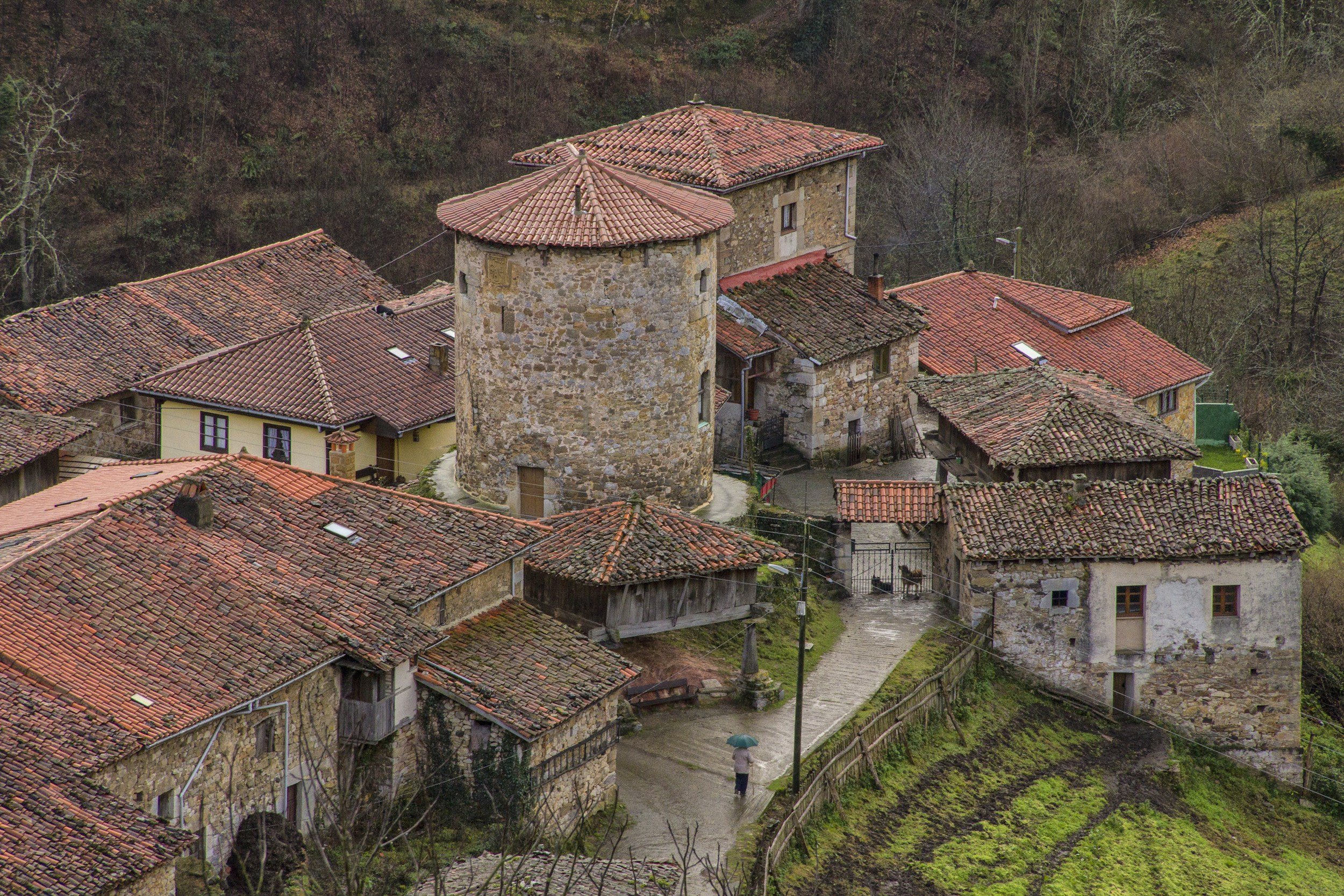
Around Oviedo, Gijón and Avilés, the train becomes much more useful
The central part of Asturias is where I would be perfectly happy to let the railway do much more of the work.
Renfe’s current network has C1 linking Gijón and Oviedo, while C3 runs from the Oviedo side towards San Juan de Nieva through Avilés. On the Gijón side, C4 continues west towards Cudillero, which can also make rail useful for places such as Candás and Avilés depending on the exact journey you are making.
I would not become obsessed with memorising the line numbers before the trip, because Renfe’s journey planner will do that job perfectly well. The useful thing to understand is that central Asturias has a much denser transport pattern than the rural coast, so missing one connection between Oviedo and Gijón is a very different problem from missing a later-day service somewhere on the eastern coast.
That is why I would happily be quite spontaneous with an Oviedo–Gijón day. There are trains, there are a huge number of buses, and current ALSA information alone shows well over 100 services a day on that corridor, with the fastest taking around half an hour.
Oviedo–Avilés has the same general advantage of being part of the central transport network, and Gijón–Avilés gives you both bus and rail possibilities, so in this part of Asturias I would simply compare whichever departure works best for the time I wanted to leave rather than developing some loyalty to one mode of transport.
The difference becomes more noticeable once you push farther away from those cities. A line continuing west or east on the map does not mean the service will keep the same frequency, speed or flexibility you had in the central triangle.
That is the bit worth remembering.
And yes, FEVE still exists in everyone’s vocabulary, but officially you are looking for Cercanías AM
You will probably hear or read FEVE while planning Asturias, even though that is no longer the official operator name.
FEVE was the former narrow-gauge railway company, and it was absorbed into Renfe in 2013. Renfe now calls these services Cercanías Ancho Métrico, shortened to Cercanías AM, although “FEVE” is still such a familiar local shorthand that I would absolutely recognise the word rather than assume somebody is talking about a completely different railway.
What matters more for your trip is how those trains behave.
The narrow-gauge railway follows some wonderful routes through northern Asturias and reaches coastal places that look almost made for travelling slowly by train, which is why I would not dismiss it at all. If I had a free day, liked trains and wanted the journey itself to be part of what I was doing, I could very happily choose a slower metric-gauge service and watch Asturias go past instead of taking the express bus.
What I would not do is use it for a tightly packed day simply because it is scenic.
We already saw the most dramatic example with Oviedo and Llanes, where a fast direct bus can take around 1 hour 15 minutes while the narrow-gauge railway can take more than three hours. That is not a small difference you shrug off because trains are nicer. It changes whether you arrive in Llanes with a full day ahead of you or whether a large part of the day has become the journey itself.
And that is how I would approach the whole former FEVE network.
If I wanted slow transport, great. If I was travelling west from Gijón and the timetable happened to suit the place I wanted, also great. If I had a museum booking, a cave entry time, dinner reservation or one particular evening bus I absolutely needed to catch, I would compare every other sensible option before choosing a slow branch-line journey just because it looks romantic.
There is also a practical reason to check close to the day itself: Renfe publishes live service notices for Cercanías Asturias, and engineering works can produce temporary changes or replacement road transport on individual lines. I would look at the live Renfe planner and notices before any journey where missing the train would genuinely affect the day.
For a short trip, I probably wouldn’t bother arranging a transport pass
This is another area where I think travel planning can become unnecessarily complicated.
If I was staying in Asturias for four or five days, taking a handful of trains and buses, I would probably buy individual tickets and get on with the trip rather than spend the first evening trying to work out whether I could save a few euros with a regional card.
Asturias does have a genuinely useful integrated system called CONECTA, run by the Consorcio de Transportes de Asturias. It works across the regional public transport network, including urban and interurban buses and Renfe rail services within Asturias, and the amount charged depends on the number of zones travelled. There is also a monthly spending cap.
For someone staying longer and making a lot of journeys, that can be very attractive.
The catch for a short international visitor is that CONECTA is personalised. You need your own physical card, linked to your identity document, and the CTA currently says normal delivery after applying through its app is around a week. EU identity documents and many passports can be used for the application, but this is still something I would arrange before travelling rather than expect to pick up casually after landing.
It is also worth knowing that CONECTA is not literally universal. The CTA currently excludes the special Covadonga Lakes shuttle and certain state-run interprovincial services even when those coaches make stops inside Asturias, so I would never write “one card covers everything” and leave it at that.
For someone spending two weeks here, moving around constantly and happy to apply ahead, I would look into it properly. For four nights in Oviedo with a Gijón day, an Avilés day and one regional coach, I personally would keep things simple.
Renfe’s frequent-traveller passes are another thing I would not automatically recommend just because the headline says free travel.
The current Asturias Cercanías scheme is designed for repeat users: it is personalised and requires registration, a refundable deposit and a minimum number of journeys before that deposit is returned. Under the rules in force when this guide was researched, that meant a €10 deposit and at least 16 journeys within the four-month validity period.
Sixteen journeys is eight returns.
If you are spending five days in Asturias, I do not think your holiday needs a side mission where you try to qualify for a railway deposit refund.
I would also treat those exact rules as temporary information rather than part of the permanent trip plan, because Spanish public-transport subsidies and pass conditions change. If you are travelling for several weeks, check the current Renfe offer when you book; if you are here for a normal short break, individual tickets are usually the option I would investigate first.
One useful current simplification on the railway side is that Renfe now allows contactless bank-card payment on Cercanías Asturias, with passengers tapping at both the start and end of the journey. Renfe currently applies its simple-ticket fare automatically, with an additional discount after several journeys made with the same card during the month. Again, I would check that the system is still operating in the same way before travelling rather than build an evergreen article around the exact discount.
The three sites I would actually use while I was there
I would keep this very simple too.
For regional buses, I would search the actual journey on ALSA, because it shows the individual departure, journey duration and, importantly, the specific boarding and arrival stops.
For trains, I would use Renfe Cercanías Asturias, particularly because that is where current line information, timetables and disruption notices appear.
And I would keep the CTA CONECTA journey planner bookmarked because the regional transport consortium combines public-transport information across Asturias and has dedicated searches for services between the main cities, coastal routes and some of the mountain transport that visitors are most likely to need.
I would trust those before a generic route aggregator, especially when the journey involves a narrow-gauge train, seasonal bus or a small coastal stop.
So the transport system is not particularly difficult once you know how to read it. I just would not reduce it to “Asturias has trains, so use the train”.
For Llanes, Ribadesella, Cangas de Onís and the airport, I would often look at the bus first. Around Oviedo, Gijón and Avilés, I would compare the next sensible bus and train and take whichever makes my day easier. And for the old FEVE routes, I would choose them when I actually wanted a slower railway journey rather than accidentally ending up on one.
That is a much more useful way to travel around Asturias than deciding in advance that you are either a bus person or a train person.
If Asturias is only one part of a longer trip across the north, I’d look at these walkable towns in northern Spain that work without a car before deciding which direction to travel next.
Can you actually visit the Picos de Europa without a car?
Yes, but this is one of those questions where the short answer can give you completely the wrong idea.
You can get to Cangas de Onís, Covadonga and the Lagos de Covadonga without driving, and that part of the Picos is actually quite well set up for visitors using public transport. What I would not do is take that fact and turn it into “the Picos de Europa are easy without a car”, because the minute your saved places start including Poncebos, Bulnes, Ruta del Cares, Sotres or Collado Pandébano, you are dealing with a different side of the mountains and a completely different transport plan.
The easiest way to understand it is that Covadonga and the Lakes belong to the western massif around Cangas de Onís, while Poncebos and the Cares side sit over towards Cabrales and the central massif. They may all appear under “Picos de Europa” when you are researching the trip, but I would plan them almost as separate destinations. The National Park itself spans three main massifs cut apart by deep valleys and gorges, which is why moving between apparently nearby places is not nearly as simple as the map makes it look.
Covadonga and the Lakes are the easiest Picos day without a car
If you want one mountain day from Oviedo, this is the version I would choose.
Cangas de Onís has direct ALSA buses from Oviedo throughout the day, with the quicker current services taking a little over an hour and twenty minutes. The bus drops you in Cangas itself rather than somewhere miles outside town, so arriving there is not the difficult part.
From Cangas, Covadonga and the Lakes have their own regulated public-transport system during the periods when private-vehicle access is restricted, generally covering busy dates around Easter, summer and selected holiday periods. During the current scheme there is a shuttle between Cangas de Onís and Covadonga, with onward bus access towards the Lagos de Covadonga, and the official tourism office strongly recommends checking the access calendar and booking arrangements for your actual dates rather than assuming the same setup operates every day of the year.
That makes this a perfectly realistic day without a car, but I would still think of it as a three-stage journey if you are coming from Oviedo: Oviedo to Cangas, Cangas towards Covadonga, then the regulated transport up to the Lakes.
Once you are up there, you are not simply getting off a bus, taking one photograph of Lago Enol and coming straight back down either. The main area includes Lago Enol and Lago de la Ercina, the old Buferrera iron mines and the Pedro Pidal Visitor Centre, with walking routes linking the landscape around the lakes. On a decent-weather day I would give myself enough time to actually walk around rather than booking the earliest possible bus back because I had treated “Lagos de Covadonga” like a viewpoint stop.
I would also leave time for Covadonga itself. The Basilica and Holy Cave sit lower down the mountain, and the current access system is designed so that Covadonga and the Lakes can be combined rather than requiring two completely separate days. The shuttle between Cangas and Covadonga is currently included when travelling with the Lakes access ticket during the regulated period.
So if your Picos wishlist really means Covadonga, the Lakes and perhaps a walk around Enol and Ercina, I would be quite relaxed about doing that without a car.
It is when the wishlist starts expanding that things get more complicated.
Ruta del Cares, Bulnes and Sotres are a completely different transport problem
This is the distinction I really wish more Asturias guides made clearly.
Poncebos is not beside Covadonga.
Poncebos is over in the Cabrales side of the Picos and is important because this is where you access the Ruta del Cares and the funicular up to Bulnes. It is also part of the transport corridor towards mountain villages such as Tielve and Sotres, and towards Collado Pandébano, which is used for routes deeper into the central massif.
Asturias does operate a special public-transport system here during parts of the year, but notice where it begins: Arenas de Cabrales, not Cangas de Onís.
Under the current seasonal access plan, buses run from Arenas to Poncebos, and from Poncebos there are onward connections towards places including Tielve, Sotres and Collado Pandébano. The plan operates on selected dates rather than being something I would assume exists in exactly the same form every month, so this is another route I would verify shortly before travelling.
That is a genuinely useful system, and it makes parts of the Cabrales side much more realistic without driving, but you still have to get yourself to the correct gateway first.
This is where a sentence like “you can explore the Picos by public transport” becomes far too vague to be useful.
If you are sleeping in Oviedo and want to do Ruta del Cares, your morning is not simply “catch the Picos bus”. You need to work out how you are reaching the Cabrales/Poncebos corridor, whether the seasonal transport plan is operating, which trail direction you are walking and how you are getting home afterwards.
And the hike itself is not small. The official route information puts Poncebos to Caín at roughly 12 kilometres one way, or about 24 kilometres if you walk out and back, so transport at either end genuinely matters. Special seasonal services sometimes make one-way logistics easier, but I would check that for the exact year and date rather than build an evergreen itinerary around it.
Bulnes is slightly different because the funicular leaves from the Poncebos area, but again, you first need to solve Poncebos.
And if your dream day is walking around Sotres, getting towards Pandébano or trying to see Picu Urriellu from one of the mountain approaches, you are now planning around the Cabrales transport network rather than the Covadonga one.
None of this makes a car mandatory. It just means I would decide which bit of the Picos I actually wanted before choosing where to sleep.
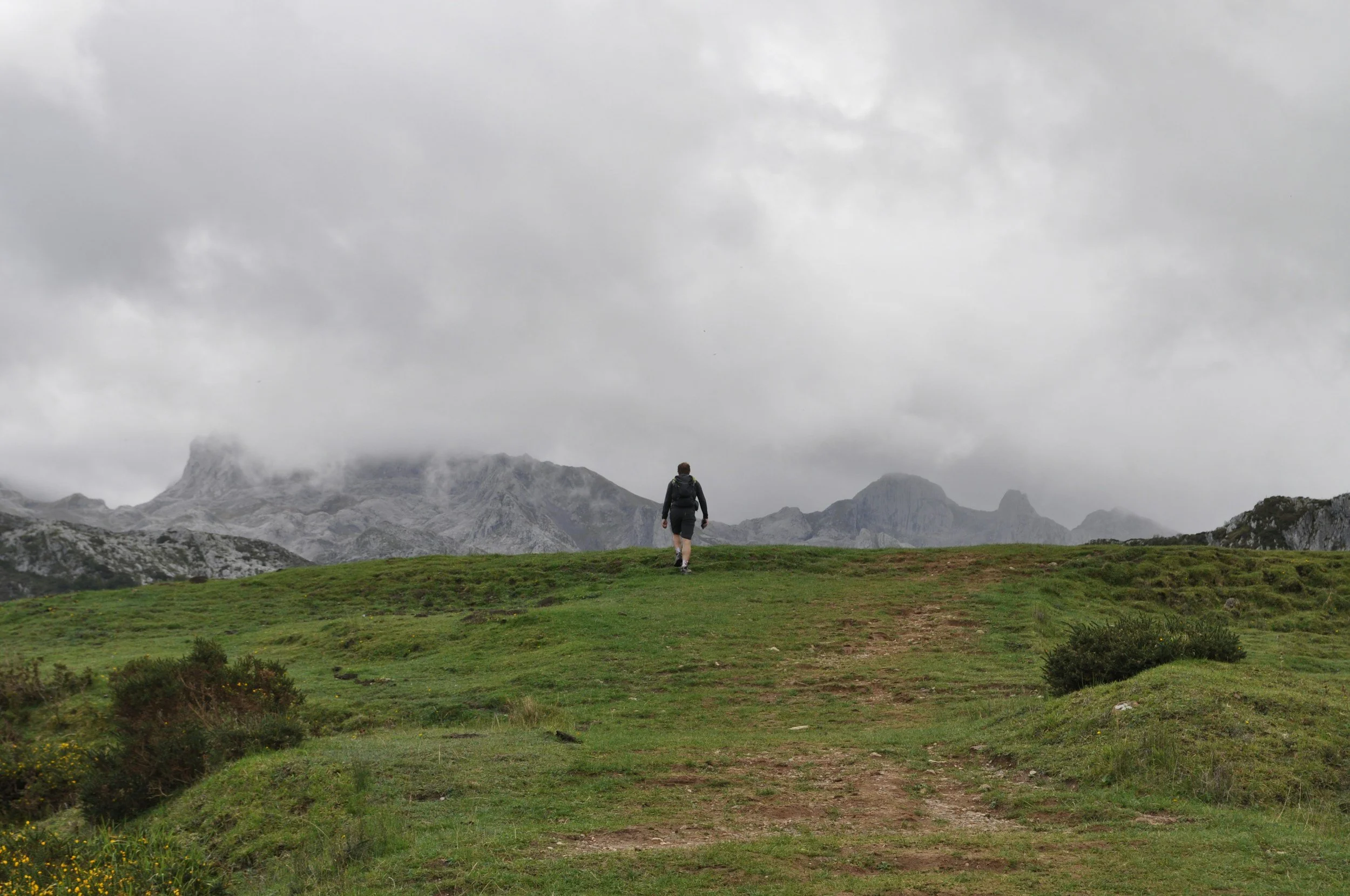
Sometimes an organised day is genuinely the easier answer
I am usually quite happy piecing public transport together myself, but this is one of the places where I think paying for an organised excursion can make sense rather than feeling like you have somehow failed at travelling independently.
Current Asturias tourism listings include full-day excursions from both Oviedo and Gijón covering combinations of the Covadonga Lakes, the Sanctuary and Cangas de Onís, and there are also private guiding companies offering Picos-focused days.
If I only had four nights in Asturias and wanted one really good mountain day, I would compare one of those trips with doing the whole journey independently.
Not because the independent route to Covadonga is especially difficult, because it isn’t, but because a tour can remove the part where you are matching the Oviedo bus to the Cangas shuttle, deciding how long to allow at Covadonga and then watching the clock because you still need to get back to the city.
It can also make more sense if you want to combine several places in one day that public transport serves individually but not particularly elegantly as a sequence.
I would not automatically book a tour if all I wanted was Covadonga and the Lakes. That is one of the easiest mountain itineraries to organise independently. But if I was looking at my plan and realising I needed four different transport searches just to make one hiking day happen, I would at least compare the cost of letting somebody else deal with it.
If the mountains are the main event, I would seriously consider two nights in Cangas de Onís
This is where changing bases can actually improve the trip rather than simply creating another check-in.
If I had a week in Asturias and knew I wanted Covadonga, a Lakes day and perhaps another eastern-Picos outing, I would be much more tempted to spend two nights in Cangas de Onís than to travel there from Oviedo on consecutive mornings.
You lose the railway network, but that does not matter very much if you have temporarily stopped trying to explore the rest of Asturias.
Instead, you wake up already at one of the main Picos gateways, which means your mountain day starts with the Covadonga transport rather than first spending well over an hour getting there from Oviedo. It also gives you more flexibility if the forecast suddenly looks much better tomorrow than today.
There is a practical local detail I would use too: the National Park lists Casa Dago in Cangas de Onís as one of its visitor reception centres, so if I was planning walks or trying to understand current access conditions, I would rather ask there than rely entirely on a route somebody posted online three summers ago.
And Cangas has enough going on that the non-mountain hours are not wasted. We already talked about the town itself earlier, so I would not repeat the bridge, restaurants and Sunday market all over again here, but the important thing is that you can come back from the mountains, eat in town and go to bed without needing another transport connection.
That is exactly the sort of reason I think a second base should exist.
I would choose Oviedo + Cangas de Onís because the move changes what the trip can do. I would not move simply because I wanted a different hotel lobby for two nights.
I would leave some room for the mountains to say no
This is the other reason I would never build an Asturias itinerary where there is only one possible Picos day.
The weather up here can change much more dramatically than it does in Oviedo or on the coast, and it is not only rain that matters.
The Picos de Europa National Park specifically warns about sudden thick fog and whiteout conditions, describing fog as one of the biggest hazards in the high mountains and advising walkers to wait for it to clear rather than continuing blindly.
Even if you are only going to the Covadonga Lakes rather than doing a serious hike, low cloud can turn a day you planned around enormous mountain views into a very different experience. The bus may get you there perfectly well and you may still see almost nothing beyond the edge of the lake.
For Ruta del Cares, Pandébano or higher walking routes, I would be considerably more conservative. The fact that you have successfully solved the transport does not mean you should now force the hike because you have already invested so much effort in the spreadsheet.
This is where staying two nights near the mountains becomes even more useful. If Tuesday is wrapped in cloud and Wednesday looks clear, you can swap the days instead of watching the weather from an Oviedo hotel and realising this was your one chance.
And if I only had one mountain day from Oviedo or Gijón, I would keep the rest of the itinerary flexible enough that I could move it around once I had a decent forecast.
So yes, you can absolutely experience the Picos de Europa without renting a car, and for Covadonga and the Lakes I think the system works surprisingly well.
I would just be much more precise than saying “the Picos are accessible”.
Covadonga is one plan. The Lakes are part of that same corridor. Poncebos and Bulnes are another. Ruta del Cares has its own walking and return logistics. Sotres and Pandébano require you to think about the Cabrales side of the mountains. And anything more remote deserves proper route planning rather than optimism.
If all you want is one mountain day, Oviedo or Gijón can still work perfectly well, with an independent bus-and-shuttle day or an organised excursion.
If the mountains are the reason you chose Asturias in the first place, I would stop making them commute to your city break and spend a couple of nights closer to them instead.
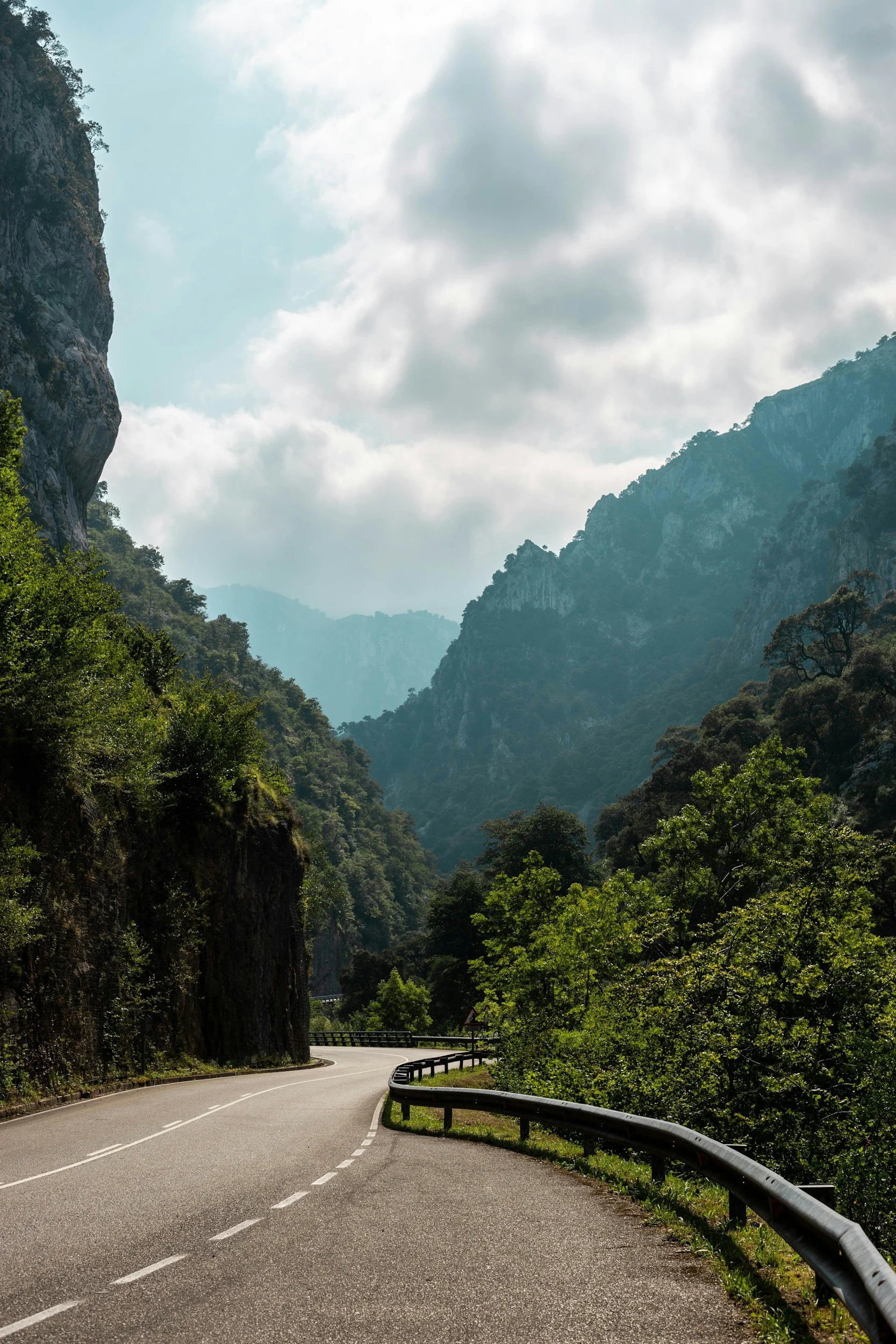
When is it actually worth changing bases in Asturias?
I would decide this based less on how many nights are showing on the booking screen and more on how many proper days you actually have once arrival and departure are taken into account, because three nights often gives you only two full days, five nights gives you roughly four, and every hotel change quietly eats into that with packing, checking out, walking to the station, waiting around with luggage and then doing the same thing again at the other end.
So I would not split Asturias simply because several places look nice or because you feel like a longer trip somehow needs more than one hotel. I would only move when the new base genuinely changes what becomes easy for the next part of the trip, because that is when the inconvenience of moving actually starts paying you back.
Moving from Oviedo to Llanes, for example, changes the whole shape of the trip because you are suddenly waking up on the eastern coast rather than repeatedly travelling towards it, while moving from Oviedo to Cangas de Onís makes sense if the mountains have become the main focus and you no longer want every Picos day to begin with a regional bus out of the city. Moving from Oviedo to Gijón, on the other hand, mostly changes what you see outside your hotel and what your mornings feel like, which can still be a very good reason if you desperately want the sea outside the door, but it is not really solving a transport problem.
Three to five nights: I would unpack once and leave it at that
For a short trip, I would keep things very simple and choose one base rather than trying to create a little multi-stop itinerary across Asturias, because the central transport network already gives you enough flexibility to see another city or two without turning every couple of days into a checkout day.
If I had three or four nights, I would still choose Oviedo for the most varied first trip, partly because you can spend time in the city itself and then use one day for Gijón or Avilés and another for something farther out without the whole stay becoming a transport exercise. Gijón is close enough that I would simply wait for the nicest coastal weather and go then, rather than deciding months in advance that a particular day has to be the beach day, while Avilés is similarly easy to reach and compact enough once you arrive that the day does not require much more planning. Current ALSA schedules still show the fastest Oviedo–Gijón journeys at around half an hour, which is exactly why I do not think those two cities need separate hotels on a short trip.
If I had five nights, I still would not automatically add a second base, because by the time you remove arrival and departure you are really working with around four full days, and I would much rather leave one of those days slightly open for weather, a market or simply deciding I cannot be bothered going anywhere than have every morning already attached to a different destination.
The exception is when the trip is obviously coast-first from the beginning. If I already know I want San Lorenzo in the morning, perhaps one day farther east, one day in Oviedo and plenty of time by the water in between, I would just stay in Gijón for all five nights rather than choose Oviedo because it is technically the more efficient hub and then keep travelling back to the sea.
For three to five nights, that is really the question I would ask: which place do I actually want to come back to every evening and wake up in every morning? Once you have answered that, the other central cities are easy enough to visit without moving your luggage.
Six to eight nights: this is where a second base starts to make sense
Once I had roughly a week, I would start looking at the map a little differently, because this is where repeated return journeys can become more annoying than one well-chosen hotel move.
Oviedo plus Llanes is probably the combination I like most for a first longer trip, because the two bases are doing genuinely different jobs. You could spend three or four nights in Oviedo for the central cities, museums, food and perhaps one mountain day, then take a direct bus east and spend the remaining nights in Llanes, where suddenly you are no longer treating the eastern coast as somewhere you have to reach and get back from in the same day. The quickest current direct Oviedo–Llanes buses are around 1 hour 15 minutes, so the move itself is manageable, but the real benefit comes afterwards, when you can walk the Paseo de San Pedro before breakfast, go to Ribadesella without crossing half the region and stay for dinner in Llanes without checking the time every twenty minutes.
That is the kind of hotel move I think earns its place because it makes the next few days feel easier rather than busier.
Gijón plus Llanes works in much the same way if the trip is more coast-heavy from the beginning, while Gijón plus Ribadesella is a really nice alternative if Santa Marina, Tito Bustillo and a couple of quieter estuary-and-beach days appeal more than Llanes’s slightly broader usefulness as an eastern base. There are direct Gijón–Ribadesella buses, so again, this is not a move that needs to consume an entire day if you time it sensibly.
Then there is Oviedo plus Cangas de Onís, which I would choose when the mountains start taking over the itinerary. If Covadonga is simply one important day, I would stay in Oviedo and travel out, but if I want Covadonga, the Lakes and another Picos-focused day, I would much rather spend two nights in Cangas than sit on the same regional bus in both directions twice. Current direct services can make the Oviedo–Cangas journey in around 1 hour 20 minutes on the quicker departures, so moving there is not particularly dramatic, but waking up in Cangas changes the mountain days completely because the first part of the journey has already disappeared.
It also gives you something that matters a lot more in the mountains than it does on a city break: weather flexibility. If Tuesday looks miserable and Wednesday suddenly looks clear, you can swap your plans around without first having to rethink another long journey out of Oviedo, which is exactly the sort of practical benefit I want from a second base.
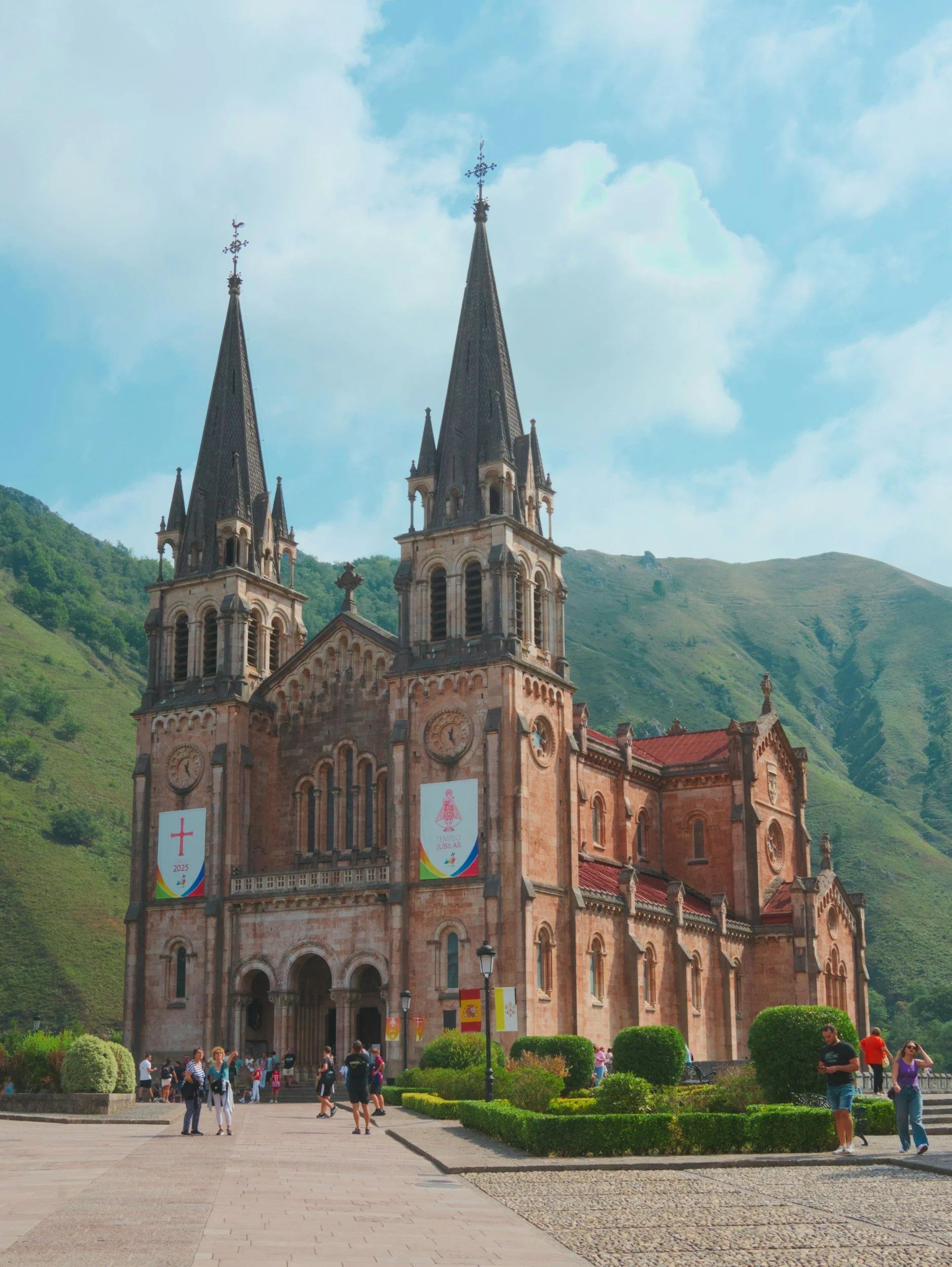
I would not split Oviedo and Gijón just because they are the two big places
This is probably the hotel move I would question most, because it looks sensible when you first sketch the itinerary but does not actually solve very much.
Three nights in Oviedo followed by three in Gijón sounds nicely balanced on paper, but the two cities are so well connected that I would ask whether the middle-of-the-trip packing is really buying me enough. Even if the actual bus journey takes around half an hour, you still have to pack, check out, get yourself and the suitcase to the station, travel, find the next hotel and possibly wait until the room is ready, which can very easily turn a short transfer into a morning that feels oddly fragmented.
And the transport problem you solved was tiny to begin with.
If you are staying in Oviedo, Gijón was already an easy day out. If you are staying in Gijón, Oviedo was already easy too, and Avilés sits inside that same central network. I would much rather use my one hotel move to go somewhere that changes the trip in a much more noticeable way, such as Llanes, Ribadesella or Cangas de Onís, where the next few days suddenly become more local and less dependent on long return journeys.
I would only split Oviedo and Gijón if the atmosphere itself was the reason, perhaps because you wanted a few city-and-culture days in Oviedo and then genuinely wanted to finish with San Lorenzo outside the hotel, rather than because you thought staying in both was somehow necessary to see them properly.
Nine nights or more: I still would not keep adding bases just because there is room
Once you get to nine or ten nights, the temptation is to start collecting places simply because the itinerary can technically fit them, and this is where I would be quite disciplined.
I would rather use the extra time to do something that is surprisingly difficult on a shorter trip, which is have a day when nothing particularly important happens. Maybe you stay in Llanes and walk San Pedro again because the weather is better, or you spend half a day in Oviedo around El Fontán and decide not to catch the afternoon train you had vaguely considered. Those are often the days that make a longer trip feel different from a short one, and I would not trade all of them for another hotel check-in.
For most nine- or ten-night trips, two bases would still be enough for me. Four or five nights in Oviedo followed by three or four in Llanes gives you a really good central-plus-east structure, while Gijón and Ribadesella works nicely if the sea is driving most of the trip. If the mountains are a major priority, Oviedo and Cangas de Onís can give you the city side first and then enough time near the Picos that one cloudy day does not suddenly ruin the whole plan.
Three bases start making sense only when the trip genuinely has three different geographical chapters, perhaps a central city, a couple of nights around Cangas for the mountains and then several nights on the eastern coast, but even then I would ask whether both Cangas and Llanes are really necessary for the exact things I want to do rather than adding them automatically because there are enough nights on the calendar.
If the move does not make the next few days easier, I would rather stay where I am.
I would also be careful about trying to squeeze western Asturias into the same trip
This is where a longer itinerary can start becoming a little too ambitious without you noticing.
Cudillero looks possible from central Asturias, so you add it. Then Luarca does not look dramatically farther. Then another western beach or village catches your attention, and suddenly several days of the trip are beginning and ending with long journeys along the same corridor simply because every individual place looked manageable when you checked it on its own.
For a first trip of a week or so, I would be completely comfortable leaving some of western Asturias for another time, not because it is less worthwhile, but because the farther-west coast and inland valleys deserve more than becoming the extra day you squeezed in after Oviedo, Gijón, Llanes and the Picos.
If I already knew the west was important, I would shape the trip around that from the beginning. Avilés starts making much more sense as the central base, because Cudillero, Salinas and the western connections naturally sit on its side of the region, and on a longer itinerary I would consider eventually moving farther west rather than repeatedly commuting there from somewhere like Llanes.
I would also be careful with any coastal or nature shuttle I found while researching, because some of the extra services Asturias runs to beaches, villages and natural areas are seasonal. They can make certain journeys much easier when they are operating, particularly in summer, but I would never build an evergreen itinerary around them without checking the dates again for the actual trip.
If I had seven or eight nights and found myself trying to fit in the entire eastern coast, the Picos and several western towns, I would probably remove something rather than add another hotel, because there is no prize for covering the widest possible section of Asturias.
The second base should make the trip feel easier, not more complicated
That is probably the rule I would keep in mind above everything else.
If moving to Llanes means I stop doing long eastern-coast return journeys, the move worked. If moving to Cangas means I wake up closer to the mountain day I actually care about, the move worked. If moving to Ribadesella means I can spend the evening beside the Sella estuary instead of thinking about the last bus back to Gijón, the move worked.
If I have simply changed from one hotel in central Asturias to another hotel half an hour away because both city names were on my list, I am much less convinced.
So for three to five nights, I would choose one base and properly settle into it, while with six to eight nights I would consider one meaningful move east or towards the mountains if that part of the region genuinely matters to the trip. Even with nine nights or more, I would usually stop at two bases unless there were three very clear geographical parts to the itinerary and I actually enjoyed changing hotels.
And if this whole question of where should I actually sleep rather than just visit for the day? is making you look farther west, this guide to choosing where to stay in Cedeira gets into exactly that problem on the northern Galician coast.
What changes if you come to Asturias outside summer?
If I were choosing between Oviedo, Gijón and Llanes for a November trip, I would not use quite the same logic as I would in July.
The places themselves obviously have not changed, but the amount of flexibility around them has. Long summer evenings make it much easier to spend two hours getting somewhere, stay for dinner and still have plenty of daylight around the edges of the day, while extra seasonal buses can make beaches, mountain areas and smaller villages surprisingly manageable without a car. Once you get into late autumn and winter, I start caring much more about whether the return bus runs at a useful time, whether there will still be somewhere I actually want to eat on a Sunday night, and whether my base is interesting enough that I will be perfectly happy staying there if the weather makes the day trip I had planned look like a terrible idea.
So I would not say Asturias has one best month, and I definitely would not tell everyone to avoid the smaller towns outside summer. I would simply make the itinerary less ambitious as the days get shorter, and let the base itself do more of the work.
Shorter days make me much pickier about day trips
This is one of those things that sounds obvious until you actually start putting bus times beside sunset times.
A journey that feels completely reasonable in June can eat into a much bigger part of the useful day by November, particularly when you are travelling somewhere for coastal walks, viewpoints or mountains rather than museums. If I left Oviedo for Llanes on a summer morning, I would have hours to walk San Pedro, have lunch, go down to the harbour and perhaps stay for dinner. Later in the year, I would be much more aware of how much daylight I was spending simply getting there and back.
That does not mean I would stop taking day trips. Gijón and Avilés still make complete sense from Oviedo because the journeys are short and there is enough going on once you arrive that a grey afternoon is not wasted, while Ribadesella can still work nicely from Llanes because you are already in the east. I would just become much less interested in those technically possible days where four or five hours end up disappearing into transport.
This is also where I think people sometimes make smaller places sound more difficult outside summer than they really are. The answer is not necessarily to abandon Llanes and stay in Oviedo for the whole trip. If I genuinely wanted two or three quiet days on the eastern coast, I would rather sleep in Llanes and make the days smaller than stay centrally and spend several short winter days commuting there.
Sundays are when I’d check the timetable twice
I would also check the actual weekday before deciding which day trip goes where, because some regional routes have noticeably more options from Monday to Friday than they do on Sundays and public holidays.
The current Gijón to Villaviciosa timetable is a good example. There are services that run every day, so Sunday does not make the journey impossible, but quite a few additional departures are weekday-only. That difference barely matters if the bus you want happens to be one of the daily ones; it matters a lot if you have planned the day based on a Wednesday timetable and only realise on Sunday morning that several of the options have disappeared.
I would be fairly relaxed about this around Oviedo, Gijón and Avilés, where the central transport network gives you much more room to change your mind. Once I was planning Llanes, Ribadesella, Cangas de Onís, Villaviciosa or a smaller coastal place, I would search the actual date rather than thinking, I checked this route last month, so it will be fine.
The same goes for public holidays. I would rather spend two minutes checking CTA or ALSA the evening before than discover at breakfast that the nice late return I had saved only operates Monday to Friday.
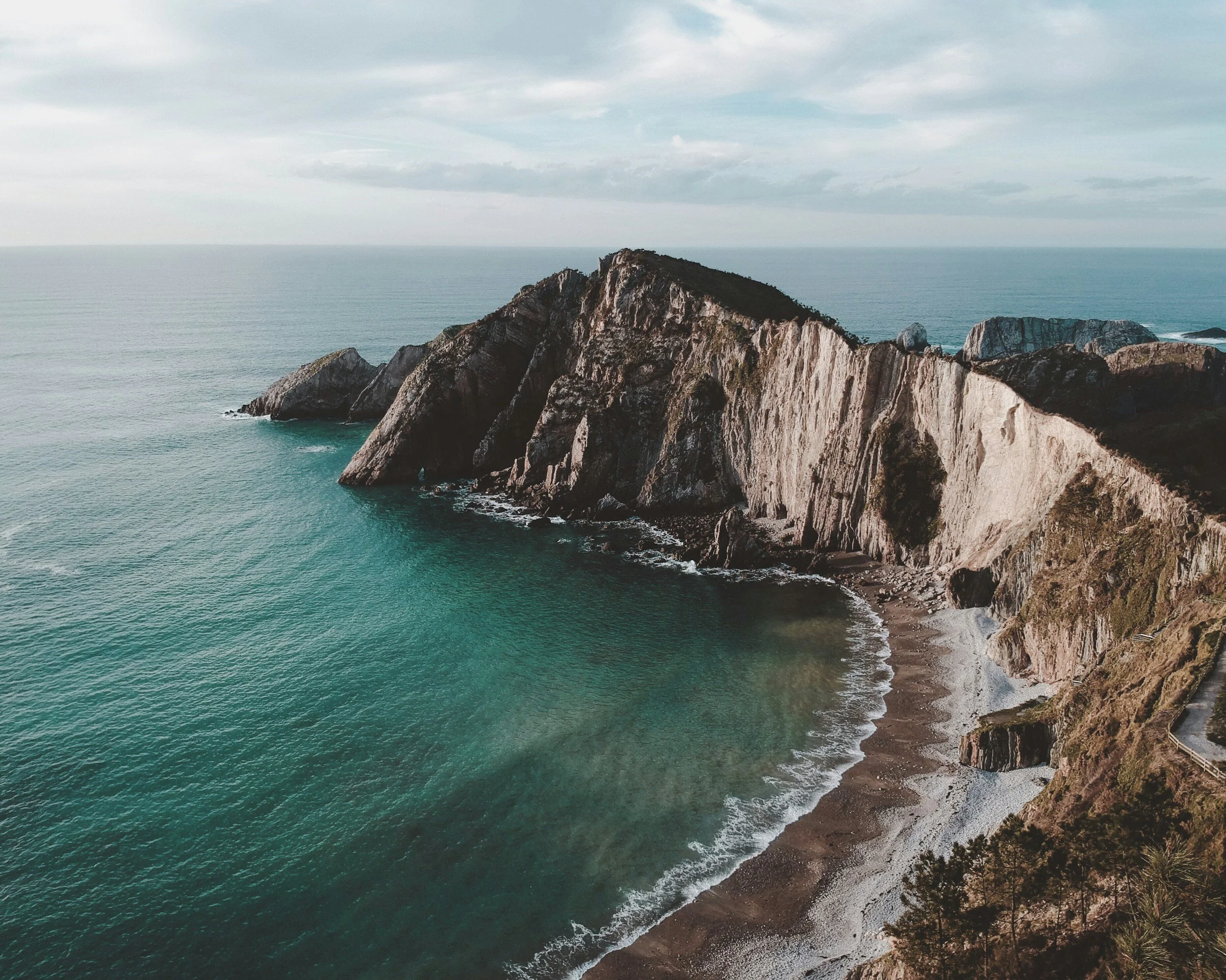
Oviedo becomes an even safer bet when the weather turns
If I only had three or four nights in late autumn or winter and wanted a mixed first trip, Oviedo would become even harder for me to argue against, mostly because the city gives you options when the weather starts deciding the itinerary for you.
We have already gone into the museums, El Fontán, independent shops, cafés and sidrerías in the Oviedo section, so I would not repeat all of that here. The seasonal point is simply that those places keep the day going when you abandon a coast or mountain plan at 08:00. You do not have to replace the cancelled excursion with some desperate “rainy-day activity”; you can just have a normal day in Oviedo.
That matters more to me in January than it does in July.
I also think the central location becomes more valuable when you have less daylight to waste, because I can still take a quick trip to Gijón or Avilés without turning the whole day into travel. On a very short winter break, that flexibility would probably push me towards Oviedo even if another base initially looked more atmospheric.
But I would not choose it automatically just because it is winter. If I had booked Asturias specifically because I wanted the coast in cold weather, which is a completely different kind of trip from wanting a beach holiday, Gijón would still have a very strong case.
Gijón still works if you actually like the coast in winter
I would happily stay in Gijón outside summer if what I wanted was to wake up and walk beside the Cantabrian Sea, rather than merely have access to it on a sunny day.
San Lorenzo does not become irrelevant because nobody is lying on a towel. The Muro is still there, Cimavilla is still there, and a clear cold morning beside the water can be one of the nicest parts of a northern Spain trip. More importantly, Gijón remains a proper working city when the beach season ends, so you still have markets, bookshops, museums, restaurants and enough evening life that you are not relying on summer visitors to keep the place going.
Where the calculation changes is what I am giving up for that sea view.
In summer, having San Lorenzo outside the centre gives me obvious extra value because I can swim, spend part of the afternoon on the sand or decide very spontaneously that today is a beach day. In winter, I would choose Gijón because I genuinely liked the idea of the winter coast itself, not because I expected the same type of holiday with a colder temperature.
If I cared more about museums, several regional trips and having the easiest possible fallback when the forecast went wrong, I would move back towards Oviedo. If I knew I would happily put on a coat and walk San Lorenzo in whatever Asturias happened to be doing that morning, I could very easily choose Gijón.
Llanes still has life, but I’d keep the days closer to town
This is the seasonal distinction I would be most careful with because I have seen smaller coastal places described in two equally unhelpful ways: either they are supposedly dead outside July and August, or people write as though absolutely nothing changes.
Llanes sits somewhere in the middle.
There is genuine year-round life here, and the local tourism office specifically describes its gastronomy as available throughout the year, so I would not worry that I was going to arrive in November and find the old town completely abandoned. You still have restaurants and sidrerías, shops, the harbour, Sablón, Toró and the Paseo de San Pedro, and the fact that all of those things are accessible on foot becomes even more valuable outside summer.
What I would change is how much I expected Llanes to unlock around it.
In July or August, seasonal transport can make more of the wider coast available and longer daylight gives you much more room to combine a bus, beach and walk without constantly checking the time. Outside that period, I would be happier keeping two or three days quite close to town, perhaps adding Ribadesella on a properly checked direct service, rather than building a little itinerary around several rural beaches and villages and assuming I could move between them whenever I wanted.
This is also when I would be even stricter about staying in Llanes town itself. A rural hotel that looks dreamy in August, when you have long evenings and more seasonal movement around the coast, can feel considerably more isolated in November when you discover the restaurant you wanted is closed that evening and the last useful local connection has already gone.
I would check restaurant opening days individually too, particularly from late autumn into winter. Llanes itself has enough year-round life to work, but individual businesses in smaller coastal towns can reduce days or close seasonally, and I would never assume that a restaurant appearing on Google Maps means it will be serving dinner every night of my January stay.
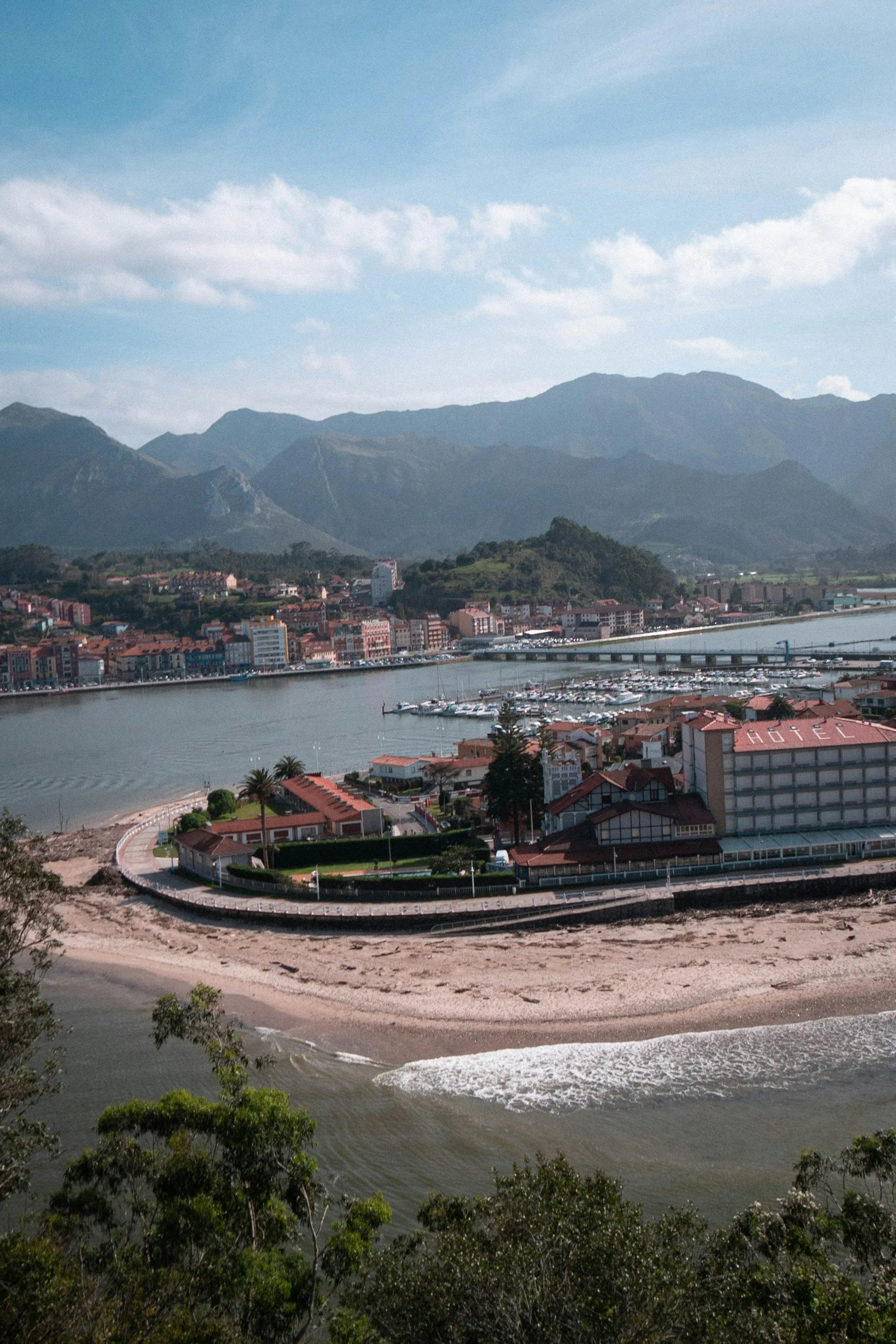
Ribadesella is where one seasonal closure can genuinely change the reason to stay
If Tito Bustillo is part of why you are considering Ribadesella for two or three nights, this is one detail I would check before booking anything.
The cave itself is seasonal. Under the current operating pattern, visits run from spring into autumn rather than throughout the entire year, and entry is limited enough that I would book in advance when it is open rather than simply turn up after breakfast.
That matters because Tito Bustillo is not a minor extra in Ribadesella. For plenty of people, it is one of the reasons to choose the town over another coastal base.
A winter Ribadesella stay can still be lovely if what you really want is Santa Marina, the Sella estuary, the harbour and coastal walks, and there is something appealing about seeing a seaside town outside its busiest months. I would just know that I was booking a different version of Ribadesella, where the outdoor side of town needs to carry more of the stay and one of its strongest cultural attractions may not be available.
This is exactly why I prefer checking the specific things I care about rather than reading a generic “best time to visit Asturias” paragraph.
Covadonga is the one place I’d always recheck before going
The Lagos de Covadonga access system is another seasonal detail that can materially change the day.
The regulated transport scheme operates on published dates rather than simply switching on for “summer” and off for “winter”, with busy periods around Easter, summer and selected weekends or holidays later in the year typically included. The operating calendar, shuttle arrangements and ticket details are published for the relevant period, so this is one journey where I would always check the official Asturias Tourism page again shortly before the trip.
I would not assume that because somebody took a particular shuttle in August, I can follow the same plan in October.
And I would not make the opposite assumption either, that travelling outside the main regulated period somehow makes everything simpler. If I do not have a car, I still need to know exactly which public transport is running from Cangas de Onís to Covadonga and the Lakes on my date.
The same caution applies to the Cabrales side of the Picos, where the seasonal transport around Poncebos, Ruta del Cares, Sotres and Collado Pandébano has its own operating period and its own access plan.
The mountains are the one part of this trip where I would happily over-check rather than improvise.
Summer gives you more freedom, but also much busier towns
There is a nice flip side to all of this, because summer often gives car-free travellers more options rather than simply better weather.
Asturias runs extra seasonal transport to beaches, villages and natural areas during the main summer period, which can make parts of the coast and countryside substantially easier to reach than they are through the normal year-round network. If my trip was going to involve several beaches outside the main towns, I would absolutely look at the current seasonal shuttle map before deciding what was realistic.
But I would also look at the events calendar before booking accommodation, because there are a few dates when a town that sounded beautifully relaxed while you were planning can become one of the busiest places in Asturias.
Ribadesella and Arriondas around the Descenso Internacional del Sella are the obvious example. The famous canoe race takes place in early August and brings enormous crowds into both towns, so I would either book it deliberately because I wanted to be part of it or avoid those dates if my plan was a quiet couple of nights beside Santa Marina.
Gijón has its own summer pressure points, with Semana Grande in August and the Fiesta de la Sidra Natural later in the month bringing concerts, events and much more activity into the centre. Again, that could be brilliant if I wanted a lively city stay, but it is worth knowing before I pay extra for a supposedly peaceful room near the seafront.
And I would not assume September automatically means everything has calmed down. Oviedo’s San Mateo celebrations fill the city with concerts and events in the second half of September, including the Día de América en Asturias parade, so accommodation and evening atmosphere can feel very different from an ordinary September week.
These events are not reasons to avoid the cities. They are reasons to decide whether you want that version of the city before you book it.
Outside summer, I’d slow the trip down rather than change it completely
That is probably the simplest way I would use all of this.
In summer, I would be more willing to build in coastal day trips, smaller beaches and longer evenings because daylight is generous and extra seasonal transport can make routes possible that are much more awkward later in the year. I would just check major events and accommodation prices before assuming August automatically means easy.
In spring and early autumn, I would probably keep the same Oviedo, Gijón or Llanes decision I would make at any other time of year, but I would pay more attention to the exact weekday, attraction opening periods and whether the seasonal transport I had seen online was actually operating yet or still running.
And in late autumn and winter, I would make the base itself a much bigger part of the trip. Oviedo becomes particularly appealing when I want indoor options and easy central journeys, Gijón still makes complete sense if a cold walk beside San Lorenzo is something I genuinely want, and Llanes works when I am happy to spend more time in Llanes itself rather than expecting to hop between half a dozen coastal villages.
I would not chase a supposedly perfect month for Asturias. I would think about what I want to do on the ordinary day when the weather is not perfect, the bus I wanted does not run as often as it did in August, and I decide I would rather stay close to where I am sleeping.
The base that still sounds good on that day is probably the one I would book.
If the smaller-town side of Asturias is what you keep coming back to, I’ve also put together these Spanish villages I’d choose after a first trip, including places where the market, old streets, and local food are more of the reason to go than a long sightseeing list.
If you’re still undecided, do this before you book
By this point, I would stop comparing towns on paper and start thinking about the trip I actually want to have, because that usually makes the answer much clearer than reading another ten “best places to stay in Asturias” guides. Before opening Booking.com and inevitably getting distracted by a beautiful guesthouse somewhere on the coast, I would write down the two or three days I would be genuinely disappointed to miss, not every possible excursion that might fit if the weather is perfect and every connection lines up, but the places that are really making me want to come to Asturias in the first place.
Then I would put those journeys into the official timetable for the actual dates I am travelling and look at them properly, because this is where a base that seemed perfect on the map either starts making a lot of sense or becomes slightly annoying very quickly. I would check what time I would realistically need to leave in the morning, whether the journey is direct or involves changing, where the bus or train actually drops me, and what the return looks like once I have given myself enough time to enjoy the day without spending the last two hours thinking about the bus home. If the trip includes a Sunday or public holiday, I would test one of those days too, because I would much rather discover now that the useful evening service does not run than while sitting in a café trying to work out how I am getting back.
There is one other question I would ask myself before booking anything, and I think it is actually a really useful one in Asturias: if one of those priority day trips disappeared because the weather was awful, the mountains were in cloud or something I wanted to visit was closed, would I still be happy spending that day where I was staying? I would want the answer to be yes, because the best base is not just somewhere that gets me to other places efficiently, it should also be somewhere I would genuinely enjoy having a lazy morning, finding lunch, going for a walk and letting the day become much simpler than I had planned.
Once I was happy with the town itself, then I would start looking seriously at accommodation, and I would probably do that in the opposite order to how most booking sites encourage you to. Rather than falling in love with a hotel and then trying to make its location work, I would put the main bus or railway station on the map first, look at the walking route with a suitcase in mind, and then see what sits around the property in the other direction too, because I would want coffee, dinner and an evening walk to feel easy as well. A place can look very central when you glance at the map and still be oddly inconvenient for the way you are travelling, while another one that looks slightly farther away might sit much better between the station, the old centre and the part of town where you will actually spend your evenings.
I would be particularly suspicious of any accommodation that creates the same little inconvenience every single day, because those are the things that start irritating me far more than one slightly longer journey ever would. If every regional bus requires another local bus first, if I have to think about a taxi after dinner, or if a listing says “Llanes” or “Cudillero” but the actual property is somewhere in the wider municipality rather than the town I thought I was booking, I would rather spot that before paying than spend the whole trip working around it.
What I am really looking for is not the base that can theoretically reach the most places, but the one where my own trip still feels easy once I add actual departure times, actual walking distances and the kind of evenings I want to have. If those two or three important days still look straightforward, the town itself still sounds somewhere I would enjoy even if I went nowhere for a day, and the hotel does not introduce some annoying little transport problem of its own, I would stop comparing and book it.
At that point, I think more research usually starts making the decision feel harder rather than better, and I would much rather arrive with a good base and a little room to change my mind than with a perfectly optimised itinerary I am already tired of before I have even got there.
FAQs about visiting Asturias without a car
Do you need a car in Asturias?
No, you do not need a car to have a really good trip to Asturias, but you do need to be a little more selective about where you stay and what you try to fit in. The mistake is assuming that because Asturias is possible by public transport, every beach, mountain village and walking trail is equally easy to reach without driving.
If I were travelling without a car, I would build the trip around places with genuinely useful connections and then accept that some of the more rural corners of the region belong on another trip. Oviedo, Gijón and Avilés sit inside the strongest part of the public transport network, while Llanes, Ribadesella and Cangas de Onís are all realistic without driving when they fit the geography of the trip. ALSA runs regional services across Asturias, Renfe covers the central rail network and several coastal routes, and Asturias also adds seasonal buses to beaches and natural areas in summer.
So I would not rent a car simply because another Asturias guide says you “need” one. I would first decide whether the places I actually care about are among the ones that work well without it.
Where is the best place to stay in Asturias without a car?
For a first trip with a mixture of cities, coast and one or two longer day trips, I would start with Oviedo. It gives you the easiest margin for changing plans once you arrive, while still being somewhere I would happily spend a day if I decided not to go anywhere at all.
That answer changes when the trip becomes more specific, though. Gijón makes more sense when having the sea close every day matters more than maximum regional flexibility, Llanes becomes a much stronger choice when several of your priorities are on the eastern coast, Avilés is worth looking at when the airport and western Asturias matter, and Cangas de Onís only really jumps ahead when the Picos are becoming one of the main reasons for coming.
I would therefore choose the base from the itinerary rather than choosing the prettiest town first and trying to make the transport work afterwards.
Is Oviedo or Gijón better as a base for Asturias?
I would choose Oviedo for the easier all-round base and Gijón when I knew I wanted the coast built into the stay itself. There is no need to treat this as a decision between a “good” and “bad” transport base, because both cities are well connected and easy to visit from one another.
The more useful question is what you want the hours between the day trips to look like. If I wanted museums, old streets, food shops, sidrerías and an easy place to fall back on when the weather turned, I would choose Oviedo. If I knew I would be much happier starting the morning beside San Lorenzo and coming back to the sea in the evening, I would choose Gijón and happily make Oviedo the day trip instead.
The connection between them is strong enough that I would not normally change hotels just to experience both. ALSA has very frequent services on the Oviedo–Gijón corridor, alongside the central rail network.
Is public transport good in Asturias?
It is good in the places most useful to a car-free trip, but it is very uneven once you get farther into the rural coast and mountains. That distinction matters much more than simply asking whether Asturias “has good public transport”.
Around Oviedo, Gijón and Avilés, I would feel comfortable making fairly spontaneous plans because there are overlapping bus and rail options. On longer regional journeys, I would often look at ALSA first, particularly for places such as Llanes and Cangas de Onís, while the narrower-gauge coastal railways can be useful when their timetable suits you but are not always the quickest option. ALSA currently lists direct regional links from Oviedo to destinations including Gijón, Llanes and Cangas de Onís, while Renfe maintains an integrated Cercanías network across Asturias.
Once the plan involves a small beach, a remote village or a mountain trailhead, I would stop thinking in terms of “Asturias public transport” and check that exact journey instead. That is where the difference between technically reachable and genuinely easy becomes important.
Is it better to travel around Asturias by bus or train?
For quite a few visitor journeys, I would check the bus first. Asturias is one of those places where choosing the train automatically because it looks easier on the map can leave you with a much slower journey than you expected.
ALSA is particularly useful for the eastern side of the region and for Cangas de Onís, while Cercanías is very useful around the central cities. Llanes, for example, has direct bus connections with Oviedo and Gijón, and Cangas de Onís has regular regional bus connections with the main Asturian cities.
You will also see the old narrow-gauge railway referred to as FEVE, although these services are now part of Renfe’s network. I would absolutely use one if the route and timetable worked for the day, especially if I liked the idea of a slower journey along the coast, but I would compare it with the bus before assuming it was the practical option.
What are the easiest day trips from Oviedo without a car?
Gijón and Avilés are the days I would feel most relaxed about because both sit inside the central transport network and do not require you to build the whole day around one particular return service. Cangas de Onís is also possible by direct bus when you want to head towards Covadonga, while Llanes can be reached directly but is enough of a journey that I would give it a full day rather than squeezing it between other plans. ALSA officially lists Gijón, Llanes and Cangas de Onís among its direct routes from Oviedo.
What I would not do is assume that every famous Asturias destination makes an equally sensible Oviedo day trip. Cudillero needs more thought once you include the station-to-village geography, while the Picos become much more complicated if what you actually mean is Poncebos, Ruta del Cares or Sotres rather than Covadonga.
For me, the best Oviedo day trip is not necessarily the farthest place I can prove is reachable. It is somewhere I can get to early enough, enjoy without watching the clock and still have a choice of sensible ways home.
Is Llanes a good base in Asturias without a car?
Yes, Llanes is one of the best smaller places to stay without a car if you want to concentrate on eastern Asturias. I like it particularly because you do not need a day trip for the town itself to feel worthwhile: the old centre, harbour, Sablón, Toró and Paseo de San Pedro are all part of normal days on foot, while direct buses connect Llanes with Oviedo, Gijón and other destinations. ALSA confirms direct links from Llanes to Oviedo, Gijón, Santander and Bilbao as well as regional destinations.
The important bit is the address of the accommodation. “Llanes” can mean the town or the much larger municipality, and those are very different bookings when you do not have a car. I would stay in Llanes town itself unless I had checked exactly how I was getting from a rural property to the station, restaurants and the places I wanted to visit.
I also would not use Llanes to cover the whole of Asturias. It becomes much more convincing when you let it be an eastern-coast base rather than asking it to send you back towards Oviedo and western Asturias every morning.
Can you visit the Picos de Europa without a car?
Yes, but “the Picos de Europa” is far too broad to be treated as one public transport destination. You can reach Cangas de Onís by bus and organise Covadonga and the Lakes without driving, but that does not mean the same journey gets you easily to Poncebos, Bulnes, Ruta del Cares or Sotres.
That distinction is the part I would work out before booking accommodation. Cangas de Onís has regional bus connections with Oviedo and Gijón, while the official Covadonga system provides regulated public transport to the Lakes on specified dates.
If I only had one mountain day and was staying in Oviedo or Gijón, I would also compare an organised excursion with doing it independently, especially if I wanted to combine several mountain stops rather than simply reach Covadonga. If the mountains were going to take up two or three days of the trip, I would seriously consider sleeping closer to them instead of spending every morning travelling out from the city.
How do you get to the Covadonga Lakes without a car?
The usual car-free route is to reach the Cangas de Onís/Covadonga corridor and then use the official Lakes transport system when regulated access is operating. The important thing is to check your exact date, because the access scheme works on specified periods rather than following one identical timetable every day of the year. Asturias Tourism publishes the current access arrangements and ticket information on its official Lagos de Covadonga page.
I would also leave a little flexibility around this day if possible. Getting the transport right is only half the equation in the Picos, because low cloud or poor mountain weather can completely change what you see once you get there, even when every bus runs exactly as planned.
And if your actual goal is Ruta del Cares or Bulnes, do not use the Covadonga Lakes instructions as your transport plan. Those are different parts of the Picos with different access logistics.
Is Cudillero easy to visit without a car?
It is possible, but I would plan Cudillero more carefully than its railway symbol on the map might suggest. The famous harbour village sits steeply below the surrounding transport routes, while many of the beaches and viewpoints people associate with “Cudillero” are scattered across the wider municipality rather than clustered around the harbour.
That is why I like Cudillero much more as a deliberate visit, or perhaps one night if I really wanted the village in the evening, than as the place responsible for the rest of a car-free Asturias trip. The important question is not simply “does Cudillero have public transport?” but how you are getting from that transport to the harbour and then back again, particularly with luggage or at the end of a long day.
I would be even more careful if booking accommodation here, because a beautiful hotel with “Cudillero” in its address may be nowhere near the part of Cudillero you have been looking at in photographs.
How many days do you need in Asturias without a car?
I think four or five nights is a good minimum if you want Asturias to feel like a trip rather than a race through a couple of highlights, while around a week gives you much more freedom to add the coast or mountains without spending every day travelling.
With three to five nights, I would normally stay in one place and use it properly. Once I had six to eight nights, I would consider a second base if moving east or towards the Picos would genuinely make several days easier, rather than adding another hotel simply because the trip was longer. Search results around Asturias itineraries commonly cluster around roughly a week, but I would rather have five well-shaped car-free days than seven days spent trying to reproduce a road-trip itinerary by bus.
The biggest difference without a car is that I would count full usable days, not just nights. Arrival day, departure day and a hotel-change day rarely give you the same freedom as a day when you wake up already where you want to be.
Can you get from Asturias Airport to Oviedo, Gijón or Avilés without a car?
Yes. Asturias Airport has direct bus connections with Oviedo, Gijón and Avilés, as well as Castrillón, so none of the main city bases requires a rental car simply because you are flying in. The airport itself does not have a railway connection.
I would still look at the flight time before booking the hotel, particularly for a late arrival or early departure, because the airport journey is part of the base decision too. Avilés is geographically closest to the airport, while Oviedo and Gijón both have direct services, so I would not compromise the rest of a week-long trip just to save a little time on one transfer.
For the actual journey, I would check the current airport timetable rather than copying departure times from a blog post, because those are exactly the sort of details that are useful today and wrong a year later.
Is Asturias worth visiting without a car outside summer?
Yes, but I would make the trip a little more local outside summer rather than trying to cover the same amount of ground with shorter days and fewer seasonal services. Oviedo and Gijón become particularly useful because both have enough year-round life that a rainy day does not leave you wondering what to do, while Llanes can still work very well when you are happy to spend more time in the town itself and plan the regional journeys more carefully.
I would pay much closer attention to Sundays, public holidays, seasonal attraction openings and the exact mountain transport operating on my dates. Summer currently brings additional CTA services to beaches, villages and natural areas across Asturias, which is useful evidence of why some routes are easier in the main season than they are at other times.
I would not see that as a reason to avoid Asturias in autumn or winter, though. I would simply choose a base I genuinely wanted to spend time in, because outside summer the difference between a nice transport hub and a place you actually enjoy being becomes much more noticeable.