
If Estonia surprises you anywhere, it'll probably be Lahemaa
Lahemaa isn’t a place you “arrive” at in any clear way. You leave Tallinn, follow the main road east for about an hour, and then at some point you turn off, usually toward Palmse, Võsu, or one of the smaller coastal villages, and that’s when it starts to change. The road narrows, the traffic drops off, and you go for stretches without passing anything except forest and the occasional house set back from the road.
What catches most people off guard is how spread out everything is. There’s no center, no main village that holds it together, and no obvious route between places unless you’ve already looked it up. You drive from one point to another, often 10–20 minutes at a time, and in between there’s nothing to stop at, no cafés, no shops, just long sections of trees and small gravel turn-offs that don’t always look like they lead anywhere.
If you head toward Altja, you’ll park just before the village and walk the last stretch in. The path is uneven, running past old wooden fishing sheds that sit close together near the shoreline, and then it opens out toward the water where there’s usually very little movement. No clear “viewpoint,” no place designed to stand and look, just the coast as it is.
In Käsmu, it’s slightly more open. You can drive further in, pass the small harbour, and park near the edge of the village. From there, it’s a short walk in any direction before you’re either at the water or back in the forest again. There are a few signs, but not enough to guide you in a structured way, so you end up figuring it out by moving around rather than following anything specific.
The Viru Bog Trail is one of the few places that feels set up for visitors. You park just off the main road, walk a few minutes through the forest, and then step onto the wooden boardwalk that runs out across the bog. It’s an easy loop, with a watchtower roughly in the middle, but even here, timing makes a difference. Late morning can be busier, especially on weekends, but early or later in the day it clears out quickly.
Spring doesn’t change how Lahemaa works, it just makes a few things slightly easier, like open cafés in Võsu and clearer access to trails that can feel more closed off earlier in the year. Some cafés in Võsu reopen, and you’ll notice a bit more activity around houses and gardens, but the overall feel stays the same. Things don’t suddenly become lively, they just become slightly more open.
What makes Lahemaa work isn’t trying to see everything, it’s understanding early on that you won’t. You pick a few places, drive between them, and let the gaps in between be part of the day instead of something you try to fill.
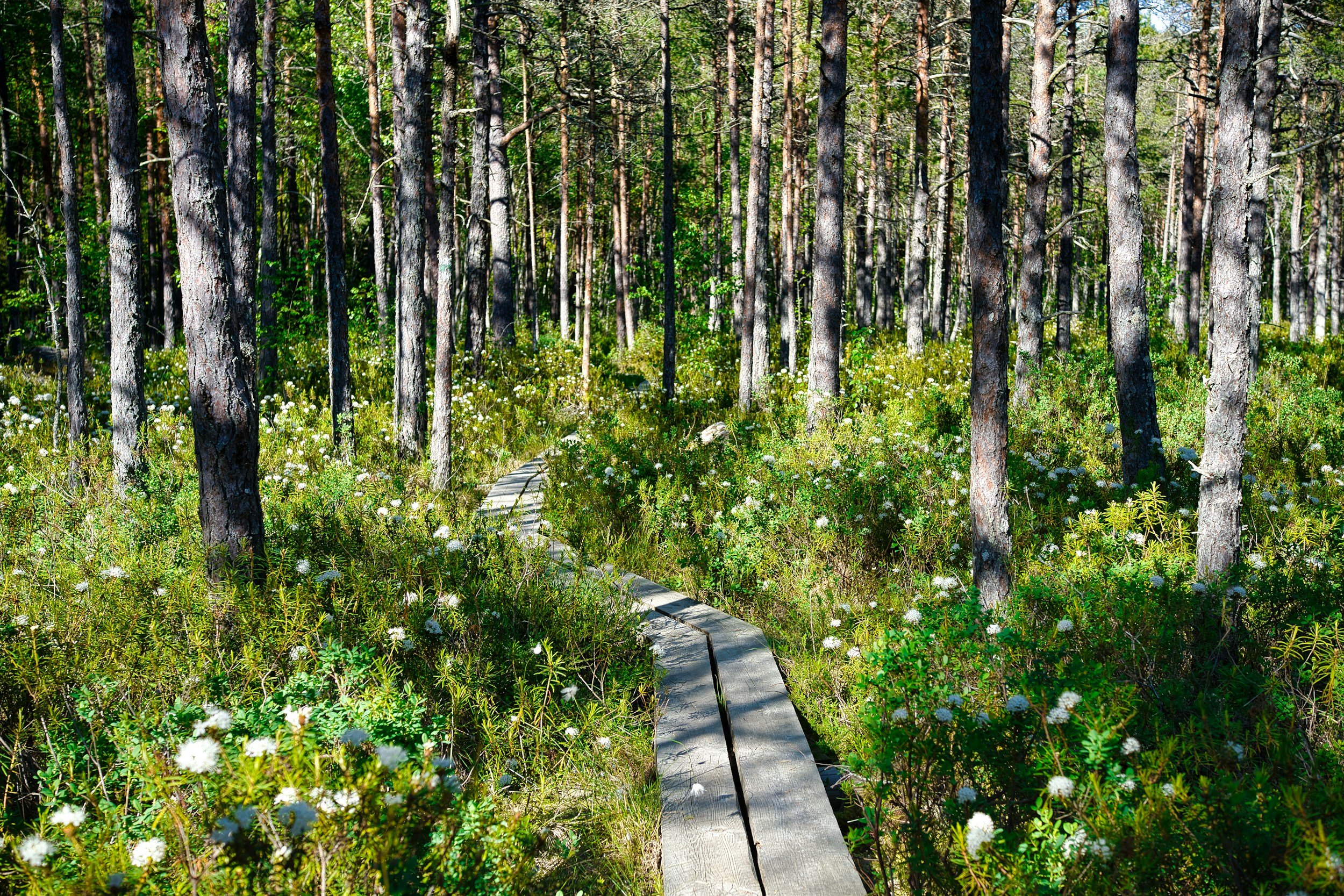
Lahemaa National Park
Where Lahemaa National Park is (and how it’s actually laid out)
Lahemaa National Park is on the north coast of Estonia, about 60–70 km east of Tallinn, but that doesn’t tell you much once you’re there because it isn’t a single place you arrive at, it’s a wide stretch of coastline and forest that you move through in sections.
Most people enter from the E20 highway (the road toward Narva) and then turn off at different points depending on where they’re going. If you’re heading toward Palmse Manor, you’ll leave the main road near Loksa tee and drive inland for a few minutes. For the coast, places like Võsu, Käsmu, or Altja each have their own turn-offs, and they’re not connected in a way that lets you move between them quickly without going back out to the main road.
Instead of one central area, you have a series of small locations spread out across the park, each with its own access road and parking area. Driving from Palmse to Altja takes around 15–20 minutes, and from there to Käsmu another 20 minutes or so, but you’re not passing through anything on the way. It’s mostly forest, with very few places to stop unless you already know where you’re going.
Even the better-known spots are slightly set back. The parking for the Viru Bog Trail is just off the main road, but once you leave the car, you still walk through a short forest section before reaching the boardwalk. In Altja, you park outside the village and walk the last stretch in. Nothing is designed to be seen from the road itself.
So while Lahemaa is close to Tallinn on paper, it feels more remote once you’re inside it because everything is spaced out and requires a bit of intention to reach.
How to get to Lahemaa National Park
Most people start in Tallinn, and the drive out is straightforward at first. You take the E20 heading east toward Narva, pass through the outskirts of the city, and then it opens up into long, fairly empty stretches where you’re mostly surrounded by forest and the occasional petrol station or roadside stop.
The part that changes things is when you leave the main road. There isn’t one obvious turn-off for Lahemaa. You decide where you’re going first, then turn off accordingly. If you’re heading toward Palmse Manor, you’ll take the turn toward Loksa and then follow smaller roads inland. If you’re going to the coast, like Võsu or Käsmu, you stay on the E20 a bit longer before turning off again. These turns come up without much warning, and if you miss one, you don’t just loop back immediately, you keep driving for a while before you can turn around.
Driving from Tallinn to somewhere like Võsu usually takes about an hour, but the last 15–20 minutes feel longer because the road narrows and there’s less around you. You pass a few houses, then long stretches of nothing, and then suddenly you’re in a village without much transition.
Once you’re there, you realise quickly why having a car makes such a difference. Getting from Võsu to Altja or over to Käsmu means going back out to the main road and driving again rather than following a direct coastal route. It’s not complicated, but it’s not something you do casually on foot or by public transport.
Buses do run from Tallinn, usually toward places like Võsu or Loksa, but they’re set up for getting you into the area, not for moving around inside it. If you take the bus to Võsu, you can walk along the beach and around the village easily, but if you decide you want to go to the Viru Bog Trail or over to Altja, you’re either waiting, arranging a ride, or changing your plan.
One thing that’s easy to underestimate is how little signage there is once you leave the main road. You’ll see signs for larger places, but smaller turn-offs toward coastal spots or trails aren’t always obvious. For example, the parking for the Viru Bog Trail sits just off the E20, but if you’re not watching for it, you’ll pass it without noticing and only realise a few minutes later.
If you want it to feel easy, the simplest way is to rent a car in Tallinn and leave either early in the morning or mid-afternoon. Early means you arrive before other people start moving around, and mid-afternoon means you avoid the midday lull and go straight into the evening.
Once you’ve done that first drive, everything else makes more sense, because you stop thinking of it as “getting to a park” and start thinking of it as moving between a few scattered places that just happen to sit in the same area.
Cycling to or around Lahemaa
Cycling in Lahemaa isn’t one continuous route you follow from one highlight to the next. It’s a series of shorter rides that you piece together, with forest in between and long stretches where nothing really changes.
If you try to cycle out from Tallinn, the first part is the least interesting. You’re on or near the E20, traffic moves quickly, and you spend more time watching the road than the surroundings. It’s doable, but most people who bring bikes drive out first and start somewhere closer like Võsu.
Once you start from there, it makes more sense. From Võsu, you can ride east toward Käsmu on smaller roads where traffic drops off. You pass scattered houses, bits of forest opening up, then closing again, and every now and then a gap where you see the sea. It’s not dramatic, but it’s steady, and you don’t need to think much about where you’re going beyond following the road.
Käsmu itself is small enough that you don’t really stay on the bike long. You ride in, pass the harbour, then end up leaving the bike somewhere and walking the rest. The same happens if you try to continue further. There isn’t a clear cycling route that keeps pulling you forward, so you naturally slow down and stop.
If you try to link bigger points like Palmse, Altja, and the Viru Bog Trail, you’ll notice the pattern quickly. You ride a quiet stretch, then you’re back out on a larger road for a while, then you turn off again. It never quite becomes a smooth route, and that’s the part people don’t expect.
The surfaces change without much warning too. You’ll be on asphalt, then suddenly on a rougher section or light gravel as you get closer to the coast or onto smaller roads. It’s all manageable, but it breaks the rhythm a bit, especially if you’re not used to it.
What stands out most is how little there is in between. You don’t pass cafés or places to stop every few kilometers. Around Võsu, you can grab something before heading out, but once you’re riding toward Käsmu or inland, you’re not really stopping anywhere until you turn back.
That’s why cycling here works better when you keep it local. Pick one area, ride for a couple of hours, stop when you feel like it, then head back the same way. Trying to cover the whole park by bike in one go usually ends up feeling more effort than it’s worth.
Planning your trip to Lahemaa: the small things that make a difference
Lahemaa is easy to underestimate because everything looks close, but the way it’s spread out means your day depends on a few small choices more than on how much you try to see.
Where you stay is the first one. In Võsu, if you’re near Ranna tee, you can walk out in the morning, grab coffee, head down to the beach, and come back again later without thinking about it. In the evening, the same stretch fills slightly, people walk up and down, and you don’t need to get in the car again. If you stay closer to Palmse or somewhere inland, it’s quieter, but even going out for dinner means driving, parking, and repeating that every time you leave.
Arrival time is another thing that catches people out. Getting there around 13:00 sounds fine, but that’s exactly when things pause. Kitchens close, cafés slow down, and you end up waiting rather than settling in. If you arrive closer to 16:00, you check in, walk around while it’s still quiet, and then everything picks up again in the evening without you having to plan it.
Food isn’t complicated, but it’s limited. In Võsu, along Ranna tee, there are a few places to eat, but not enough to treat it casually. If you decide too late, you’ll notice tables filling and not much else nearby to fall back on. During the day, it’s even more spaced out. If you’re driving between Palmse, Altja, and Käsmu, you’re not passing places to stop for lunch along the way. You either eat before you leave or wait until you reach the next village.
Driving distances are short, but they don’t feel flexible. Going from Palmse Manor to Altja takes around 15–20 minutes, but there’s nothing in between, so you don’t stop halfway. You go there, park, walk around, then get back in the car and go somewhere else. It’s not a place where you drift from one thing into another.
Parking is simple, but rarely right where you expect it. At the Viru Bog Trail, you pull off the E20, park in a small lot, then walk a few minutes through forest before the boardwalk starts. In Altja, you leave the car outside and walk in past the wooden sheds. It’s all easy, but it adds small transitions that slow the day down slightly.
It also helps to decide early what you’re not going to do. Trying to fit Viru Bog, Käsmu, Altja, and Palmse into one day is possible, but it turns into short stops and a lot of driving. Splitting it into two days makes everything feel calmer without needing more time overall.
Lahemaa in spring: what it actually feels like once you’re there
At the Viru Bog Trail, if you get there early, the car park just off the E20 might only have a couple of cars, and the short walk through the forest before the boardwalk feels darker than expected, even during the day. Once you step onto the boards, they’re often still damp, and you end up watching your footing more than the view at first. The pools out on the bog aren’t that bright yet, more dark water and muted colours, and the watchtower in the middle looks closer than it actually is. You walk, stop for a bit, then keep going, but there’s no real “highlight” moment, it’s more about the stretch itself.
Out at Altja, the difference is even smaller. You park outside the village, walk past the row of old wooden sheds, and down toward the water, and it feels almost the same as it would any other time of year. The only thing that changes is that it doesn’t feel shut. A gate might be open, someone might be moving around one of the houses, and you get the sense that people are starting to return, even if you don’t see much of them.
In Käsmu, the harbour area is where you’ll notice a bit more movement, but it’s still quiet enough that you hear things carry across the water. A couple of people walking, someone sitting on the rocks for longer than you’d expect, then nothing again. You don’t stay there for long, but you don’t rush either, because there’s nowhere else pulling you immediately.
Võsu is the only place that feels like it’s shifting into a new season. Along Ranna tee, you’ll see a few cafés open, then closed again the next day, then open later in the week. You stop checking and just see what’s there when you walk past. In the evening, people drift along the beach, not in groups, just spaced out, walking a bit, stopping, then moving on again.
What stands out more than anything is how little you have to adjust your timing. You don’t avoid places because they’re busy, and you don’t plan your day around getting somewhere early. You just go when it makes sense.
At the same time, you notice quickly when something isn’t available. If you arrive too late for lunch in Võsu, there isn’t always another option nearby. If a café is closed, it’s just closed. You don’t spend time looking for alternatives, you just move on and adjust.
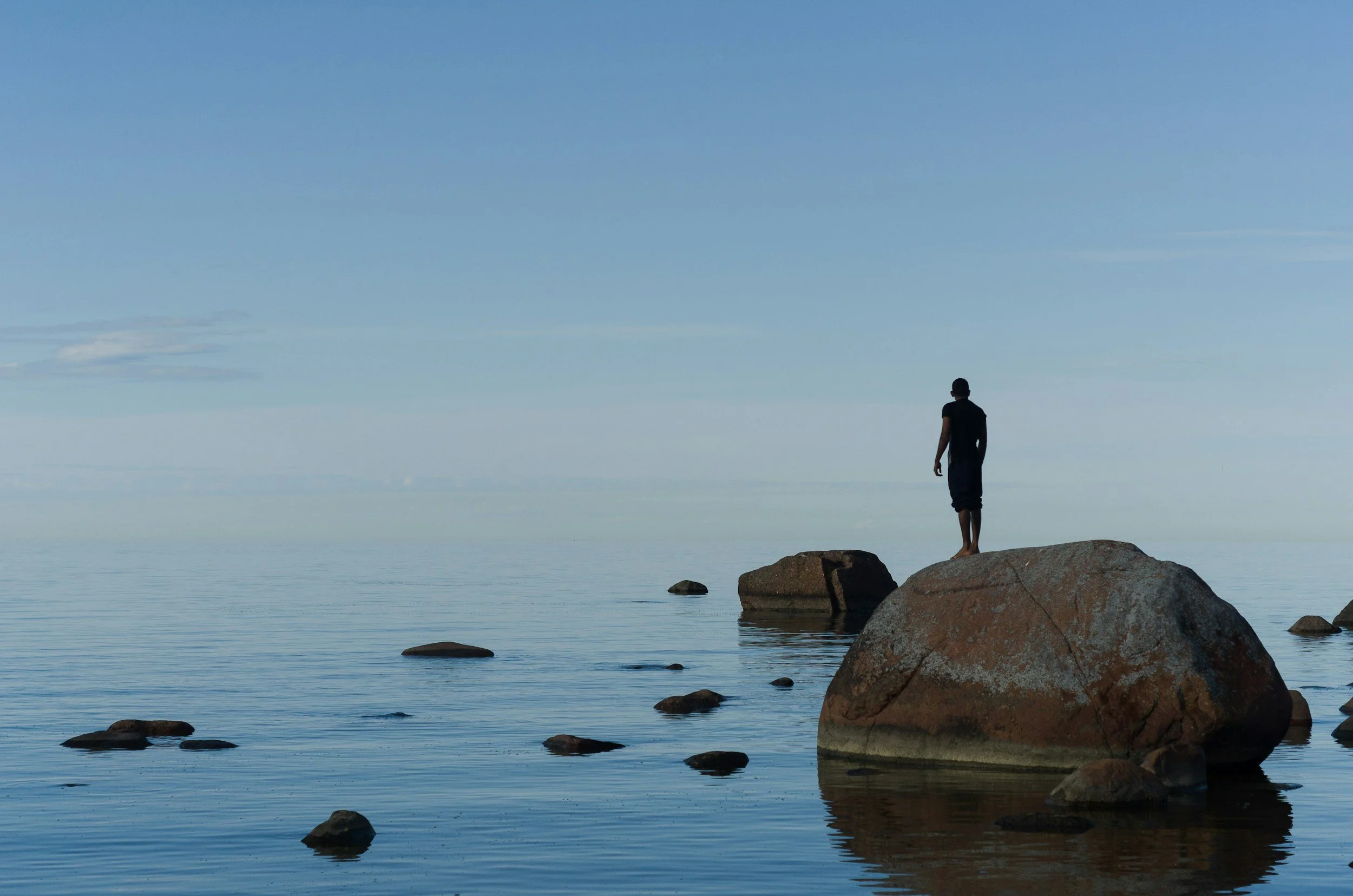
Käsmu
Where to stay in Lahemaa: what makes a good base
Where you stay in Lahemaa ends up deciding how much you move around without you thinking about it too much.
If you stay in Altja, at Altja Guesthouse, you’re already inside one of the quieter coastal areas. You don’t drive in and out, you just step outside and you’re there. The path down toward the water starts a few steps from the house, past the old wooden sheds, and in the evening you don’t really leave because there isn’t anywhere else to go nearby. You end up walking the same short stretch more than once, at different times of day, rather than trying to fit in other places.
At Vihula Manor, it feels different as soon as you arrive. You turn off the road, drive across the small bridge into the estate, and everything is contained within that area. The buildings are spread out, so even getting from your room to breakfast or the spa means walking across the grounds. You’re not near the coast here, so every outing, whether it’s Palmse, Viru Bog, or the villages, means getting back in the car, but when you return, you stay put for the rest of the evening.
Near Käsmu, Toomarahva Farmstay sits slightly outside the village rather than in it. You’ll likely drive in to Käsmu, park near the harbour, walk around for a bit, then head back out again. Once you’re back at the farmstay, it’s quiet in a different way, houses spaced out, forest close, no reason to go anywhere else unless you’ve planned to.
If you stay in Võsu, especially close to Ranna tee, the whole day feels easier without needing to organise it. You can walk out in the morning, pick up coffee, head down to the beach, and come back again without thinking about parking or timing. In the evening, you walk to dinner instead of deciding where to drive, which makes a bigger difference than you expect in a place like this.
There isn’t a “best” option in general, but there is a difference between staying somewhere you return to briefly and somewhere you actually spend time. In Lahemaa, if you get that part right, everything else falls into place without needing much planning.
What to do in Lahemaa: how to spend your time without rushing
A typical morning often starts at the Viru Bog Trail, mainly because it’s the easiest place to access early. You park just off the E20, walk a few minutes through forest, and then you’re on the boardwalk. It takes around 1.5–2 hours if you do the full loop with the watchtower in the middle, but most people don’t rush it. You stop, walk a bit further, stop again, and turn back when it feels like enough rather than when the loop ends.
After that, you’re usually back in the car, heading toward the coast. Driving from the bog down to Altja takes around 20 minutes, and you’re not stopping anywhere unless you’ve already decided to, so you go there with the intention of staying for a while. You park outside the village, walk in past the old wooden fishing sheds, and follow the path toward the shoreline. There’s no set route, you walk a bit, turn back, maybe walk it again from a slightly different angle, then leave when you’ve had enough of it.
From there, people often go to Käsmu, which is another short drive but feels more open. You park near the harbour, walk along the water, then cut back through the village streets without needing to follow anything specific. It’s not a long stop, but it breaks up the day without adding much structure.
If you’re staying in Võsu, the middle of the day usually slows down. You might walk along Ranna tee, find somewhere open for lunch, then head down to the beach for a bit before going back to your accommodation. Nothing really pulls you to keep moving at that point, so most of the day sits between a few short walks rather than one long plan.
Saunas come in later, usually in the evening if your accommodation has one. In places like farmstays or smaller guesthouses, it’s not something you book in the same way as a spa, it’s arranged on site, often at a set time. It becomes part of the evening rather than a separate activity.
Lahemaa tends to feel like the kind of place you come to reset for a few days, and if you’re thinking about where to go next, it’s easy to compare it with something like Finland’s Lakeland for more of that water-and-forest stillness, or shift toward a different kind of stay through these Sweden stays, or even take it further with a solo trip like Ayr in Scotland.


FAQ: planning a trip to Lahemaa National Park in Estonia
What is Lahemaa National Park actually like to visit?
Lahemaa isn’t one place you arrive at and walk around. It’s a wide area made up of separate stops like Viru Bog, Altja, Käsmu, and Palmse, and you move between them by car. Once you understand that early, the visit becomes much easier to plan because you’re not trying to connect everything in one continuous route.
Is Lahemaa easy to visit without a car?
You can get into Lahemaa by bus from Tallinn, usually toward Võsu or Loksa, but getting between places inside the park is difficult without a car. For example, going from Võsu to Altja or Viru Bog Trail isn’t something you do spontaneously. Without a car, it works best to stay in one location and explore that area on foot.
How long do you need in Lahemaa National Park?
One full day is enough to see a few key places, but two days works better if you don’t want to rush. Trying to fit Viru Bog, Altja, Käsmu, and Palmse into one day means a lot of driving and short stops. With two days, you can split it naturally without needing to plan tightly.
Can you visit Lahemaa as a day trip from Tallinn?
Yes, and many people do. It’s about a one-hour drive each way. The key is to choose two or three stops rather than trying to cover everything. A common route is Viru Bog Trail in the morning, then the coast around Altja or Käsmu in the afternoon.
What is Lahemaa like in spring compared to summer?
In spring, Lahemaa feels more open but less structured. Places like Võsu start to reopen, but not always consistently, and you don’t need to think about crowds at trails or coastal villages. In summer, more cafés and services are open, but you’ll need to plan timing more carefully, especially late morning and weekends.
Where should you stay in Lahemaa for the easiest trip?
Staying in Võsu, especially near Ranna tee, makes the day easier because you can walk to food, the beach, and cafés without driving. Staying in places like Altja or near Käsmu is quieter, but you’ll rely on a car for almost everything.
What are the easiest places to visit in Lahemaa without much planning?
The Viru Bog Trail is the most straightforward, with parking just off the E20 and a clear boardwalk loop. Coastal villages like Käsmu and Altja are also simple to explore once you arrive, but you need to know where to park and walk in rather than expecting to see them from the road.
Are the roads and distances in Lahemaa easy to manage?
Distances are short, but they don’t feel flexible. Driving between places like Palmse and Altja takes around 15–20 minutes, but there’s nothing in between, so you move from one stop to the next rather than stopping along the way.
Is Lahemaa worth visiting if you’re traveling solo?
Yes, but it’s quieter than most destinations. You won’t find many structured activities or places to move between constantly. Most of the day is spent walking, driving short distances, and returning to the same areas rather than filling time with different things.
What should you know before visiting Lahemaa for the first time?
Plan your stops before you go, especially if you don’t have a car. Don’t expect to find food or cafés between locations, and avoid arriving around early afternoon when many places pause between lunch and evening. Once you understand those small details, the visit feels much easier.
Where do you park for the Viru Bog Trail?
Parking for the Viru Bog Trail is directly off the E20 highway, in a small designated area that’s easy to miss if you’re not watching for it. There’s no large sign or entrance gate. Once you park, you walk a few minutes through forest before reaching the boardwalk. If you pass it, you’ll need to continue a bit further before turning back, since there’s no immediate turnaround.
Can you walk between Altja and Käsmu?
Not realistically as part of a normal visit. The distance is around 10–12 km depending on the route, and there’s no continuous coastal path connecting them in a simple way. Most people drive between the two, which takes about 20 minutes. Walking works within each village, but not between them unless you’re planning a longer hike.
Is there food available near the Viru Bog Trail?
No, there are no cafés or food stops directly at the Viru Bog Trail. The nearest options are in places like Võsu or along the main road before you turn off. It’s a good idea to eat beforehand or bring something with you, especially if you’re visiting earlier in the day or outside peak summer.