
These Tuscan villages are much easier to reach than people think
When most people think of Tuscany, they picture the rolling hills, vineyards, and medieval towns that fill travel brochures. And while places like Florence, Pisa, and Siena have their undeniable charm, there’s another side to Tuscany that many miss. You’ll likely arrive into one of these towns without really knowing which one should come first.
Maybe you’ve parked just outside Pienza near Porta al Prato and walked in, expecting to spend an hour, then realised you’re already at the far edge of the town looking out over the valley. Or you’ve stopped in San Quirico d’Orcia along Via Dante Alighieri, thinking it’s just a quick pass-through, and ended up sitting down at Bar Centrale longer than planned. Then later, in Bagno Vignoni, you reach Piazza delle Sorgenti and notice people aren’t moving through it the same way at all.
That’s usually where the confusion starts. The towns are close, the drives are short, and everything looks easy to combine. But they don’t work in the same way once you’re actually there. Each one has a different pace, a different layout, and a different way people use it during the day.
This guide is built around that difference.
Instead of listing what to see, it focuses on how each place actually works when you arrive. Where you park and how you enter the town. Which streets pull you through and which ones slow you down. When it makes sense to sit down for a meal and when it doesn’t. And how to move between Bagno Vignoni, Pienza and San Quirico d’Orcia without turning it into a rushed loop.
If you’ve been trying to figure out how to combine these towns in a way that actually feels manageable once you’re there, this is where it starts to become clearer.
Some of these villages feel quiet on the surface, but once you start paying attention to where locals actually eat, it changes the experience completely. Slow food in Tuscany gives you a clearer idea of what to look for.
Bagno Vignoni, Val d’Orcia
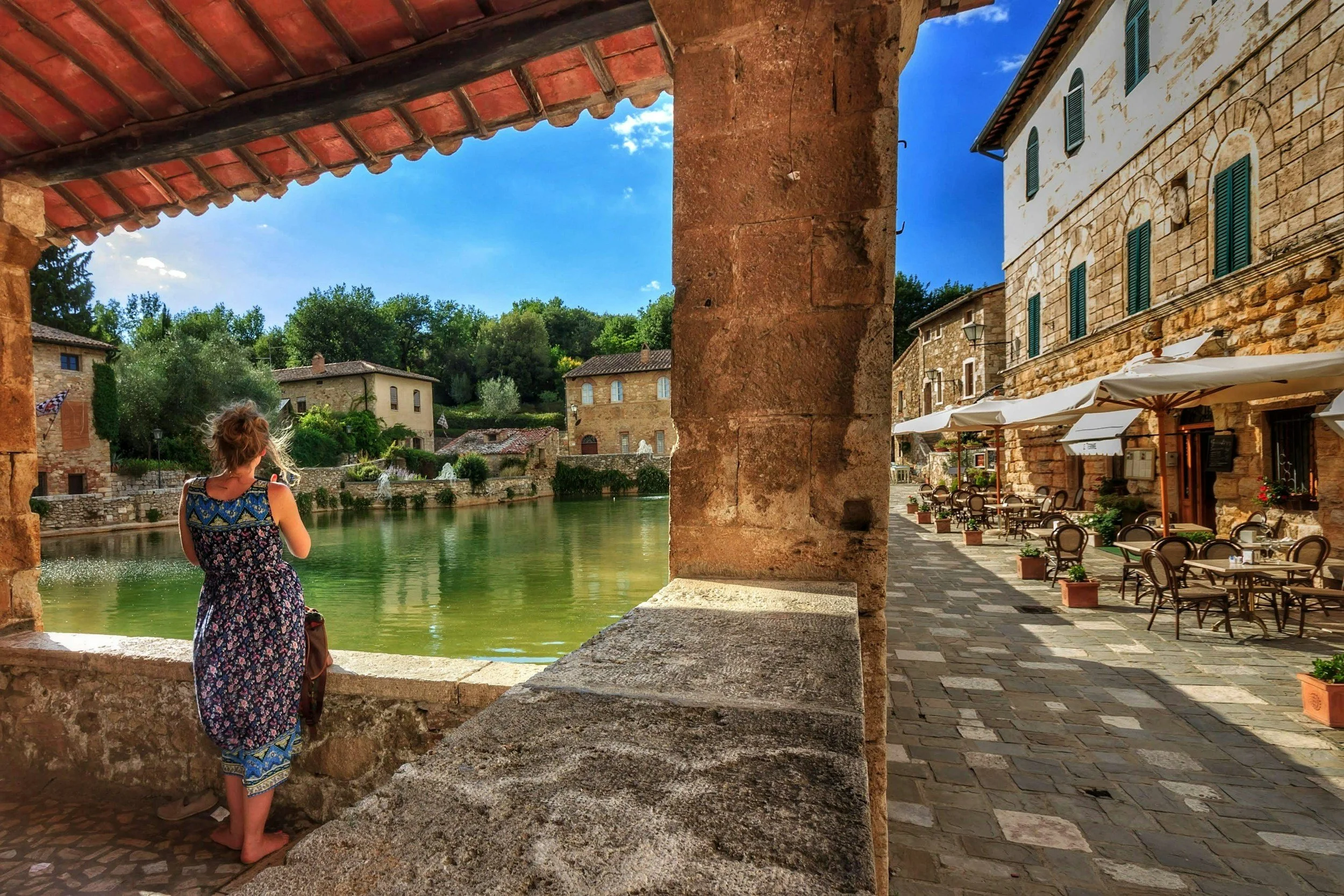
Bagno Vignoni sits just off the SP146 between San Quirico d’Orcia and Pienza, about 10 minutes from San Quirico and roughly an hour south of Siena. It’s the kind of place you can easily drive past if you’re heading between the bigger towns, but once you turn off and park, the layout makes you slow down whether you planned to or not. You leave the car along Via dei Mulini or just before the village entrance, then walk in on foot, and within a minute you’re standing in front of something that doesn’t feel like a typical square at all.
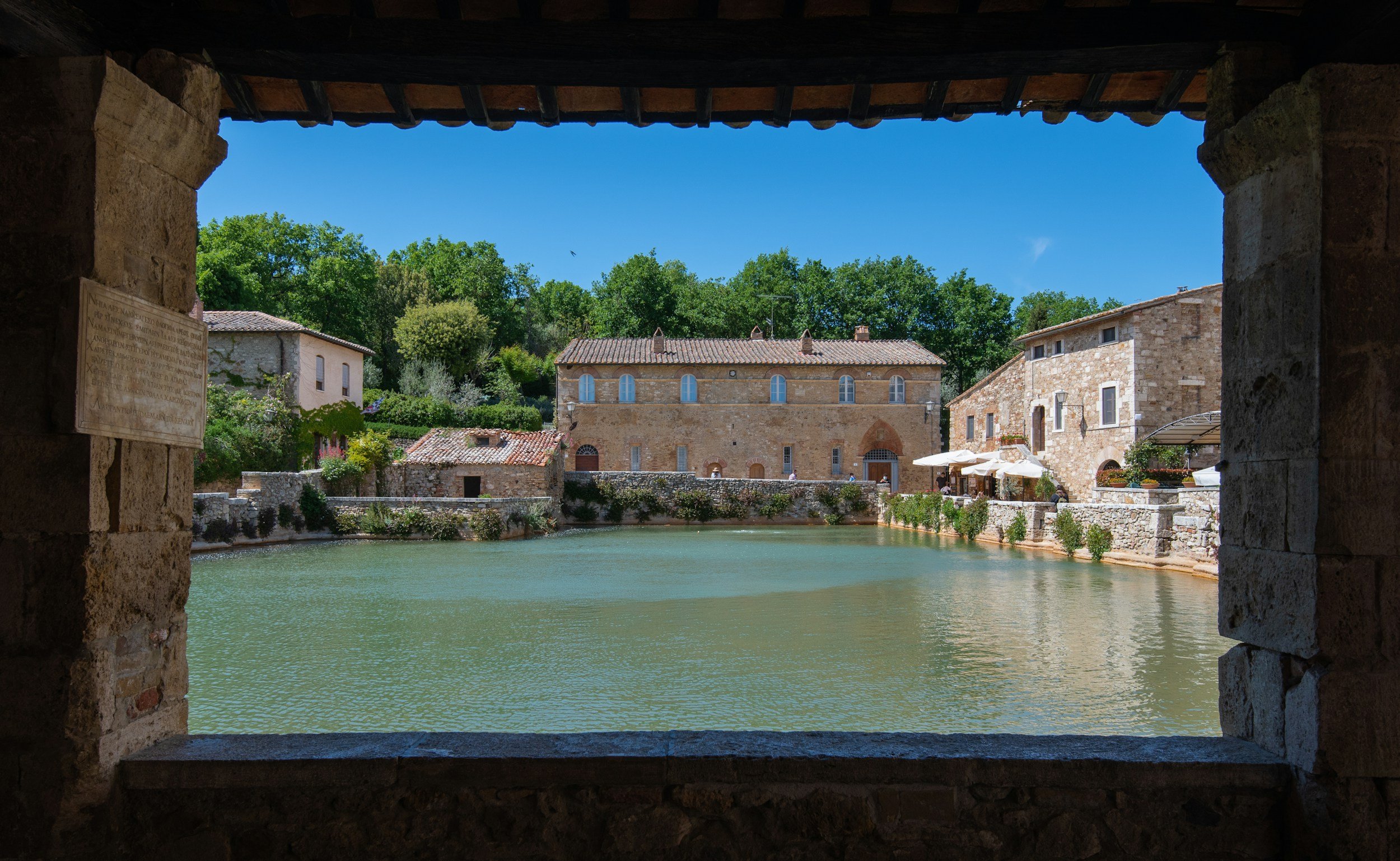
Piazza delle Sorgenti is the centre of everything, but instead of cafés or a church in the middle, it’s a large thermal pool, fenced but fully visible, with steam rising constantly. It’s not a quick photo stop kind of place. People move around the edges, sit for a while, walk across to the opposite side, then circle back again. If you arrive around midday, you’ll notice small groups coming in, walking a loop, and leaving again within 20 minutes. If you stay longer, you start seeing a different rhythm, especially later in the afternoon when it quiets down and people aren’t moving through as quickly.
Just behind the square, streets like Via del Gorello and Via dei Mulini feel more lived-in than expected for a place this small. Doors are open, laundry on balconies, deliveries coming through. It’s not busy, but it’s not staged either. You’ll pass a few small shops, a couple of places selling local products, and then you’re back at the square again without really trying. Everything is close, but it doesn’t feel compressed.
The part many people skip is the walk down to Parco dei Mulini. There’s a clear path starting right next to the square, and within a few minutes you’re below the village where the thermal water continues through old stone channels and shallow pools. It’s slightly uneven underfoot, and you’ll want to take your time going down, but this is where the place starts to feel less observed and more used. You’ll see people sitting along the edges with their feet in the water, especially outside peak summer. No one stays long, but they don’t rush either.
If you’re planning to use the thermal water properly, you need to decide that before you arrive. Albergo Le Terme is directly on the square and uses the same spring, with smaller pools inside. It’s not a large spa setup, and that’s part of why it works here. You can sometimes access it during the day, but availability changes depending on guests. About 10 minutes away by car, Adler Spa Resort Toscana is more structured, with larger pools and views out over the valley. It’s easier to secure a time slot there if you want to stay longer.
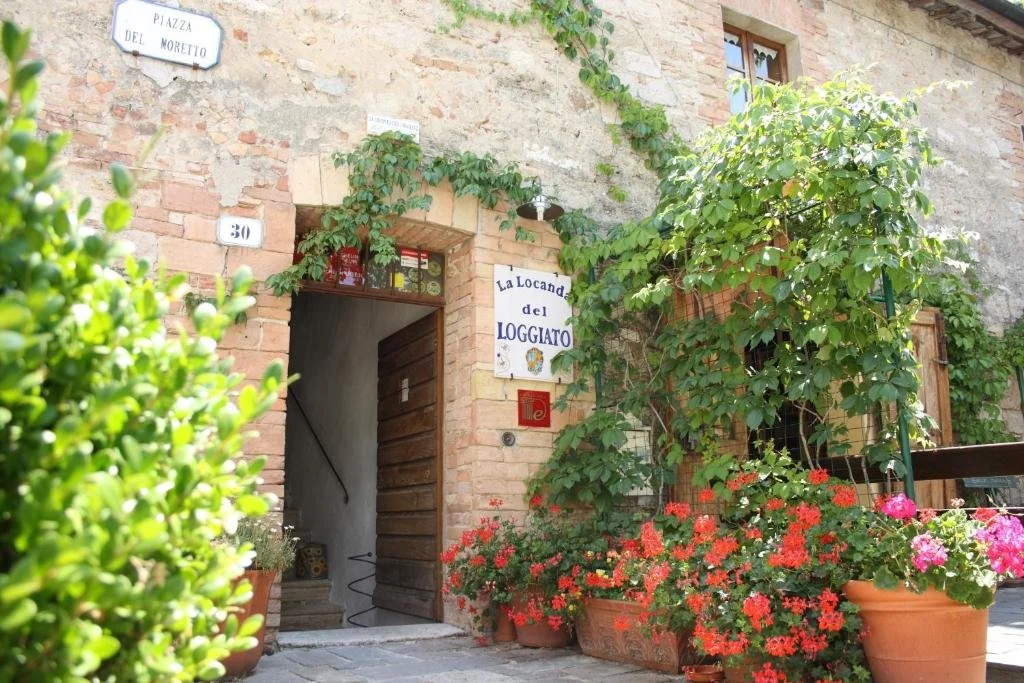
Food is straightforward but tied to specific hours. Most places open for lunch around 12:30 and close again by mid-afternoon. Osteria del Leone is one of the more reliable stops, while Il Loggiato sits right by the square and is one of the few places where you can sit facing the water for a longer meal. If you arrive outside those hours, you’ll still find coffee, but not much else, and most people don’t stay for extended breakfasts here.
If your trip overlaps with local market days, it’s worth planning around them. Italy’s summer market towns makes that part much easier.
Where to eat and drink in Bagno Vignoni
Food in Bagno Vignoni is limited to a handful of places, and that’s part of how the village works. You don’t move between multiple spots in one evening. You pick somewhere, sit down, and stay there for a while. Most of the restaurants are either directly on Piazza delle Sorgenti or just behind it along Via del Gorello, so you’re never more than a minute or two from where you started.
Il Loggiato is the one most people notice first because of its position right by the square. If you can get a table along the edge facing the water, it’s one of the few places where you can sit for a full meal without feeling like you’re in a rush to leave. It’s more of a dinner spot than a quick lunch, and tables start filling from around 19:00, especially in warmer months. Earlier in the evening, around 18:00, it’s quieter and easier to sit down without waiting.
Osteria del Leone is slightly tucked away but still close enough that you’ll find it without trying. It’s more straightforward and works well for lunch, especially if you arrive between 12:30 and 13:30 before things fill up. Meals here follow a typical structure, and service tends to move at a steady pace rather than quickly turning tables. If you arrive later, closer to 14:00, you’ll still be served, but the kitchen may already be winding down.
Albergo Le Terme has a restaurant that’s often overlooked unless you’re staying there or using the spa. It’s directly on the square, and the setting is quieter than the more visible places. This works well if you want to eat without constant movement around you. It’s also one of the more consistent options for a longer, slower lunch if you’ve booked time in the thermal baths.
For something more casual, La Bottega di Cacio sits just behind the main square and is one of the few places where you can stop without committing to a full meal. You’ll find cheese boards, cured meats, and simple sandwiches, and it’s one of the better options if you arrive outside standard lunch hours.
If you’re just after a casual coffee or a quick bite, Caffè delle Terme is right by the thermal pool and has a chill vibe. It’s not fancy, but it’s great for a cup of coffee while you soak in the quiet of the village. The outdoor seating is perfect for people-watching, and the café is a good place to relax before heading back to explore more. Coffee in Bagno Vignoni is usually quick. Most people stop for an espresso in the morning or mid-afternoon rather than settling in with a long breakfast. Bar Centrale, just off the square, is one of the easier places to stop as you pass through, especially if you’ve just arrived or are about to leave. It’s not somewhere you plan around, but it fits naturally into how you move through the village.
Timing matters more here than in larger towns, as lunch is concentrated between 12:30 and 14:30, and after that the village becomes noticeably quieter until dinner. If you arrive mid-afternoon expecting full menus everywhere, you’ll be limited to smaller options.
If you want a wider overview before narrowing down to specific villages, slow travel Tuscany helps you see how it all fits together.
History & nature in Bagno Vignoni
Bagno Vignoni exists because of one thing, and you see it immediately when you walk into Piazza delle Sorgenti. The thermal spring isn’t hidden or tucked away. It sits right in the middle of the village, contained in that large rectangular pool, and everything else is built around it. The water rises here naturally at around 49°C and has been used since Roman times, not in a museum-like way, but continuously, which is why the layout still feels practical rather than preserved.
If you stand at the edge of the pool and look toward the lower side of the village, you can see exactly where the water goes next. There’s a path starting just beside the square, near Via dei Mulini, and within a couple of minutes you’re walking downhill into Parco dei Mulini. It’s not far, but it feels separate from the centre, partly because the space opens up and partly because fewer people go down there.
This is where the older working structures are. The thermal water was used to power a series of mills built directly into the slope, and you can still see how that system worked. The channels are narrow and direct, cut through stone, guiding the water into basins and past the remains of the mill buildings. Some of the walls are still intact, others are partially collapsed, but the route of the water hasn’t changed. It’s constant, and you can follow it visually the entire way down.
There aren’t formal signs explaining each section, so you move through it by observation rather than reading. You’ll notice where the flow speeds up, where it slows into shallow pools, and where people tend to stop. In cooler months, especially in the morning, the steam is more visible here than up in the square, and it settles low across the channels and grass.
The ground is uneven in places, particularly closer to the water, and the stone can be slippery, so it’s not somewhere you rush through. Most people who come down either walk the full path and head back up, or stop halfway and sit along the edge for a while. It’s also where you’ll see people using the water more casually, usually just with their feet in, rather than staying up by the main pool where everything is more observed.
If you continue past the lower basins, you reach the edge of the valley quite quickly. From there, you can see how close Bagno Vignoni is to the surrounding countryside. The SP146 runs just above the village, but once you’re below the mills, it feels further away than it actually is. You’re looking out toward open fields and scattered farmhouses rather than back toward the centre.
Nothing here feels separated into “history” on one side and “nature” on the other. The mills only exist because of the spring, and the village only exists because of both. You don’t need to visit a separate site or follow a marked route to understand it. You basically walk from the square, follow the water downhill, and within a few minutes you’ve seen how the whole place fits together.
And if you’re timing your trip around food rather than weather, Italian food seasons makes a bigger difference than most people expect.
Outside of peak summer, the atmosphere changes quite a bit in these towns. Italian food markets explains why that shift is often worth it.
Where to stay in and around Bagno Vignoni
Staying in Bagno Vignoni changes the experience quite a bit, mainly because of timing. The village gets short visits through the middle of the day, but early morning and later in the evening feel completely different. If you stay overnight, you can walk out to Piazza delle Sorgenti before 9:00 or after 18:30 and see the square without constant movement through it.
Hotel Posta Marcucci is one of the easiest options to use properly. It sits just below the village along Via Ara Urcea, about a three to four minute walk uphill to the main square. You’re close enough to go back and forth without thinking about it, which matters here. The thermal pools are spread out across a garden area with different temperatures, and most people use them early in the day or again before dinner. If you go in the middle of the afternoon, it’s usually quieter. From the hotel entrance, you can walk straight up into the village without needing the car at all.
Albergo Le Terme is the only place directly on Piazza delle Sorgenti. You step out onto the square immediately, which makes a difference in the morning when everything is still quiet and the steam is more visible across the water. Some rooms face the pool itself, so you’re looking straight out over it rather than onto a street. The spa here is smaller and more contained, but it uses the same spring as the central pool. This is the better option if you don’t want to leave the village once you arrive.
If you want more space and less movement around you in the evening, it makes more sense to stay just outside instead of in the centre. Agriturismo Il Rigo is about 10 minutes away by car toward San Quirico d’Orcia, set just off the SP146. The setting is open countryside, with long views across the valley and no immediate neighbours. There’s no walking into a village for dinner from here, so you either eat on-site or drive back toward Bagno Vignoni or San Quirico. Roads are quiet, but unlit in places, so it’s something to plan rather than decide last minute.
Another practical option nearby is to stay in San Quirico d’Orcia and drive in. It’s a 10-minute drive and gives you more choice in the evening, especially along streets like Via Dante Alighieri where most of the restaurants are. You can then come into Bagno Vignoni early or later in the day when it’s less crowded, rather than trying to fit it into the middle of a longer route.
How to get there
Bagno Vignoni sits along the SP146 in Val d’Orcia, between San Quirico d’Orcia and Pienza. It looks central on a map, but getting there takes a bit of planning because there’s no train station in the village itself.
If you’re driving, it’s straightforward. From Siena, it takes about 50–60 minutes, following the SR2 south toward Buonconvento and then turning onto the SP146 toward San Quirico d’Orcia. From San Quirico, it’s another 10 minutes. The road is narrow in parts but well maintained, and the final stretch into the village is clearly signposted. You won’t drive into the centre. Instead, you park just outside along Via dei Mulini or in the marked area before the entrance, then walk in for a couple of minutes.
If you’re coming from Florence, expect around 2 hours by car depending on traffic. The most direct route is via the Raccordo Autostradale Firenze–Siena, then continuing south as above. It’s not a place you reach quickly, but the roads are consistent and easy to follow once you’re out of the main cities.
By public transport, it’s possible but slower and less direct. The closest train station is Buonconvento, which sits on the Siena–Grosseto line. From there, you’ll need to take a local bus toward San Quirico d’Orcia or Bagno Vignoni itself. Buses run, but not frequently, and timing matters. It’s worth checking schedules in advance because missing one connection can mean waiting a couple of hours.
Another option is to base yourself in Siena or San Quirico d’Orcia and take a taxi for the final stretch. From San Quirico, it’s a short ride, usually around 10 minutes, and easier than trying to coordinate buses, especially if you’re only visiting for a few hours.
If you’re unsure how realistic it actually is to rely on trains and local buses here, Tuscany without a car breaks down exactly what works and what doesn’t before you plan anything.
Did you know that Leonardo da Vinci visited Bagno Vignoni in 1517? He came to take advantage of the thermal waters for health reasons - talk about a historical soak…! So next time you’re relaxing in the same waters, you can imagine the great Leonardo doing the same hundreds of years ago.
Pienza, Val d’Orcia
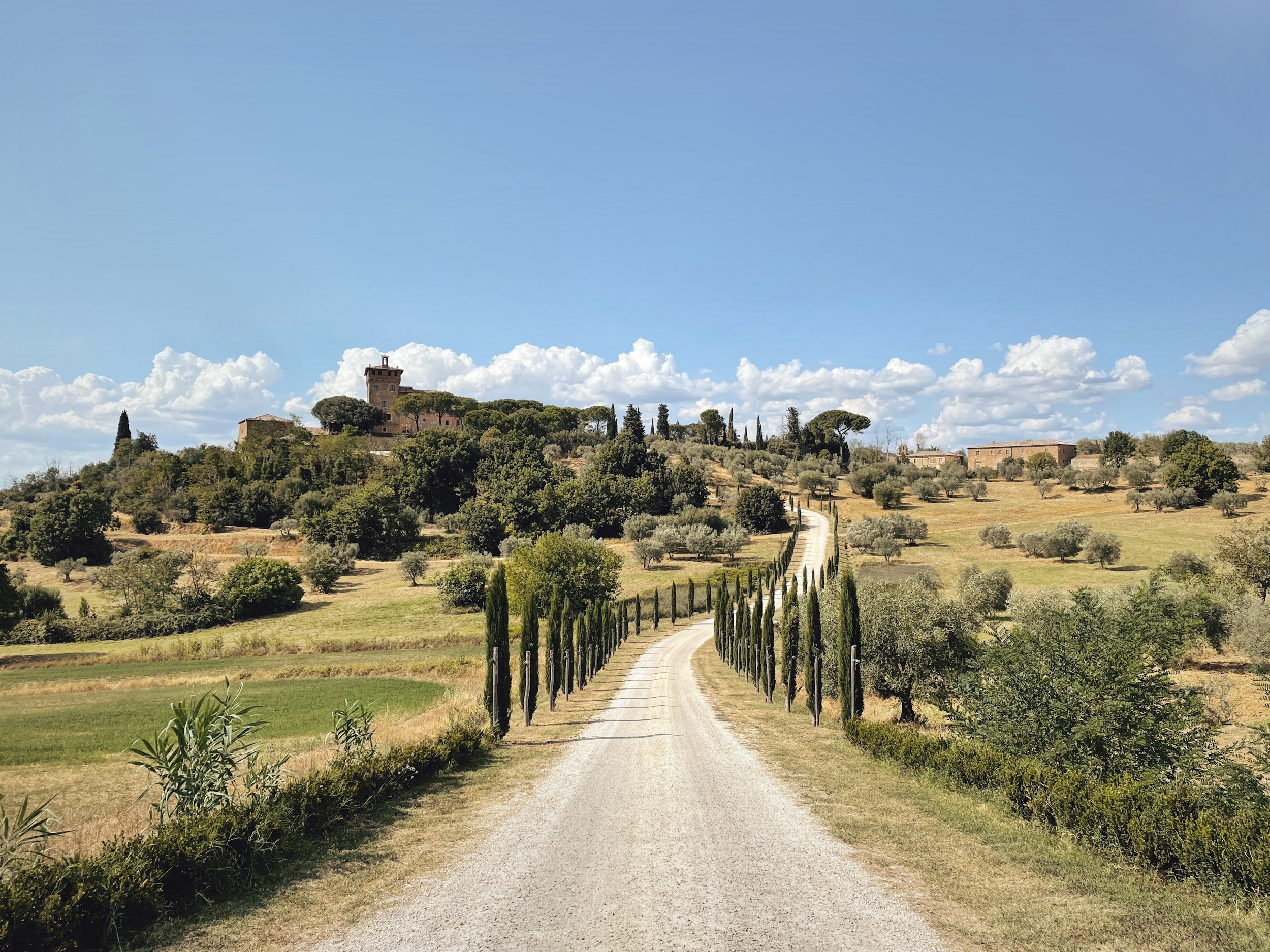
The road into Pienza doesn’t take you through the town, it circles it. You follow the SP146, the walls come into view, and then you’re already looking for a place to park instead of driving in. Most people end up along Via della Circonvallazione or just outside Porta al Prato. From there, it’s a short walk, slightly uphill, and you’re inside within a minute or two.
You don’t ease into the town. You step through the gate and land straight onto Corso il Rossellino. It’s not a long street, but it pulls you forward without much effort. You pass a cheese shop, then another one, then a small wine bar, and before you’ve decided where to stop, you’re already halfway through.
If you’re the type who plans your trip around wine rather than sights, secret vineyards is worth a quick look before choosing where to base yourself.
The centre opens up suddenly into Piazza Pio II. There’s no gradual transition, it just appears. The cathedral sits directly in front, and the square feels balanced in a way that doesn’t happen by accident. This is where the Renaissance planning shows, but it doesn’t feel staged when you’re there. It just means everything is positioned where it makes sense. Most people stand in the middle, look around, then turn back. If you keep walking instead, past the cathedral and toward the low wall behind it, the space shifts completely. The ground drops away, and you’re looking straight out over Val d’Orcia with nothing in front of you.
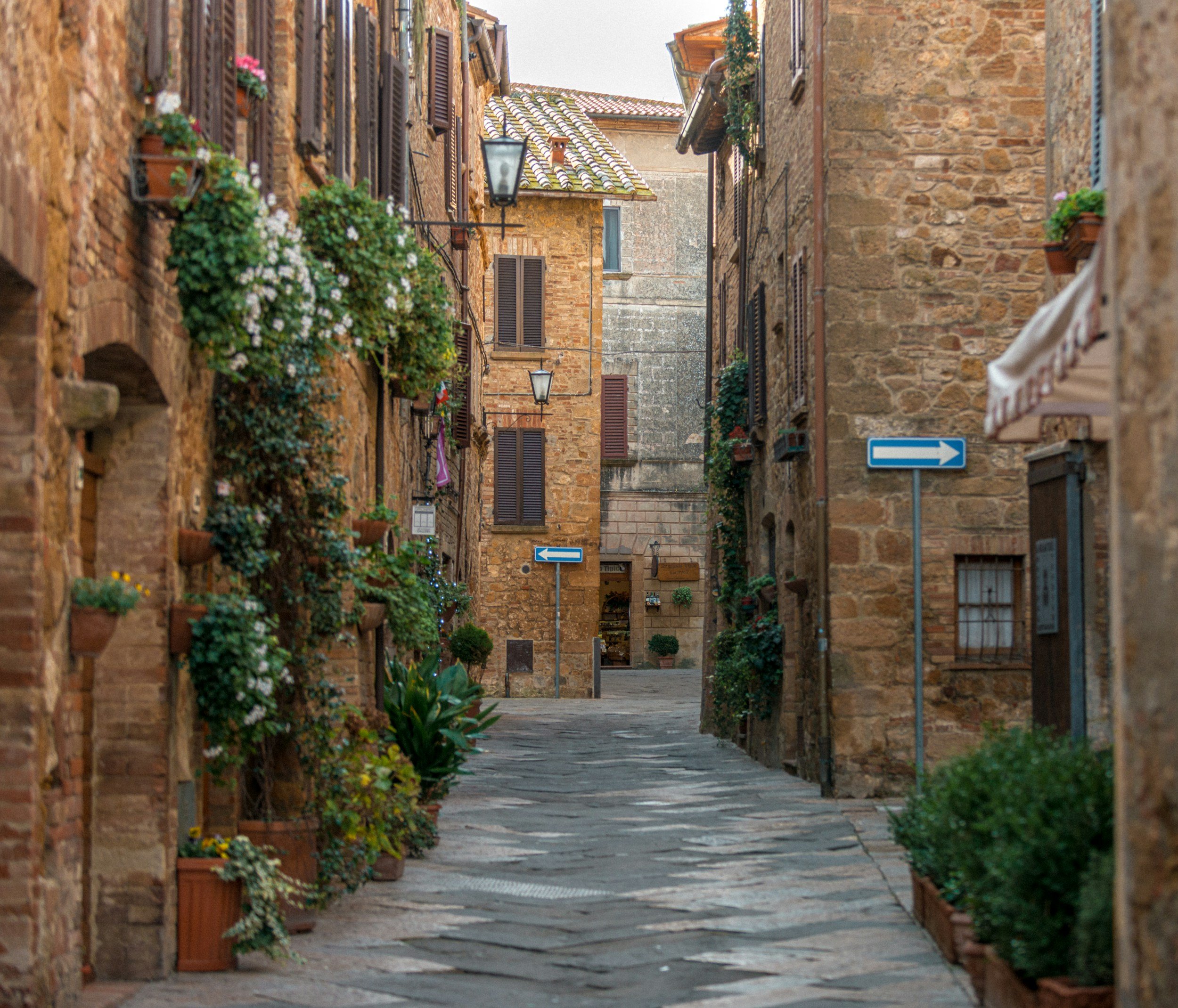
From there, it’s worth not retracing your steps. Take one of the smaller streets running off the square or the main street. Via del Casello is one of the easiest to follow, but it doesn’t really matter which one you choose. Within a few seconds, it’s quieter. No shops, no flow of people, just doorways, staircases, and the occasional sound from inside a house. Keep walking and you’ll reach the back of the town again, where a gravel path runs along the edge. It’s slightly uneven underfoot, and there’s no signage pointing you there, but it’s one of the better ways to understand where you are. You’re walking behind the buildings with open countryside directly below.
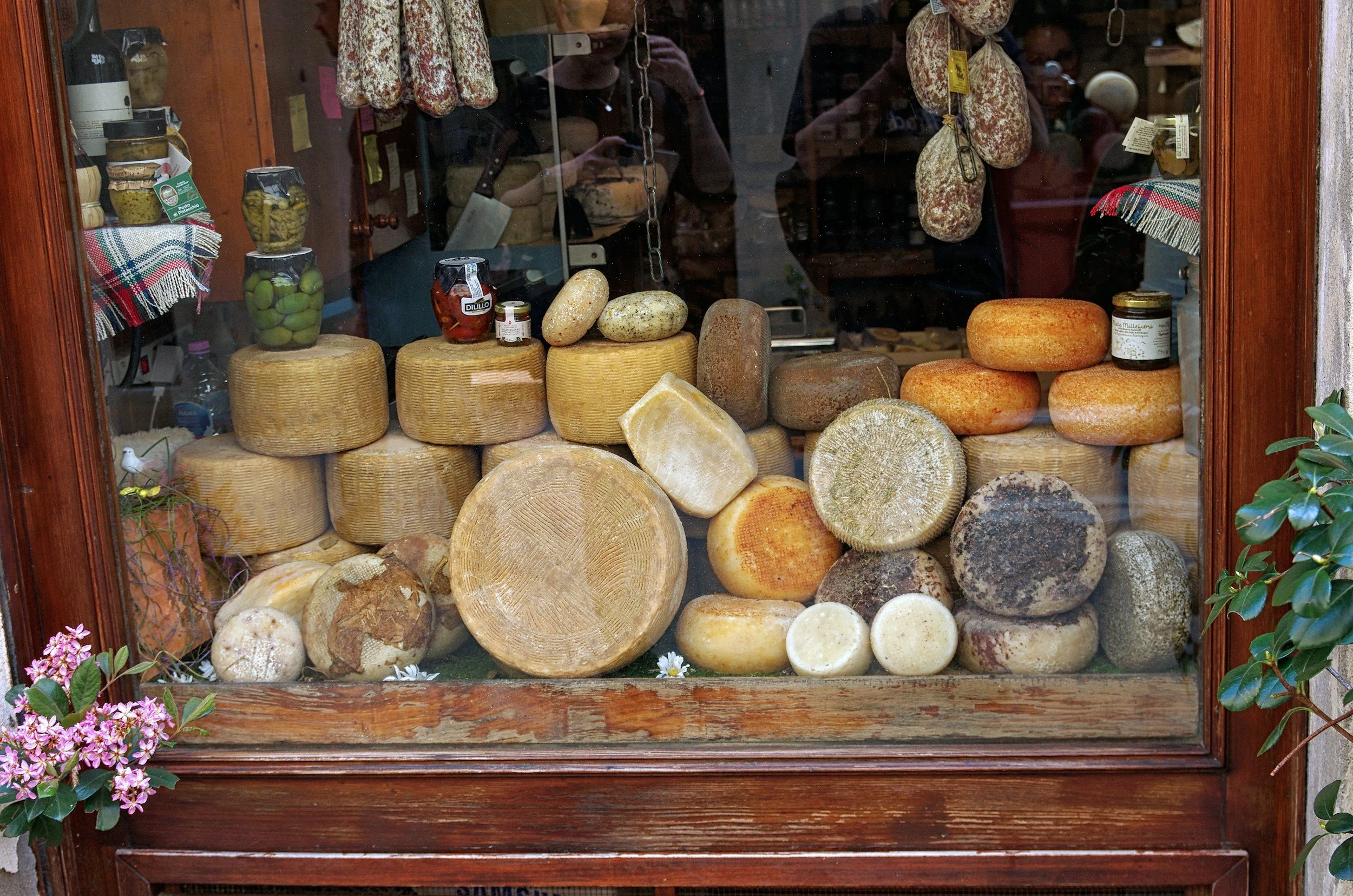
Back on Corso il Rossellino, the cheese shops are what most people stop for, but it’s easy to tell the difference between places that expect quick purchases and places that take a bit more time. At Marusco e Maria, they’ll cut pieces to order and explain the ageing without turning it into a formal tasting. You’ll see people come in, ask for something specific, and leave again within a few minutes. A few doors down, smaller counters work in the same way, just without the queue.
Food follows a predictable pattern. Around 12:30, tables start filling, and by 13:00 most places along the main street are busy. If you want something quieter, Trattoria La Buca delle Fate sits just off the main street and feels slightly removed from the flow. If you’re not ready for a full meal, it’s easier to stop at one of the enotecas along the street, sit down for a glass of wine and something small, then keep moving.
What changes Pienza most is how long you stay and whether you change direction. If you walk straight through and leave, it feels like one continuous line. If you pause, step off the main street, then come back again later, you start noticing the gaps between things. Shops closing briefly in the afternoon, fewer people moving through after 16:00, and the same streets feeling slightly different depending on the time of day.
What to do in Pienza
Start on Corso il Rossellino, but don’t treat it as something to “get through.” Walk it once without stopping just to see how short it actually is, then turn around and go back more slowly. The first pass gives you the layout. The second is where you notice which places are worth stepping into.
Cheese shops are the obvious stops, but it’s better to choose one or two rather than going into all of them. At Marusco e Maria, you can ask for small tastings of different pecorino ages, and they’ll cut pieces fresh instead of handing you something pre-packed. Just a few doors away, smaller counters along the same street work in a more local way, with people coming in for specific quantities rather than browsing. If there’s a queue, it usually means the turnover is good.
When you reach Piazza Pio II, don’t stop in the centre. Walk straight across toward the far side, behind the cathedral. There’s a low wall there where the view opens out over Val d’Orcia. It’s not marked as a separate viewpoint, but it’s where people end up once they realise the square isn’t just about the buildings. From that edge, you can see how the town sits on the ridge, with no gradual slope down.
From the square, take a side street instead of going back the same way. Via del Casello is one of the easiest to follow, but any of the smaller lanes will take you away from the main flow within seconds. These streets are short and mostly residential, but they lead you back out toward the edge of the town. Once you reach it, there’s a gravel path running along the back of the buildings. It’s slightly uneven, with patches of grass and stone, and it gives you a different angle over the valley than the main square.
If you want to go further, you can leave the town from Porta al Ciglio and walk a short stretch out into the countryside. Even 10–15 minutes is enough to see how quickly Pienza drops into open land. The roads are quiet, but there’s no pavement, so it’s something to do carefully rather than casually.
For a slower stop in the middle of the day, sit down somewhere along Corso il Rossellino rather than waiting until you leave. Smaller enotecas work well if you don’t want a full meal. You can order a glass of wine, something simple to eat, and stay for as long as you need without feeling rushed. If you prefer a proper lunch, it’s easier to sit down before 13:00 than after, when most places are already full.
Some of the best walks here in Tuscany aren’t marked as hikes at all, just vineyard paths between villages. If that’s part of your plan, vineyard hikes helps you map it out properly.
Where to eat and drink in Pienza
Most of the places you’ll eat in Pienza sit along Corso il Rossellino or just a few steps off it, so you’re not searching for options as much as choosing when to sit down. Around 12:30, tables start filling, and by 13:00 the main street is noticeably slower because people are either already seated or waiting. If you arrive closer to 12:00, you can usually pick a place without thinking about it. After 14:00, it opens up again, but some kitchens start closing.
If you want something flexible, Enoteca di Ghino is one of the easiest places to stop right on the main street. You can take a table outside, order a glass of wine, and something simple like pecorino with honey or a small plate of salumi. It works well if you’re not ready for a full meal but still want to sit down for a bit. Nearby, La Enoteca is another option in the same style, slightly more low-key, where people tend to stay quietly rather than move in and out.
For a proper lunch, Trattoria La Buca delle Fate is just off Corso il Rossellino, down a small side street that’s easy to miss if you’re not looking for it. Once you’re inside, it feels separate from the main flow, and meals tend to stretch a bit longer. Another solid option nearby is La Bandita Townhouse restaurant, which sits right in the centre but feels more contained once you’re seated.
Sette di Vino is smaller and tucked along Via del Casello. You might walk past it the first time, then notice how few tables there are and come back. It’s one of those places where people settle in without rushing, and you’ll often see the same tables occupied for a while rather than turning over quickly.
Cheese is part of the experience whether you plan for it or not. At Marusco e Maria on Corso il Rossellino, you can stop in and try different pecorino ages, from fresh to more mature varieties. Just a few doors down, Caffe La Posta also sells cheese and simple plates if you want to sit briefly instead of just buying something to take away. Shops like Caseificio Cugusi, just outside the town toward Montepulciano, are also worth knowing if you’re driving through the area and want to pick up something more local on the way.
For coffee, Bar Il Casello sits along the main street and works for a quick stop without needing to think about it. People come in, have an espresso, maybe something small, and leave again within a few minutes. It’s not somewhere you plan your time around, but it fits naturally as you move through the town.
Where to stay in Pienza
Pienza has no shortage of charming places to stay, each providing its own unique experience. For a more rustic, countryside vibe, consider staying at La Bandita Townhouse, which is just a short walk from the center. The hotel has a cozy, modern feel with a relaxed, welcoming atmosphere and offers stunning views of the Tuscan hills. It’s a great place for anyone looking for a peaceful retreat after a day of exploring the town.
If you want to experience a more traditional Tuscan rural vibe, Agriturismo Il Rigo is a fantastic option. Located just outside of Pienza, it’s a family-run farm that offers rustic rooms with breathtaking views of the Val d'Orcia. It’s the perfect base for those who want to get away from the crowds and enjoy the quieter, more authentic side of Tuscany.
How to get to Pienza
Pienza is easily accessible from Siena (about 45 minutes by car) or Florence (about 1.5 hours by car). If you're relying on public transport, you can catch a bus from Siena or Castiglione d’Orcia to get to Pienza. However, having a car gives you more flexibility to explore the surrounding area, including the beautiful Val d’Orcia and nearby towns like Montalcino and Bagno Vignoni.
San Quirico d’Orcia, Val d’Orcia
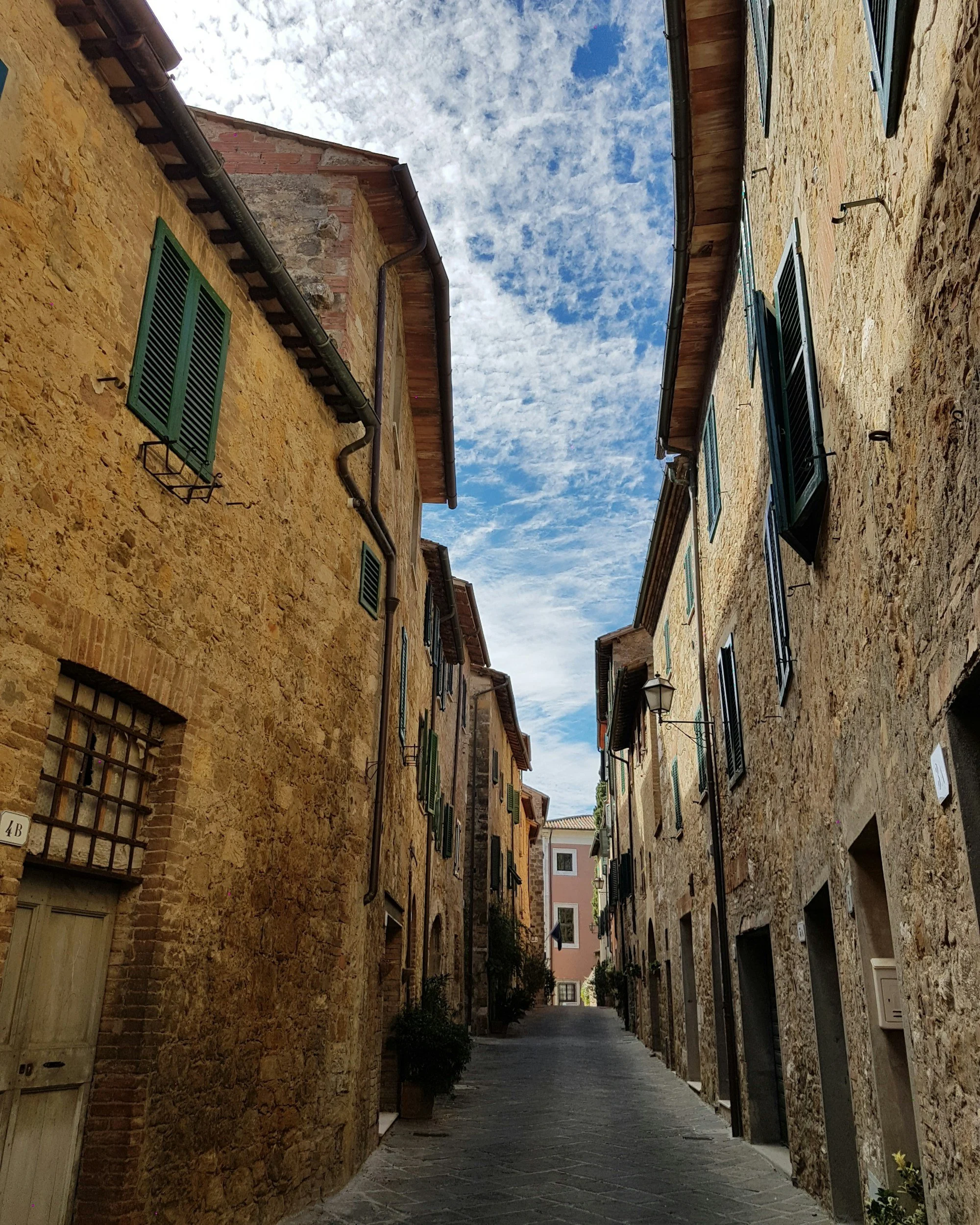
San Quirico d’Orcia sits directly on the old Via Cassia, so you don’t arrive into it in a quiet, hidden way. You drive straight toward it, pass a few local businesses and cafés on the outskirts, then park along Viale Marconi or just outside Porta Cappuccini and walk in. It feels more like a place people live in year-round than somewhere set up around short visits.
Once you’re inside the walls, you end up on Via Dante Alighieri almost immediately. It runs straight through the town, but it’s wider than most streets in this area, with benches, small storefronts, and people actually stopping instead of just walking through. You’ll see someone sitting outside Bar Centrale with a coffee, a couple of people talking outside a shop, someone heading home with groceries. It’s not busy, but it’s active in a different way than Pienza.
A few minutes along the street, you reach Piazza della Libertà. It’s not something you arrive at and stop for. People cross it, meet briefly, then keep going. From there, it’s worth turning slightly off the main street toward Horti Leonini. The entrance sits just behind a low wall and is easy to miss if you’re not paying attention. Inside, it opens into a structured garden with straight gravel paths and trimmed hedges. It’s not large, but people tend to stay longer than expected because it’s quiet and slightly removed from everything else. If you walk all the way to the back and take the steps up, there’s a higher point where you can look out over the town roofs and the valley beyond.
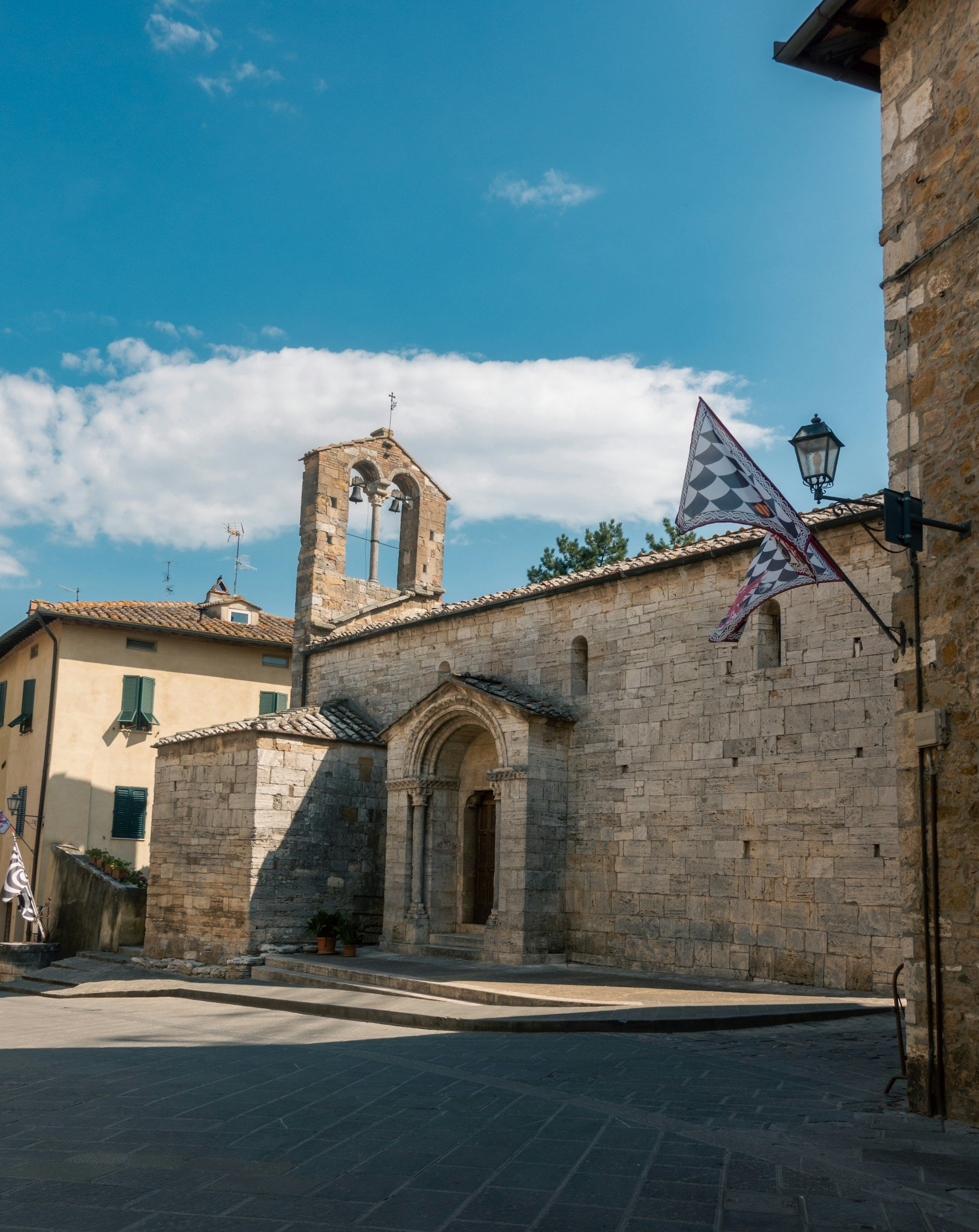
Back on Via Dante Alighieri, you’ll come across the Collegiata dei Santi Quirico e Giulitta without much warning. It sits directly on the street rather than in a wide square, so you notice it as you pass rather than approaching it from a distance. The stone façade is detailed, but most people don’t stop for long before continuing.
If you keep walking, the street gradually narrows and becomes quieter. Side streets start branching off, and within a minute or two you’re away from the main line completely. Streets like Via Poliziano or the smaller lanes near Porta Nuova lead you toward the edge of the town, where you’ll find small openings between buildings looking out over Val d’Orcia. There’s no single main viewpoint here. You come across these views as you walk, not because you followed a sign.
Food is easier to manage here than in Pienza because it’s less concentrated. Trattoria Osenna, just off the main street, is one of the places where people sit for a proper meal and stay for a while. Il Garibaldi, right on Via Dante Alighieri, works if you want something more central without planning too much. For something quick, Bar Centrale or Caffè Pizzeria Dante are the kind of places people stop at briefly, especially earlier in the day.
What stands out in San Quirico is how evenly the day moves. There’s no sharp peak where everything fills at once. People arrive, leave, come back, and the pace stays relatively steady. If you walk through once and leave, it can feel simple. If you slow down a bit, sit somewhere for a while, then continue, you start noticing how much of it happens between the main points rather than at them.
What to do in San Quirico d'Orcia
Start on Via Dante Alighieri and don’t rush it. It’s the main street, but it’s wide enough that people actually stop rather than just pass through. Walk it once to get a sense of where things are, then turn back and slow down. You’ll notice small details you missed the first time, like which cafés have people sitting outside and which shops locals are actually using.
A few minutes in, you’ll reach Piazza della Libertà. Most people cross it without stopping, but it’s a good place to pause briefly and decide where to go next. Just off the square, slightly set back from the street, is the entrance to Horti Leonini. It’s easy to miss because it doesn’t look like a major attraction from the outside. Inside, the space opens into a formal garden with straight gravel paths and low hedges. Walk all the way through instead of turning back early. At the far end, there are steps leading up to a higher point where you can see over the town and out into the valley. It’s usually quiet, even when the street outside isn’t.
Back on Via Dante Alighieri, continue walking until you reach the Collegiata dei Santi Quirico e Giulitta. It sits directly on the street, so you come across it without any open square around it. It’s worth stepping inside if it’s open, but even from the outside you can see the detailed stonework on the façade.
After that, don’t stay on the main street. Take one of the smaller lanes branching off it. Via Poliziano is an easy one to follow, but most of the side streets lead somewhere similar. Within a minute, it’s quieter, with fewer people and more of a residential feel. Keep walking and you’ll reach the edge of the town near Porta Nuova or Porta Cappuccini. From there, you’ll find small openings between buildings where the land drops into Val d’Orcia. There’s no main viewpoint. You just come across these views as you walk.
If you have a bit more time, it’s worth stepping just outside the walls. From Porta Cappuccini, you can walk a short stretch along the road and see how quickly the town gives way to open countryside. It’s not a long walk, but it gives you a better sense of how compact everything is.
For a slower stop, sit down somewhere along Via Dante Alighieri instead of saving it for later. Places like Bar Centrale or Il Garibaldi work well if you want to pause without planning a full meal. You can sit for a while, watch the street, then continue when you’re ready.
Where to eat in San Quirico d’Orcia
You’ll probably decide where to eat while you’re already walking. Via Dante Alighieri runs straight through the town, and within a few minutes you’ve passed most of the options without needing to look anything up. What usually happens is you walk once, notice a couple of places, then double back and pick one that feels right at that moment.
Around 12:30, tables start filling, but it builds gradually. You’ll see a few people already seated at Il Garibaldi, others just being shown to a table, and some still walking past deciding. If you stop then, you can usually sit straight away. Closer to 13:00, you might need to wait a bit, but it’s not the kind of place where everything locks up at once.
If you turn slightly off the main street, Trattoria Osenna is one of the first places people commit to rather than hesitate over. It’s only a few steps away, but the noise drops immediately. You sit down, menus come out, and the pace changes without anyone saying anything about it. People here stay for a while, and you can feel that from the way tables aren’t being reset quickly.
Back on Via Dante Alighieri, Il Garibaldi feels more open and easier to walk into. You might pass it once, see a couple finishing their meal, and then come back five minutes later and there’s space. It’s that kind of place. You don’t need to plan it, you just catch it at the right moment.
If you keep walking toward Porta Nuova, Ristorante Daniela sits slightly further out, and fewer people drift past it by accident. It’s quieter around the tables, and you’ll notice the difference as soon as you sit down. This is usually where people end up when they’ve decided they want to stay somewhere a bit longer rather than keep moving.
In between all of that, there are smaller stops that fit into the gaps. Bar Centrale is where you pause without thinking too much, have a coffee or something small, then step back out again. Caffè Pizzeria Dante works the same way if you just want something simple and don’t feel like sitting down for a full meal.
And if you’re still deciding between countryside and water, Italian lake towns without a car helps you compare what daily life actually looks like in both.
Where to stay in San Quirico d’Orcia
Where you stay here depends on how you want to use the town. If you stay inside the walls, everything is a short walk and you can move in and out of the centre without thinking about it. If you stay just outside, you’ll have more space and quieter evenings, but you’ll rely on the car even for short distances.
Hotel Palazzo del Capitano sits right in the centre, just off Via Dante Alighieri near Piazza della Libertà. You walk out and you’re immediately in the middle of things, which makes a difference early in the morning before the street fills up. The building itself is older, with thick walls and a small internal garden that’s easy to miss if you don’t look for it. People tend to use that space in the late afternoon, especially after coming back from walking around the town. You’re close enough to go back to the room for a break without it feeling like a detour.
A few minutes away, along the same central stretch, places like Casa Lemmi and smaller guesthouses on the side streets around Via Poliziano give a similar setup without being directly on the main flow. You’re still inside the walls, but slightly removed from the street where most people pass through. It’s a small difference, but noticeable in the evening when things quiet down.
If you drive a few minutes out toward the countryside, the setting changes quickly. Relais La Saracina sits just outside town, along the road toward Pienza. You leave the main road, follow a smaller track, and then you’re in open land with very little around you. Evenings here are quiet in a different way than inside the town, because there’s no movement at all once people have settled in. You’ll need the car to go back into San Quirico for dinner unless you plan to stay on-site, but the trade-off is more space and less noise.
Another option in a similar direction is staying near the vineyards between San Quirico and Montalcino, where a few agriturismos sit just off the main roads. These places don’t feel connected to the town in the same way, but they work well if you’re planning to move around the area during the day and return somewhere quieter in the evening.
How to get to San Quirico d'Orcia
Getting to San Quirico d'Orcia is easy by car. From Pienza, it’s only about a 15-minute drive, and from Montalcino, it’s just 30 minutes. It’s small enough that you can easily walk around, but having a car is ideal if you want to explore the surrounding countryside.
If you don’t have a car, the bus service to Castiglione d’Orcia is your best bet, and from there you can grab a quick taxi to get to San Quirico.
If you’re heading further south after Tuscany, Umbria in autumn is one of those natural next stops that feels like a continuation rather than a new trip.
Why Tuscany’s quieter side works better
It usually clicks on the second stop, not the first.
You might start in San Quirico, walk along Via Dante Alighieri, pass Bar Centrale, keep going, then turn back because you noticed a small bakery window or a table you didn’t register the first time. You sit down without planning to, stay longer than you expected, then leave through a different street and end up near Porta Nuova instead of where you came in.
From there, it’s a short drive to Pienza, but it doesn’t feel like a clear next step. You park outside Porta al Prato, walk in, follow Corso il Rossellino, then realise you’ve already reached the square. Instead of leaving, you cross it, go to the edge behind the cathedral, then take Via del Casello on the way back without really deciding to. It’s only then the town starts to open up a bit.
By the time you reach Bagno Vignoni, you’re not really moving the same way anymore. You stand by the pool in Piazza delle Sorgenti, walk down toward Parco dei Mulini, stop halfway, then head back up. No one is rushing through it, so you don’t either.
Nothing here needs a fixed plan. The distances are short, but the stops take longer than you expect. You repeat streets, change direction, sit down somewhere, leave, then come back again later.
That’s what makes this part of Tuscany work. Not the places on their own, but how easily the day shifts once you stop trying to move through it efficiently.
If you’re comparing Tuscany with other quieter parts of Italy for a similar kind of trip, peaceful Italian towns gives a broader view before you commit.
For a slightly different landscape but similar pace, the Prosecco Hills are often easier to navigate without a car than people expect.
FAQ: visiting Bagno Vignoni, Pienza and San Quirico d’Orcia
Is Pienza or San Quirico d’Orcia better to visit?
Pienza is more structured and centred around Corso il Rossellino and Piazza Pio II, so it’s easier to navigate on a short visit. San Quirico d’Orcia feels more spread out, with daily life along Via Dante Alighieri and fewer people moving through at the same time. If you prefer a place to walk without a clear route, San Quirico works better. If you want a defined centre with food and shops in one line, Pienza is easier.
Which town is best to stay in: Pienza, San Quirico or Bagno Vignoni?
Pienza has the most options within walking distance, especially for evenings. San Quirico d’Orcia is a better base if you want something quieter but still with restaurants along Via Dante Alighieri. Bagno Vignoni is the smallest and only makes sense to stay in if you plan to use the thermal baths early or late in the day.
How many days do you need in Val d’Orcia (Pienza, San Quirico and Bagno Vignoni)?
Two days is enough to see all three towns without rushing. Three days works better if you want time between stops, especially if you plan to sit down for longer meals or stay in one place for part of the day.
Can you visit Val d’Orcia without a car?
It’s possible but limiting. The closest train station is Buonconvento, and buses connect to towns like San Quirico d’Orcia, but schedules are infrequent. Moving between Pienza, Bagno Vignoni and San Quirico is much easier by car, especially along the SP146.
Where do you park in Pienza?
Parking is outside the walls. Via della Circonvallazione and the area near Porta al Prato are the most practical. From there, it’s a short walk into Corso il Rossellino.
Where do you park in San Quirico d’Orcia?
Most people park along Viale Marconi or near Porta Cappuccini. You then walk straight into Via Dante Alighieri, where everything is centred.
Where do you park in Bagno Vignoni?
Parking is just outside the village along Via dei Mulini. From there, it’s a short walk into Piazza delle Sorgenti.
Can you swim in the thermal waters in Bagno Vignoni?
You can’t swim in the main pool in Piazza delle Sorgenti. To use the thermal water, you need access through places like Albergo Le Terme or Hotel Posta Marcucci. Below the village, near Parco dei Mulini, people sometimes sit with their feet in the natural channels.
What is Pienza known for food-wise?
Pienza is known for pecorino cheese. Shops along Corso il Rossellino, including Marusco e Maria, sell different ages and variations, and you can usually taste before buying.
What time should you visit Pienza to avoid crowds?
Before 10:00 or after around 16:00. Midday, especially between 11:30 and 14:30, is when the main street and Piazza Pio II are busiest.
Is Bagno Vignoni worth visiting if you don’t use the spa?
Yes, but for a shorter visit. Most people walk around Piazza delle Sorgenti, then head down toward Parco dei Mulini where the thermal water continues through the landscape. Without the spa, you don’t need more than a couple of hours.
How far apart are Pienza, San Quirico d’Orcia and Bagno Vignoni?
They’re all within 10–15 minutes of each other by car, connected by the SP146, which makes it easy to visit them in the same day.
What’s the best way to plan a day in Val d’Orcia?
Start in one town early, move to the next before or after lunch, and leave space between stops. Trying to visit all three quickly in one loop makes the area feel smaller than it is.