Besalú from Girona by bus: how to plan the day
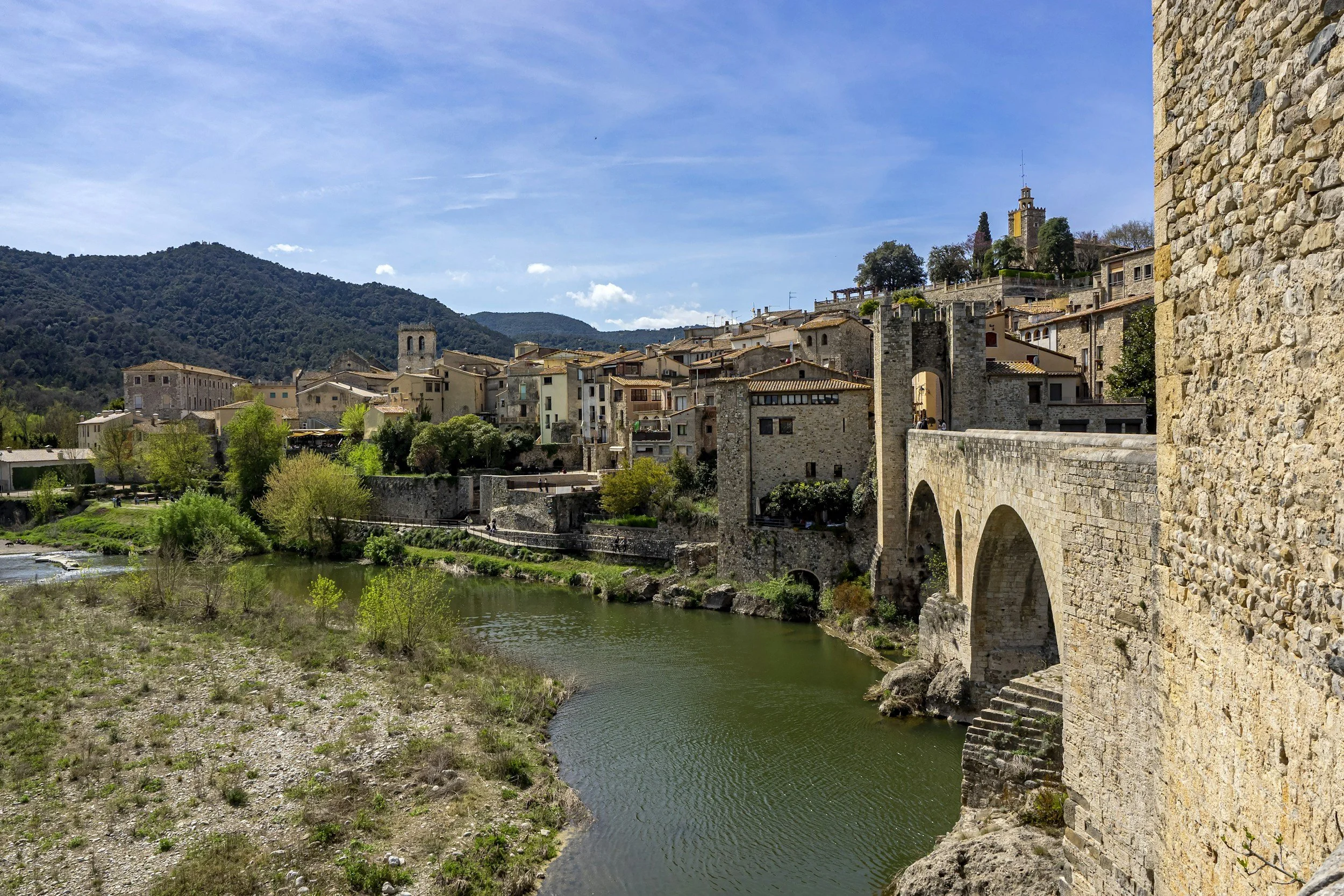
Besalú is one of those day trips that looks simple on a map and becomes much better once you plan the return before anything else. TEISA links Girona with Besalú on the route towards Olot via Banyoles, and the journey is roughly an hour on the services checked for this guide. The real difference is what happens after you arrive. Some departures give you close to six hours in town; others leave a much tighter window.
That matters because Besalú is small enough that you do not need an ambitious sightseeing plan. The medieval bridge is the obvious landmark, but there is more to the town than the photograph everyone takes on arrival. On Tuesday mornings, the weekly market fills Prat de Sant Pere until 13:00, while anyone interested in Besalú’s Jewish heritage needs to think a little more carefully about access to the mikveh, which is tied to guided visits rather than something to assume you can simply walk into.
I would choose the bus home first, then decide what kind of day you actually want. A longer stay gives you time for the town, lunch and a booked heritage visit without constantly checking the clock. With a shorter return window, Besalú is still a very worthwhile outing from Girona, but it is better enjoyed as a small town visit than stretched into an itinerary full of stops.
Choose your return before you choose your day in Besalú
The return bus changes the kind of day you can have in Besalú. On a normal weekday, the 09:10 from Girona arrives at 10:03 and the 15:57 return leaves you with just under six hours. Saturday is nearly the same, with a 09:15 departure reaching Besalú at 10:03. On Sunday, the clearest short-day option is the 09:15 bus out and the 13:57 return, which leaves roughly four hours in town.
That difference matters more than it sounds. With the longer window, there is room for lunch, a booked heritage visit and time around the centre without having to watch the clock. With four hours, I would choose one thing to give the day some structure and keep the rest simple.
If Tuesday works for your trip, the market at Prat de Sant Pere is the obvious place to start before it closes at 13:00. If the mikveh is the reason you are coming, I would plan around that instead, since access is tied to guided visits and the longer municipal tour lasts around 75 minutes when it is offered.
A longer Sunday can work on some dates, but I would check the return before building lunch or a booked visit around it.
A weekday or Saturday gives you the better version of Besalú
If your dates are flexible, I would choose a weekday or Saturday. The morning bus from Girona gets you into Besalú at around 10:00, and a useful afternoon return leaves just before 16:00, which gives you close to six hours in town.
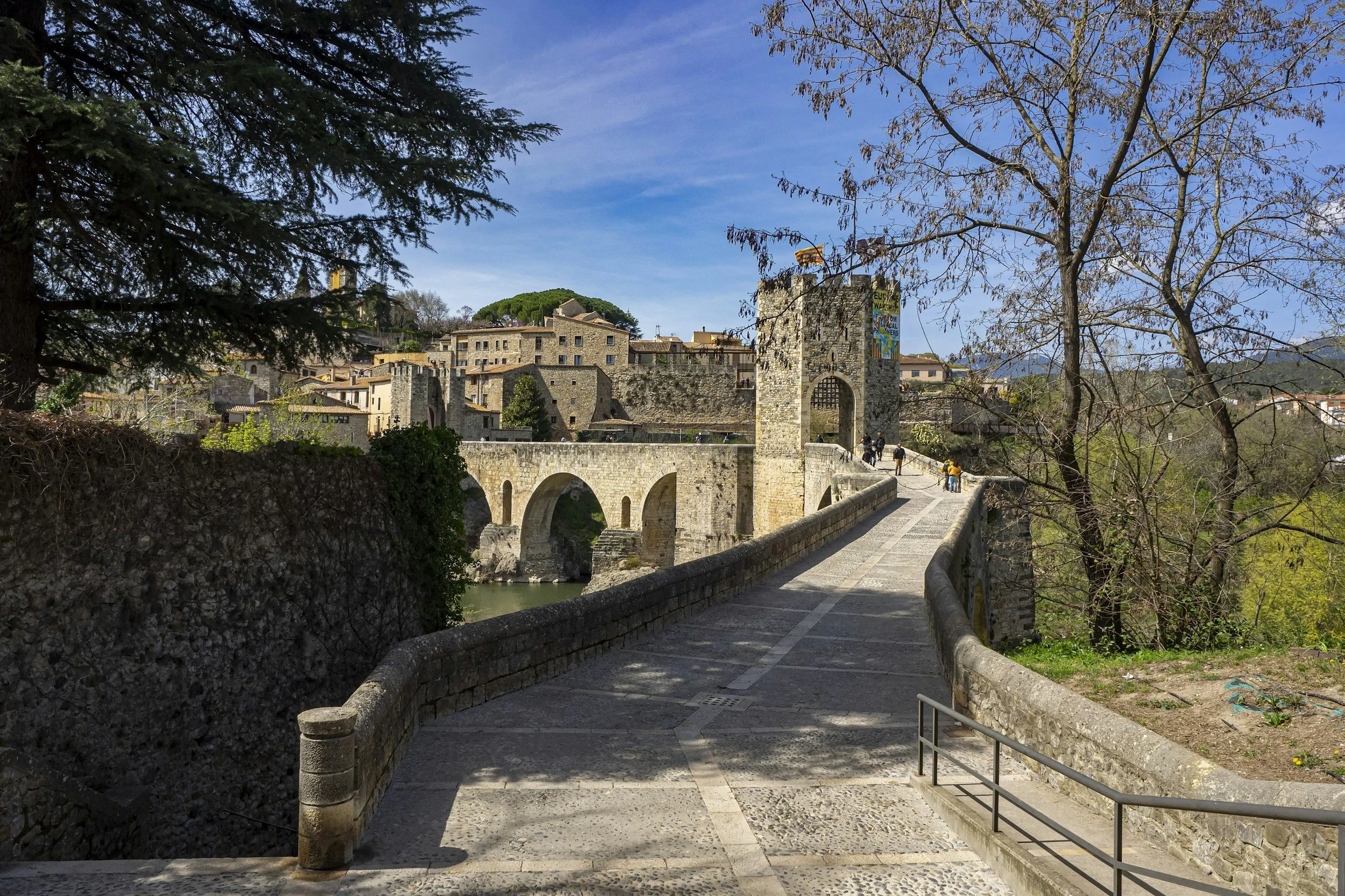
That is enough time for Besalú to feel like a place rather than a short stop with one famous bridge. You can start around the Pont Vell and the Jewish quarter, then work your way towards Plaça de la Llibertat and Prat de Sant Pere without feeling you need to rush through the centre. On Tuesday, the weekly market at Prat de Sant Pere gives that part of town a completely different role. It runs until 13:00 and mixes fruit, vegetables and other food with clothing, shoes and everyday goods, so I would see it first and let the more historical part of the day come afterwards.
The longer window is also the one I would choose if the mikveh is important to you. Access is tied to guided arrangements, and the fuller municipal heritage visit lasts around 75 minutes when it is offered. That is not a huge commitment, but it is enough to change the day once you add lunch and the walk back across town.
There is another reason I prefer the longer visit: Besalú has a little more depth once you move beyond the obvious medieval route. The Molí d'en Subirós, a water-powered flour mill with surviving machinery, is one of the details that helps explain the town as somewhere that worked as well as impressed. Visits are arranged rather than something to assume you can drop into, so it is the kind of extra I would consider only if you have the longer window and genuinely want it.
Saturday gives you almost the same amount of time as a weekday, so there is no need to avoid it unless your main reason for going is the Tuesday market. Just make sure the service you choose actually stops in Besalú rather than assuming every coach signed for Olot will do so.
Sunday needs a simpler plan
Sunday is still a good option, but I would keep the day a little more compact.
The morning bus gets you into Besalú at around 10:00, and the clearest early return leaves you with roughly four hours in town. That is enough for the bridge, the Call and the central squares, especially if you are happy to keep the day mostly outdoors.
If you want to add a heritage visit, I would choose one thing and plan around it rather than trying to fit in a full tour, a long lunch and everything else as well.
A longer Sunday can work on some dates, but I would check the return before fixing anything else in the day. With around four hours, I would keep Besalú fairly simple; with closer to six, there is much more room for lunch, a booked visit and time to explore without watching the clock.

If Besalú appeals because you want a smaller historic town rather than another city day, Pals is another Catalan option worth considering, although the transport planning is quite different.
Take the TEISA service via Banyoles from Girona bus station
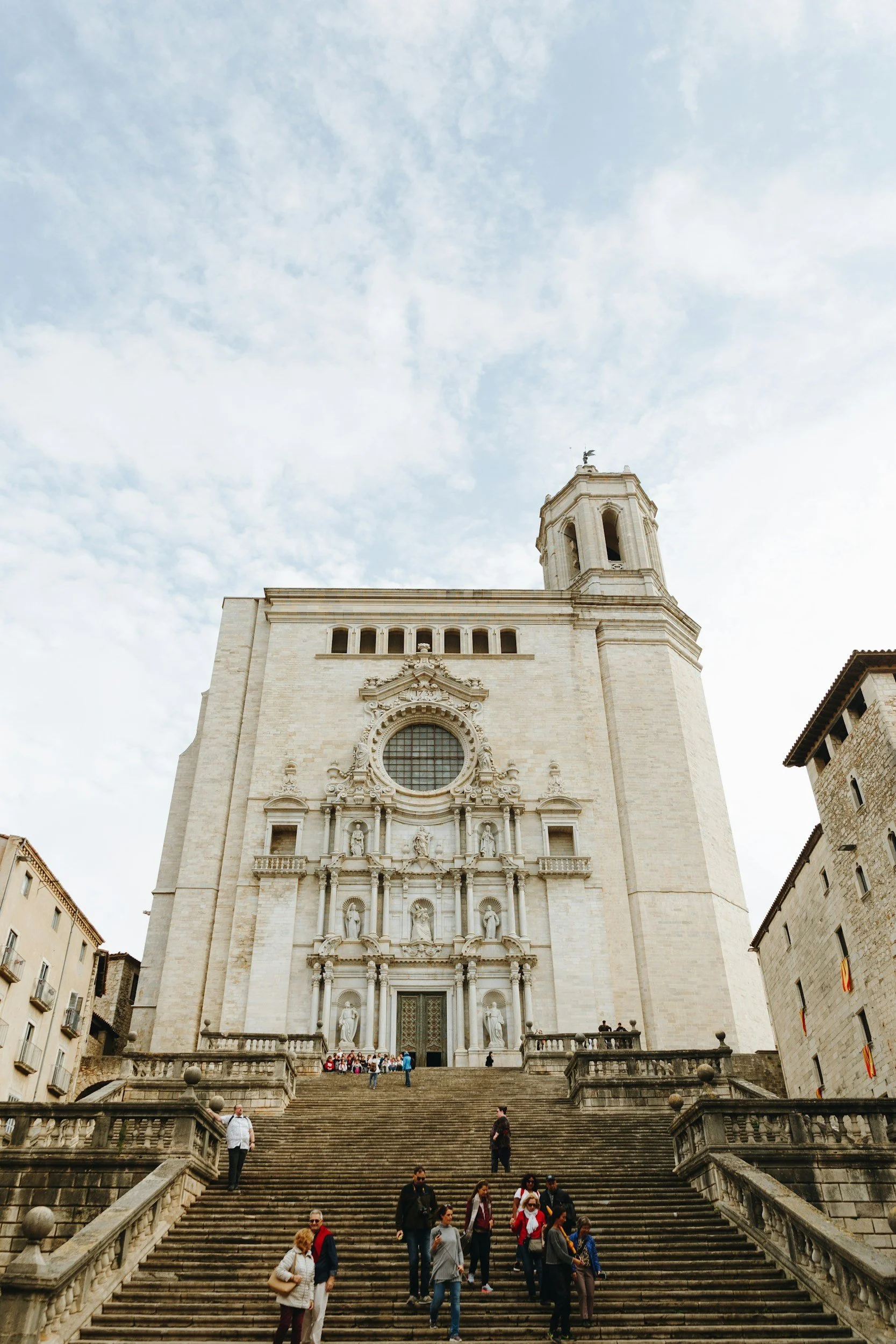
For a first visit, I would keep the journey simple and start from Girona’s main bus station rather than trying to pick up the bus at one of the intermediate city stops. The station sits below the high-speed rail building, so once you are there, the main thing is making sure you have the right TEISA service.
For Besalú, you want the route towards Olot via Banyoles. That last part matters. There is another Girona–Olot route via Amer, and not every coach heading for Olot stops in Besalú, so I would always check that Besalú is listed on the actual departure rather than relying on the destination on the front of the bus.
The ticket side is fairly low-tech. If you buy onboard, TEISA says payment is cash only, with change guaranteed only for notes up to €20. I would carry a few smaller notes or coins rather than making the morning depend on a card terminal being available.
If step-free boarding matters for your trip, check the specific departure too. TEISA says most of its regular fleet is adapted, but that does not guarantee the vehicle used on your service.
Find your Girona-bound stop before you start exploring
I would deal with the return stop while you are still in transport mode, before the bridge and old streets distract you.
The bus from Girona drops you at Carretera d’Olot / Carrer de Josep Maria Folch i Torres, but the Girona-bound bus leaves from a different point, at Carretera d’Olot / Carrer de la Piscina. I would save that second location on your phone as soon as you arrive. It is not complicated, but it is exactly the sort of detail that is annoying to discover when you are already thinking about lunch, the market or whether you have time for one more stop.
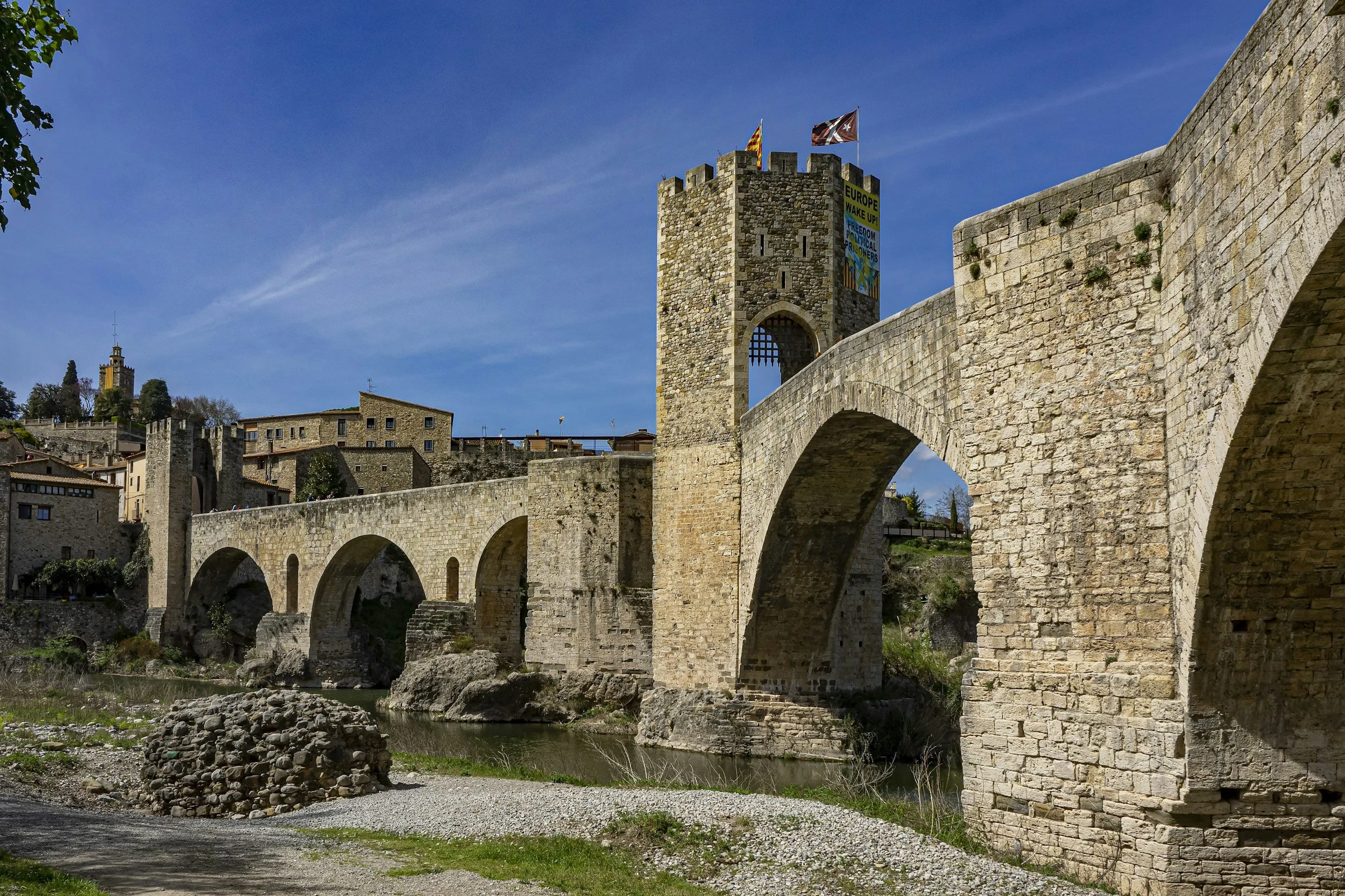
The old town sits away from those roadside stops, with the tourist office at Carrer del Pont, 1, beside the Pont Vell. That makes the bridge area a useful first anchor once you have walked into the centre, and later it gives you a clear point to think from when you are heading back out.
If you would rather keep your day trips entirely on the rail network, these small Catalan towns you can reach by train are easier alternatives to Besalú’s bus journey.
Start with the part of Besalú that matters most to you
Besalú is small enough that I would choose one thing to give the day some direction, then leave the rest fairly open. On Tuesday, that is probably the market. If the Jewish heritage is what brought you here, the guided visit deserves the fixed place in your day. Otherwise, there is no real need to turn the town into a route of compulsory stops.
On Tuesday, go to Prat de Sant Pere before the market closes
Tuesday is the one day when I would be a little less casual about the order of things. The weekly market at Prat de Sant Pere runs from 08:30 to 13:00, so it makes sense to see it first rather than wander the old town and arrive just as the stalls are packing up.
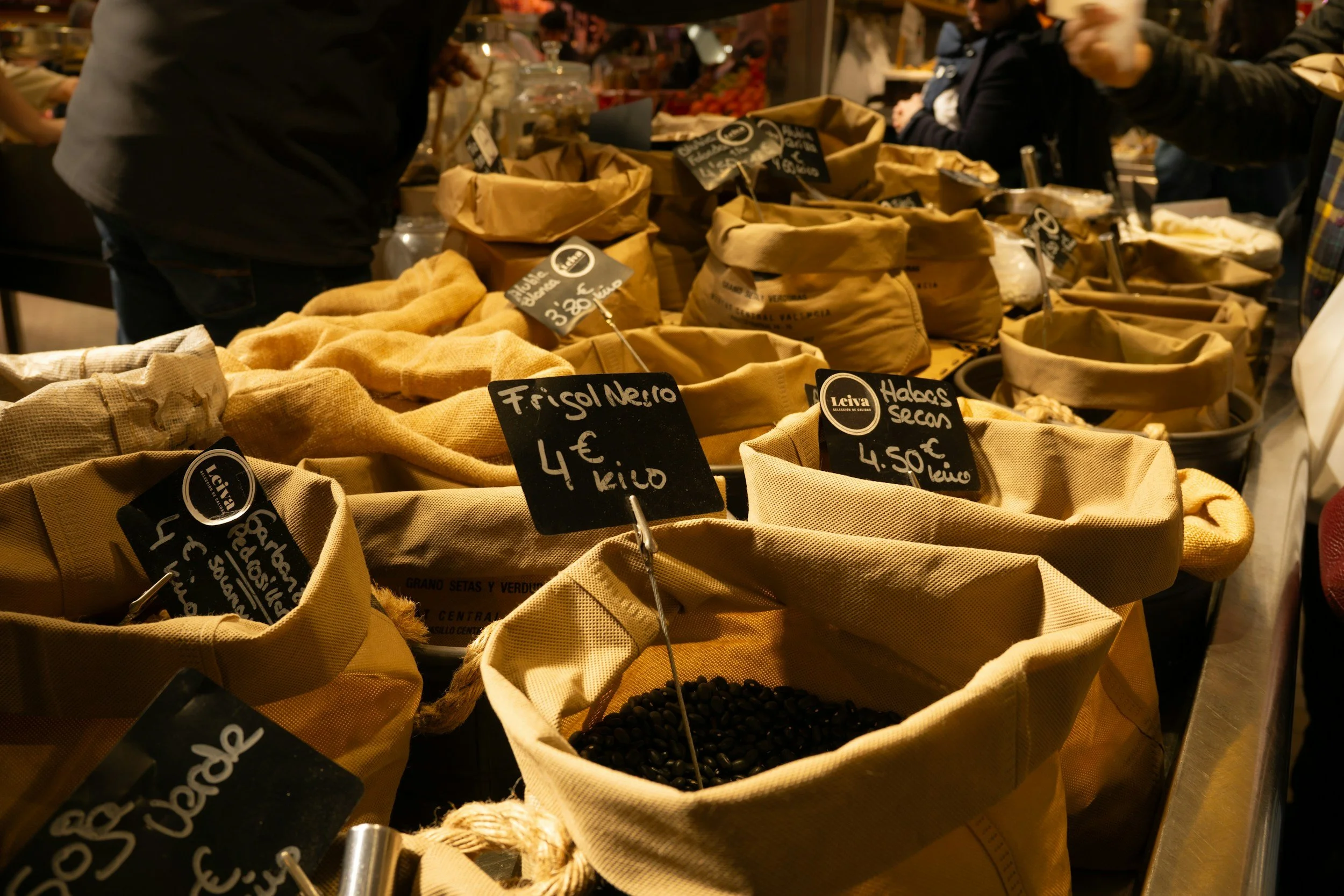
It is a mixed local market rather than a specialist food market, with fruit, vegetables and other food alongside clothes, footwear and everyday goods. That actually makes it more interesting to me. Besalú can be very easy to read as a medieval backdrop, especially around the bridge, and the market gives you a reminder that this is still a town people use for ordinary things.
The square itself is worth some time even after the market. Sant Pere, the surviving church of the former Benedictine monastery, sits here too, so you get daily life and the older fabric of Besalú in the same place without needing to turn either into a formal sightseeing stop.
For the mikveh, check the visit before you go
You can walk through the Call on your own, but the mikveh is different. Access to the bath itself is tied to guided visits through the tourist office, so this is the one part of Besalú I would sort out before arriving.
The programme changes, and the available visits can differ in length, language and what they include. Some are shorter walks through the Jewish quarter, while others are longer medieval tours, so I would check the option running on your date rather than assume the mikveh is included automatically.
There are also 36 steps down to the bath, which is worth knowing in advance if stairs are difficult for you.
The tourist office is at Carrer del Pont, 1, beside the bridge, and that is the best place to confirm the current visit and language.
Otherwise, keep the bridge and town walk loose
If you are not booking a heritage visit, I would keep the rest of Besalú deliberately simple. The Pont Vell, the exterior of the Jewish quarter, Prat de Sant Pere and Plaça de la Llibertat are enough to give the day a clear shape without turning the town into a list of things to complete.
The bridge deserves more than a quick photo, partly because its history is less neat than the usual “perfect medieval bridge” story. There is documentary evidence of a bridge here from 1075, but it was altered and rebuilt over the centuries, with the structure we see today shaped by reconstruction in the early 1960s. I find that more interesting than pretending it has survived untouched.
From there, I would stop planning quite so much and just move through the centre at your own pace. The Call, the main squares and the bridge all sit close enough together that there is no need to turn the afternoon into a fixed route. If an interior fits naturally, fine. If not, I would rather spend that time seeing how the different parts of Besalú connect than rushing from one doorway to the next.
If you are still deciding where to base yourself, I have a separate guide to choosing Girona or Figueres without a car, including which works better for different day trips around Catalonia.
Leave enough time for lunch and the walk back to the bus
This is the point where the day can either feel nicely paced or suddenly much too tight. If you have the longer afternoon in Besalú, there is no real need to rush lunch. A full heritage visit around midday still leaves you enough time to eat afterwards and spend a little longer around the centre before heading back to the stop you saved earlier.
The shorter return is different. A 75-minute tour starting at noon would finish at around 13:15, which is simply too close to a 13:57 bus for the kind of lunch I would actually want on a day like this. In that case, I would either choose the shorter heritage visit, keep lunch very simple, or eat properly once you are back in Girona rather than squeezing everything into the final hour.
I would also avoid planning around the very last bus just because it exists. A later service is useful to know about if something runs over, but it is much nicer to leave the centre with enough time to walk back without checking the clock every two minutes.
Should you add Banyoles or another Garrotxa stop?
I probably wouldn’t, at least not on the same day.
Banyoles is tempting because the bus already passes through, and Castellfollit de la Roca and Olot sit further along the same corridor. But that can make the route look easier on paper than it feels once you start adding another stop, another walk and another bus you need to be back for.
Banyoles is the one I’d be most careful with. The service gets you to the town, but that does not mean you step off beside the lake, and unless the timings line up well you can end up spending more of the day connecting places than enjoying either of them.
For this trip, I’d keep Besalú as the focus, especially if you want the Tuesday market, a proper lunch or one of the heritage visits. There is enough here to make the day feel complete without adding another destination for the sake of it.
If Castellfollit or Olot is high on your list, I’d give it its own day and plan it properly. Sharing a bus route is useful, but it does not automatically make two towns a good pairing.
Before you head back to Girona
I would not try to squeeze much more out of Besalú than the day naturally gives you. Once you have seen the part you came for, had lunch and wandered through the centre, that is enough.
The only things I would sort in advance are the bus home and anything that genuinely needs booking. After that, I would leave a little space in the day. Otherwise it is very easy to turn a small town into a military operation, and that is not really the point.
Besalú is small. You do not need to “make the most of every minute” for the trip to feel worthwhile. Sometimes the better day is the one where you still have time to sit down somewhere, change your mind, or take the long way back to the bus.